
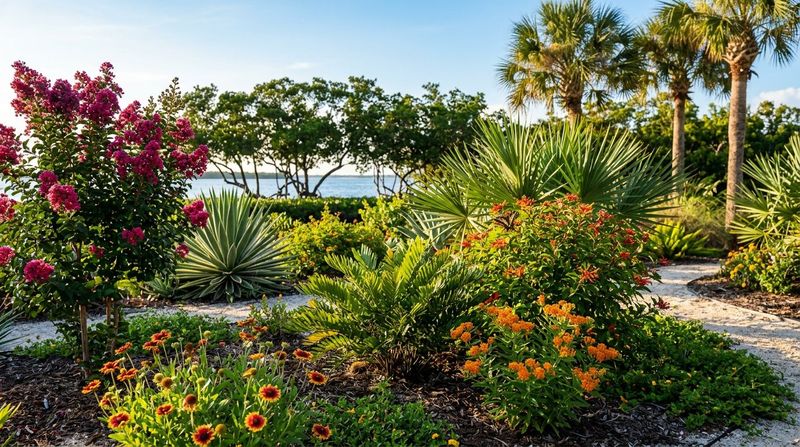
A tidy Florida yard does not have to mean wall-to-wall grass. Florida law protects Florida-Friendly Landscaping, but that does not erase every HOA design rule or approval step.
As communities rethink thirsty lawns, native plants offer practical ways to add color, support wildlife, and cut mowing. These eight choices can help you build a polished plan that fits your site and is easier to explain to your HOA.
1. Sunshine Mimosa
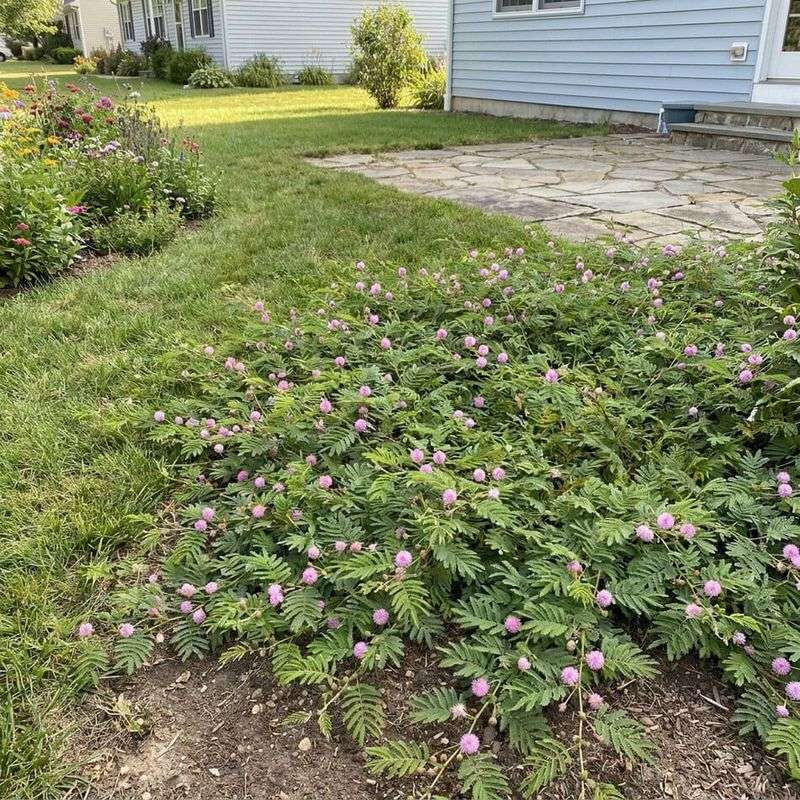
Pink powder-puff flowers can make a small lawn conversion look like a garden upgrade rather than an unfinished project. Sunshine mimosa, Mimosa strigillosa, spreads close to the ground and gives sunny Florida yards a soft, flowering carpet.
Use it in a defined island, along a driveway, or in a lightly traveled area where turf struggles. It handles occasional footsteps, but it is not a replacement for a busy play lawn or a dog run.
Choose full sun for stronger flowering and well-drained soil for reliable growth. Water new plants until their roots establish, then adjust irrigation to rainfall and soil conditions rather than keeping a daily lawn schedule.
Its wandering stems need boundaries, especially beside flower beds. A crisp edge and periodic trimming keep the planting intentional, while cool weather or frost can temporarily thin its appearance in northern Florida.
For an HOA proposal, show the exact footprint, edging, and maintenance plan. Florida Statutes section 373.185 protects Florida-Friendly Landscaping, but it does not make every native planting automatically exempt from reasonable design review.
2. Frogfruit
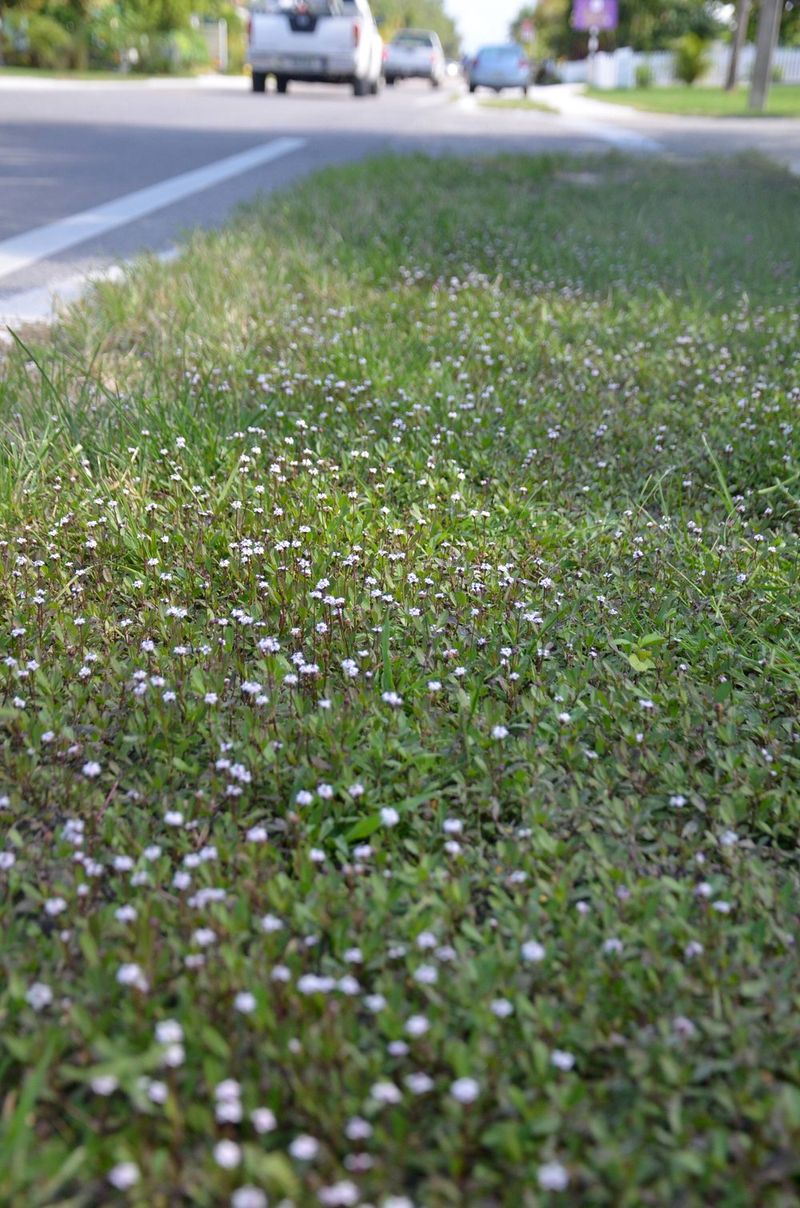
A butterfly garden can start just a few inches above the soil. Frogfruit, Phyla nodiflora, produces tiny flowers and serves as a host plant for several butterflies, including the white peacock and common buckeye.
Its special role on this list is turning a low groundcover patch into useful habitat. Plant it beside a sunny walkway or in a contained lawn-reduction bed where visitors can see the flowers without stepping through them.
Sun to partial shade works, although flowering is generally better with more light. Established plants tolerate varied moisture conditions, including occasional wet periods and some drought, making frogfruit useful where irrigation coverage is uneven.
Expect a natural-looking carpet rather than the uniform surface of sod. It can spread into neighboring beds, and cold weather may reduce its coverage in parts of Florida.
Keep runners off pavement and remove weeds while the planting fills in. Because blossoms attract bees, place the patch away from favorite barefoot play areas, and retain turf or a path where regular foot traffic belongs.
3. Muhly Grass

Come fall, a row of pink clouds can do more for curb appeal than another strip of thirsty sod. Muhly grass, Muhlenbergia capillaris, brings a seasonal show while keeping a clear, clumping shape.
That shape makes it especially useful for HOA-facing front yards. Repeat several plants along a broad bed, leaving enough room for mature clumps that commonly reach about 2 to 4 feet tall and wide, with flower stalks rising above the foliage.
Give muhly full sun and a site that drains well. Once established, it handles dry spells well, but newly planted containers still need careful watering while roots move into the surrounding soil.
Skip rich fertilizer and constant irrigation intended for lawn grass. Both add work without solving the plant’s basic need for the right location.
In late winter or early spring, before fresh growth gets going, cut back old foliage if needed. Keep clumps away from sight lines at driveway exits, and show their full flowering height on any landscape drawing submitted for review.
4. Coontie
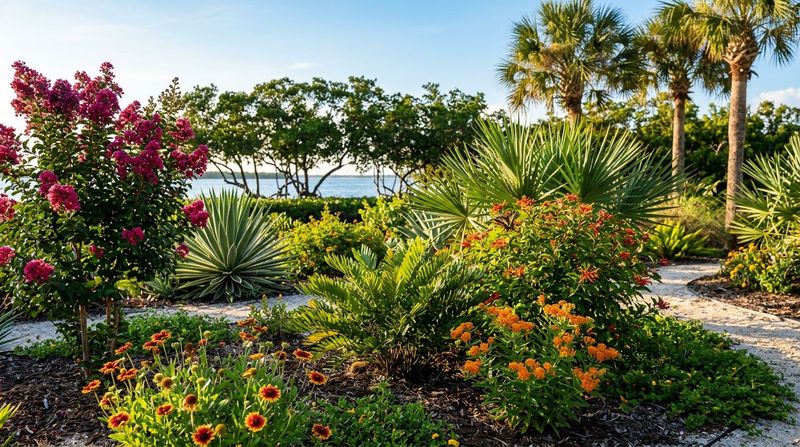
For homeowners who want native plants without a meadow look, polished evergreen foliage is a useful starting point. Coontie, Zamia integrifolia, offers the tidy presence of a small shrub with the bold leaves of an ancient cycad.
Place it in foundation beds, beside an entry, or beneath an open tree canopy. It usually stays around 2 to 3 feet tall, though mature plants can spread wider, so allow space instead of crowding it against a wall.
Coontie grows in sun or shade and suits well-drained Florida sand. Avoid low spots that remain soggy, and water thoughtfully during establishment rather than assuming a native needs no early care.
Its wildlife connection is unusually specific: coontie is the larval host for the rare atala butterfly where that butterfly occurs. Feeding damage may happen, so decide whether a habitat planting fits your expectations for appearance.
There is also a serious placement concern: all parts are toxic if eaten, especially the seeds. Keep coontie away from pets or children likely to chew plants, and buy nursery-grown stock rather than collecting wild specimens.
5. Dwarf Yaupon Holly
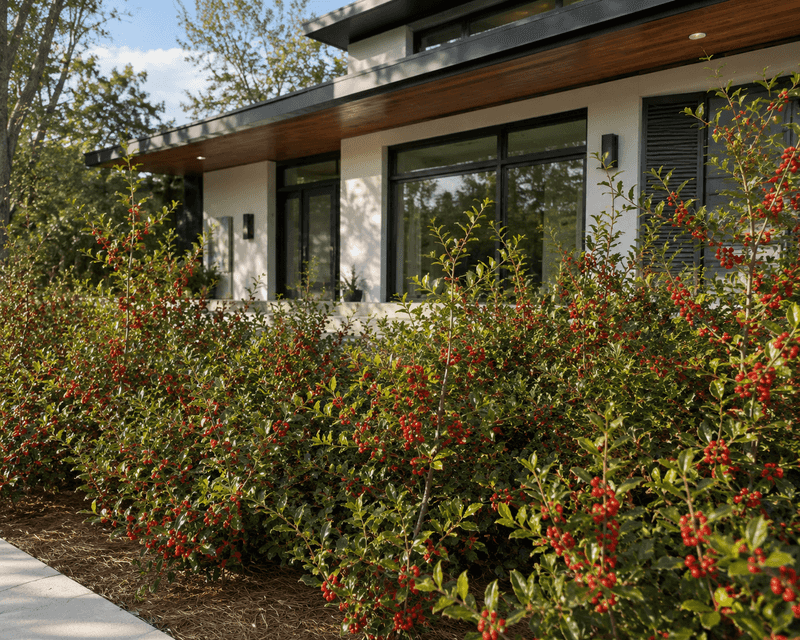
Not every lawn update needs to look loose or wild. A low row of dwarf yaupon holly can give a native-focused yard the familiar structure that many neighborhood design committees prefer.
The species, Ilex vomitoria, is native to Florida, while dwarf selections provide smaller garden forms. Check the cultivar label carefully because mature size varies, and a plant sold in a small pot is not necessarily a small-growing shrub.
Use compact selections to frame a porch, anchor a mixed border, or replace a short stretch of high-maintenance hedge. Sun to partial shade and well-drained soil suit many sites, with good drought tolerance after establishment.
Choose a variety that fits the available space without frequent shearing. Light, selective pruning keeps the branching more natural and avoids turning routine upkeep into a monthly chore.
Do not buy a dwarf cultivar expecting a heavy berry crop. Many familiar selections are male, and fruiting female plants need a compatible male nearby.
Its strongest payoff is year-round order. Pair the rounded shrubs with flowering groundcovers to show how habitat value and a neat front yard can work together.
6. American Beautyberry
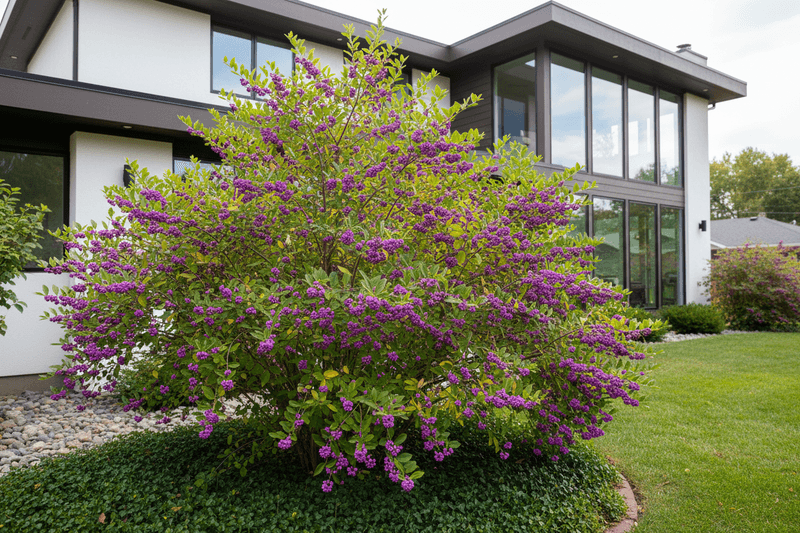
Those bright purple berries hardly look real, yet they belong to one of Florida’s most useful native shrubs. American beautyberry, Callicarpa americana, adds a bold late-season feature while offering food for birds.
Give it a relaxed position near a woodland edge, along a side yard, or behind shorter plants. Mature shrubs often reach roughly 4 to 8 feet tall and wide, so this is not a good choice beneath a low front window.
Sun to partial shade works, with flowering and fruiting influenced by available light. Well-drained soil and establishment watering help it settle in, and established plants can handle seasonal dry periods.
Beautyberry loses its leaves during cooler weather, especially in northern and central Florida. Plan for bare branches rather than expecting an evergreen screen all year.
If size needs managing, prune in late winter before the new growth that will carry flowers. Avoid repeatedly clipping it into a tight ball, which sacrifices its arching form and can reduce the berry display.
For a street-visible bed, surround it with lower evergreen plants and a clear border. That simple frame helps its seasonal changes look planned.
7. Dune Sunflower
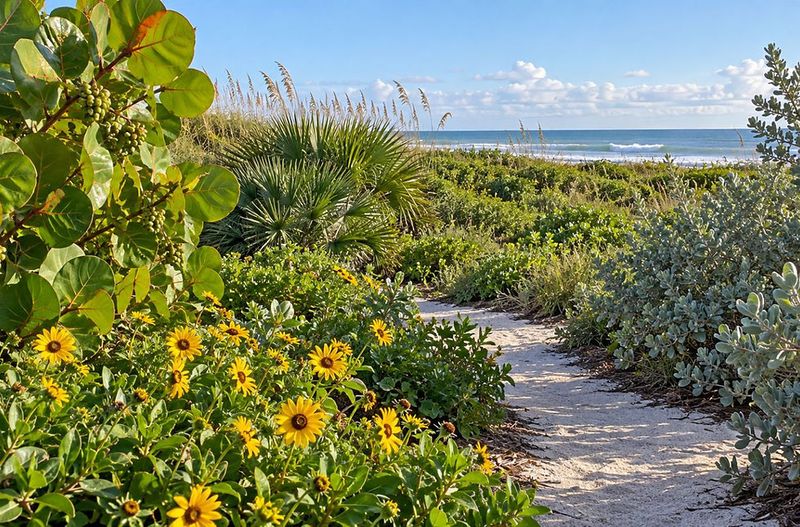
A hot, sandy strip beside the driveway can become the brightest part of the yard. Dune sunflower, Helianthus debilis, spreads into a cheerful mass of yellow blooms where many fussier bedding plants need constant attention.
Its best use is covering sunny, well-drained ground, especially in coastal settings. Plants commonly stand about 1 to 3 feet tall and spread several feet, so leave room for growth rather than packing them tightly.
Drainage matters more than rich soil. Avoid soggy beds and overspray from lawn sprinklers, and water new plants until established before easing back according to weather.
Flowering can continue for long stretches in warm parts of Florida, while freezes may cut plants back farther north. Trim wandering stems to protect sidewalk clearance and refresh untidy growth when needed.
Buy from a native nursery that can identify the plant’s subspecies and regional suitability. Florida has distinct native forms, so choosing locally appropriate stock helps avoid moving the wrong form into sensitive coastal areas.
For HOA review, draw a firm bed boundary. A contained sweep of yellow reads much more clearly than stems spilling across pavement.
8. Fakahatchee Grass
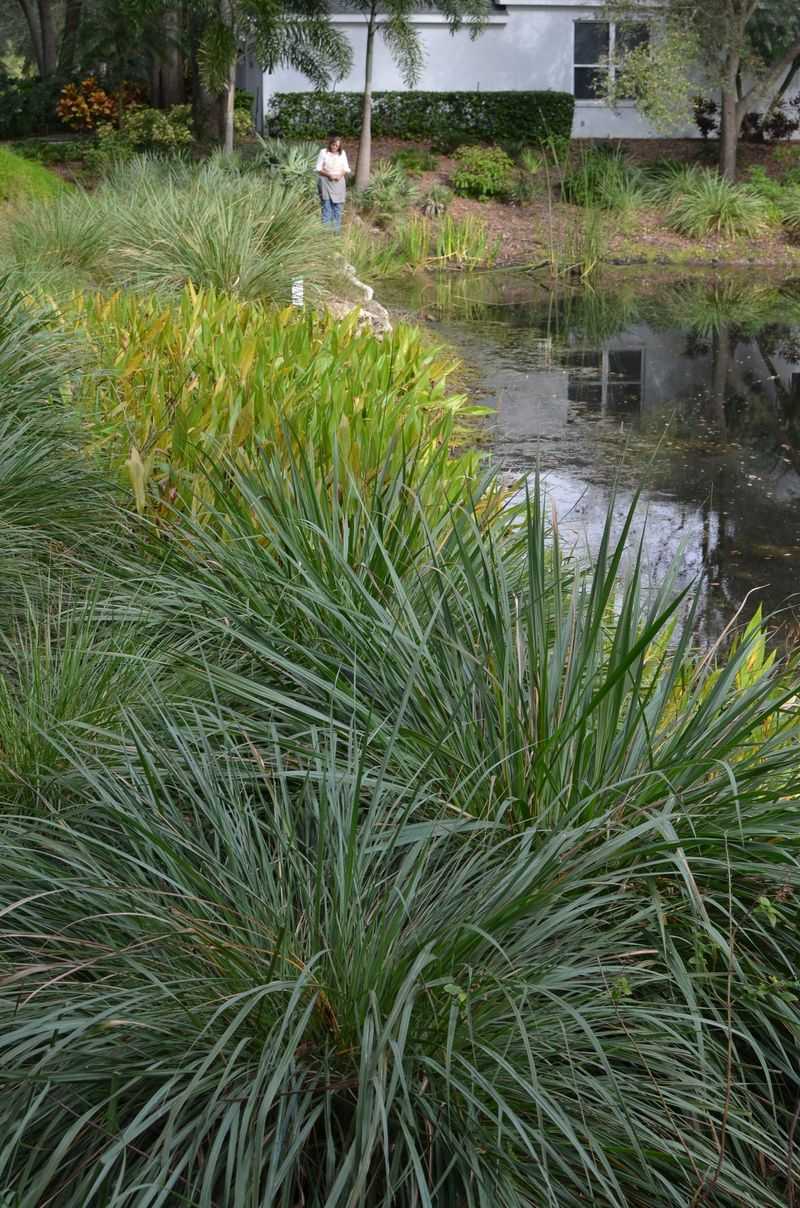
When the low corner stays damp after rain, another drought-loving plant is not the answer. Fakahatchee grass, Tripsacum dactyloides, brings bold green structure to moist spots that frustrate many common landscape choices.
Unlike airy muhly grass, it has broad blades and a substantial presence. Clumps can reach about 4 to 6 feet tall, with flower stalks sometimes taller, so reserve it for roomy borders or the background of a rain garden.
It grows in sun to partial shade and tolerates a range of soils, including sites with periodic wetness. That does not mean it can solve drainage trouble threatening a house or tolerate every type of prolonged flooding.
Plant clear of narrow paths and driveway views. Give each clump space to mature, and remove worn foliage as needed rather than trying to maintain it at lawn height.
Before changing a swale, check drainage easements and community rules. Keep water routes open and avoid grading that sends runoff toward a neighbor.
Finish your proposal with plant sizes, bed edges, and an irrigation plan, using UF/IFAS Florida-Friendly Landscaping guidance as a reference. Good site matching makes the entire native planting easier to maintain and explain.