
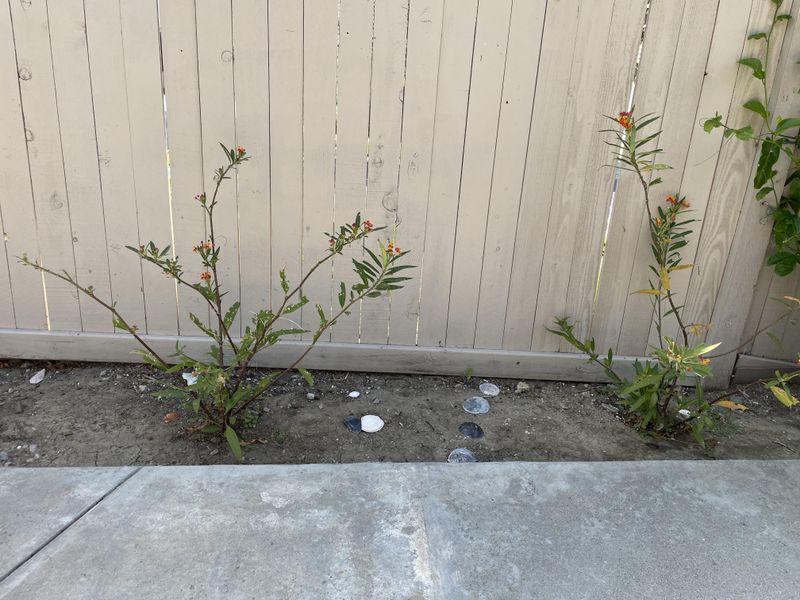
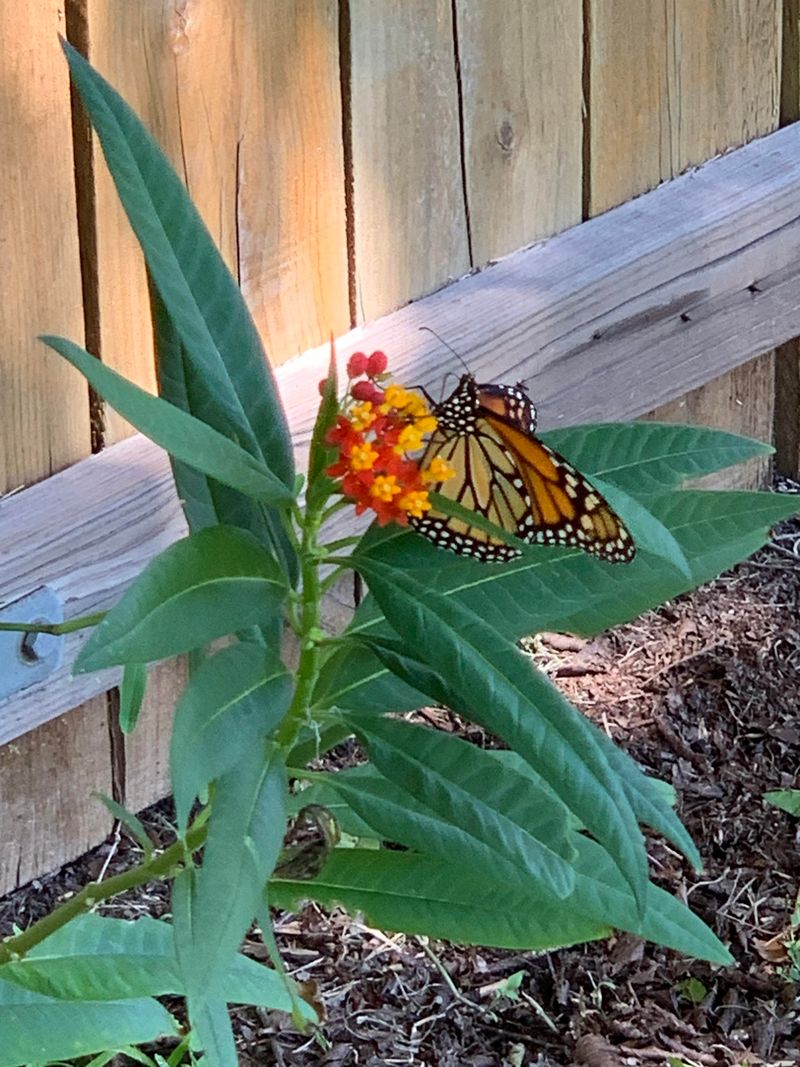
Tropical milkweed looks like a gift to monarchs, with its orange and yellow flowers and green leaves that keep going when other plants quit. In much of Florida, though, those leaves can stay put all winter.
That may keep monarchs breeding when they would normally slow down, and it can help a monarch parasite pass from butterfly to caterpillar. Here is what fall pruning is meant to do, what nobody has proven yet, and how advice changes from the Panhandle to the Keys.
Why tropical milkweed raises a fall garden question
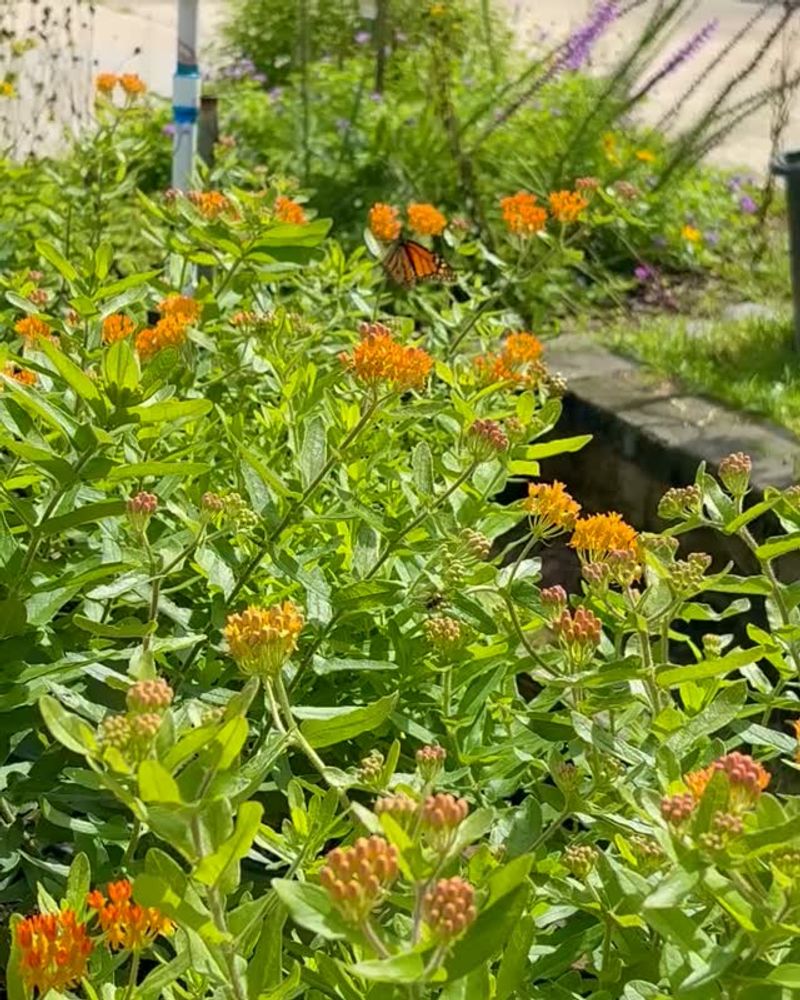
Walk out to a patch of tropical milkweed in January and you may be surprised. In many parts of Florida it is still green, still leafy, and sometimes still blooming.
Milkweeds native to the Southeast usually die back for the cooler months and return in spring, but tropical milkweed (Asclepias curassavica) often keeps going because winters here are mild.
That staying power is exactly why the plant draws questions. Monarchs lay eggs on milkweed, and caterpillars need its leaves to eat.
When fresh foliage is available all winter, butterflies can keep laying eggs and raising caterpillars well past the time they would otherwise stop. UF/IFAS guidance on milkweed points to this seasonal die-back of native milkweeds as the pattern that cutting back is meant to imitate.
The Monarch Joint Venture (MJV) also recommends fall and winter cutbacks in many areas. Its stated aims are to discourage winter breeding colonies and to remove foliage that may carry disease spores.
Not every garden or butterfly will respond the same way. A plant in a sheltered Gainesville yard, one in a Tampa courtyard, and one in a Miami planter face different winter conditions, and the monarchs around them may not behave alike.
Think of fall pruning as a question about timing and risk, one you answer based on where you live.
How OE moves from monarchs to caterpillars
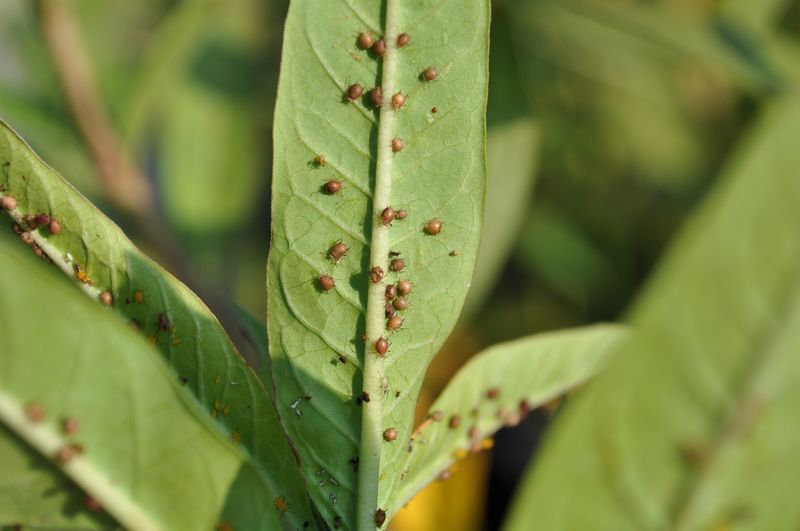
The parasite behind this worry is called Ophryocystis elektroscirrha, or OE for short. It is a naturally occurring parasite that infects monarchs.
According to MJV’s disease information, an infected adult butterfly carries dormant spores on its body, mostly around the abdomen.
When that butterfly lands on milkweed to lay eggs, some spores can rub off onto the eggs and onto the leaves. A hungry caterpillar that hatches and starts munching may swallow those spores.
Inside the caterpillar, the parasite then grows and reproduces, which is why the monarch is the host and the plant is only a surface where spores can land.
This distinction matters in the garden. The leaf is not a breeding ground for the parasite.
It is more like a doorknob that can carry germs from one person to the next.
The effects vary a lot. Severe infection can make it hard for a butterfly to emerge from its chrysalis or to fly properly.
Some infected adults look perfectly normal, so a healthy-looking monarch in your yard may still carry spores.
That is also why gardeners cannot spot and remove the problem by eye. You cannot tell by looking which eggs or leaves have spores, which is part of why guidance focuses on reducing opportunities for spread across the whole plant.
What pruning might reduce—and what research has not shown
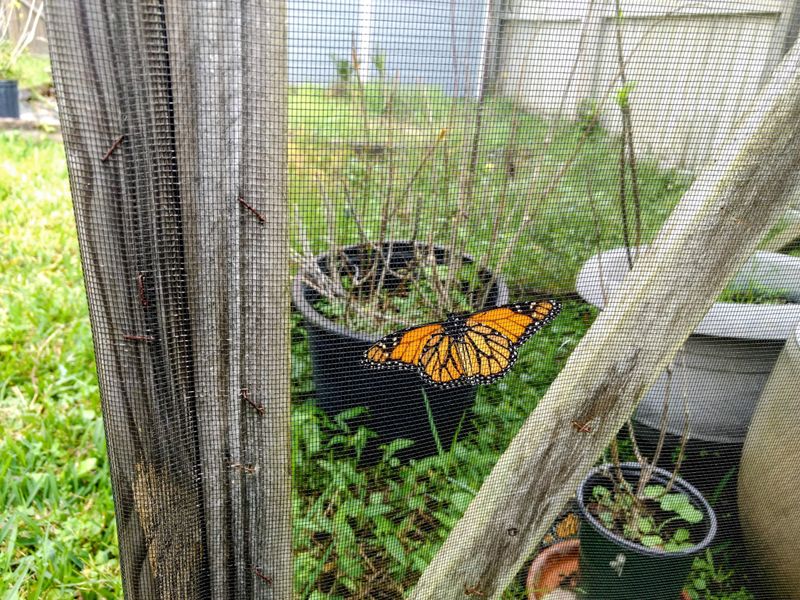
The reasoning behind pruning is straightforward. If you cut the plant back, there are fewer leaves for monarchs to lay eggs on, so winter breeding may slow down.
Cutting also removes foliage that could be carrying spores. Those are the two goals MJV lists for its pruning advice.
What nobody has shown is how well that works across a whole population. A scientific review of monarch conservation experiments notes that the population-level effects of fall cutbacks have not been tested.
So pruning is a sensible precaution, not a proven way to improve monarch survival, and it will not wipe out OE or reverse monarch declines.
Migration adds another wrinkle. In a 2019 experiment by Majewska and Altizer, exposure to tropical milkweed increased reproductive activity in some fall migrants.
The authors suggested this could reduce their tendency to keep migrating.
That result is narrow. It does not show that every exposed butterfly stops migrating, and it did not measure what pruning does in Florida yards.
Treat it as one more reason researchers are cautious about winter-green tropical milkweed, not as a guarantee about your garden.
Florida’s pruning advice varies by region
Florida stretches a long way, and the advice stretches with it. The MJV says its fall-and-winter pruning recommendation does not apply south of Orlando.
In that part of the state, a distinctive non-migratory monarch population has long been established, and MJV still encourages gardeners there to choose native milkweed.
UF/IFAS takes a different approach. Its guidance recommends cutting existing tropical milkweed in late October and continuing until spring, and it does not carve out the same exception.
You can read it in the UF/IFAS milkweed guide, and the MJV position is laid out on its pruning page. The two sources do not fully agree, so it is fair to say there is no single statewide rule everyone accepts.
It also helps to drop the idea that every Florida monarch is a traveler headed to Mexico. South Florida has year-round resident monarchs as well as occasional migrants, and UF/IFAS notes that how migrants move to, from, or through the state is still uncertain.
One more point: MJV’s exception is about when to prune, not whether to plant. It is not an endorsement of putting tropical milkweed in the ground in South Florida.
How to prune an existing tropical milkweed plant
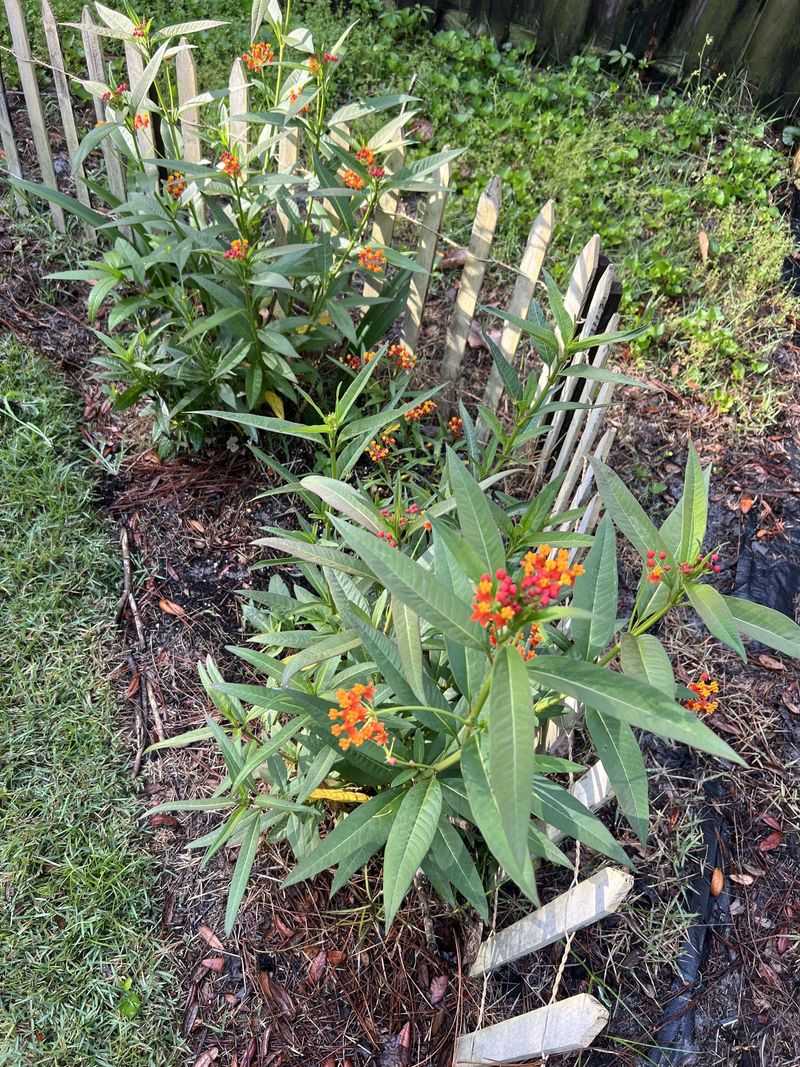
If you already have tropical milkweed, here is how the two main sources suggest handling it. MJV advises cutting stalks down to about 6 inches in fall and winter.
If leaves resprout, cut again every few weeks.
UF/IFAS gives a calendar instead. It advises cutting existing plants in late October and continuing until spring, which mimics how native milkweeds die back each year.
You can see both recommendations in the MJV pruning guidance and in UF/IFAS’s milkweed publication.
A simple routine fits both. Mark late October on your calendar, cut the stalks low, and check the stumps every couple of weeks through winter.
Trim any fresh green shoots before they turn into a tempting nursery for eggs.
Before you cut, look for caterpillars and eggs. Pruning is aimed at discouraging winter breeding and removing foliage that may carry spores, so it is not a reason to disturb a plant full of young caterpillars you can still see.
Keep expectations realistic. Cutting back will not eliminate OE or guarantee healthy butterflies.
And this advice is for managing plants you already have, not a reason to add new tropical milkweed.
Consider native milkweed suited to your garden
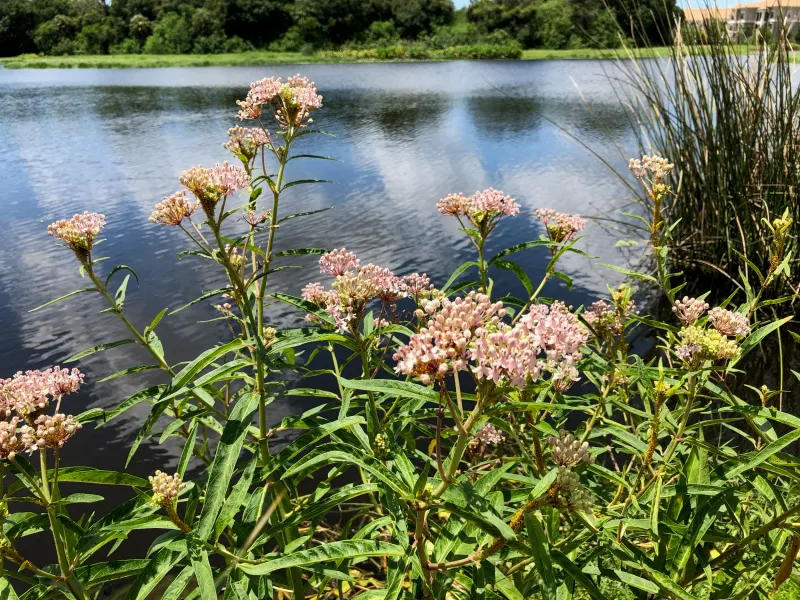
For gardeners who want a longer-term fix, native milkweed is the route UF/IFAS recommends. Its milkweed guide names butterfly milkweed (Asclepias tuberosa), swamp milkweed (A. incarnata), and aquatic milkweed (A. perennis) among the choices some Florida nurseries carry.
Natives naturally die back in the cooler months, so you do not need to keep trimming them to mimic a winter rest.
Still, no single native fits every yard. Butterfly milkweed generally likes bright sun and well-drained soil, which suits sandy spots.
Swamp and aquatic milkweeds are better matched to wetter ground, so a low corner that stays damp after storms may suit them better than a dry, sunny bed.
Check your light, soil, and moisture before shopping. Availability also varies, and not every nursery stocks every species, so call ahead or ask a local native plant sale.
As for the plant already in your yard, the UF/IFAS assessment of Asclepias curassavica classifies tropical milkweed as invasive and not recommended in North, Central, and South Florida. A good plan is to add suitable natives and phase out tropical milkweed over time.
Avoid adding hazards while managing the garden
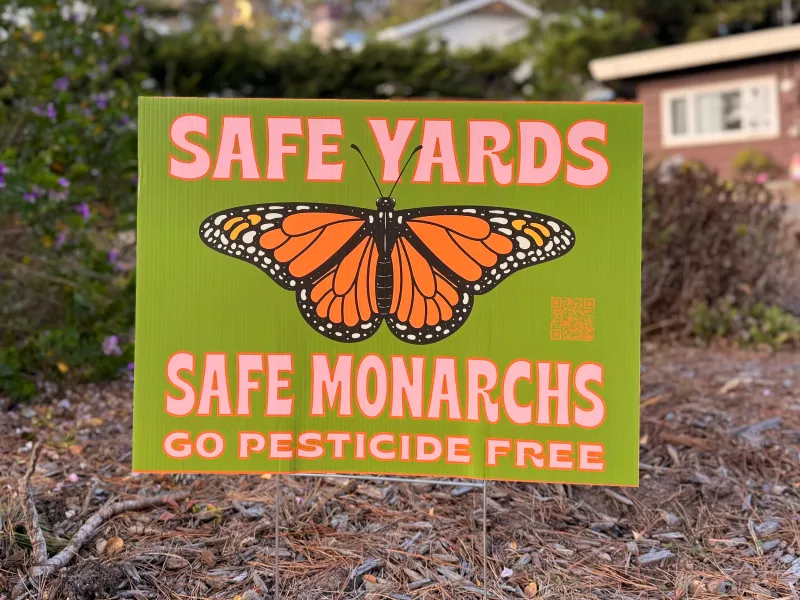
When people worry about spores, some reach for a spray bottle. Skip it.
MJV does not recommend bleaching milkweed plants, and bleach is not a safe way to sterilize leaves that caterpillars will eat. You can read more in its disease guidance.
Insecticides need the same caution. UF/IFAS advises against systemic insecticides on milkweed because they may harm monarchs and other beneficial insects, a point made in its milkweed publication.
Check labels on plants you buy, too, since some nursery stock may have been treated.
Taken together, the plan is modest. Follow the pruning advice that fits your region, and lean toward native milkweeds that suit your site.
That lowers avoidable risks without adding new ones.
No single yard practice guarantees healthy monarchs or eliminates OE. A careful gardener can only tilt the odds a little, and that is still worth doing.