
A tiny, pale green insect with lacy wings may be sharing your rose bed this winter. Its young, called larvae, eat aphids, and they can be wiped out by the same sprays gardeners use to tidy up.
Lacewings are not a magic fix, and they do not behave the same way in every California yard. Knowing what they really do helps you decide when to leave the sprayer on the shelf.
Minor aphid numbers rarely justify a routine fall spray
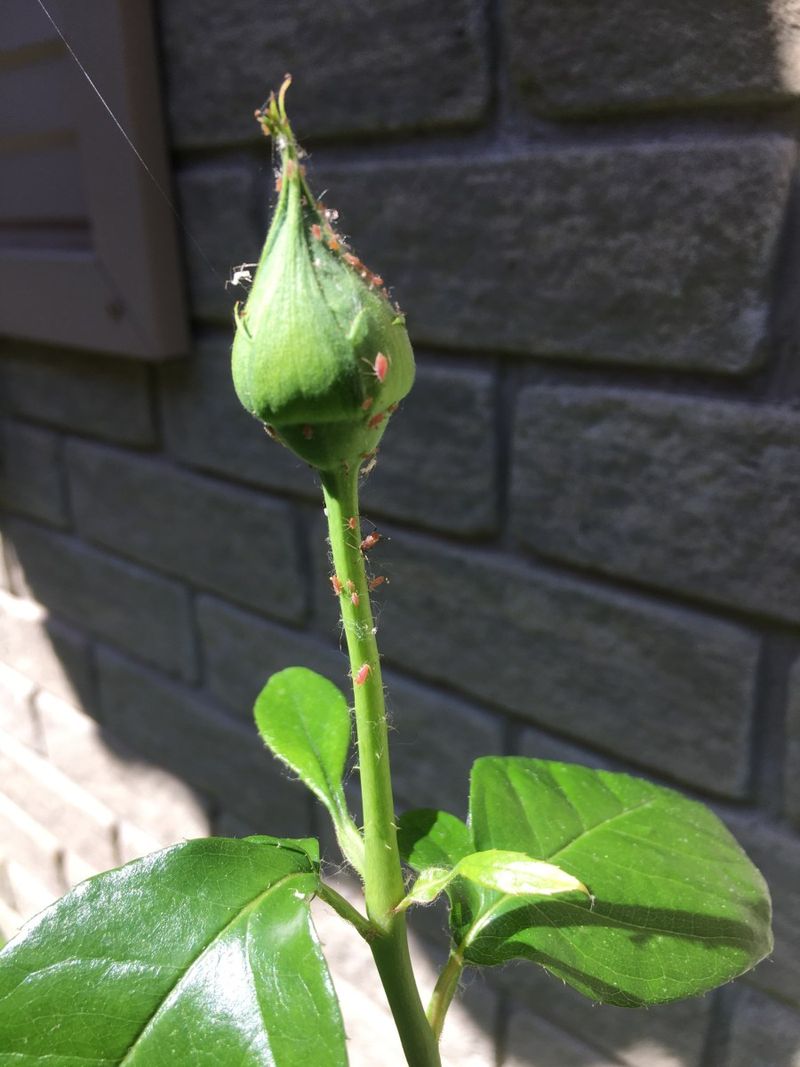
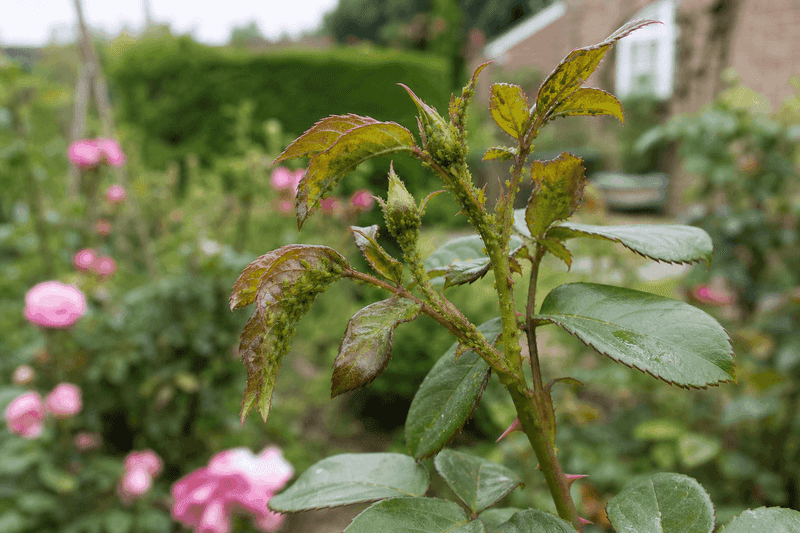
Spotting aphids on a rose can feel like an emergency, but most of the time it is not one. UC IPM rose guidance explains that aphids are common on roses, and that low to moderate numbers usually do little damage.
A few clusters on a tender shoot are a normal part of a living garden.
Large populations are a different story. When aphids pile up, they can distort buds, shrink flower size, and leave behind sticky honeydew.
That honeydew can then grow sooty mold, a black film that makes leaves look dirty and slows their work.
Timing matters here. In most parts of California, the main rose-aphid problem lasts about six weeks in spring and early summer, not fall.
So fall is not a season when every garden has a big aphid wave building up on the roses.
That said, California is a big state. According to UC IPM aphid information, most aphids in the mild climate here can reproduce through much or all of the year, though some species lay eggs that carry them through winter.
In a mild coastal yard you may see a few aphids in December, while a mountain garden may see none.
The practical takeaway is simple. If you find only a small number of aphids and the plant looks healthy, a routine spray on a calendar schedule usually costs more than it gives.
It can also remove the helpful insects already working in your beds.
Lacewing larvae hunt aphids; adults usually do not
Green lacewings go through four stages: egg, larva, pupa, and adult. Only one of them is the real aphid hunter.
According to UC IPM green lacewing information, the larvae are the predators.
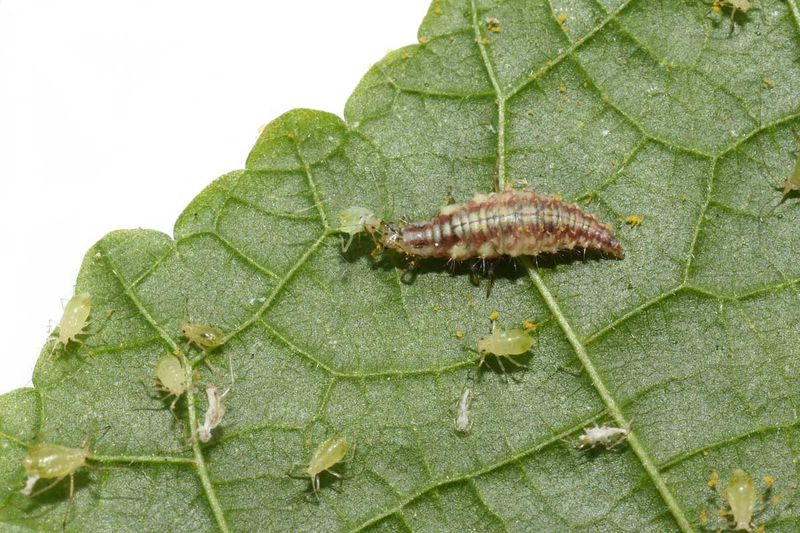
Picture a tiny, spiky, alligator-shaped creature with curved jaws. It grabs aphids and other small soft-bodied prey and feeds on them.
Some people call these larvae aphid lions, and the name fits.
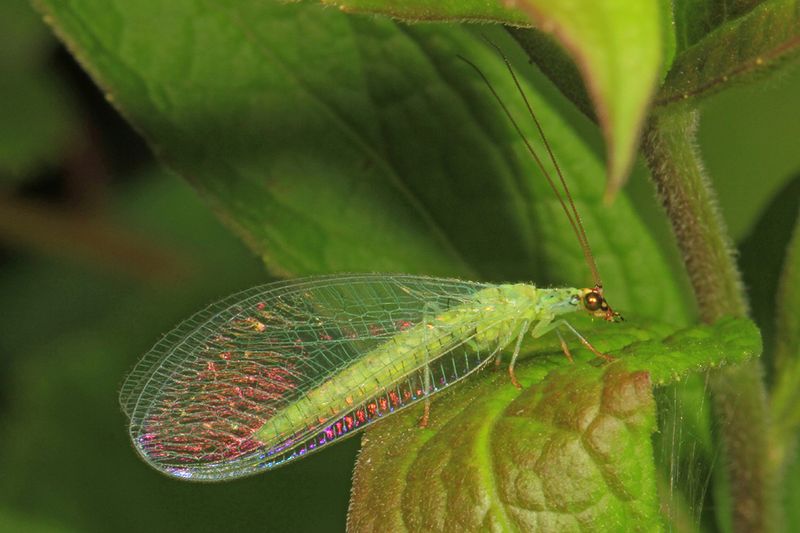
The adults look completely different. They are slender, pale green insects with delicate, see-through wings and golden eyes.
Adults mostly feed on honeydew, nectar, and yeasts, and what they eat can vary by species.
That means a lacewing fluttering around your porch light or resting on a leaf does not prove that aphids are being eaten. The adult is likely sipping sweet liquids.
The aphid control, if any, comes from the larvae that hatch from eggs the adults lay.
Look closely and you may find the eggs. They sit at the tip of thin, hair-like stalks on leaves and stems.
Finding those little stalks is a good sign that larvae may soon be on the job, and a good reason to hold off on sprays that would harm them.
Winter lacewing activity depends on local conditions
California has foggy coast, hot inland valleys, snowy foothills, and high desert, so winter looks very different from one yard to the next. Lacewings respond to those differences.
The result is that there is no single winter story for the whole state.
In places without cold winters, all lacewing stages may be found year-round. That is the case described by UC IPM.
A mild garden near the coast might have eggs, larvae, pupae, and adults all present at once.
In colder locations, lacewings mostly overwinter as inactive larvae or pupae. They tuck into protected spots such as bark crevices.
They are resting, not hunting, so they are not eating aphids on your roses while the weather is cold.
Even where lacewings are present, overwintering does not guarantee that active larvae are working on your roses through fall and winter. Adults may become less active and stop laying eggs in late fall and winter.
Species and local conditions both play a part.
So how does this help you? Think of fall sprays as something that could hit lacewings at rest in sheltered spots, or active ones in mild areas.
Neither situation is one you can see easily. If you are in a mild-winter area, keep an eye out for larvae.
If you are in a colder one, expect a quiet garden until spring.
Lacewings are one part of the rose garden’s natural control
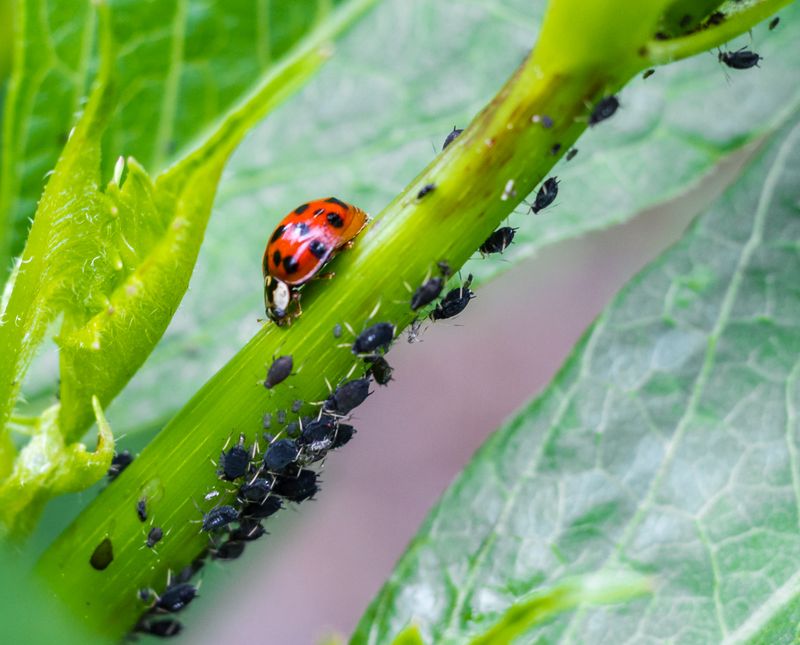
Lacewings get a lot of attention, but they are only one member of the crew. UC IPM’s rose pest guide names several important aphid enemies on roses, including parasitic wasps, lady beetles, and syrphid flies.
Each one works differently. Lady beetles and their spiky larvae eat aphids directly.
Syrphid fly larvae, which look like small pale slugs, do the same. Parasitic wasps lay eggs inside aphids, leaving behind swollen, tan aphid shells called mummies.
The same guide reports that releasing green lacewings against rose aphids has not provided significant control in research trials. Buying a carton of lacewing eggs and sprinkling them on your roses is therefore not a dependable plan.
That does not make lacewings unimportant. It means their value comes from the ones already living in your yard, as part of a team.
Protecting that team is far more practical than counting on any one insect.
Natural enemies will not prevent every aphid problem. Spring can still bring a burst of aphids before the predators catch up.
But a garden with many kinds of beneficial insects tends to hold aphids in check more often, and gives you more time before you need to act.
Inspect roses and try nonchemical steps first
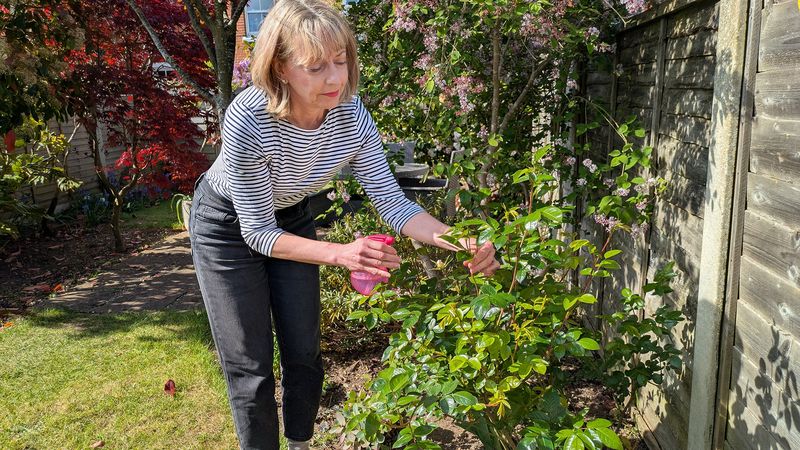
Start with a slow walk around your roses, ideally every week or two when new growth is coming in. Check the tips of shoots, the undersides of leaves, and the buds.
Aphids love tender growth, so that is where they gather first.
If you find only a few, UC IPM aphid guidance supports simply tolerating them. Low numbers are food for the beneficial insects you want around.
Look for lacewing eggs, lady beetle larvae, and aphid mummies before you decide anything.
When a colony is getting bigger, take small steps. Prune off a heavily infested leaf or stem and bag it.
On sturdy plants, a strong stream of water from the hose can knock aphids off, and many will not find their way back.
Look at what you feed, too. Extra fertilizer, especially nitrogen, pushes out the soft new growth that aphids favor.
Easing up can make roses less inviting.
Also watch for ants walking up the canes. Ants protect aphids from their natural enemies in exchange for honeydew, so managing ants may help predators do their work, as noted in the UC IPM rose guide.
Keep your response in proportion. A few aphids call for patience.
A growing cluster calls for pruning or a water spray. Keep checking, and let the plant’s actual damage guide you.
Treat only when damage warrants it, and protect the plant
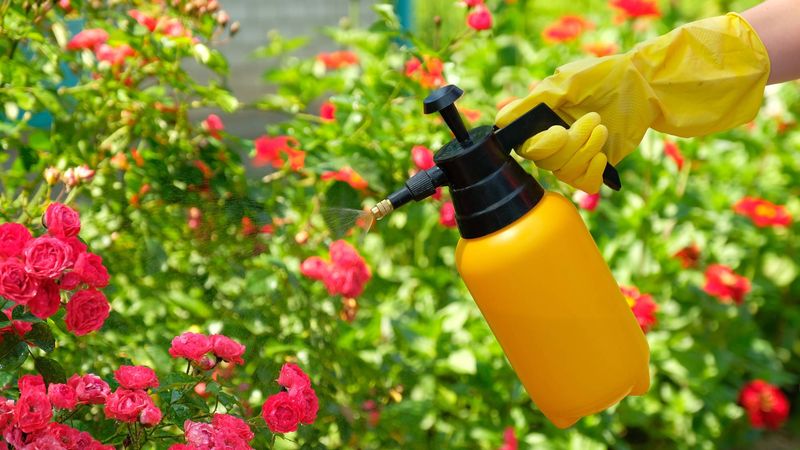
Sometimes nonchemical steps are not enough. If aphids are causing real damage, such as distorted buds or heavy honeydew, treatment can make sense.
The key word is careful, not never.
According to UC IPM, insecticidal soaps and oils can be less harmful to natural enemies when used properly. They are not risk-free, and they are not a fix for every situation.
Broad-spectrum or persistent insecticides are the ones most likely to harm the beneficial insects you are trying to protect, which is why blanket spraying is discouraged. The UC IPM Pest Notes on rose insects also point toward other options before pesticides.
Soaps and oils work by contact. They must touch the aphid to work, so thorough coverage matters, including leaf undersides and shoot tips.
They will not reach aphids hidden inside tightly curled leaves, so pruning those leaves first may help.
Timing and plant health matter. Do not apply soaps or oils to drought-stressed plants or in very hot conditions, since the plant can be injured.
That is a real concern in California summers, so water the plant well beforehand and choose a cooler part of the day.
Check the label for plant sensitivity and follow its directions exactly. Test on a small area first if you are unsure.
Spot-treat only the infested shoots rather than the whole bush.
A garden that keeps its helpers is a garden that needs less rescuing.