
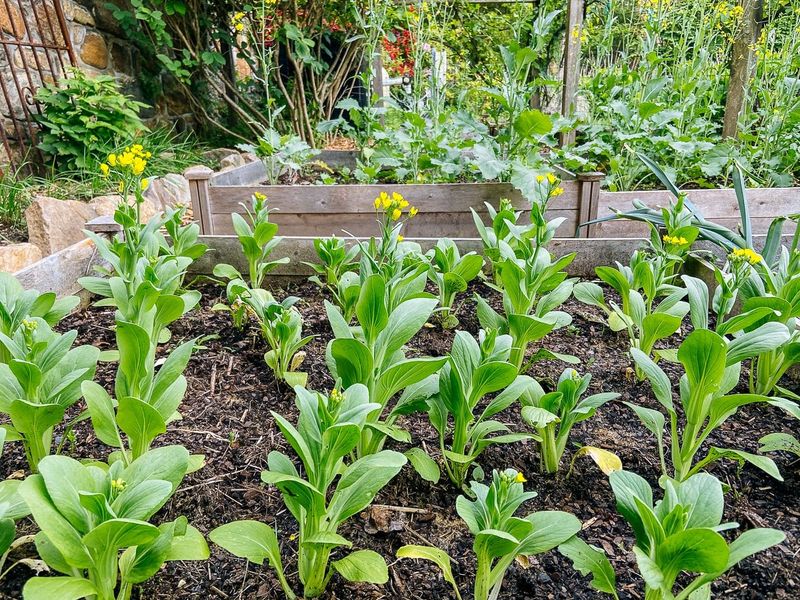
You walk out to the fall garden and spot a tall, budding stalk rising from the middle of your bok choy. It looks alarming, but your harvest is not ruined.
A cool spell followed by warm weather may play a part, though it is only one possible factor. Here is how to read the sign, use the plant, and plan a better next crop.
A visible flower stalk means bok choy is bolting
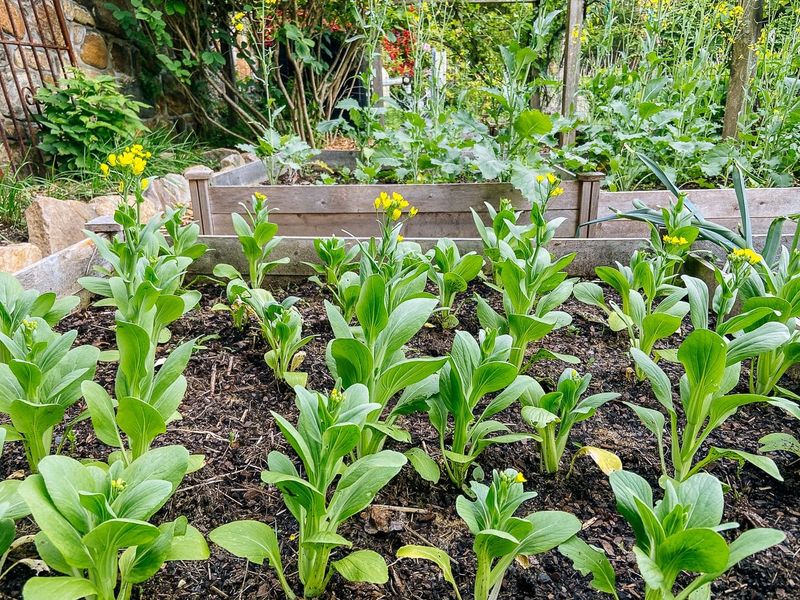
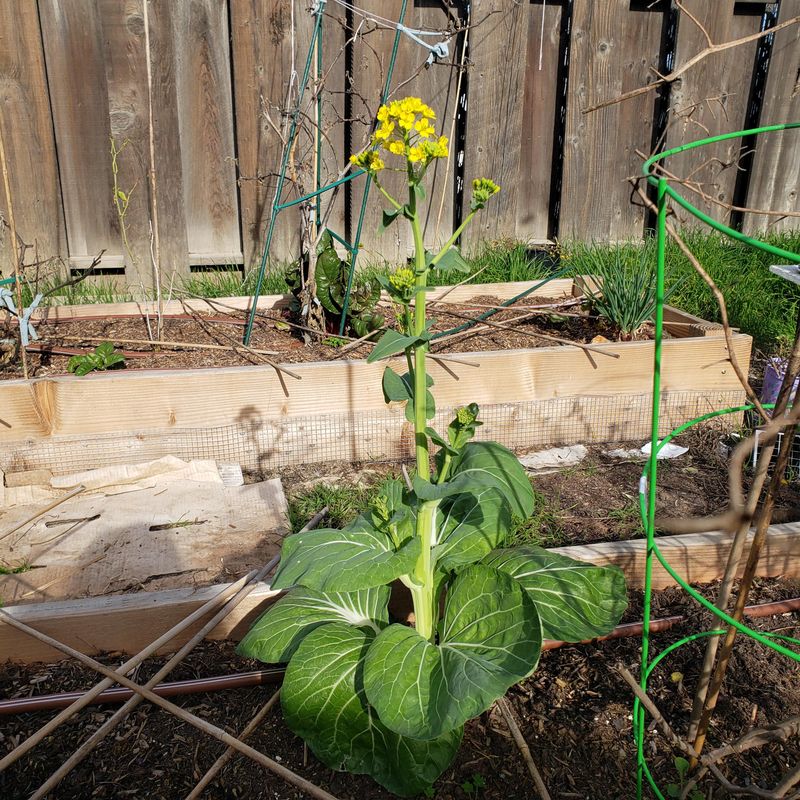
Spot a thick stalk with tight green buds climbing out of the center of your bok choy, and you are looking at bolting. The plant is shifting from making leaves to making flowers and seeds.
Ordinary bok choy growth stays low and leafy, with broad white or green stems and dark green blades.
The change matters because of what happens next. Minnesota Extension says a bok choy plant that starts to bolt will stop growing leaves.
So the plant you see today is close to the size it will reach.
Bolting is described by North Carolina Extension as flower stalk development. Look at the center of the plant for a raised cluster of buds, and check whether any yellow flowers have opened.
Those two clues tell you how quickly to act, and the next steps are simple.
Why a chilly spell followed by warmth may matter
Cold nights followed by warm days can push some bok choy toward flowering. That pattern is a possible contributor, not proof of why your plant bolted.
Earlier cold exposure, the plant’s age, the variety, and growing conditions all shape the response.
Minnesota Extension notes that more than a week of nights below 50 degrees F can make bok choy likely to bolt once warm weather returns. Rutgers gives seedling cold-exposure examples too, but those come from a regional production guide.
Treat them as background, not a November rule for Florida or Texas.
Fall crops can follow a different path. UC IPM describes fall-planted crops bolting after cold slows fast growth, and Clemson Extension says many varieties bolt after prolonged cold that follows a good growing period.
A single warm week is rarely the whole story.
Harvest the whole plant before flowers open
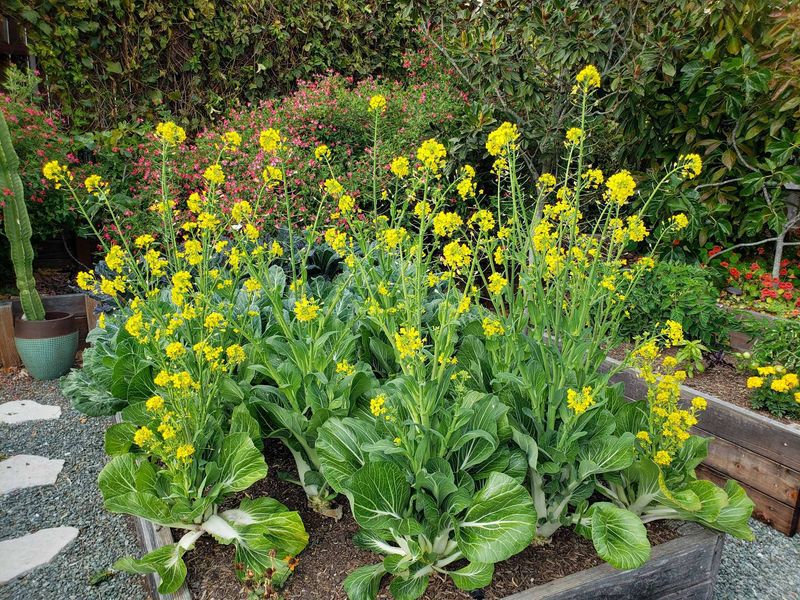
Cut the plant now. Pull out a knife, slice the whole bok choy at the base, and bring it inside while the buds are still closed.
Minnesota Extension advises harvesting the whole plant before the flowers open, and North Carolina Extension gives the same timing. Neither source points to stalk removal as a way to bring back a compact, leafy plant.
Pinching off the stalk may buy a little time in some crops, but it is not a dependable fix for bok choy. Think of harvest as a way to use the crop you have, not a way to undo the bolting.
Rinse the plant, separate the leaves from the stalk, and plan to cook it within a day or two. Any plants in the row that show no stalk yet can be picked a few outer leaves at a time.
The bolted plant can still be edible
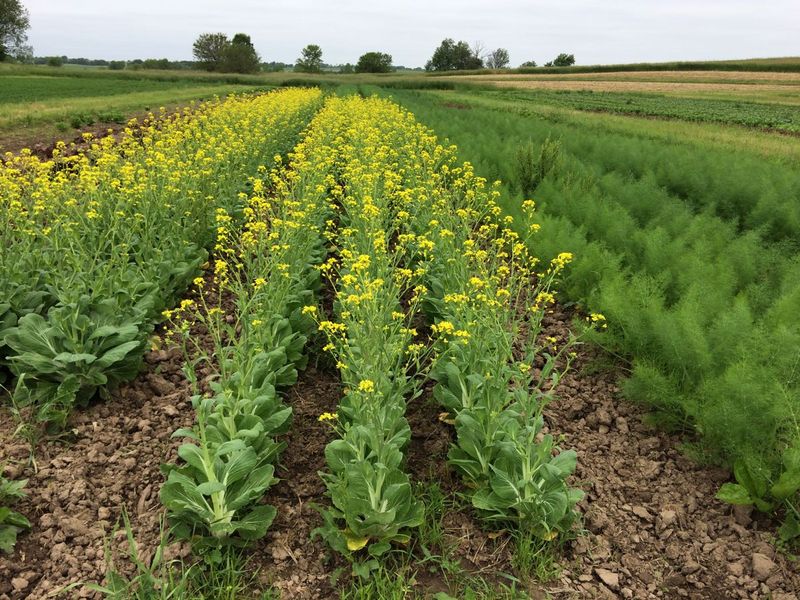
Good news for the cook: bolting does not turn bok choy into a safety problem. Leaves, stems, the flower stalk, and even the flowers are edible, according to North Carolina Extension.
Minnesota Extension suggests using the stalk like broccoli. Peel tough outer skin if needed, then steam, roast, or stir-fry it with garlic.
Edible and delicious are different questions. Some plants may taste stronger or feel firmer after bolting, and others may be fine.
Taste a leaf raw, then cook a small batch before deciding how much to use.
Tender leaves can go into soup or a quick sauté, while sturdier stems may need a few extra minutes in the pan. Yellow blossoms make a pretty garnish on rice or eggs.
Reduce risk with variety, harvest, and steady moisture
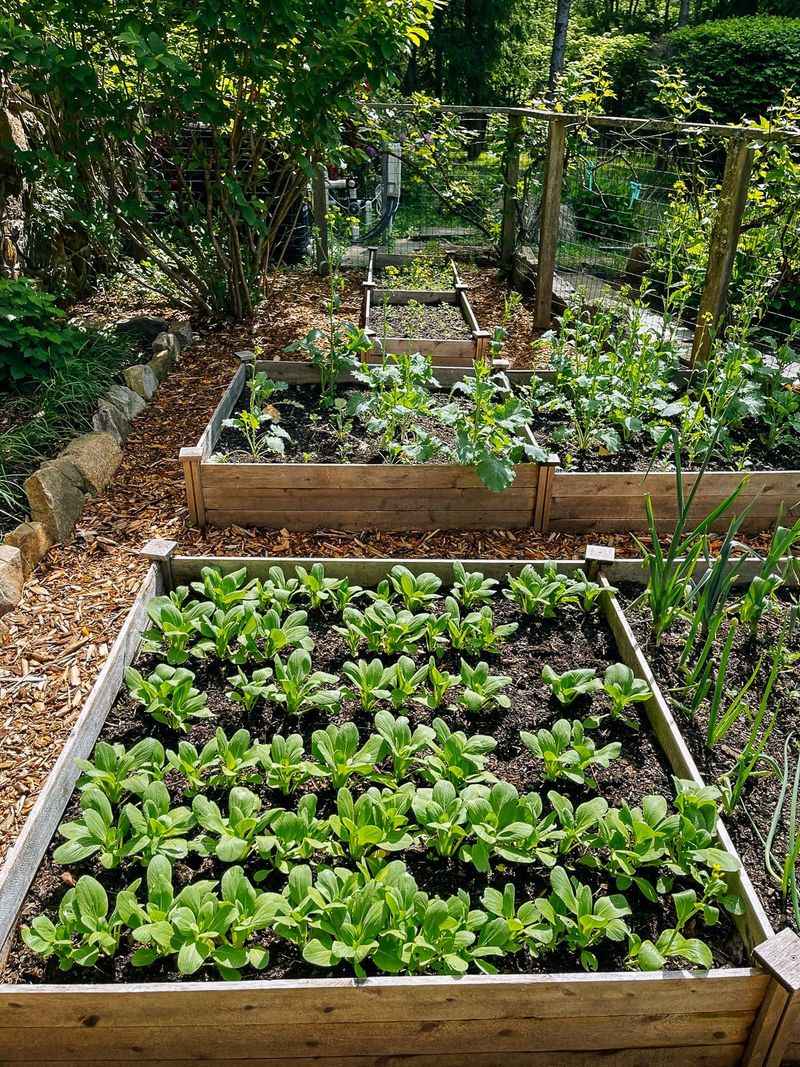
Three habits can lower the odds of bolting next time, though none can guarantee it. First, look for a slow-bolting variety on seed packets or in catalogs.
Second, pick mature plants promptly instead of leaving them in the bed.
Third, keep the soil evenly moist but not soggy. UF/IFAS recommends moist, not wet, soil for bok choy in Northeast Florida, and Minnesota Extension links uneven moisture with poor texture and bitterness.
A layer of mulch and a drip line or a regular watering routine can help hold moisture steady. Watering will not cure a plant that already has a flower stalk, so use it as a support for the next crop.
Staggering plantings every couple of weeks also spreads out harvests, so one sudden change in weather does not catch the whole bed at once.
Use a planting schedule for your region
Planting dates differ across the South, so use local guidance instead of one date. UF/IFAS Hillsborough County puts cool-season planting in Central Florida near October 15.
North Florida is generally about two weeks earlier, and South Florida about two weeks later.
Texas is trickier. The Texas A&M AgriLife fall guide lists dates for five regions but does not name bok choy, so it cannot give you a statewide bok choy date.
Check with your county Extension office for the nearest match.
Bok choy is a cool-season crop that North Carolina Extension covers with southern home-garden planting and harvest guidance, which makes a handy second reference.
Pair a local planting window with a slow-bolting variety, and you cut your risk without ever removing it. A well-timed row still keeps a few surprises up its sleeve.