
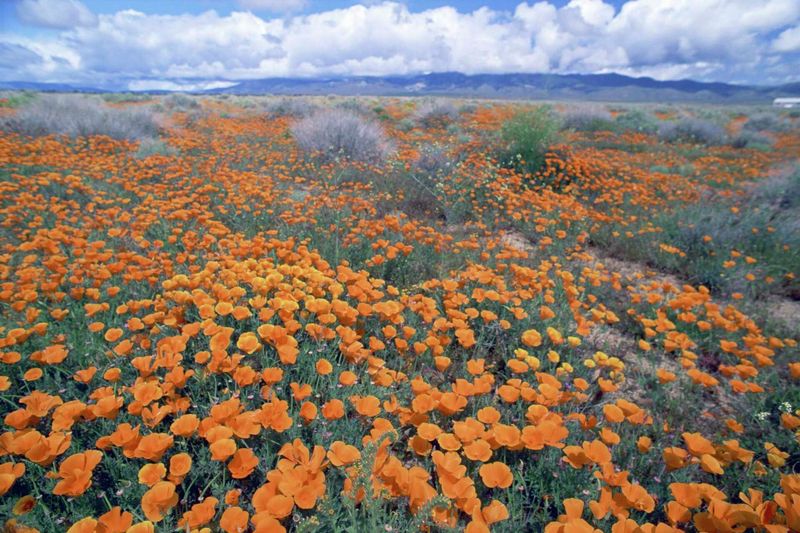
California poppies are one of the easiest wildflowers to start from seed, and fall gives them a head start. Our winter rains can do a lot of the watering for you when they show up on time.
A little planning also helps you lose less seed to wind, rain, and hungry birds. Here is how to set up a bed that gives your poppies their best shot.
Fall sowing can put California’s seasonal rains to work
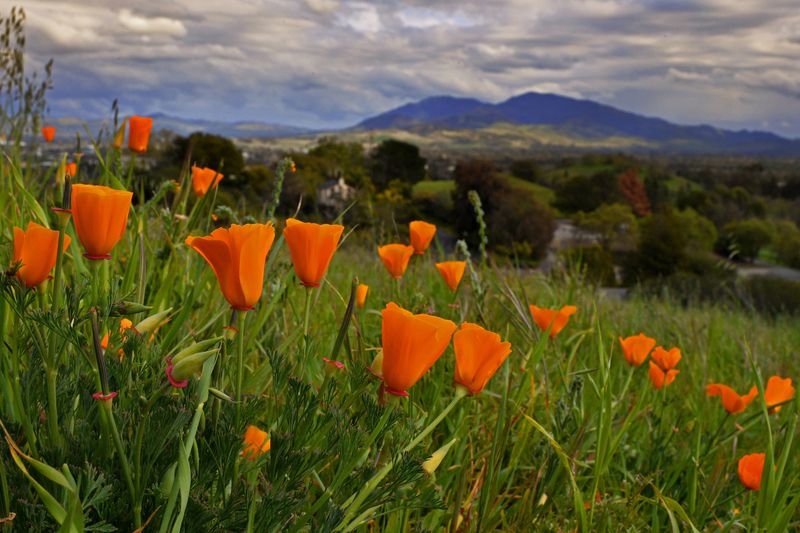
California poppies grow on the state’s wet-winter, dry-summer rhythm. Seeds drop in late spring, wait out the dry months, then sprout when cool rains return.
Sowing in fall copies that pattern, so seasonal rain may supply much of the water the seeds need, as long as storms arrive and the seedbed stays moist.
For timing, Napa County Resource Conservation District describes October through February as the traditional planting window for native seeds. Southern California guidance from a California Native Plant Society chapter also points to fall through early winter, with later sowing possible in that region.
Local conditions matter. A foggy coastal yard, a hot inland valley, and a hillside lot can all see different rain timing from year to year.
If your area has not had a soaking storm yet, you can wait for a forecast with real rain instead of sowing into a dry week.
Spring sowing after the rains have ended is a different story. Napa County RCD notes that those later sowings need irrigation through germination and early growth, which means more hose time and more attention.
Fall sowing does not remove the need to watch your soil, but it can cut the workload when the weather cooperates.
Choose a sunny patch that drains and clear it first
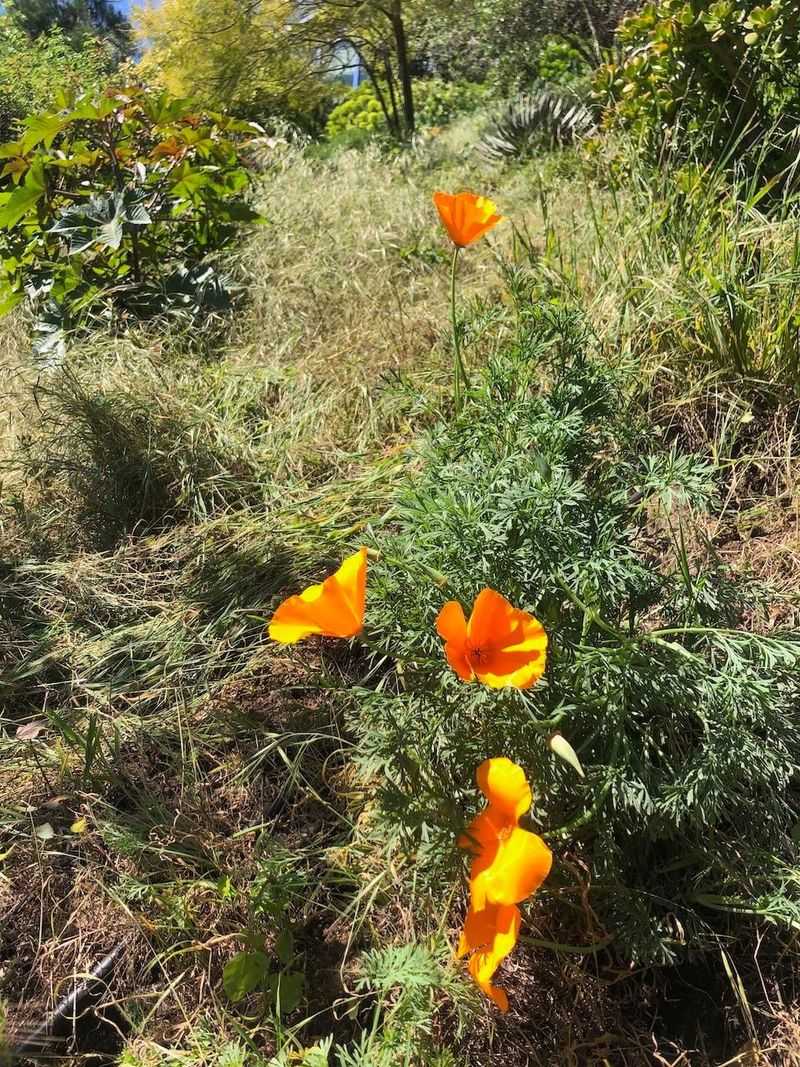
Poppies want full sun. Pick a spot that gets direct light most of the day, away from the shade of fences, large shrubs, and trees.
Plants in too little light tend to get leggy and bloom less.
Drainage matters just as much. Walk the area after a good rain and look for puddles that linger or soil that stays soggy for days.
Those spots can rot seed and seedlings, so skip them or choose a slightly raised area where water runs off.
Next, clear the ground. The USDA Natural Resources Conservation Service plant guide notes that California poppy does not compete well with established grasses.
Weeds that already have roots in the soil will outgrow tiny poppy seedlings and shade them out.
Pull weeds by hand or with a hoe, and remove the roots of grasses, not just the tops. Rake out rocks, clumps, and dead plant debris so the surface is loose and fairly even.
A bare, crumbly seedbed lets seed touch soil directly.
If you are replacing lawn, take your time with this step. Leftover turf is a common reason a wildflower patch looks thin.
Stay away from heavy fertilizer too, since poppies are native to lean soils and do not need rich feeding.
Press the seed in and keep its cover thin
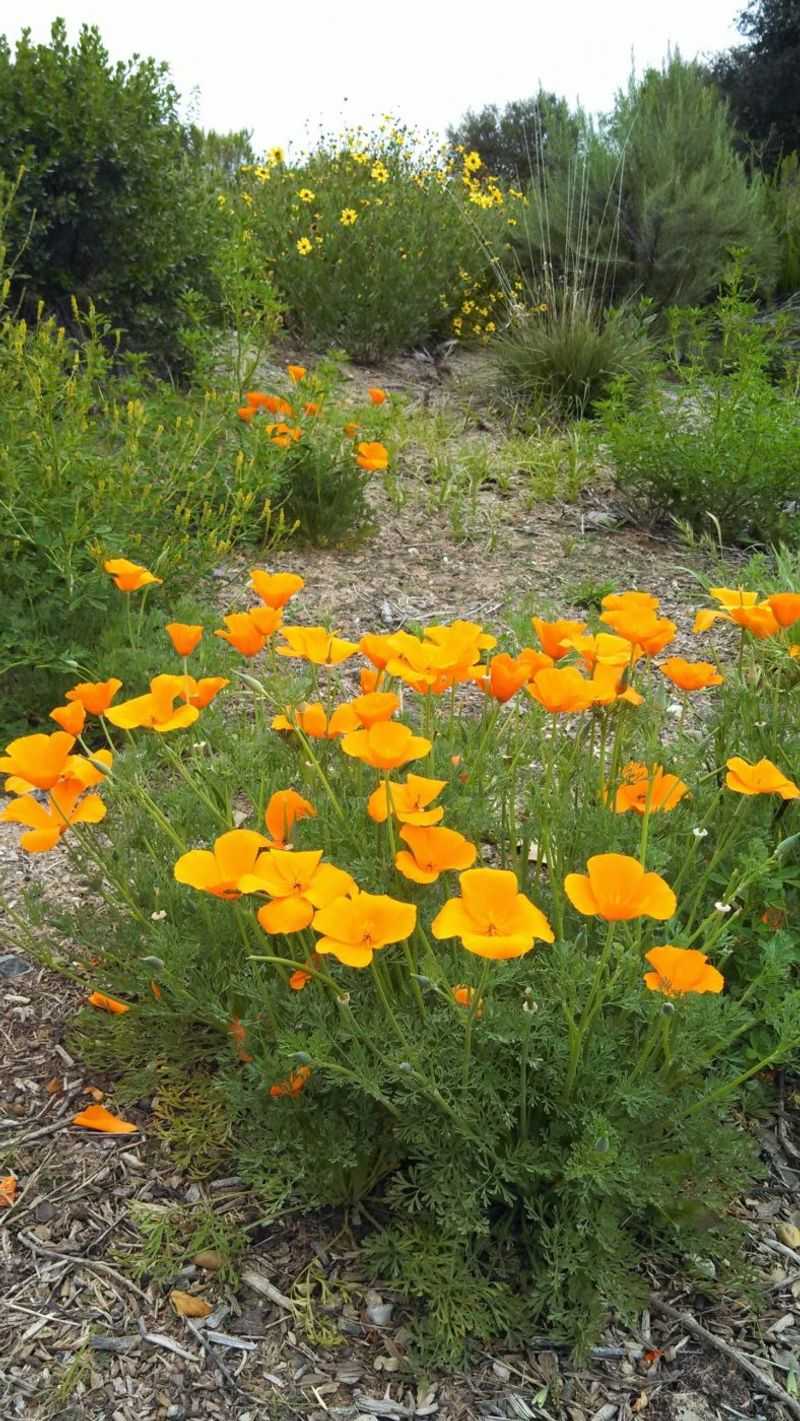
Poppy seed is tiny, so it is easy to dump too much in one spot. Mixing it with coarse sand helps you spread it evenly, and you can see where you have already sown.
Scatter half the mix in one direction, then the rest crosswise.
After scattering, press the seed into the soil. Walk over the patch carefully, or tamp it with a flat board.
This gives seed contact with the ground so it is less likely to blow or wash around.
Keep any cover very thin. UC ANR advice calls for less than a quarter inch of cover with light tamping.
USDA NRCS suggests surface sowing and covering to about one eighth inch for non-dormant seed. Those two ranges fit together: think a light dusting, not a blanket.
Burying seed deeper will not hide it from birds in any dependable way, and it can keep seedlings from reaching the surface. That is why deep planting is not a good garden shortcut.
NRCS does note that dormant seed populations may do better planted deeper, around a quarter to a half inch. That applies to certain wild seed lots, not ordinary garden packets.
Check what your seed supplier says about your seed, and when in doubt, keep it shallow.
Protect the seed without smothering it
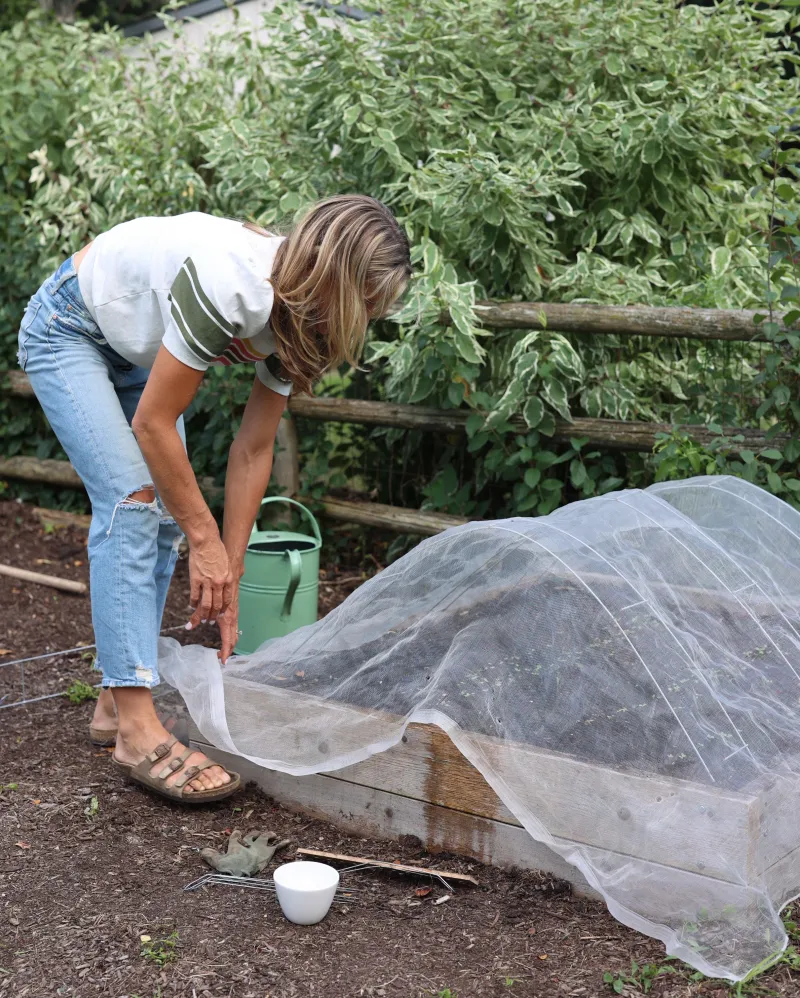
Birds, wind, and heavy rain can all move seed. Two options may help keep it where you put it: a thin mulch or a temporary row cover.
UC Master Gardeners of Contra Costa say light mulch can protect seed from birds while holding in moisture, and they suggest row cover as an alternative. That advice is for native wildflowers in general, not a trial on poppies and birds, so treat it as a sensible tool, not a proven fix.
Go light with mulch. A scattering of weed-free straw or similar material, thin enough that you can still see soil, is plenty.
Thick mulch can block light and keep seedlings from pushing through.
Row cover keeps birds off the bed, but it needs care. Pin the edges firmly with stakes or heavy stones so there are no loose folds.
New South Wales wildlife guidance warns that loose netting can entangle animals.
Check any cover often, and take it off once seedlings are up and protection is no longer needed. Loose netting left alone is a hazard to birds, lizards, and snakes.
Even with these steps, some seed may disappear. Plan on that, and sow a little generously so a few losses will not leave the bed bare.
Let rain lead, but watch the seedbed
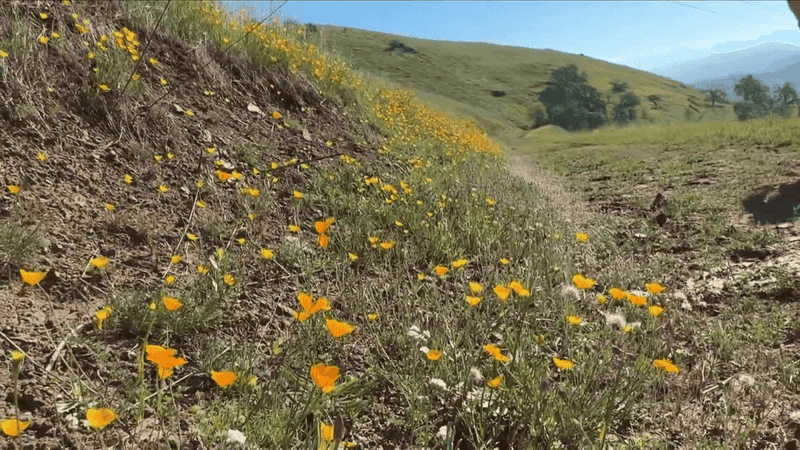
In a normal wet season, storms may deliver most of the moisture your seeds need. Still, rain does not always come on schedule, and a dry stretch of warm, breezy days can pull moisture from the top inch of soil fast.
Make a habit of checking the bed between storms. Poke a finger into the surface.
If it is dry and dusty where the seeds sit, a light watering can keep things going. Napa County RCD guidance ties establishment to steady moisture through germination and early growth.
Use a fine spray or a watering can with a gentle rose. A hard blast can wash tiny seeds into low spots or off the bed.
Water in short sessions so the surface soaks in rather than running off.
Do not overdo it. USDA NRCS points to well-drained conditions for poppies, and waterlogged soil can harm seed and seedlings.
Moist is the goal, not soggy.
Spring sowings are a separate case. Without winter storms behind them, they may need regular irrigation until plants are growing well.
If you sow late, plan your watering from day one.
Sow where you want the plants to grow
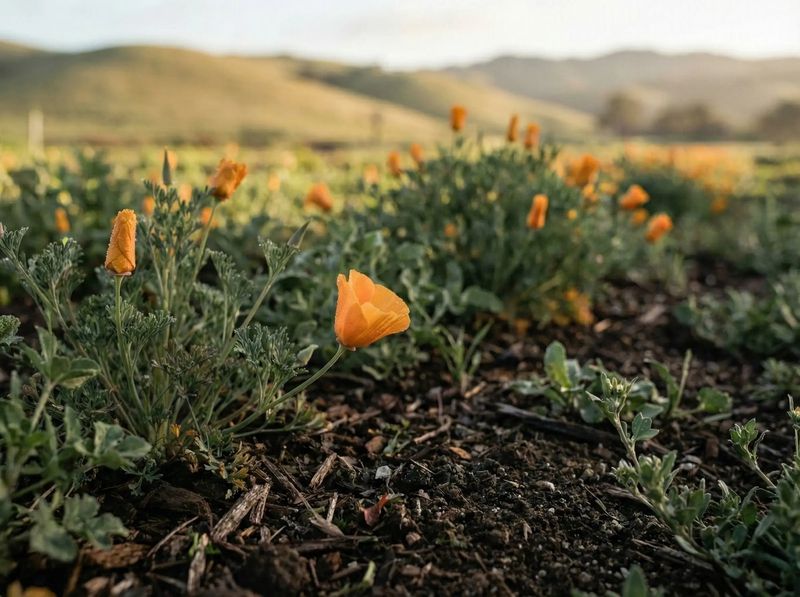
Poppies grow a long taproot, and they do not like being moved. USDA NRCS says the species does not tolerate transplanting well, except when plugs are very young.
For a home garden, the simplest plan is to sow the seed right where you want flowers.
That means picking your spot with care. Think about where color will show best: along a walkway, beside a mailbox, or in a sunny strip near the street.
Mark the edges with stakes or a light line of sand so you remember where you sowed.
You may also see advice that every packet of poppy seed needs a cold treatment before it will sprout. That is too broad.
The same USDA guide reports that domesticated garden varieties generally germinate consistently without special treatment, while some wild populations keep a level of dormancy and may respond differently.
For most homeowners buying packets, there is no need to chill seed in the fridge. Just sow it as described, and let the season do its job.
If seedlings come up too thick, thin a few early rather than digging and moving them. A little crowding is fine, and the plants will fill in as they grow.
A rain-ready bed improves the odds, not the guarantees
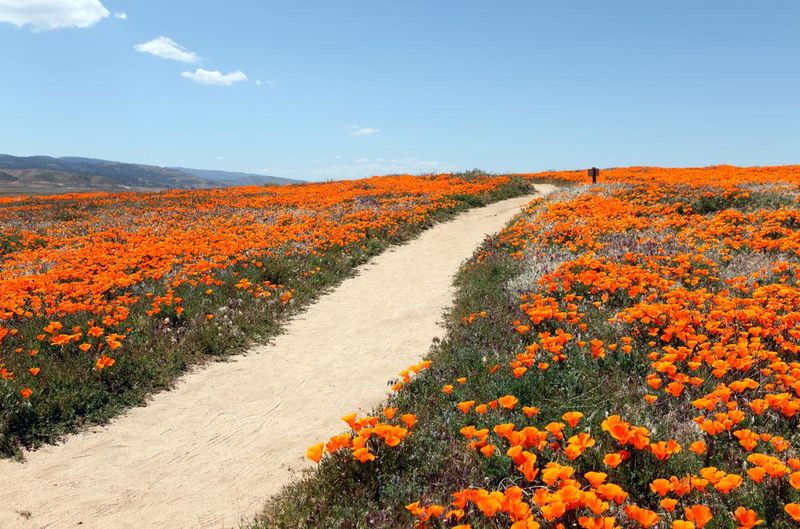
A sunny, clear, well-drained bed, a light hand with seed cover, and a quick soil check between storms all stack the odds in your favor. A thin mulch or a secured, monitored cover can help, as UC ANR notes by also recommending staggered sowing to replace lost seed or seedlings.
Birds may still take some seed, and germination or a thick carpet of blooms is never guaranteed. Keep in mind too that all parts of the plant are toxic if eaten, so keep it away from kids and pets.
Some years the bed fills in, and some years it comes in patchy. Either way, the poppies that make it will often reseed for next season.