
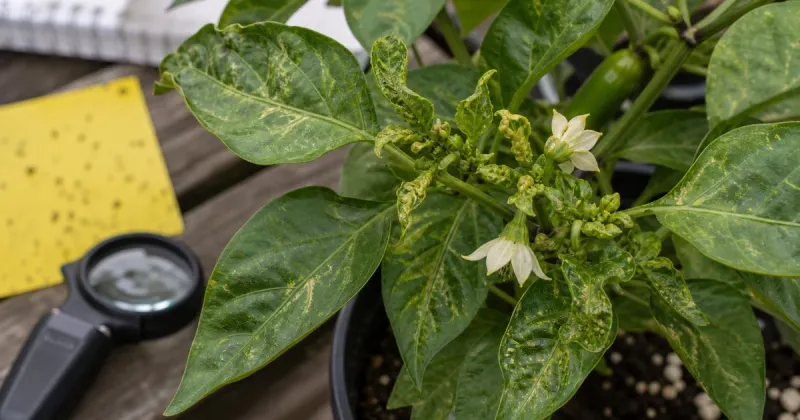
Some of the most stubborn garden pests are too small to see without help. Chilli thrips are one of them, and they feed on plants that many Texas gardeners love, including peppers and roses.
Their damage can show up on new growth before you ever find the insect. Here is how to read the clues, check for the pest, and respond without guessing.
Damage can show before the tiny thrips do
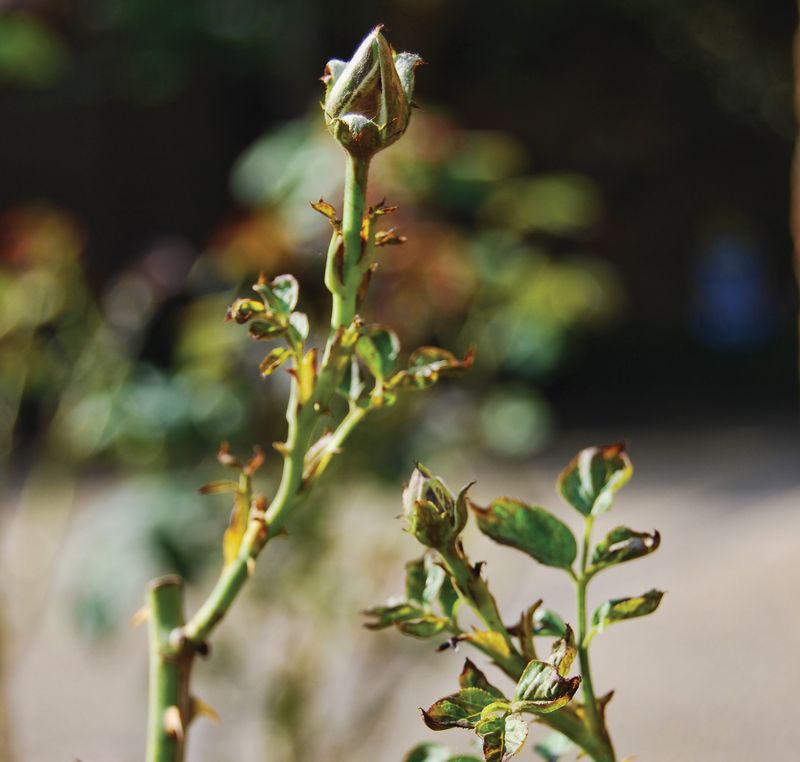
Chilli thrips (Scirtothrips dorsalis) are a nonnative pest, and peppers and roses are among the plants they feed on. According to University of Florida gardening guidance, they cause damage in Florida and Texas.
They feed on young, tender growth, which is exactly the part of a plant most gardeners enjoy watching.
The insects are tiny and hard to identify with the naked eye. Damage may also become more visible only after the affected tissue grows and expands.
That means a gardener can notice odd-looking new leaves before finding a single insect. It does not always happen that way, and some plants show little or nothing.
Here is an important line to draw. A Texas A&M AgriLife Extension publication reports the pest in a Houston residential landscape in November 2007 and across the Houston area by summer 2008.
That shows chilli thrips have been present in Texas. It does not tell us how common or severe they are in Central Texas right now.
So treat this as a pest worth knowing, not a confirmed local crisis. Odd growth on a pepper or rose has many possible causes.
The goal is to learn the early clues, check for the insects, and avoid jumping to conclusions.
Knowing what to look for takes only a few minutes, and it can save you from treating the wrong problem. The sections below walk through the signs, a simple scouting method, and sensible next steps.
New growth offers visible clues
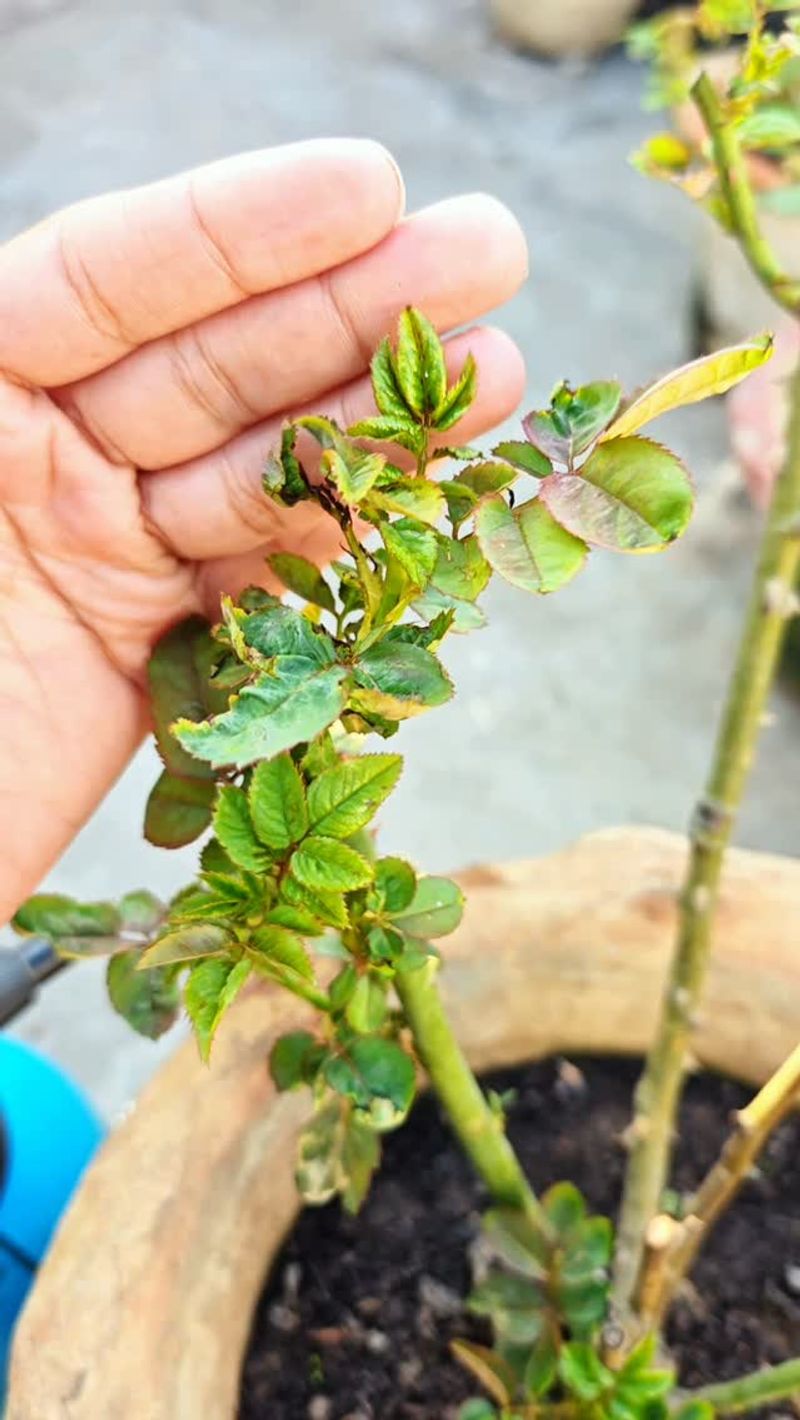
Young growth is where chilli thrips injury tends to appear. On peppers and other hosts, UF/IFAS describes bronzing or silvery discoloration, and leaves that curl upward or turn misshapen.
Buds can be damaged, and shoots may die back.
Roses can show their own version. Look for angular brown marks on new growth, and sometimes leaves that drop earlier than they should.
Because rose and pepper tips are where fresh tissue forms, that is the best place to look first.
A practical habit is to check the newest leaves and the growing tips once a week. Compare them with older leaves lower on the plant.
If only the newest growth looks bronzed, puckered, or scarred while older leaves look normal, that pattern is worth a closer look.
Here is the catch. UC IPM notes that these symptoms are signs to investigate, not proof.
A silvery leaf or a curled tip does not mean chilli thrips are present.
Think of what you see as a reason to scout, nothing more. Take a photo of the damage, note which plants are affected, and move on to checking for insects.
That record also helps if you later ask an expert for advice.
Scout with white paper and a hand lens
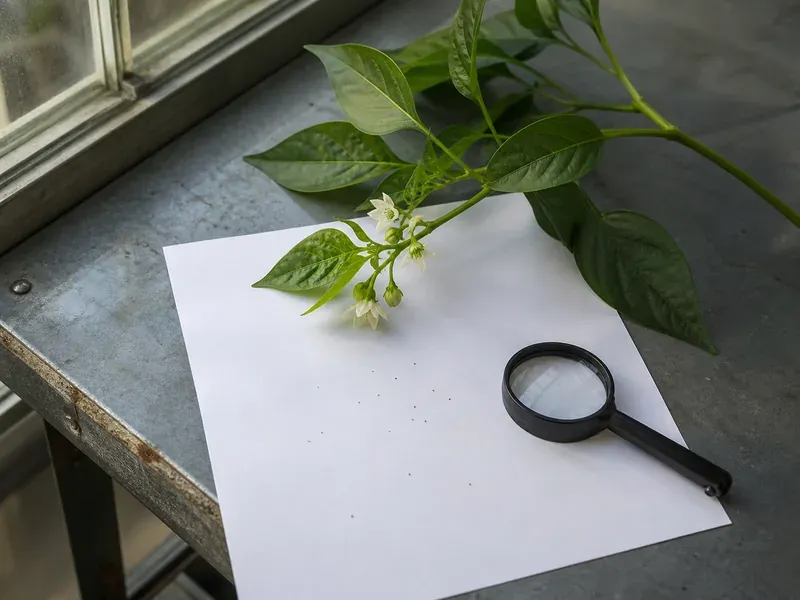
Scouting is simple and needs only two cheap tools. Hold a sheet of white paper under a suspect shoot or leaf, then tap the plant firmly.
Tiny insects fall onto the paper, where you can see them move.
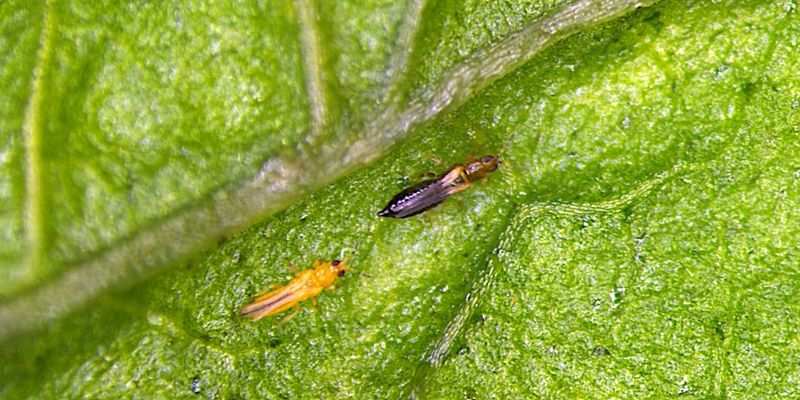
Use a hand lens to look closely at anything that dropped. Adult chilli thrips are pale and less than 1 mm long, as UF/IFAS explains.
That is smaller than a grain of rice, which is why unaided identification is so difficult.
Try tapping a few different shoots, including some with damage and some without. Do it in the morning or in shade so the paper is easy to read.
Write down how many tiny insects you see and which plants they came from.
Even with a lens, a positive match is hard. The Texas A&M AgriLife publication points out that other thrips look similar, so species-level identification can be tricky.
Many thrips in a garden are harmless or even beneficial.
If you suspect chilli thrips, contact your county Extension office. Bring a sample in a sealed container or send clear photos, and ask for help confirming what you have.
A confirmed identification keeps you from chasing the wrong pest.
Similar damage can have another cause
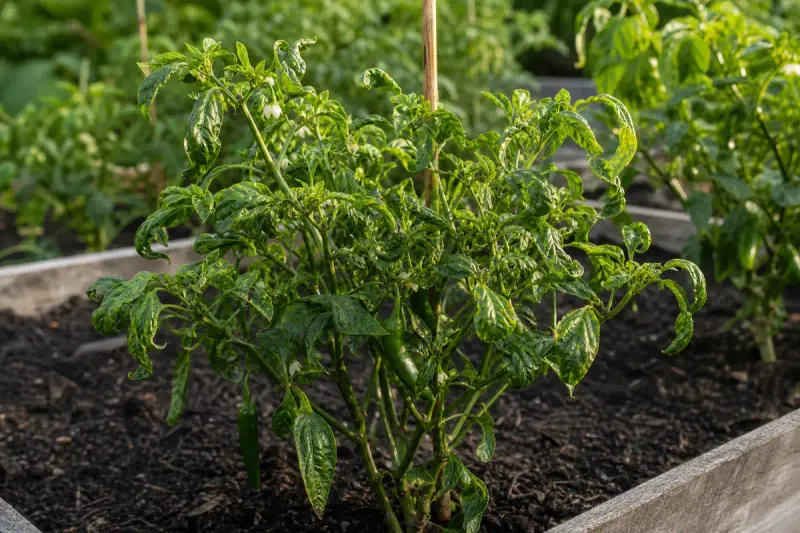
Bronzed, curled, or twisted growth is a common-looking problem with many sources. Herbicide injury can distort new leaves in ways that resemble pest feeding.
Broad mites and spider mites can also leave bronzed, puckered, or stippled foliage.
University of Florida researchers addressed this in a publication on telling apart causes of strawberry plant damage. It lists chilli thrips, spider mites, and herbicide injury as look-alikes, and advises identifying the cause rather than relying on symptoms alone.
The plant is different, but the lesson carries over to peppers and roses.
Some practical clues can help. Did you or a neighbor spray a lawn weed killer recently nearby?
Does damage appear on many different kinds of plants, or only one? Are there fine webs, which point toward spider mites?
Still, clues only narrow the list. UC IPM likewise stresses that you need to confirm the pest before choosing a response.
Treating for the wrong problem wastes money and can harm helpful insects. If you cannot tell what is going on, send photos to your county Extension office before you spray anything.
Sanitation and steady scouting support prevention
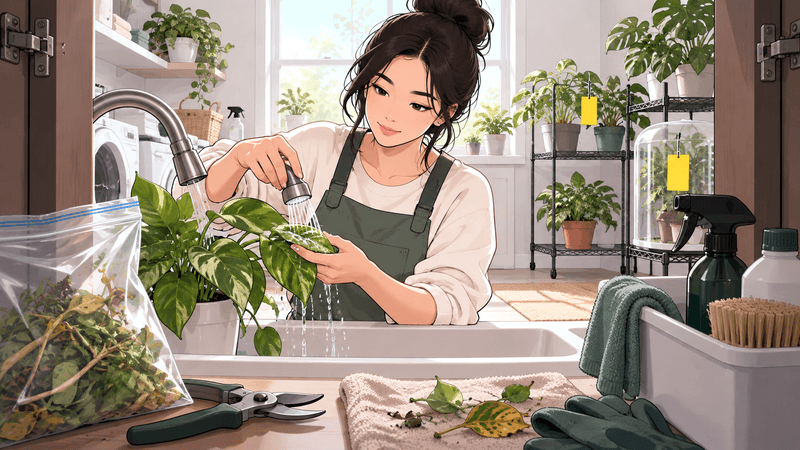
Regular inspection is your first line of defense. Check susceptible plants often, especially the young growth, since that is where chilli thrips feed.
A few minutes each week with a hand lens catches problems earlier than an occasional glance.
Cleanup matters too. UC IPM advises removing weeds and infested plant debris, because thrips can survive in that material.
Bag suspect clippings and fallen leaves and throw them out rather than adding them to the compost pile.
A good example is pruning damaged rose tips. Drop the trimmings straight into a bag instead of leaving them under the bush.
Pull weeds around pepper beds as well, since they can shelter insects between crops.
Natural enemies also help. UF/IFAS lists minute pirate bugs and predatory mites as predators of thrips.
Protecting them means avoiding unnecessary sprays that kill beneficial insects along with pests.
Keep expectations realistic, though. Released natural enemies need to be present early, and they will not control a population that is already high.
Think of them as steady background support rather than a rescue.
Together, scouting, sanitation, and a garden friendly to predators give you a calm, low-risk routine. None of these steps guarantees you will avoid chilli thrips, but they reduce the places the pest can hide and help you notice trouble sooner.
A spray cannot erase injury or guarantee control
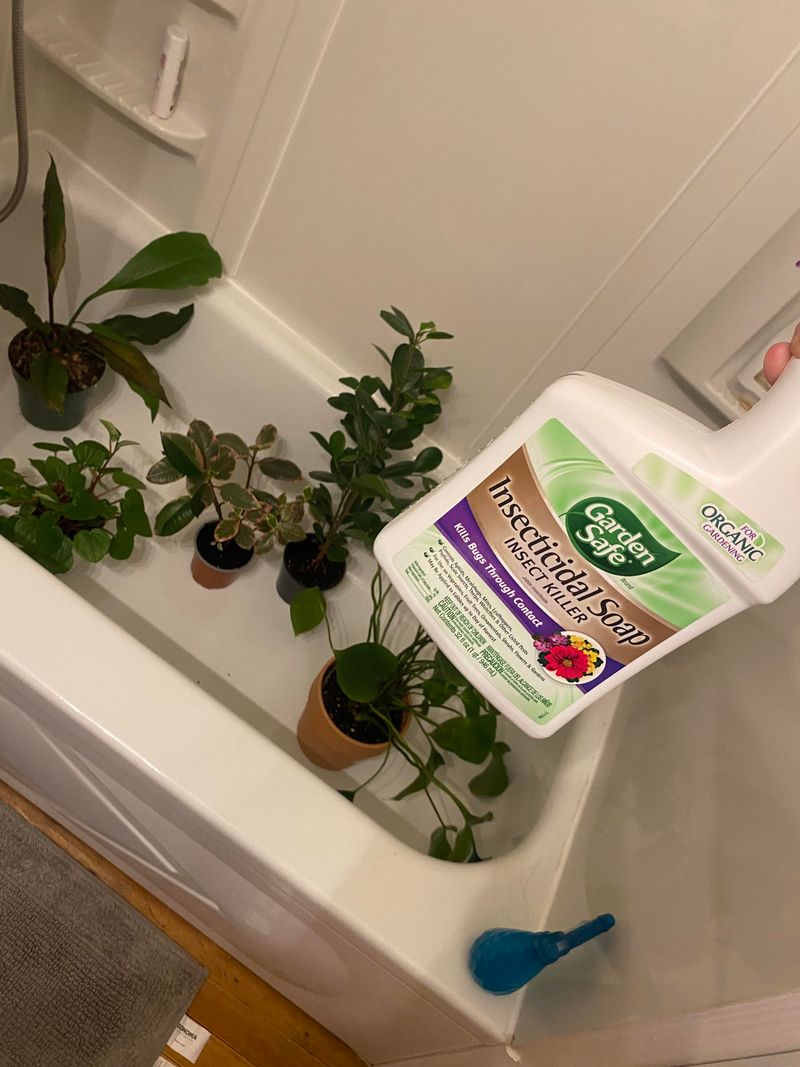
Sprays tend to get more credit than they deserve. According to UC IPM, no insecticide provides complete control of chilli thrips, and resistance is common.
They are also generally resistant to pyrethroids, a common class of garden insecticides.
Spraying also cannot fix what has already happened. Injured foliage stays marked until it drops, is pruned, or is replaced by new growth, a point UC IPM makes about thrips damage.
A bronzed leaf will not turn green again.
If you still consider a pesticide, the product label is your rulebook. The EPA’s labeling requirements explain that labels carry legally enforceable directions.
Check that the label covers your plant, the pest, and the application site.
Pollinators deserve attention, especially on flowering roses and peppers. UF/IFAS notes that spinosad can be highly toxic to bees while wet.
The EPA’s pollinator labeling information shows that some labels restrict use on flowering plants.
This article does not recommend a product, a homemade recipe, or a timing schedule. Results vary by product and thrips species, so avoid unproven mixes.
Confirm the problem first, then let the label guide any choice you make.
Check first, then choose a response
Start with what you see. Notice odd new growth on a pepper or rose, tap a few shoots over white paper, and look closely with a hand lens.
If something tiny turns up or the cause is unclear, ask your county Extension office to help confirm it.
Until you know, stick to sanitation and regular monitoring. Current sources show chilli thrips have been reported in Texas, so caution makes sense, but they do not show a widespread outbreak in Central Texas.
A careful look beats a quick guess every time.