
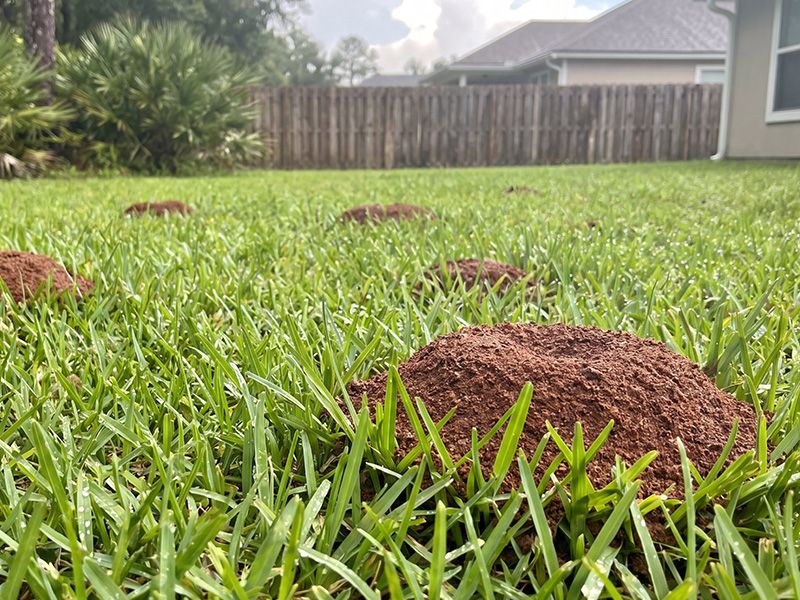
You walk out after a rainy week and spot a dome of loose soil in the grass that was not obvious before. Next door, the lawn looks perfectly smooth.
Rain, sunshine, soil history, and where colonies happen to sit all play a part in what you see. Knowing which clues mean something and which do not can save you time, money, and a few painful stings.
Rain can make mounds easier to notice
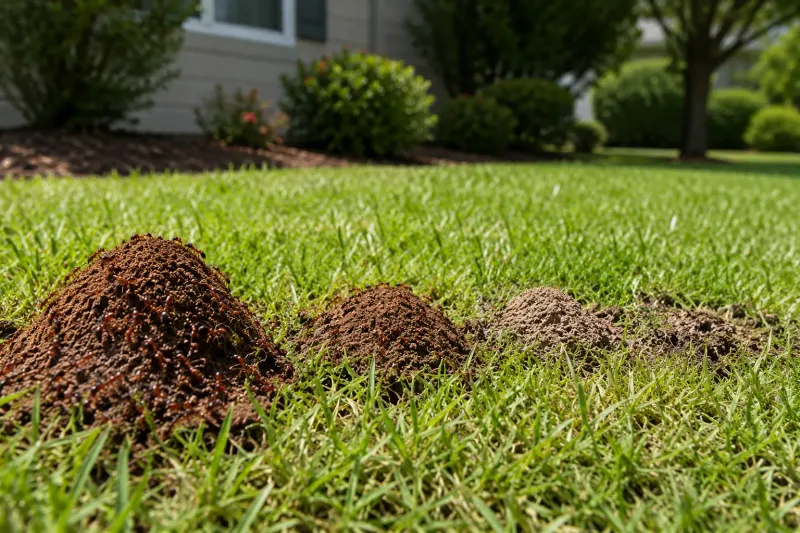
Soggy soil changes how fire ants behave, and that is often why a mound seems to appear overnight. Texas A&M extension specialists explain that workers move brood in response to wet conditions, which can bring ants and fresh soil nearer the surface.
A colony that was already there simply becomes easier to spot.
Saturated ground can do more than that. When soil floods or stays waterlogged, colonies may shift upward or relocate to higher ground, as described on the UF/IFAS Ask page on fire ants.
So a mound that pops up in a drier corner of your yard may be a colony on the move, not a brand-new infestation.
Neither observation shows that rain made ant numbers climb. Visibility and movement are different things from population growth, and a mound after a storm is not proof of repeated rebuilding either.
Nor is every new dome a separate colony, since one colony can build several mounds.
Fall rain is a perfectly reasonable time to notice all this, because many Floridians are back outside tending lawns and beds. Still, it is not a special season when rain uniquely triggers mound building.
The same thing can happen after a heavy summer or spring storm.
Mating flights are a separate event. UGA Extension notes that flights tend to follow rainy periods and are most common in spring and fall, but winged ants taking off are not the same as a mound suddenly showing up.
What yard conditions suit fire ants?

Red imported fire ants are not picky about soil. They live in many soil types, but they clearly favor open, sunny spots, and lawns fit that description well.
UGA Extension guidance also lists cleared and disturbed ground as common habitat.
Think of bare patches after construction, fresh fill dirt, a new sod install, or soil churned up by a utility trench. Those are the kinds of places where colonies often settle.
That is a pattern across many properties, not a diagnosis of why your particular yard has mounds.
Mowing is a good example of how tricky the cause can be. A study of central Florida pastures found that soil disturbance history mattered, while mowing alone was not significantly associated with mound density.
That does not mean lawn care never matters anywhere. It means ordinary mowing should not take the blame by default.
It also helps to be honest about what you cannot promise. Adjusting irrigation, changing soil, or tweaking your routine has not been shown to keep ants away.
Habitat clues are useful for understanding what you see, but they are not a recipe for a mound-free yard.
A practical step is simply to notice where mounds cluster. Sunny edges, recently disturbed ground, and thin turf are worth a look, and they can guide where you watch most closely after the next rain.
Why might a neighbor’s lawn look clear?
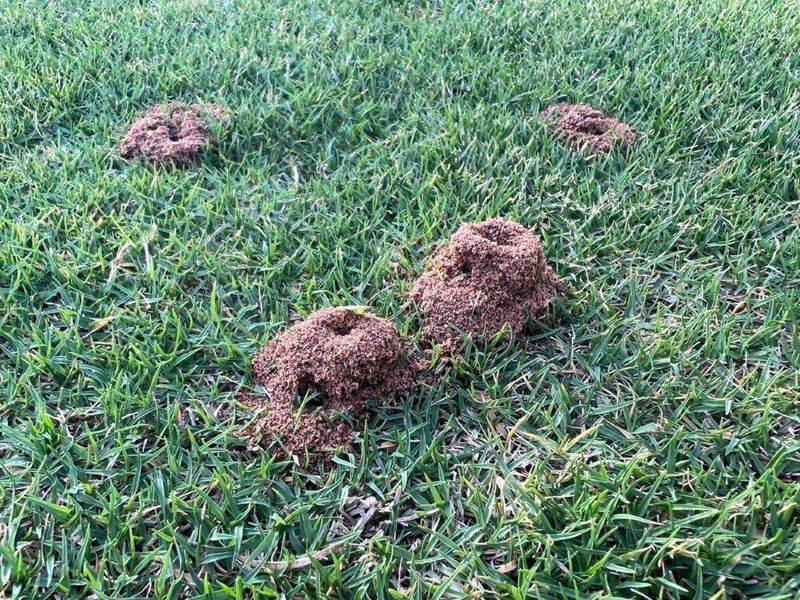
Comparing two lawns feels like it should have a clear answer, but mounds are only the visible tip of the story. Colonies are scattered unevenly across neighborhoods, so one yard may simply sit on top of an active colony while the next does not, at least for now.
Social form adds another wrinkle. UF/IFAS describes how some colonies have multiple queens, and those colonies can spread across many closely spaced mounds.
Single-queen colonies tend to show fewer mounds in the same area.
That said, you cannot work backward from a mound count. Ten mounds in a corner could be one sprawling colony or several, and a lone mound does not reveal the size of what lives beneath it.
UGA Extension makes the same point: what you see on the surface does not map the whole colony.
A smooth-looking lawn next door also tells you little. Colonies may be present but quiet, or located under shrubs, pavers, or mulch beds where they are harder to see.
A neighbor might also have treated recently, and reinvasion can happen later.
So the honest answer is that nobody can name one cause for your pair of yards. A clear lawn does not prove your neighbor does something different, and there is no guaranteed method to copy.
Confirm the ant before treating

Plenty of ants build mounds, and not all of them are fire ants. Treating the wrong species wastes product and can leave the real problem untouched.
UGA Extension stresses confirming identification before choosing any control.
A mound by itself is not enough to pick a treatment. Soil piles can come from other ant species, and what looks like a fresh mound may belong to something harmless.
Take the time to check before you spend money.
If you are unsure, reach out for help. UF/IFAS Gardening Solutions recommends contacting your local county Extension office when identification is uncertain.
Staff there can help confirm the ant and talk through options that suit your site.
Photos can be useful when you call or visit, so snap a clear picture from a safe distance. Do not poke the mound to get a better look, because disturbed fire ants swarm and sting quickly.
Once you know what you have, the next decision is whether treatment makes sense at all. A mound appearing after rain does not automatically call for action, especially if it is away from walkways, play areas, and pet spots.
Choose control by the label
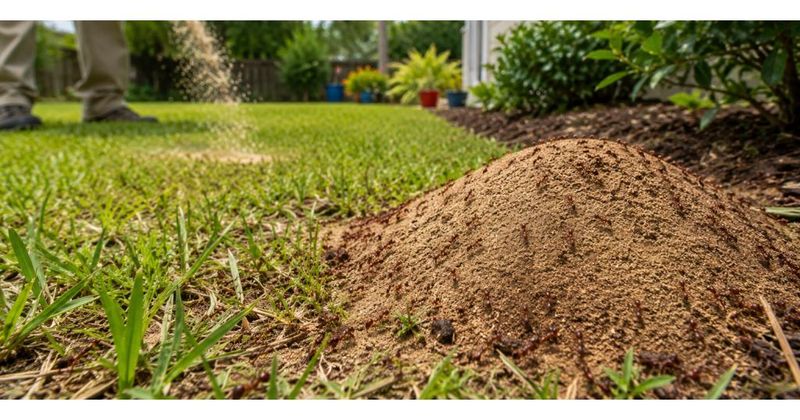
Fire ant products vary a lot, and the label is the rulebook. Choose one that is labeled for your specific site, such as a lawn, garden bed, or play area, and follow every direction on it.
If the label does not list your site, that product is not the right pick.
Baits are a common option, and they rely on worker ants carrying the granules back to the colony. That means ants must be actively foraging for bait to work.
UGA Extension explains that baits are applied to dry ground and grass when rain is not expected, as product directions specify.
Timing around weather matters for that reason. Bait that gets soaked may lose its punch, and ants may not forage on saturated ground.
Read the label for its guidance on dry conditions and forecast rain before you spread anything.
Set your expectations, too. Baits are not instant, and colonies often take days or longer to decline.
UF/IFAS notes that untreated areas nearby can send ants back, so results can fade.
Finally, a mound that shows up after rain does not by itself require treatment. If it is in a low-traffic corner, you can watch it, confirm the ant, and decide on your own timeline with the label in hand.
Protect people and pets, and plan for reinvasion
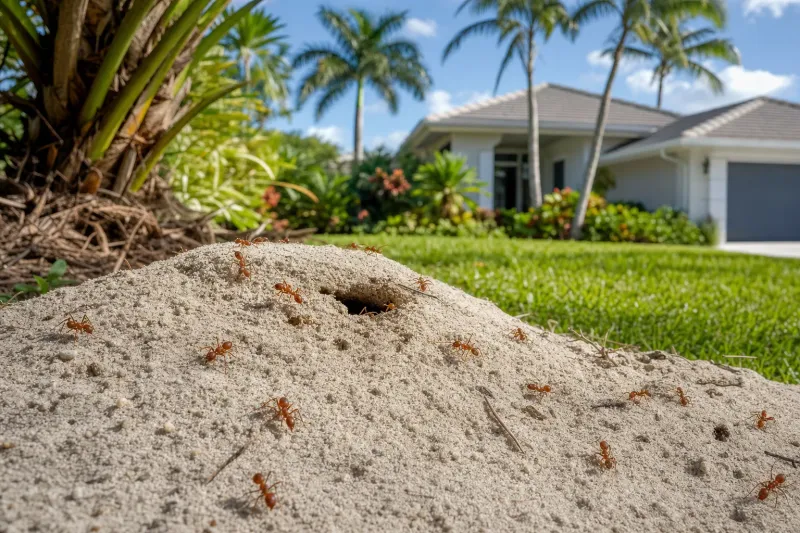
Keep kids, adults, and pets well away from active mounds. Fire ants can sting repeatedly, and a disturbed colony defends itself fast.
UGA Extension advises caution around mounds, so teach children to look before they sit or play in the grass. If someone has a worrying reaction to stings, contact a medical professional or emergency services.
Skip the household remedies. Gasoline, solvents, bleach, and similar chemicals are hazardous, can kill plants, and may contaminate soil or groundwater.
Gasoline in particular is strongly discouraged.
Boiling water is sometimes mentioned, and it can eliminate some colonies. It is not fully reliable, though, and it carries serious burn risks for you and damage risks for nearby plants.
Treat it as an imperfect method rather than a safe fix.
Plan for the long game as well. UF/IFAS notes that colonies can reinvade treated areas and populations may recover, so no treatment guarantees permanent eradication.
In Florida, the ants are part of the landscape, and the goal is managing them where people live and play. A mound after rain is mostly a message that something was already there.