
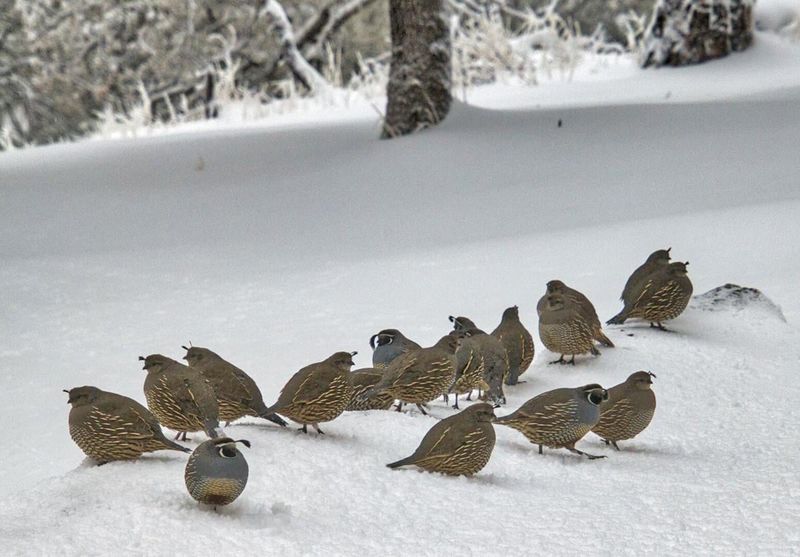
Maybe you glanced out the window one cold morning and saw a parade of plump, topknotted birds scurrying across the yard. California quail often look like they showed up overnight once fall arrives.
Really, they may have been nearby all along, and their habits just make them easier to spot. Here is what is going on, and how a California yard can be a welcoming stop on their rounds.
Fall coveys can make familiar quail easier to notice
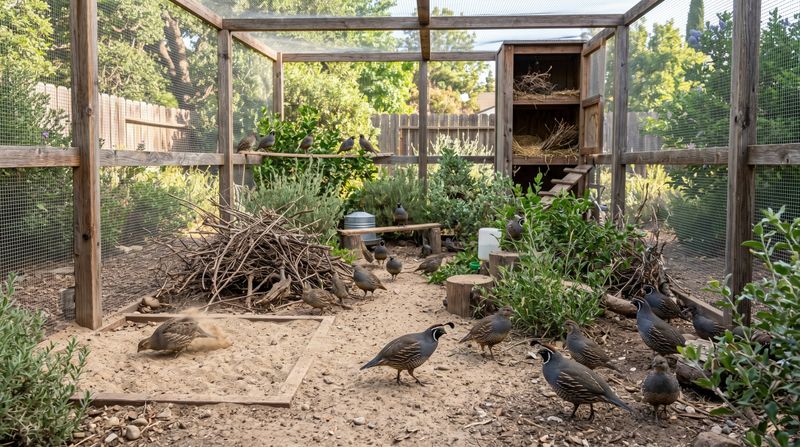
Late in the year, California quail change how they group up. According to Cornell Lab of Ornithology, they form coveys in fall and winter, and these flocks often grow out of family groups that stayed together after the nesting season.
A summer yard might have hosted one pair, quietly tucked into brush. By November, that pair and their grown young may be moving as a bunch of a dozen or more.
A crowd of birds crossing a lawn is simply much harder to miss than a single shy bird.
That is the key point for a backyard watcher. Seeing a covey does not mean quail just arrived in your neighborhood, and it does not tell you why they walked through your particular garden.
Nothing you did caused the grouping. It is a seasonal habit that plays out across hillsides, vacant lots, farm edges, and yards.
The California Department of Fish and Wildlife life-history account describes the same pattern of seasonal grouping and wider movement. Think of fall as the season when quail go from background characters to a very visible parade.
If you want to learn what your local covey is up to, try watching at dawn and dusk. Those are the times when birds tend to feed and travel, and you may notice the same route being used on several mornings.
A backyard is only part of a wider range
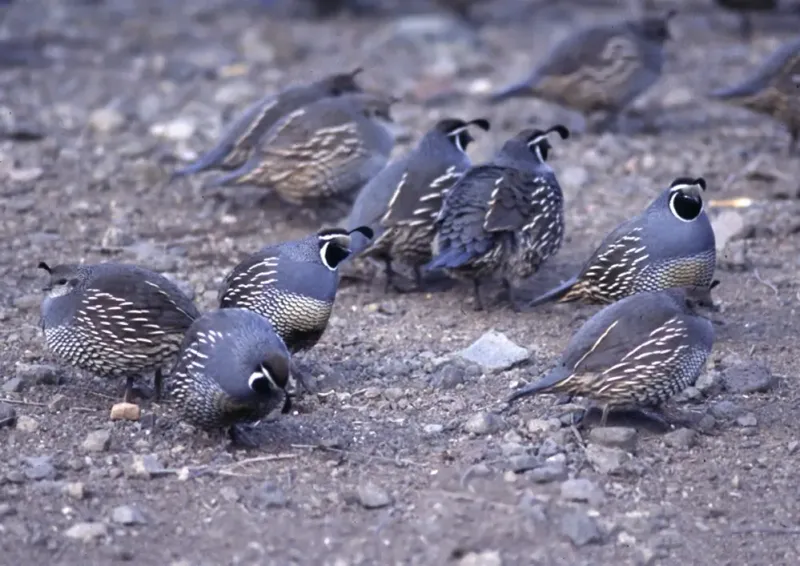
California quail are generally non-migratory. They do not fly off to a distant winter home and return in spring.
In winter, though, they roam over a larger area than they do in summer, and that is why a covey can seem to appear and vanish.
The California Department of Fish and Wildlife account gives one picture of how large that area can be. In a study of just four coveys, the average winter range was about 26 acres, and the individual ranges ran from 17 to 45 acres.
That is a small sample, not a rule for every covey in the state.
Still, the numbers help you picture the scale. A typical residential lot is a fraction of an acre, so your yard is likely one stop on a much longer loop that may include neighbors’ gardens, creek corridors, and open slopes.
That changes what success looks like. A covey that visits on Tuesday and skips Wednesday is not rejecting your yard.
It is doing what quail do, working across a broad landscape. Your garden can be a good stop, and the birds decide how often to use it.
Quail need a patchwork of cover and open ground
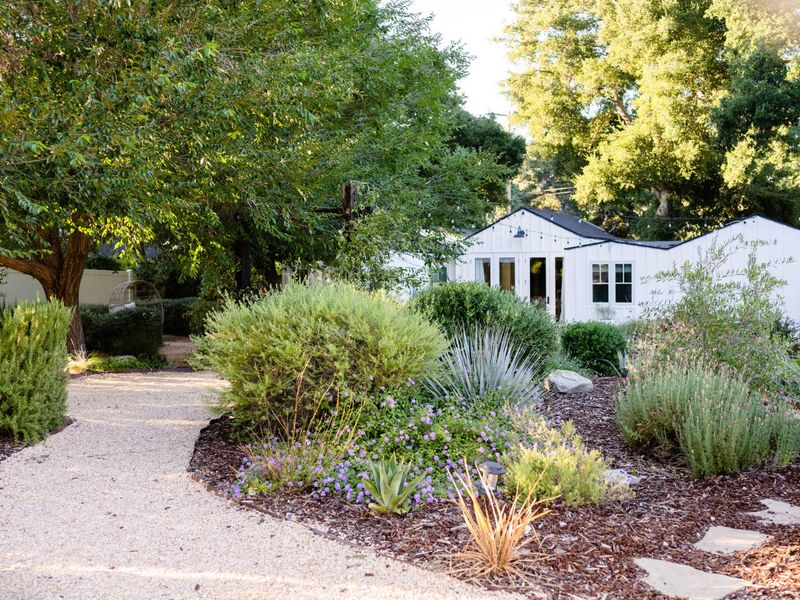
Quail habitat is a mosaic. According to the California Department of Fish and Wildlife, brush and trees give protection, while grassy or forb-filled openings give birds places to feed on the ground and in low vegetation.
Both parts matter. Quail seldom venture far from cover when they feed, so a wide, bare lawn leaves them exposed.
A thick wall of shrubs with nothing open beside it gives shelter but little to eat.
Picture a yard where a cluster of shrubs flows into a patch of native grasses and wildflowers, then back to another shrub group. That layout lets a covey step out, scratch around, and dash back under cover if a hawk passes.
Here are a few ways to check your own space:
Walk the yard and note where a bird could duck under cover within a few quick steps. Look for open ground with enough room to move but not so much that it feels like a runway.
See whether your cover connects to a neighbor’s shrubs or wild land beyond the fence.
You may not be able to rebuild a whole yard, and you do not need to. Even one connected corner can add something useful, though it cannot guarantee a covey will drop in.
Native plants can provide shelter and natural food
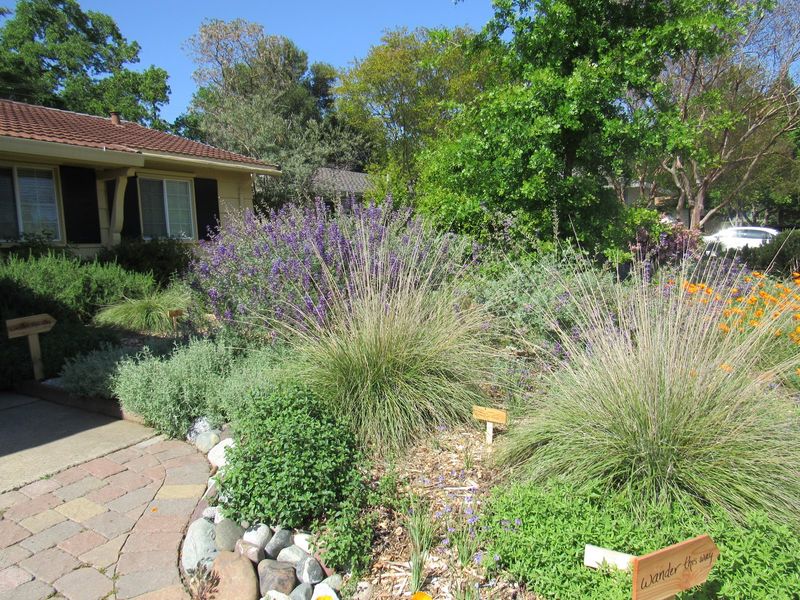
Native plants do two jobs for quail at once: they shelter birds and grow the food they eat. Quail feed on seeds, especially legumes, along with green plant material, grains, fruit, and arthropods, as the California Department of Fish and Wildlife account explains.
Chicks eat many insects and other arthropods.
For shrubs and forbs, UC Marin Master Gardeners suggest options such as California lilac (Ceanothus), coffeeberry, toyon, sage, deerweed, lupine, clover, and buckwheat. A CDFW question-and-answer page also points California gardeners toward native plantings for quail.
Use shrubs like toyon and coffeeberry for cover, and let lower plants such as lupine, clover, and buckwheat fill the open spaces where birds can forage.
No single list fits every California yard, though. A coastal garden in Marin, an inland valley lot in Sacramento, and a hillside in San Diego County have different rainfall, soil, and heat.
Check which natives do well locally, ask a nearby native plant nursery, and match plants to sun, drainage, and fire-safety rules in your area.
Planting natives also saves water once they are established, which suits most California yards well. Expect it to take a season or two before the plants offer real cover and seed.
Water matters most in hot, dry conditions

Quail do not need a water dish every day of the year. In cool weather, they can meet their needs from dew, succulent plants, and arthropods, according to the California Department of Fish and Wildlife.
Hot weather changes things, and free water is needed daily.
That matters in California, where long dry stretches can come early or hang on into fall. In places where natural water is scarce, a shallow, ground-level dish is one option, as noted by UC Marin Master Gardeners.
It is a choice, not a requirement.
If you add one, keep it shallow so small birds can stand at the edge, and set it near shrubs so quail can approach under cover. Placing a few flat stones inside can help.
Rinse it often and refill with fresh water, since stale water can get grimy fast.
If your yard is near a creek, pond, or neighbor’s water source, a dish may add little. If your area is hot and dry, it may be a more useful feature.
Either way, it is one piece of the habitat, and it will not by itself hold a covey.
Seed may attract quail, but it cannot make them stay
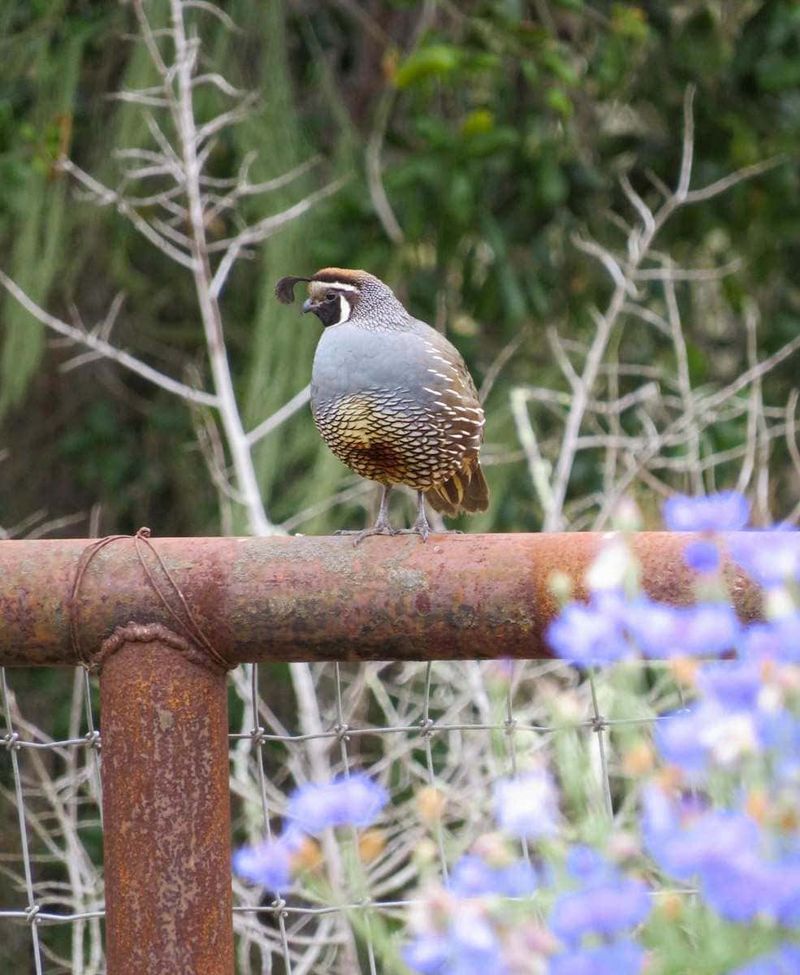
Tossing seed on the ground is tempting, and it can work to draw a look. Cornell Lab of Ornithology notes that ground-level birdseed can attract quail.
The catch is who else shows up. UC Marin Master Gardeners warn that seed on the ground may also attract rats.
And USDA Wildlife Services advises against feeding wildlife in general, since feeding can crowd animals together and raise the risk of disease and conflict.
So the advice differs, and the sensible way through is to start with habitat. Native cover, open foraging ground, and natural seed sources give quail what they look for without the rat problem or a crowded feeding spot.
Seed is not necessary for quail, and it is not harmless. It also will not reliably hold a covey, since the birds roam across many acres in winter and will follow food wherever they find it.
If you are still tempted, think about the neighbors, your own trash and compost, and whether rats are already a problem on your street. Putting the effort into plants usually pays off for more seasons.
Protect ground nests and reduce risks from cats
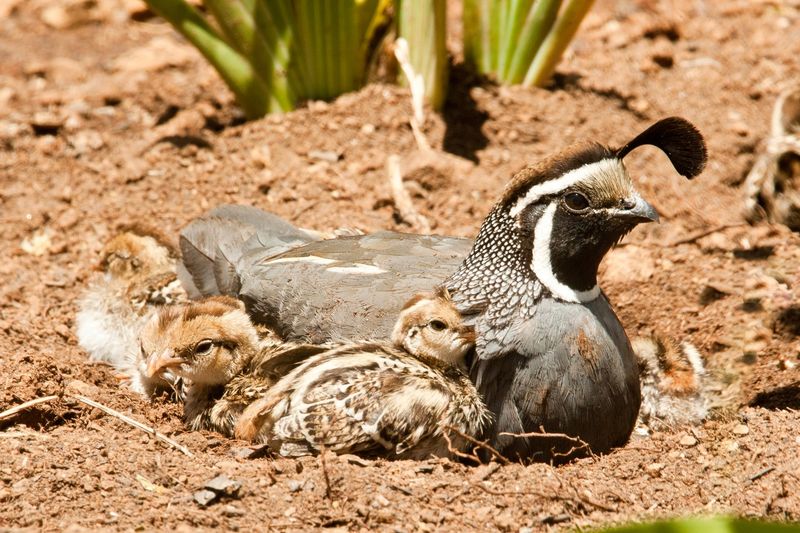
Quail nest on the ground, and the nests are hidden among vegetation. Most nesting happens from April through August, with a peak in May and June, according to the California Department of Fish and Wildlife.
A nest can sit in a tuft of grass you would never think twice about.
That is why spring and summer yard work calls for care. Before mowing, trimming, or clearing brush, walk the area slowly and look for flushing birds or a shallow bowl in the grass.
If you suspect a nest, leave that patch alone and work around it. Do not move eggs, chicks, or adult birds.
Cats are the other risk. The CDFW account and UC Marin Master Gardeners both point out that domestic cats threaten ground nests and birds.
Keeping cats indoors, or at least out of quail habitat, is one of the most direct ways to help.
This work may feel unrelated to winter coveys, but the fall birds you enjoy are often the young raised in these hidden nests. Careful spring work helps decide who is in the covey next fall.
Support a visit, then let the covey come and go
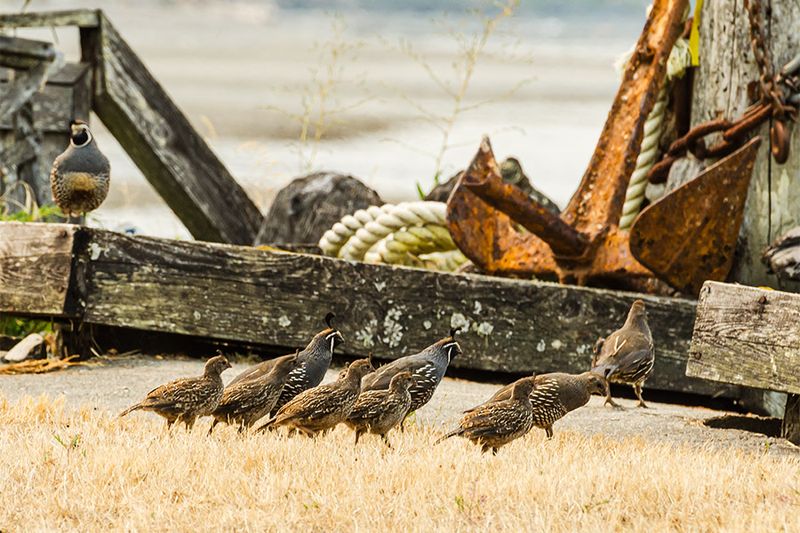
A mix of cover, open foraging space, natural food, and water suited to the season can make your yard a welcoming stop. The California Department of Fish and Wildlife reports winter ranges far larger than a typical lot, so quail will move on and may return another day.
Supporting wild quail also means leaving them wild. Keeping native quail in captivity generally requires a Domestic Game Breeder’s License, and CDFW explains that wild quail may not be trapped to start a captive brood.
Plant well, keep the cats in, and let the birds set the schedule. The best quail garden is one that is ready, whether or not the covey strolls through today.