
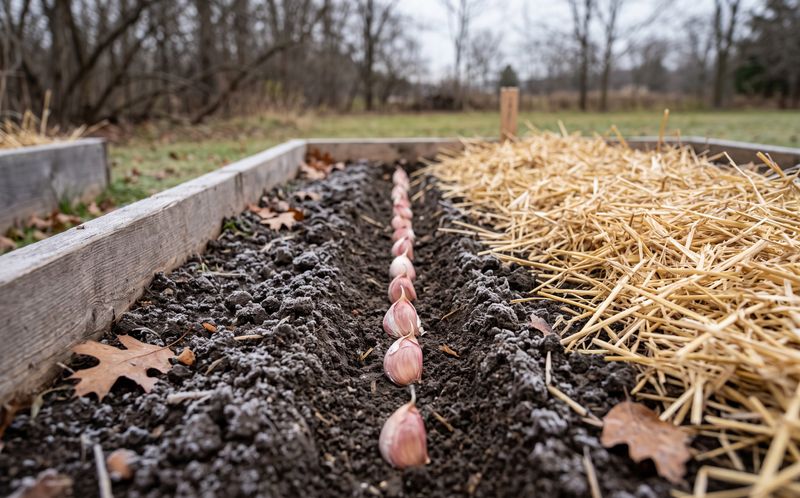
Few things are more discouraging than finding fresh garlic cloves sitting on top of the soil after a cold snap. Winter weather can push shallow cloves upward, especially when the ground freezes and thaws again and again.
The good news is that a few simple choices at planting time can lower the risk. Here is how to plant garlic in the South so it has a better shot at staying put and growing well.
Freeze–thaw swings can lift shallow cloves
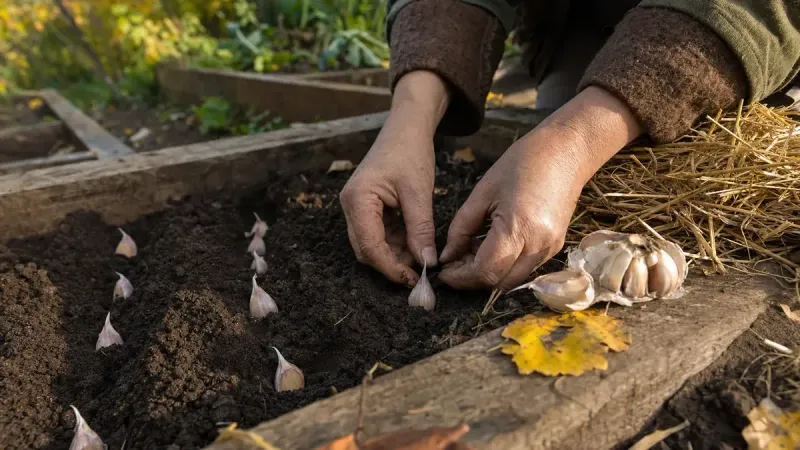
Garlic that sits too close to the surface can get bumped out of place. The Southeastern vegetable handbook from UGA Extension warns that shallow cloves can be dislodged by rain, birds, or heaving from alternate freezes and thaws.
Notice the key words: alternate freezes and thaws. Heaving is linked to the ground freezing, warming, and freezing again over winter or early spring.
One hard freeze does not predictably pop cloves out of the ground, so there is no need to panic after the first cold night.
Where winters swing back and forth, though, shallow cloves have less soil holding them down. Rain can wash soil away from them, and birds may scratch at loose spots.
A clove that ends up lying on the surface is exposed to cold, and it may dry out before roots can anchor it.
Two habits can lower the odds. One is planting at a suitable depth, and the other is covering the bed.
Illinois Extension recommends straw mulch to prevent frost heaving. Both steps reduce the risk, but neither one wipes it out, so check your bed after stormy or freezing weather and gently press any loose cloves back into place.
Choose a planting depth for your region
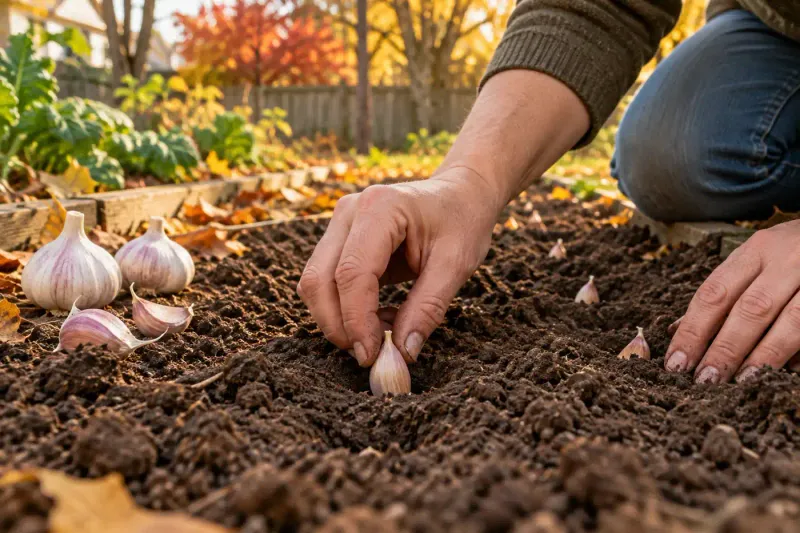
Depth advice changes depending on who you ask, so it helps to follow the guidance closest to home. Georgia Extension recommends planting cloves 1 to 3 inches deep.
LSU AgCenter recommends 2 to 3 inches. The Southeast handbook words it differently, saying soil should cover the clove tops by 1 to 1.5 inches.
These numbers describe depth in somewhat different ways, so pick one source for your area and stick with its wording instead of blending them into a single rule.
Why does depth matter? Cloves set too shallow have less soil above them, which raises the chance they get displaced during freeze-thaw swings or by rain and birds.
Going extra deep is not the answer either. The handbook cautions against planting so deeply that soil interferes with bulb swelling.
Aim for the range your local extension office gives, and use a ruler or a marked stick the first time so you are not guessing.
Set cloves upright in a well-drained bed
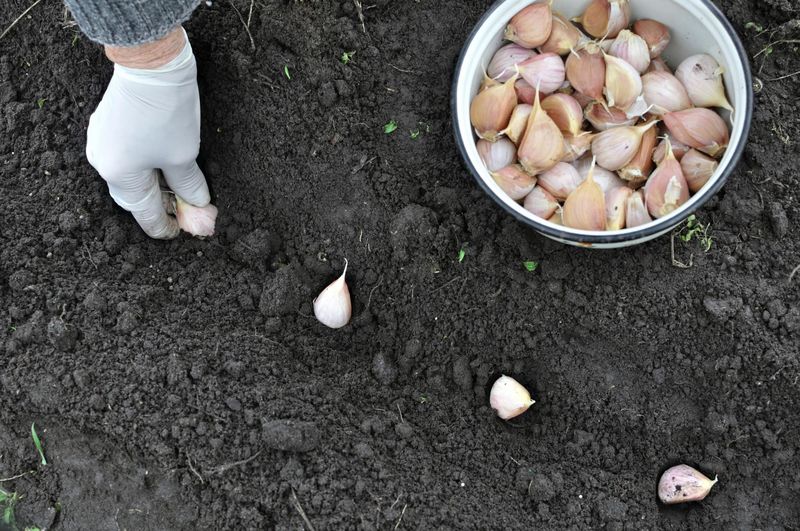
Once you have your depth sorted out, pay attention to which end points where. Georgia, LSU, and the Southeast handbook all describe setting cloves upright, with the pointed tip up and the flat basal, or root, end down.
Cloves tossed in sideways may waste energy turning toward the surface.
Bed choice matters just as much. Georgia Extension recommends a well-drained bed.
Garlic sitting in soggy ground through cool, wet months can struggle, so a spot where water drains away is a smart pick.
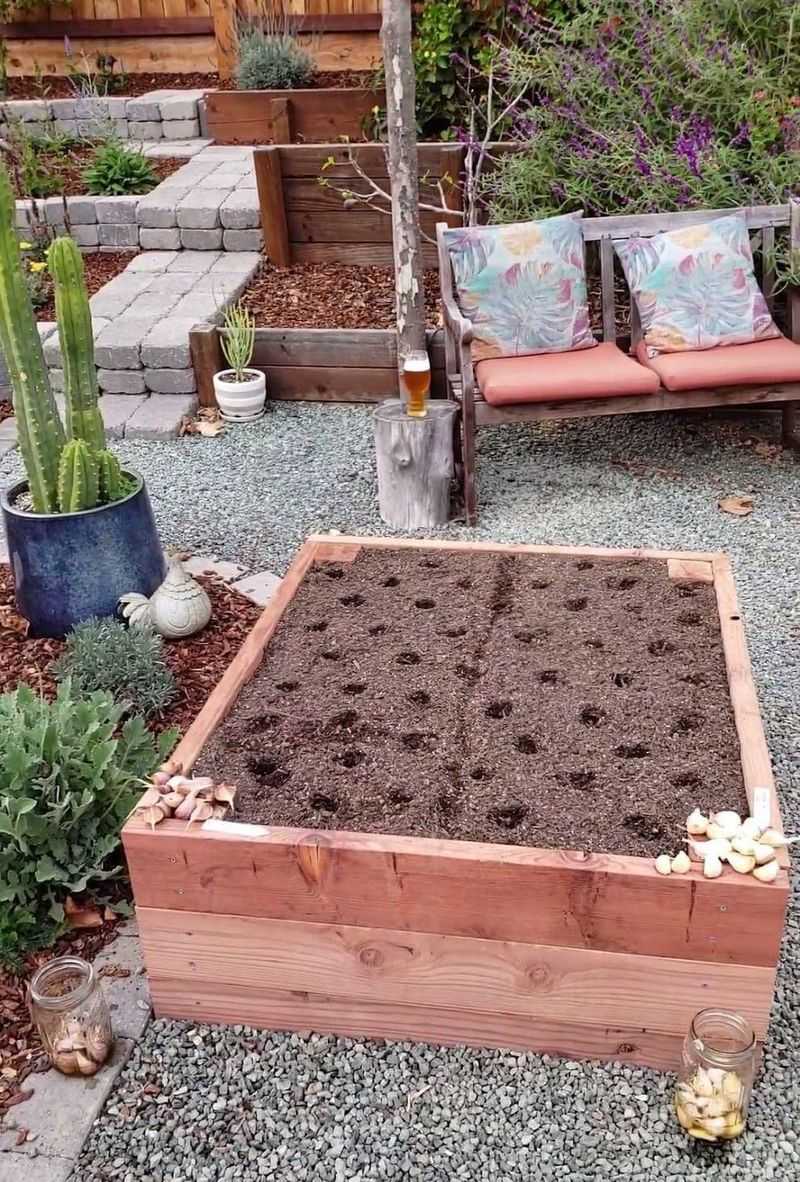
If your yard holds water after storms, consider building up the planting area. LSU AgCenter advises raised rows or beds where drainage is an issue.
That can be as simple as mounding loose soil into a long ridge or filling a wooden frame.
Before planting, loosen the soil and break up clumps so roots can spread. Space cloves out in rows, press each one in by hand, and cover the holes so nothing is left exposed.
Use mulch to reduce risk, not promise protection
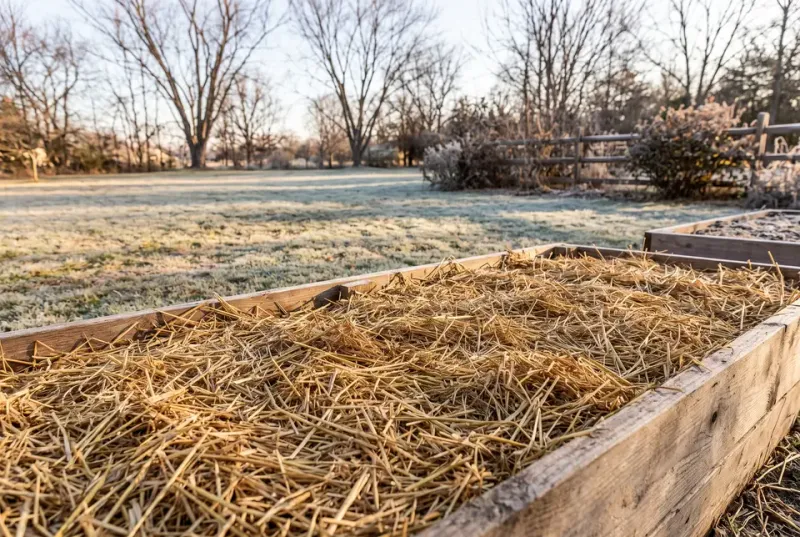
A blanket of straw can take some of the sting out of winter. Illinois Extension recommends straw mulch to help prevent frost heaving, since it keeps the soil surface from swinging as sharply between frozen and thawed.
Georgia Extension adds that mulch can protect bulbs from severe cold and help conserve moisture. Those are two useful jobs in one layer.
Still, mulch lowers risk and does not guarantee cloves stay put. A heavy rain or a determined bird can still shift things, so look over the bed now and then.
How much should you spread? There is no single answer for the whole South.
Guidance from colder states may call for thicker layers than a mild Gulf Coast garden needs, so treat those numbers as a comparison and not a recipe. Start with a modest, even layer of straw, keep it loose enough that shoots can push through, and adjust based on your local winters and advice from your county extension office.
Match planting time to your part of the South
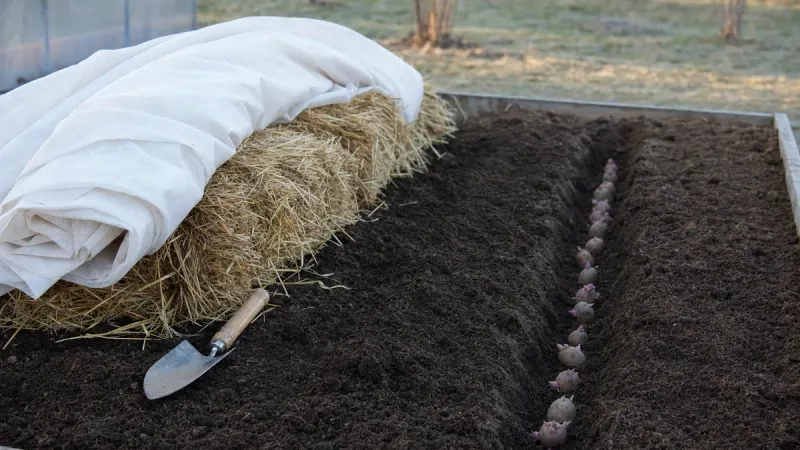
November works for some Southern gardeners, but it is not the right month for everybody. The South covers a lot of ground, and extension offices give different windows.
UF/IFAS says Florida garlic can go in from late fall through early winter, and it recommends softneck varieties such as Artichoke or Creole. Georgia Extension gives a window of late September through November.
In Louisiana, LSU AgCenter has recently recommended September and October. Texas gardeners can use a different yardstick: Texas A&M AgriLife Extension gives fall planting as 4 to 6 weeks before the first freeze.
So how do you decide? Look up your own county extension office for a local planting calendar, and compare it with your average first-frost date.
Planting inside your local window gives roots time to settle in before cold weather arrives.
Set up the crop for healthy bulbs
Keeping cloves in the ground is only half the job. Big bulbs come from a combination of things, and depth and mulch are just two of them.
Georgia Extension says larger planting cloves yield larger mature bulbs. It also points to variety, plant growth before bulbing, adequate moisture, cool-weather exposure, and longer spring days as factors in how well bulbs develop.
That means you can help your garlic before it even hits the soil. Choose healthy, plump cloves from a variety suited to your area, and save the biggest ones for planting.
Then keep the soil evenly moist during dry spells so the plants can build strong leaves.
When planting day arrives, keep the priorities simple. Follow your local depth and timing guidance, set cloves upright in a well-drained bed, and add mulch to lower the risk of heaving.
No harvest size is guaranteed, but these steps stack the odds in your favor.
Garlic rewards patience, and the bed does most of its work while you wait.