
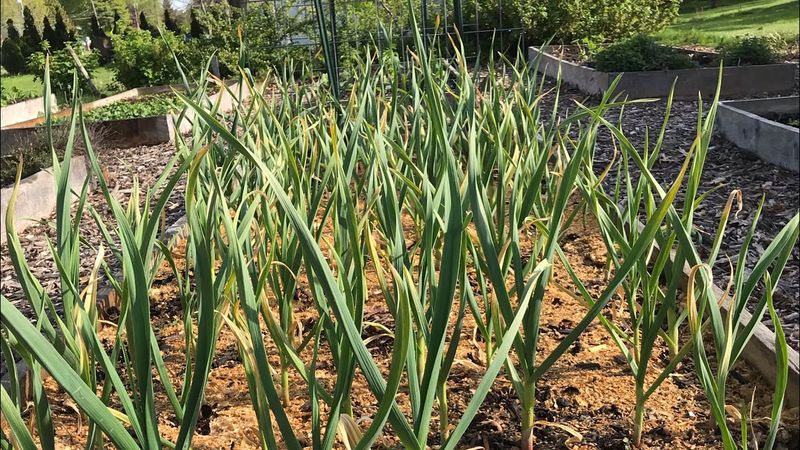
You walk out to the garden and your fall garlic looks tired, with yellow or floppy tops. Wet soil may raise the risk of rot, but the color of the leaves alone cannot tell you what is going on.
A few quick checks at the soil line can show whether you have a moisture problem or something else. Here is how to look, what to adjust, and when to call for backup.
Yellow tops alone do not diagnose wet-soil rot
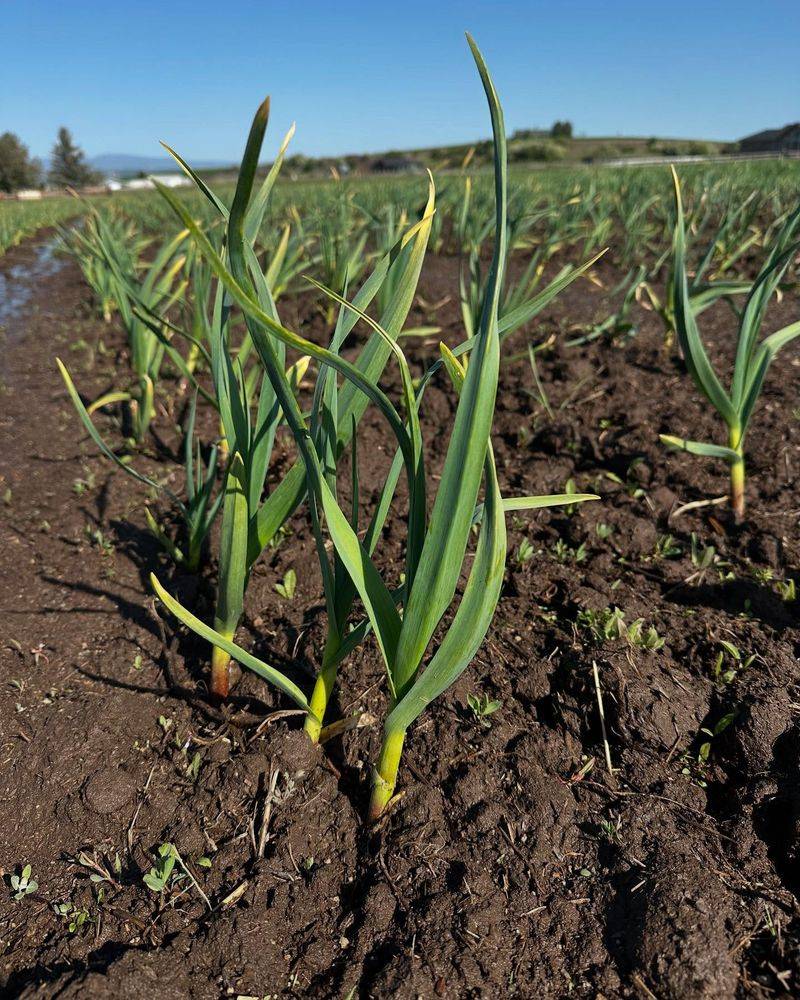
Rainy weeks make gardeners nervous, and limp garlic leaves seem to confirm the worry. Still, a droopy or yellow leaf is a reason to look closer, not proof of a cause.
Garlic does best in moist but well-drained soil, and UGA Extension garlic guidance notes that excess water can cause “wet feet” and bulb rots.
Wet soil is only one suspect, though. A University of Minnesota diagnostic guide lists several rots, onion maggot, and nitrogen deficiency among the possible reasons garlic leaves yellow and wilt.
So treat a rainy spell and limp foliage as clues. Clues tell you where to start looking.
They do not tell you to spray, feed, or dig up the whole bed.
What you find at the soil line matters
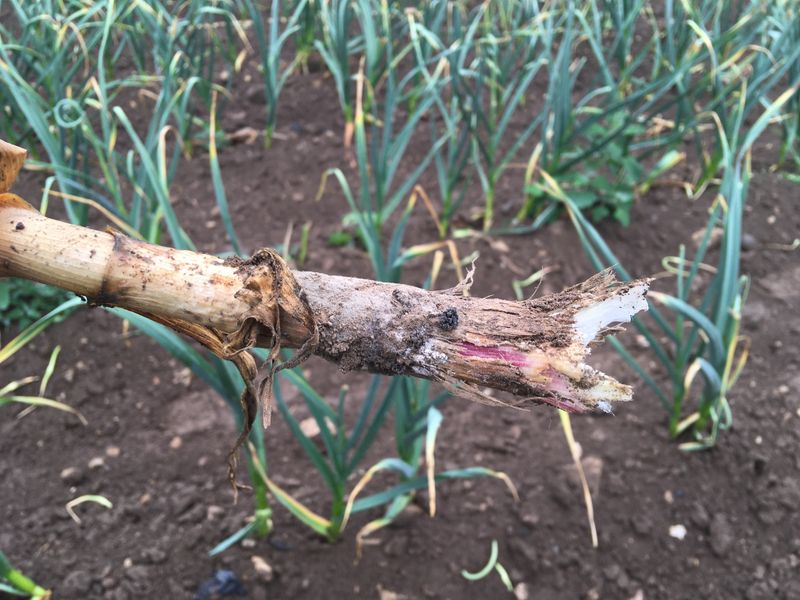
Pick one or two affected plants and look at the base. Leaves that look limp after a soaking rain are a milder clue.
Soft or water-soaked tissue right at the soil line is more worrying.
If you gently loosen the soil, check the roots and the bulb too. University of Minnesota guidance on soft garlic necks describes a water-soaked stem at soil level as a sign worth taking seriously.
Other signs that raise concern include rotten roots or bulb, white fungal growth, and small black structures. Extension notes on bulbs rotting from the base up cover what that can look like.
Finding these signs makes rot more likely, but it does not name the disease. Many garlic problems look alike, so avoid guessing from a quick look.
Check whether the bed is actually waterlogged
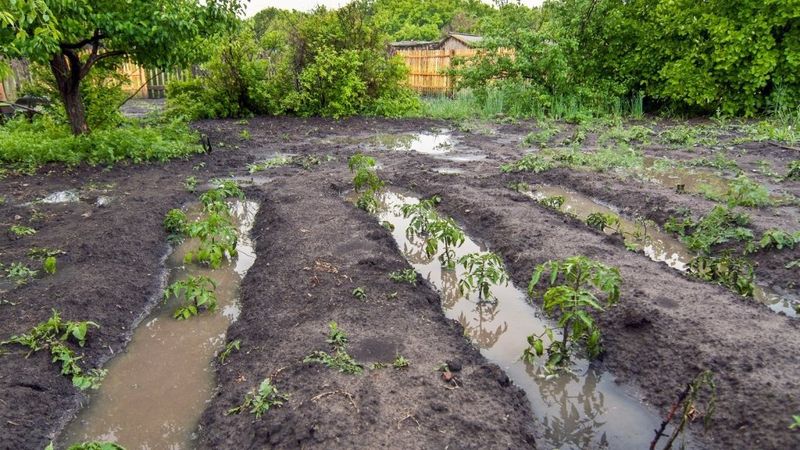
Before changing anything, test the bed. Push a finger or trowel a few inches into the soil near the garlic.
Soil that feels moist like a wrung-out sponge is fine. Soil that is soggy, drips when squeezed, or has water pooling on top is waterlogged.
Garlic wants steady moisture with good drainage. UF/IFAS advice for Florida garlic calls for evenly moist soil that is not waterlogged, and the UGA guidance points the same way.
If the bed is waterlogged, turn off irrigation and skip hand watering until the top layer firms up. Where it is feasible, scoop or channel standing water away from the plants.
These steps cut down excess moisture, which is sensible. They are not a guaranteed rescue, and dry soil with yellow tops points you toward other causes.
Move soggy mulch away from stems, not necessarily off the bed
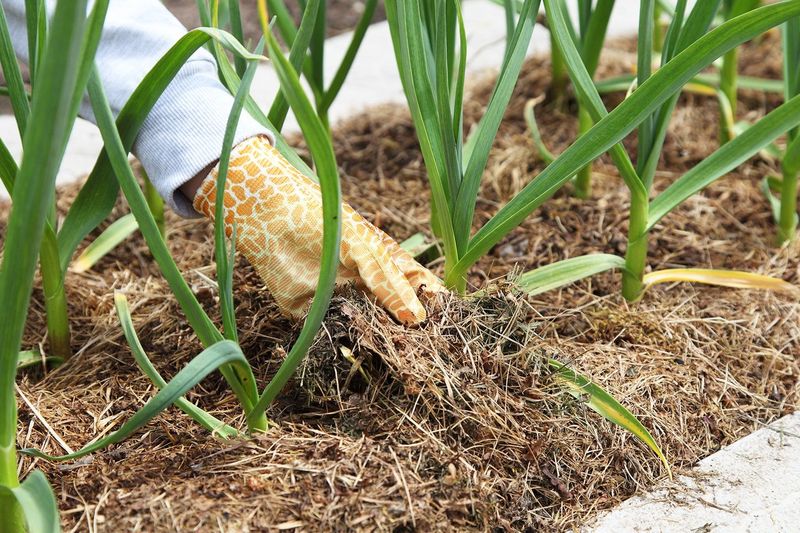
Mulch earns its place in a garlic bed. It helps hold moisture, slows weeds, and can protect against cold snaps.
So there is no need to strip the whole bed.
The fix is narrower. If damp, matted mulch is resting against the stems, pull it back so it no longer touches them.
UGA Extension suggests keeping mulch 2 to 3 inches from the stems, since mulch held damp against them can set up conditions for disease.
Leave the rest of the mulch where it is. University of Minnesota advice recommends 3 to 4 inches of leaf or straw mulch for winter protection and weed control, but that comes from a cold climate.
Warm Southern beds may need less mulch or different timing. Fluffing a thick, soggy layer can also help it dry out.
November growth depends on where and when you planted
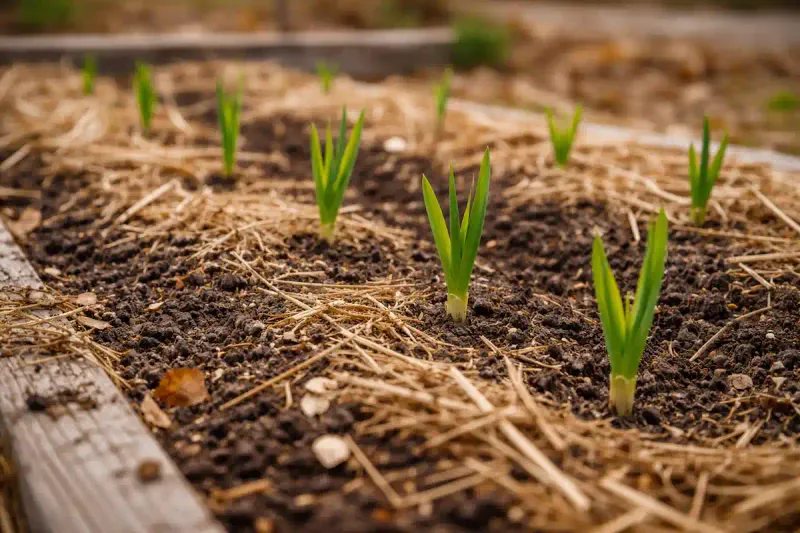
Green tops in November can be perfectly ordinary. In Georgia, UGA guidance says garlic planted in October may have tops above ground by November.
Fall and winter growth includes root development and some top growth, with bulbs maturing in early summer.
That means yellowing in November is not harvest dieback. Harvest-time yellowing belongs to the end of the season, not the start.
Florida runs on its own calendar. UF/IFAS says gardeners there can grow garlic in late fall and early winter.
Texas readers should not assume either schedule fits their area. Check your planting date and your local Extension calendar before judging how your plants should look.
When to ask for a closer diagnosis
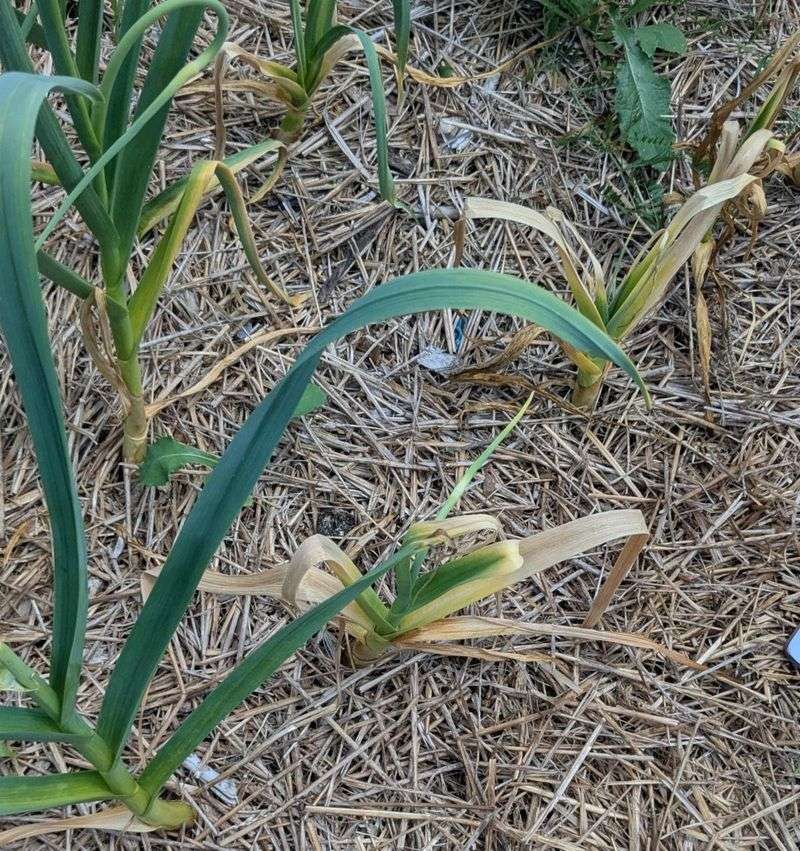
Start with the simple steps. Correct any obvious waterlogging, pull damp mulch away from stems where it is touching them, and then watch the bed over the next couple of weeks.
Note whether new growth looks firm and green.
If plants collapse or show signs of rot, get help rather than guessing. Take clear photos and contact your county Extension office or a plant diagnostic lab.
University of Minnesota’s garlic diagnostic pages show how much garlic symptoms overlap, which is why a proper diagnosis helps.
Hold off on fungicide, fertilizer, or digging up every plant based on yellow leaves alone.
Easing excess moisture is a sensible move in a soggy bed, though it cannot promise a bulb-saving fix. Garlic tells its story at the base, so read that part first.