
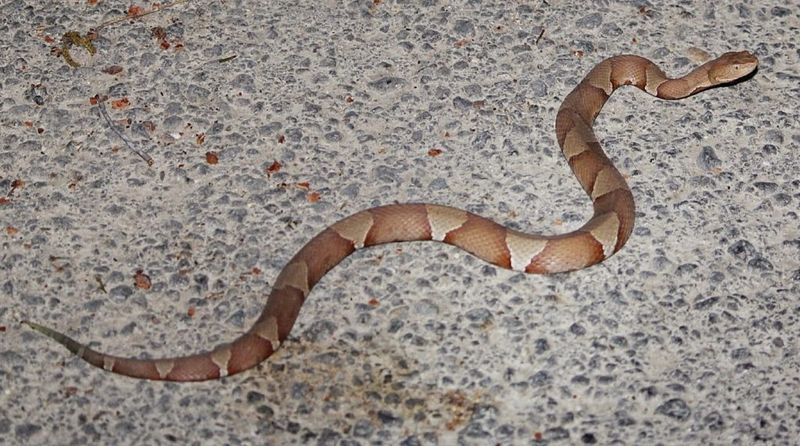
Fall brings rakes, gloves, and a long list of garden beds to clear. Most cleanup days are uneventful, but leaf piles can hide things you cannot see, including the occasional venomous snake.
In parts of Central Texas, copperheads and Texas coral snakes are the two to know. A few simple habits let you work with confidence and keep your hands out of trouble.
The “tiny snake” premise needs a correction
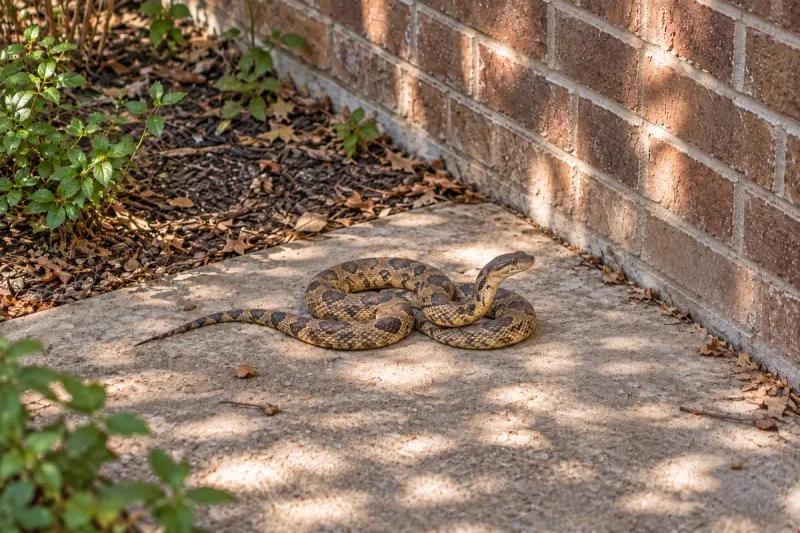
The idea of one tiny venomous snake waiting in every leaf bed does not hold up. Two different snakes are involved here, the copperhead and the Texas coral snake, and neither is accurately called tiny as an adult.
A concealed snake is a possibility worth planning for, not something gardeners should expect on any given afternoon.
Size is where the label falls apart. Texas Parks and Wildlife Department safety guidance gives the Texas coral snake a usual maximum of about 2 and a half feet, and copperheads run roughly 20 to 30 inches depending on the subspecies.
That is a snake the length of a garden hose section, not something that fits in a palm.
Young copperheads are smaller. Newborns measure about 7 to 10 inches, according to TPWD fact sheets, so a small snake could well be a juvenile.
Still, a small body does not tell you the species, and it does not tell you how risky the snake is.
Because size cannot identify a snake, the useful habit is simple. Treat any snake you cannot clearly identify from a distance as one to leave alone, and look before your hands go into leaves, brush, or other cover.
Central Texas is not one uniform snake range
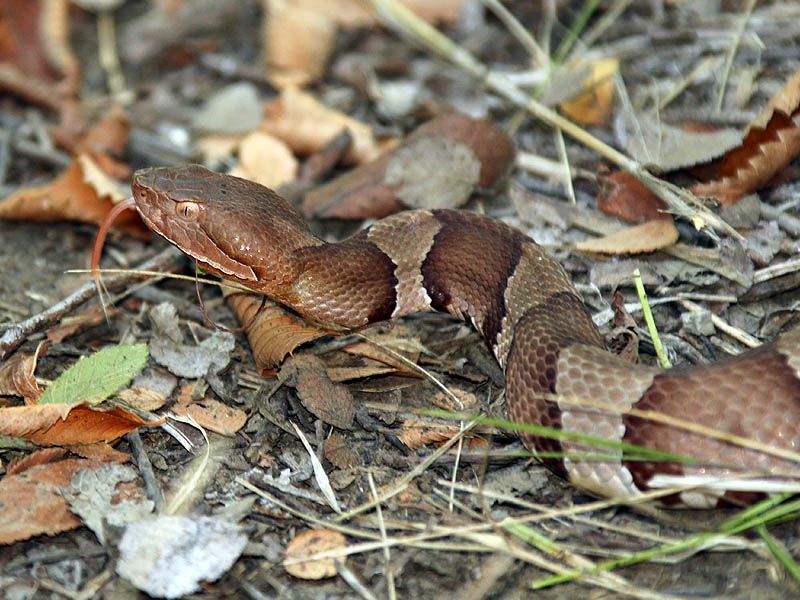
Snake ranges do not follow the neat borders people use for “Central Texas.” TPWD describes broad-banded copperheads as scattered through central and western Texas, while the southern copperhead is found in the eastern third of the state. So the copperhead you might meet depends on where you live, and in some places you may not meet one at all.
The Texas coral snake is a separate story. A TPWD newsletter on coral snakes places its range through the Hill Country, and describes the species as shy and seldom seen.
That makes it relevant to some Central Texas communities, especially those near wooded or rocky ground.
Being in range is not the same as having snakes in your yard. A county map cannot tell you whether a particular flower bed, side yard, or compost corner hosts a copperhead or coral snake, and most properties will never have a problem.
What the geography does give you is a reason for a light-touch routine. If you garden in or near the Hill Country, or in a wooded suburb, a few seconds of looking before reaching is a sensible habit, not a sign of danger around every corner.
Why leaf litter can conceal a snake
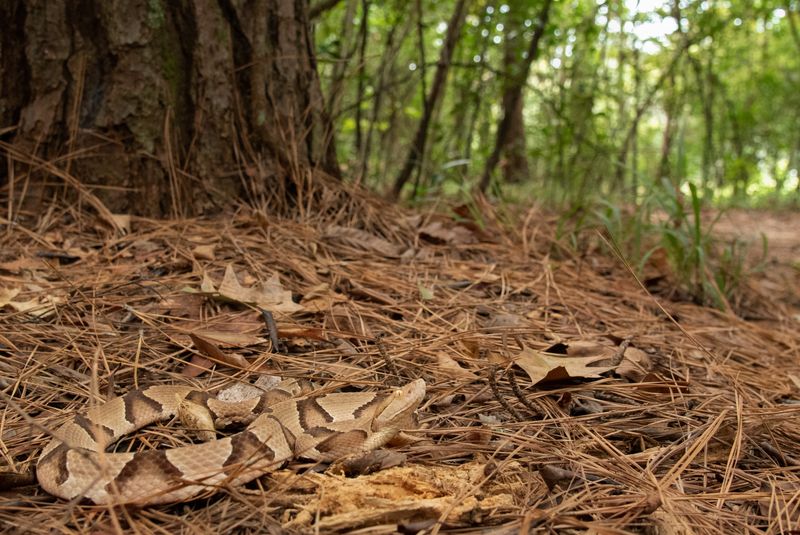
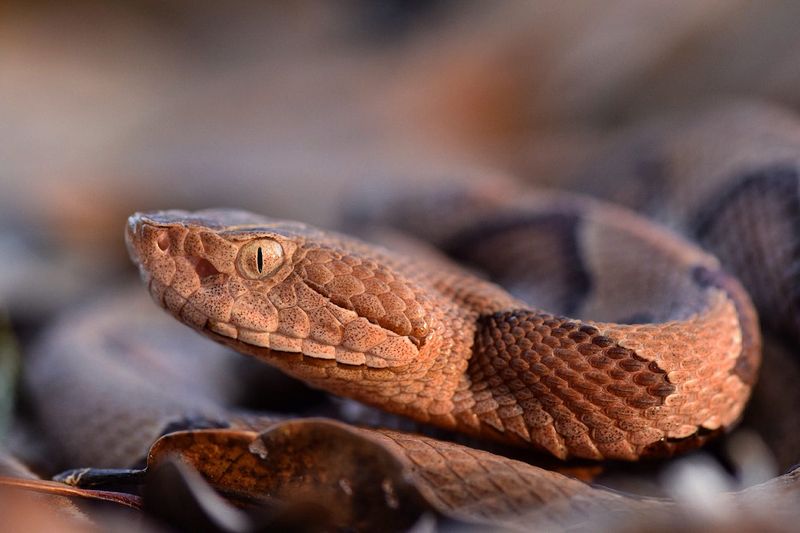
Fallen leaves look like nothing more than yard waste, but to a snake they can be cover. TPWD’s copperhead page notes that copperheads hide in leaf litter, logs, and branches, and that they can turn up in wooded suburbs.
Their banded pattern blends in so well that a snake can be hard to spot even when you are looking.
Coral snakes live a bit differently. They tuck under debris or into shallow burrows, and they are primarily active at night and around dawn or dusk, according to TPWD’s coral snake newsletter.
A daytime raking session is less likely to overlap with their active hours, though a hidden snake can still be resting under cover.
Timing matters for copperheads too. TPWD says they are active by day in early spring and late fall, and more active at night during summer heat.
Late fall cleanup can overlap with those daytime hours.
None of this means leaf litter is proof of a snake, or that cleanup causes bites. Nobody has measured how often gardeners meet snakes in leaf beds.
It simply explains why concealed spots deserve a look before a hand goes in.
Clear garden beds without reaching blindly
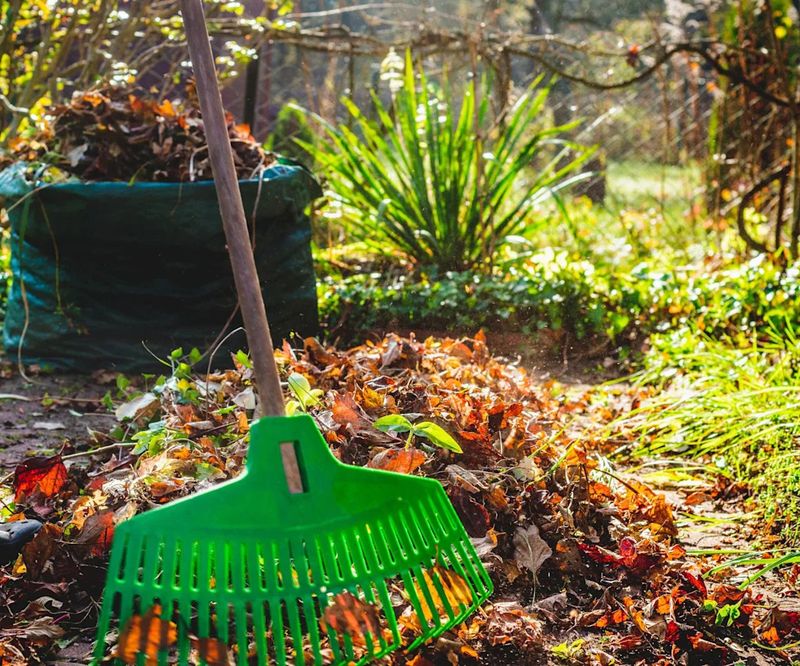
Start with your eyes. Before you grab a handful of leaves, scan the area and look into holes, brush, and any tucked-away spot where your hand will go.
TPWD cautions against reaching or stepping where you cannot see.
Let a tool do the first pass. A rake or long-handled garden fork can pull leaves back in layers so you see the ground as it opens up.
For a log or board, use a long tool to check beneath it or roll it over, rather than sliding your fingers under the edge.
Dress for the job. TPWD’s venomous snake safety page recommends shoes and gloves when handling debris, and CDC guidance for outdoor workers adds boots, long pants, and leather gloves around brush.
Sandals and bare hands are the weak link.
Notice that none of this asks you to strip your beds of mulch. A thin layer of mulch around plants is a normal part of a Texas garden.
The point is visibility and protection: open up leaf piles and brush in stages, work in good light, and keep your hands where you can see them.
If a snake appears, give it room
Spotting a snake mid-cleanup is startling, but the best move is a quiet one. Stop, keep your distance, and back away slowly.
Call children and pets away too, and let the snake move off on its own.
Skip the urge to get a closer look. TPWD safety guidance advises against handling, trapping, or killing a snake, and that includes trying to catch it for identification.
A photo from a safe distance is plenty if you want help naming it later.
Do not count on the old coral snake rhyme to sort friend from foe. A TPWD account notes it may not always help and that colors vary.
If you are unsure, treat the snake as one to leave alone.
For the longer term, TPWD suggests removing piles of brush, wood, rock, or debris close to your home, since those can serve as hiding places. That advice targets clutter near the house, not ordinary mulch in a planting bed.
Stacking firewood and cuttings away from walls and patios is an easy first step.
Treat a suspected bite as an emergency

If a snake bites you and it might be venomous, call for emergency help right away. Do not wait to see whether symptoms show up.
The 2024 American Heart Association and American Red Cross first aid guidelines call for activating emergency services for a venomous or possibly venomous bite.
Delay can be a real problem with coral snakes, because their venom can cause paralysis within minutes to hours. A small-looking snake, no obvious fang marks, or feeling fine at first does not rule out danger.
Copperhead bites are seldom fatal, but seldom fatal does not mean harmless.
While help is on the way, keep the person calm and still. Rest and immobilize the bitten limb if that does not delay care, and remove rings, watches, or other tight jewelry before swelling starts.
Some well-known steps do harm. Do not cut the wound, suck out venom, apply ice, or use a tourniquet.
Also skip any attempt to catch or kill the snake.
The Texas Poison Center Network advises calling 1-800-222-1222 for instructions and going to the nearest hospital. That call supports emergency care and does not replace it.
A snake in the leaves is rare news; a calm plan is what makes it manageable.