

A bare fig tree sitting in a pot in winter can look pretty sad. Many gardeners reach for the watering can, thinking they can help it.
But soil that stays soaked can cause trouble for roots, while a dormant tree still needs a little moisture. Here is how to tell what your fig needs and how to water it with confidence.
Leaf drop can be part of normal dormancy
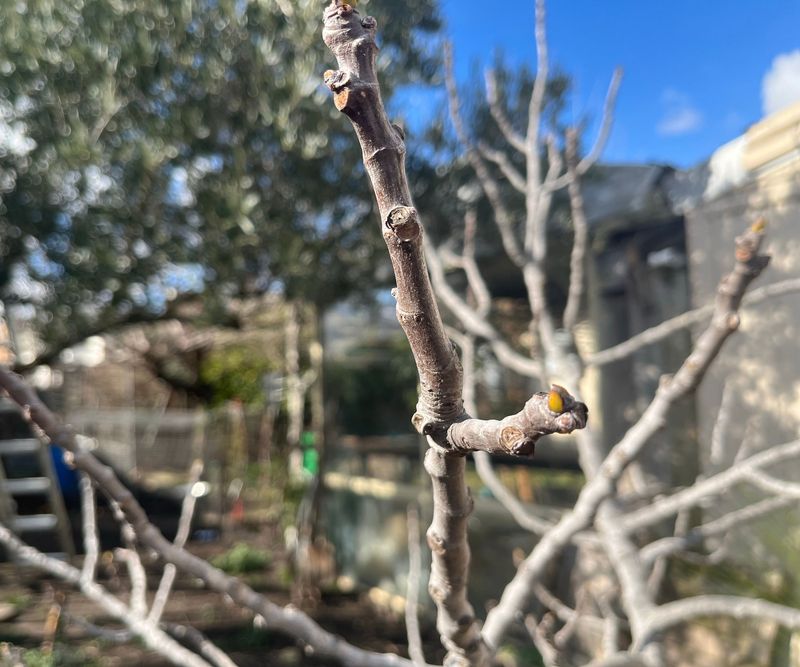
Common figs are deciduous, so yellow leaves and a bare tree in late fall or winter are often just the plant heading into rest. UNH Extension guidance on container figs treats a cool, unheated spot and much lighter watering as part of normal overwintering.
So a naked fig is not proof that something has gone wrong. Seeing bare branches in January does not mean you overwatered, and it does not mean the roots are rotting.
What should send you to check the potting mix? Look for mix that stays wet for days, a tree that wilts, or a sour smell from the pot.
Penn State’s plant health guide lists many possible causes of leaf drop and wilting, including overwatering and other stresses, so leaves alone cannot settle the question.
Persistently wet mix creates the root risk
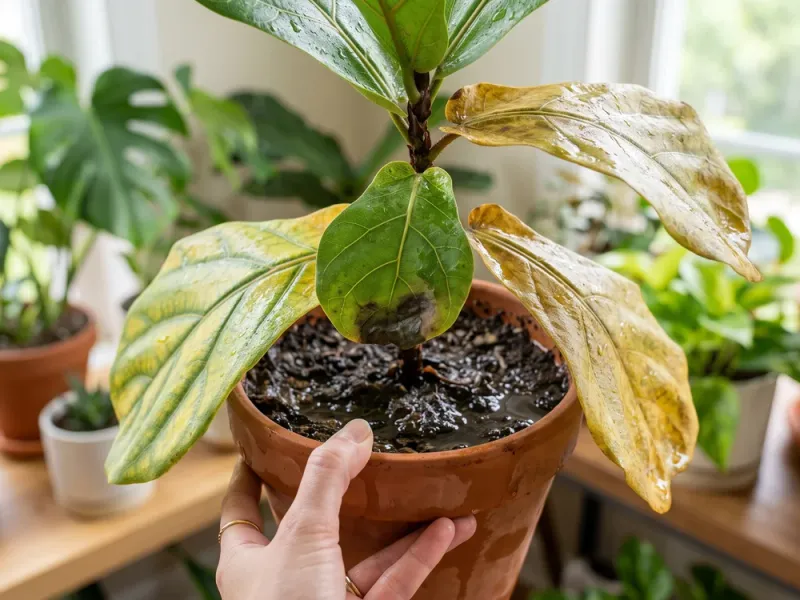
Roots need air as well as water. When potting mix stays saturated, the tiny air spaces fill up, oxygen drops around the roots, and conditions can favor root disease, as described in Penn State’s overview of root rot.
One generous watering does not mean damage has been done. The real worry is mix that never gets a chance to drain and loosen up, week after week.
Notice the wording here: this is a risk, not a promise. A wet pot can lead to trouble, but it does not guarantee root rot, and no calendar date, such as spring, marks when it would happen.
Think of soggy mix as a warning light to act on, not a verdict.
Identify the fig’s winter conditions

Before you change your watering, figure out which situation your tree is in. A leafless edible fig stored somewhere cool is resting and uses little water.
A fig kept warm and still holding leaves, or pushing new growth indoors, is a different case and may need water more often.
Location matters too. UF/IFAS notes that Florida fig trees often are not cold-conditioned before winter, so colder-climate storage schedules do not automatically fit Florida.
The same caution applies across Texas and the rest of the South, where winters vary widely.
Also check what you own. The dormant-fig advice here is for edible common figs (Ficus carica).
UF/IFAS separates edible figs from ornamental Ficus, so do not assume a houseplant ficus follows the same rules. The UNH container fig article describes dormant storage specifically.
Check the mix and water sparingly
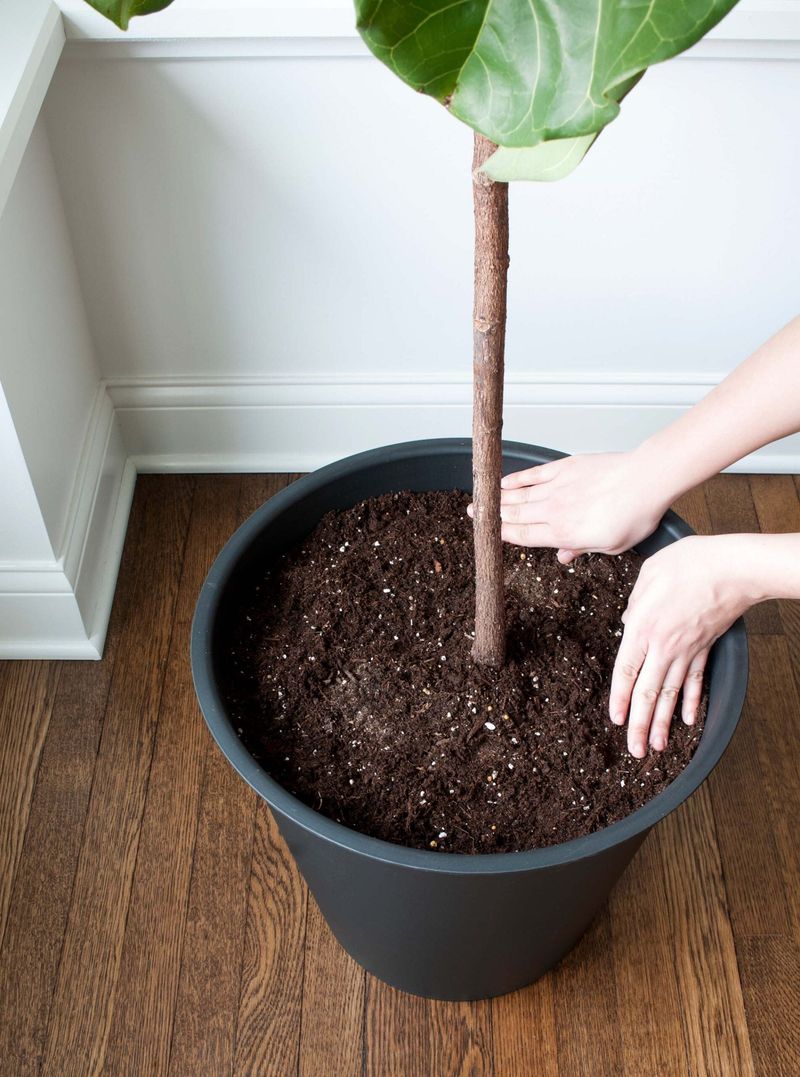
Skip the rigid schedule and let the pot tell you. Push a finger into the upper mix and see how it feels.
Sources give different guides: Illinois Extension suggests infrequent watering when the top 2 to 3 inches seem dry, while UNH Extension says to let the upper 2 inches dry first.
Another source, Virginia Tech’s fig guide, gives a much looser approach of watering monthly until just moist. Those differences are a good reason to treat any number as a starting point, since your pot size, mix, and room temperature all change how fast it dries.
For a dormant fig, water lightly and less often, but do not let the root ball dry out completely. Dormant roots still need a bit of moisture.
A warm fig with leaves may need more frequent checks.
Keep excess water draining away
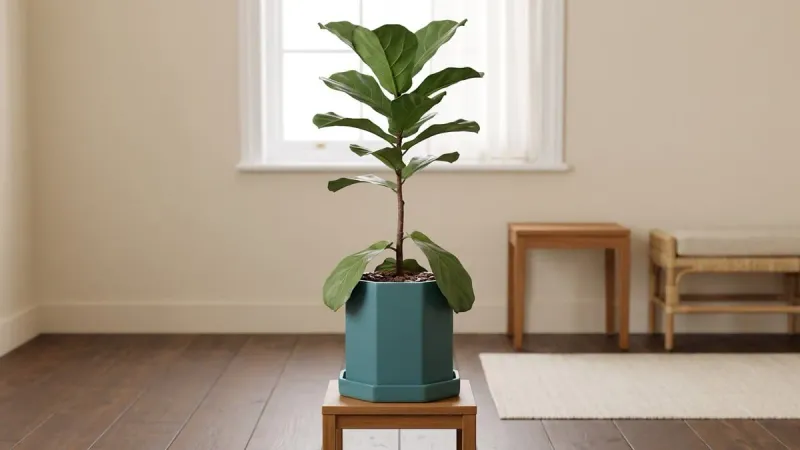
Even careful watering backfires if the pot cannot let go of extra water. Choose a container with drainage holes, as the UNH fig container guidance specifies.
Then check the saucer. Oregon State Extension advises emptying runoff so roots do not sit in excess water.
A few minutes after watering, tip the saucer out or set the pot on small feet or blocks.
These habits lower the odds of pooling, but they are not a force field. A tree with good drainage can still have problems from other causes, so keep watching the mix and the plant.
Use symptoms as clues, not a diagnosis
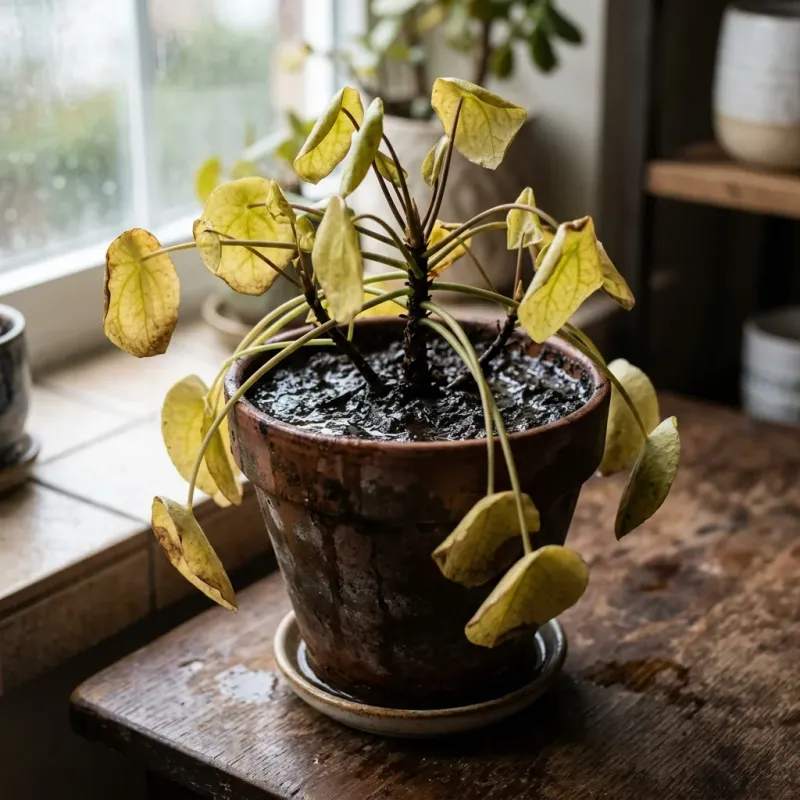
Think like a detective. Mix that stays wet, a tree that wilts, or roots that look dark and limp can point to overwatering or a root problem, according to Penn State’s diagnostic advice.
They are clues, not a final answer.
Yellow leaves and leaf drop alone cannot confirm trouble, since a dormant fig does both on schedule. Before you decide, ask three things.
Is the mix soggy or bone dry? Does the pot drain freely?
Is the tree cool and dormant, or warm and growing?
If the mix is wet and the tree is wilting, ease off watering, improve drainage, and look at the roots. Healthy roots are generally firmer and lighter than dark, limp ones.
The UNH guidance on dormancy helps you judge what is normal.
Soggy soil raises the risk, but it does not prove root rot has happened or will happen by spring. A bare fig with a well-drained pot is usually just sleeping.