
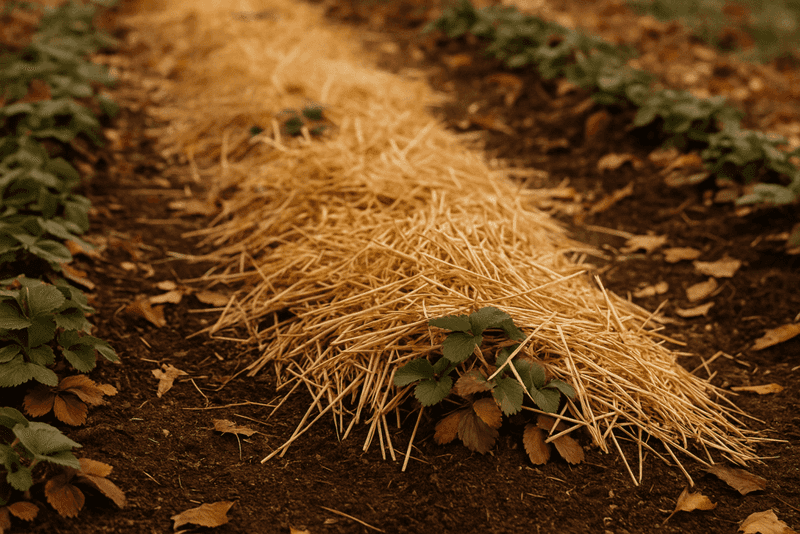
Cold snaps can sneak up on a strawberry bed, and many Southern gardeners wonder if a blanket of straw is the answer. Straw can help protect plants from winter injury, but it is not a magic trick for giant berries.
The right move depends on where you live, what stage your plants are in, and how low the temperature is headed. Here is how to decide what your bed really needs.
Straw insulates crowns against winter injury
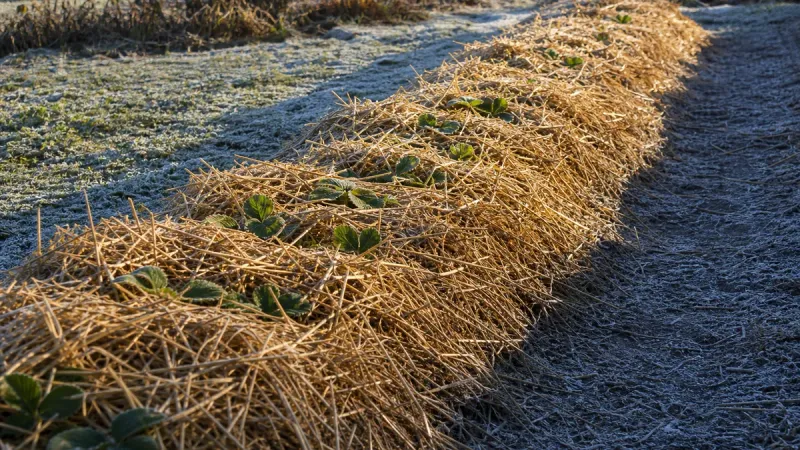
Picture the crown of a strawberry plant, the short stem at soil level where new leaves and flower buds start. That crown is what winter mulch is meant to guard.
Straw can soften sudden temperature swings, blunt drying winter wind, and reduce the freeze-thaw cycles that heave plants up and expose roots, as described in Oklahoma State Extension’s home garden guide.
Think of it as a loose winter blanket, not a sealed lid. University of Minnesota Extension treats it as a way to help plants come through the cold season alive and healthy.
Winter straw is a different job from the mulch gardeners tuck under ripening berries in the growing season. That later layer keeps fruit off wet soil and cleaner.
Neither one is a promise of a bigger harvest. Winter straw is about getting plants through the cold in good shape.
Decide whether your Southern bed needs protection
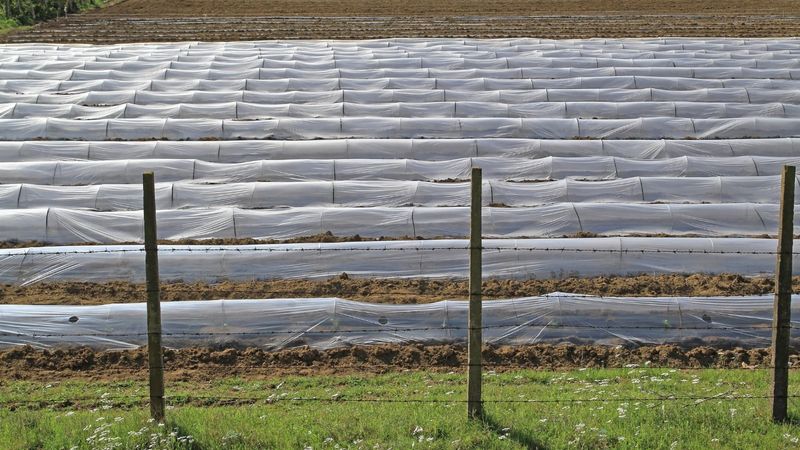
Southern winters vary a lot, so start with your own forecast and your own crop. In much of Texas, fall-planted strawberries tolerate freezing, and Texas A&M AgriLife advises protection with hay or row cover when temperatures drop into the teens.
Texas is a big state, though, and AgriLife also notes that severe or long freezes can still injure plants, even when covers are used.
Florida works differently. Strawberries there are usually grown as annuals and fruit through fall, winter, and spring, so plants are often blooming when cold arrives.
UF/IFAS says flowers and fruit can be damaged below 32°F and recommends covering plants with sheets or frost cloth, anchored to the ground, when a freeze is forecast.
The key difference is what you are protecting. Acclimated crowns and leaves handle colder temperatures than open flowers and ripe berries do.
So a Florida gardener may only need a temporary cover on a cold night, while a Texas gardener may only act when the forecast hits the teens.
Wait for dormancy or cold acclimation
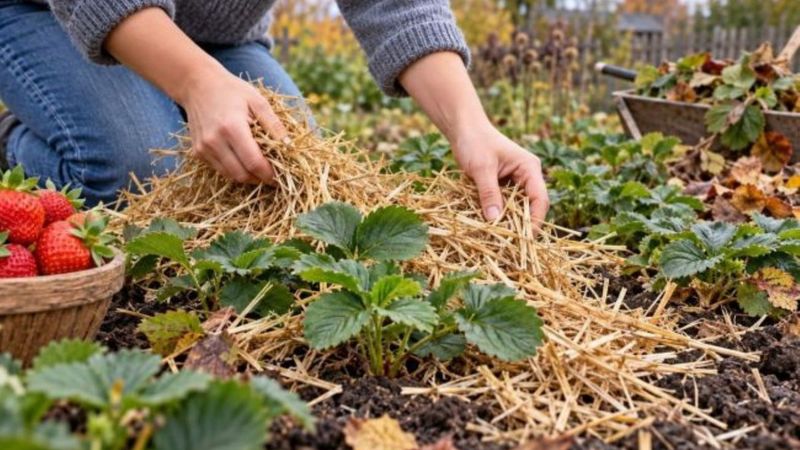
Rushing to cover plants can backfire. Strawberries need time to slow down and toughen up in cooler weather, and where winter straw is the norm, extension advice is to wait until plants are dormant or acclimated to cold.
Covering too early can keep plants soft and growing when they should be settling in.
Timing examples exist, but they come from colder places. Minnesota guidance ties mulching to the plants’ cold-hardened state, and Oklahoma State points to waiting until soil stays consistently cold.
Those dates and numbers were not written for Houston, Gainesville, or the Rio Grande Valley.
Your best next step is simple. Call or check your county extension office, ask when local growers mulch or cover, and watch your plants.
Slowed growth and a change in leaf color are clues that the season is shifting, while a forecast low is your cue to act.
Choose clean straw over hay
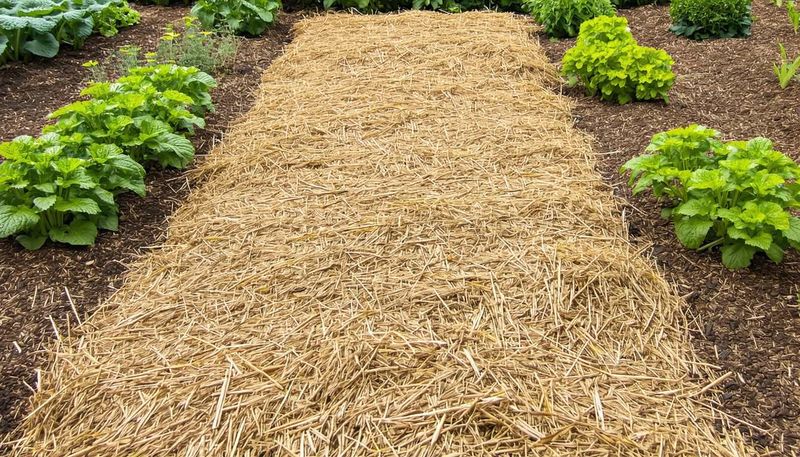
Not all dry bales are equal. Straw is the stalk left after grain is harvested, while hay is cut grass or legumes, often with seed heads still attached.
That seed is why hay can bring weeds into a strawberry bed you worked hard to keep tidy.
There is a bigger worry too. UGA Extension warns that hay may carry herbicide residues that can harm fruit and vegetable crops.
Ask the seller what the material is and where it came from before you spread it around your plants.
If clean straw is hard to find locally, ask at a feed store or garden center before settling for hay. As for how much to use, there is no single right amount for every Southern yard.
Follow the instructions from your state or county extension service, and keep the layer loose rather than packed down.
Bigger berries are possible, not promised
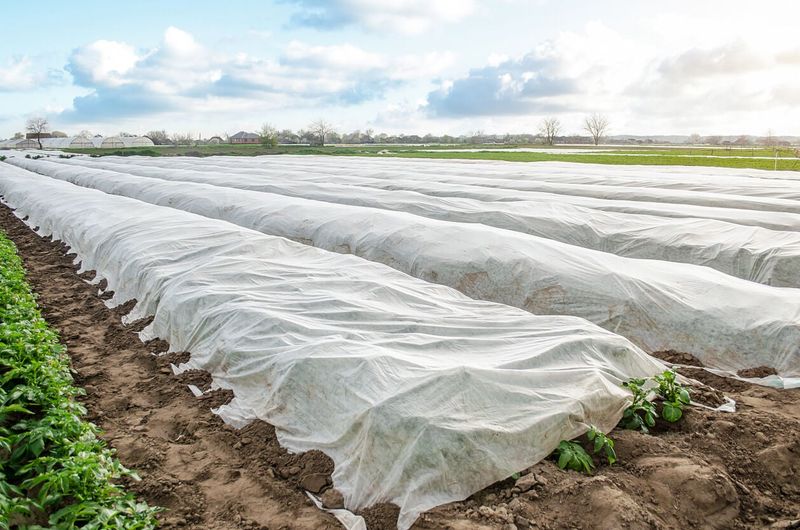
Here is where the popular claim needs a reality check. In a peer-reviewed study of winter covers, researchers working with field-grown strawberries in coastal and continental climates found that covers reduced freezing injury and plants produced larger fruit.
That sounds like a win for straw, but read the details. Several other covers, including fleece and plastic-based materials, generally performed better than straw.
The work was also done in northern field conditions, not in Southern backyards.
So the honest answer is that bigger berries may happen, but nobody can promise them. Protecting crowns, and in Florida covering flowers during a freeze, can help more plants survive and fruit.
Variety, spring weather, watering, and feeding all play a big part in berry size too. Treat any size boost as a possible bonus.
Pull winter mulch back as growth resumes
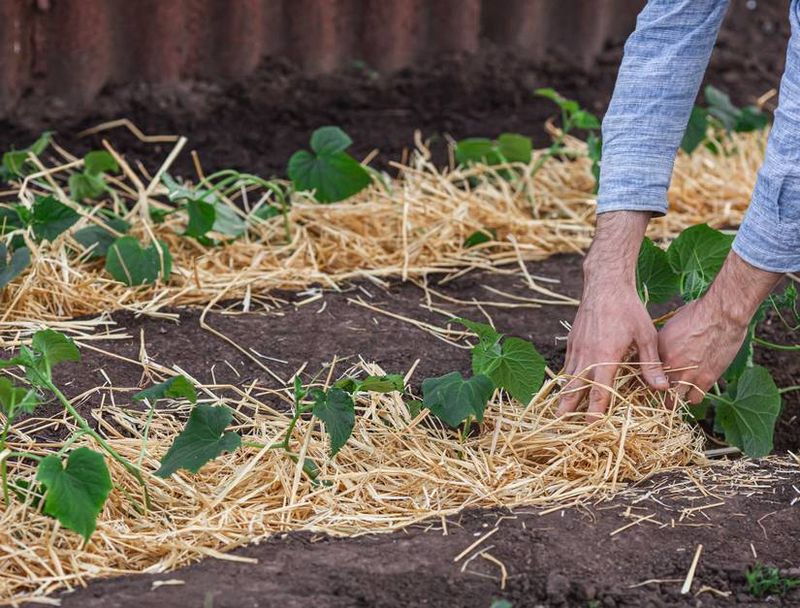
When new leaves start pushing up, the job flips from covering to uncovering. Both Minnesota and Oklahoma State guidance say to pull the mulch back or remove it as growth begins.
Leaving it on too long can delay growth and harvest and reduce yield.
Check plants every few days once weather warms. Pale, stretched growth under the straw is a clue it is time to move it.
Rake it into the aisles, where it can stay handy for the next cold snap or serve as a clean path.
The whole plan comes down to four steps: check what your area needs, wait for the right plant stage, use clean straw, and uncover in spring. A strawberry plant that gets through winter in good shape has the best shot at a good season.