
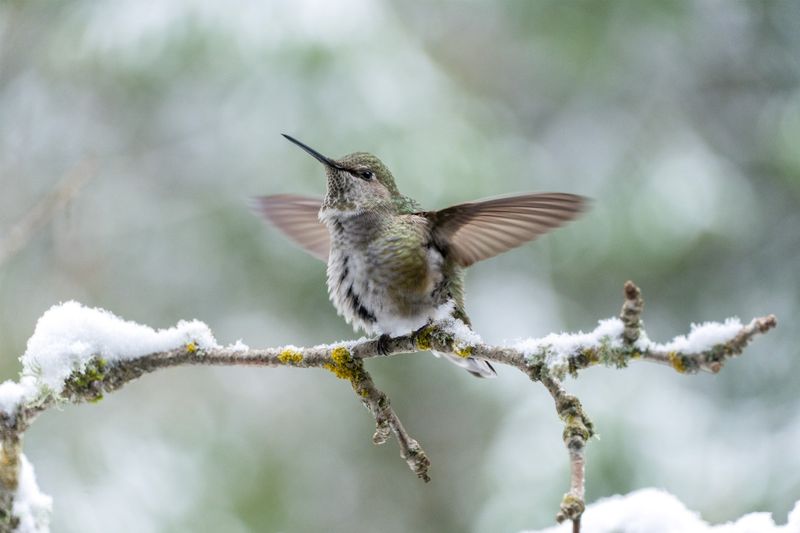
A tiny, iridescent bird zips past your window in January, and you wonder why it hasn’t flown south. For many Anna’s hummingbirds in California, there is nowhere else to go, because this is home all year.
Winter still asks a lot of a bird that weighs less than a nickel. Here is what these birds eat, how they handle cold nights, and how a yard can help.
Many Anna’s hummingbirds are California residents
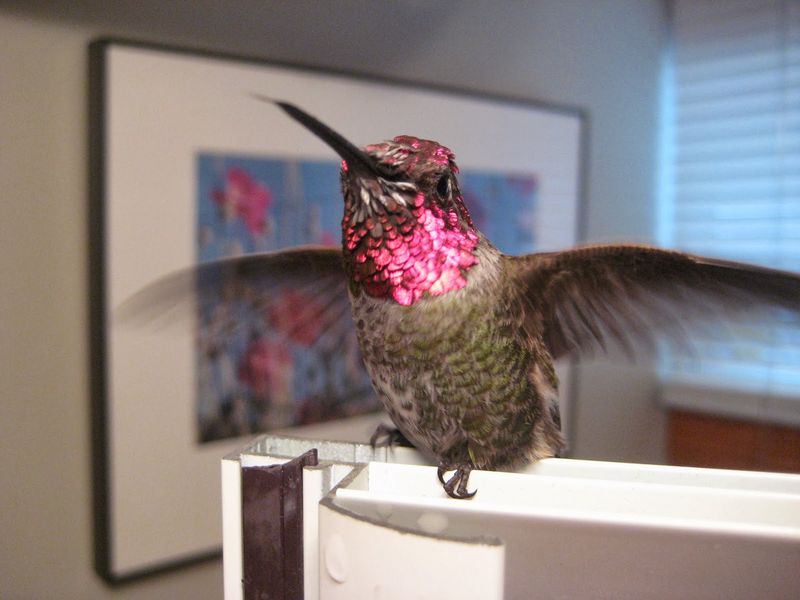
Spotting a hummingbird in December can feel like seeing a summer bird who missed the memo. For Anna’s hummingbirds, it is usually just a regular day at home.
A USDA Forest Service guide to California hummingbirds describes Anna’s as a year-round resident along the Pacific coast, and it notes that some urban populations are sedentary.
That means the bird at your window was probably not talked into staying by a feeder. A feeder can be one stop on its daily rounds, but it does not explain why an individual bird is around, and it does not keep birds from migrating.
Anna’s simply do not follow the long-distance migration pattern that other hummingbird species do.
Residency still varies across the state. California Department of Fish and Wildlife’s life-history account lists Anna’s as common residents in coastal California and much of the interior, but less common in montane areas, where they are summer residents.
Birds that breed in the mountains tend to move to lower elevations in the nonbreeding season.
So a hummingbird in your coastal or lower-elevation yard in winter fits a normal pattern. If you live higher up, you may see fewer birds or none at all until warmer months.
Even in places where Anna’s stay, one bird may linger in your yard all winter while another passes through or shifts to a different elevation. Both are ordinary behavior for this species.
Their winter menu extends beyond feeder nectar
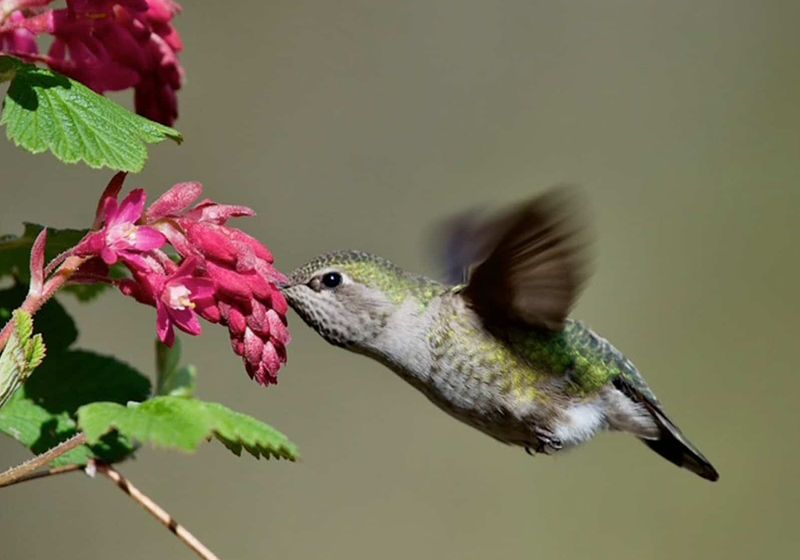
Sugar water gets all the attention, but it is only part of the menu. Anna’s hummingbirds sip nectar from flowers, and they also catch small insects and spiders.
California’s wildlife profile for the species also notes that they take pollen and plant sap.
Think of nectar as the fuel and bugs as the protein. A bird hovering over a branch is often picking off tiny gnats or aphids, not just drinking.
Sap wells and pollen add to the mix, which helps explain how a bird can find food in a season when fewer flowers are open.
Feeders fit in as a backup. Audubon’s feeding FAQs treat them as supplemental, meaning they add to what birds find on their own rather than replace it.
A bird may visit your feeder in the morning, check the flowering shrubs at midday, and snap up gnats near the fence in the afternoon.
That variety is a handy clue for yard watchers. If you see a hummingbird hovering near leaves or webs with no flower in sight, it is probably hunting.
And a bird that skips your feeder for a day has not necessarily gone anywhere. It may be working through its other food sources.
A living yard can supply natural food and prey
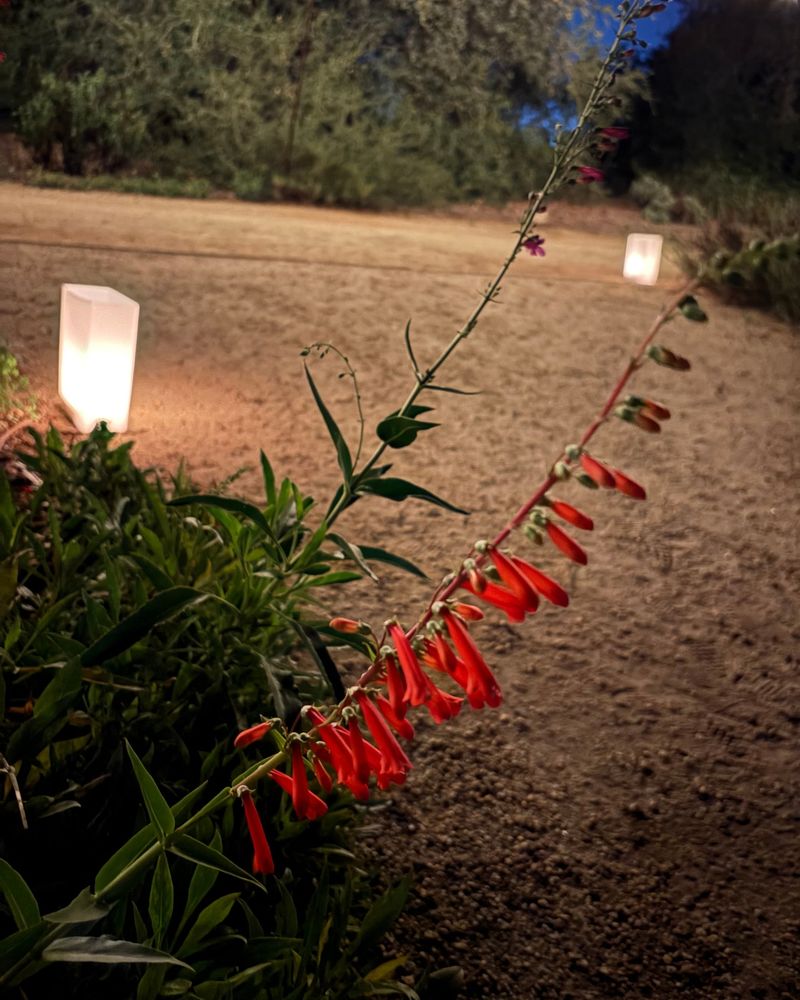
If the birds eat blooms and bugs, the yard choices follow. A mix of flowering plants, shrubs, and trees gives hummingbirds nectar, perches, and places for insects to live.
Seasonal blooms matter most, since winter is when flowers are scarce.
For one local example, UC Master Gardeners in San Mateo and San Francisco counties recommend year-round blooms and list manzanitas, chaparral currant, and fuchsia-flowered gooseberry as California-native winter options. Those are Bay Area examples, not a planting list for the whole state.
A San Diego hillside, a Central Valley lot, and a Sierra foothill property each call for plants suited to their own soil, water, and fire conditions. A local native plant nursery can point you to winter bloomers that fit.
Insects count too. Because Anna’s eat small insects and spiders, cutting back on unnecessary pesticide use is a reasonable way to leave prey on the menu.
The UC Statewide IPM Program explains how natural enemies in the landscape help keep pest insects in check.
No single change guarantees a bird will visit or survive the winter. But a layered, water-wise planting with fewer sprays gives wildlife more to work with.
Keep defensible space in mind on fire-prone lots, and place plants accordingly.
A feeder supplements habitat when you maintain it
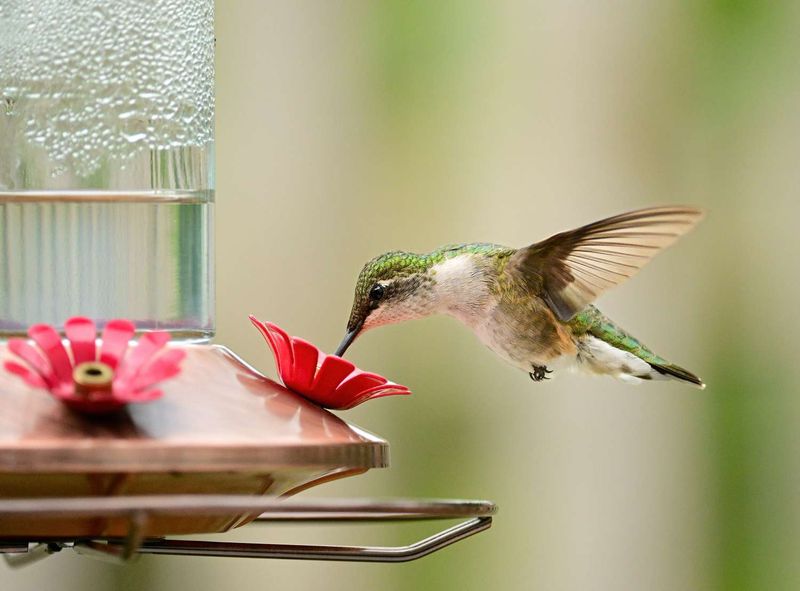
If you choose to hang a feeder, keep it simple and keep it clean. The Smithsonian’s National Zoo recommends one part refined white sugar to four parts water.
Tap water is fine, and boiling is not necessary.
Skip the red dye. Honey, corn syrup, raw or unprocessed sugar, and powdered sugar are also poor choices.
Plain refined white sugar and water is all the birds need from you.
Cleaning matters as much as the recipe. The Smithsonian suggests cleaning and refilling about every other day in general, at least weekly in cooler weather, and at least twice a week in hot weather.
Nectar that sits too long can spoil, so a smaller amount refreshed often beats a full feeder left alone.
Cold snaps call for a quick check. Audubon notes that slightly subfreezing temperatures may not freeze the sugar solution, but where temperatures regularly dip below freezing, make sure the nectar has not turned to ice.
Many coastal yards rarely face this, while inland and higher-elevation yards might.
Remember that a feeder is one food source among several. It does not explain why a particular bird stayed, and it works best next to flowers and insect-rich plantings.
Torpor helps Anna’s endure cold nights
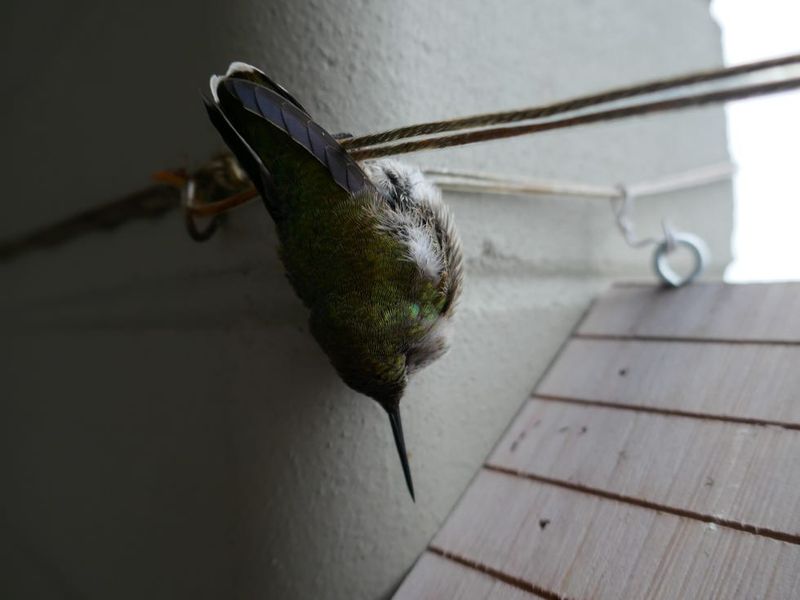
A hummingbird’s metabolism runs hot, which makes long winter nights a challenge. The bird cannot feed in the dark, so it needs a way to stretch its energy.
One tool is torpor, a state of lowered metabolism that cuts how much energy the bird burns overnight.
Anna’s hummingbirds are among the species included in a peer-reviewed field study of torpor in hummingbirds. In plain terms, researchers found that these birds can drop into this energy-saving state rather than burning fuel at the normal daytime rate.
Torpor is not a force field against cold. It is one strategy that helps a bird get through a night, and it works only if the bird has fuel to start with and a place to rest.
A bird that cannot find enough nectar and prey during the day starts the night with less in reserve.
That is where habitat comes back in. Sheltered perches in dense shrubs or trees, flowers that bloom in winter, and a steady supply of insects all help a bird build up energy before dusk.
A feeder that is clean and unfrozen can add to that daytime fuel, but it does not replace the rest.
If you see a hummingbird sitting very still early on a cold morning, it may be warming up from a rest like this. Give it space and let it recover.
Winter can include nesting, not just waiting for spring
It is easy to picture winter hummingbirds as stragglers biding their time until spring. Anna’s break that picture.
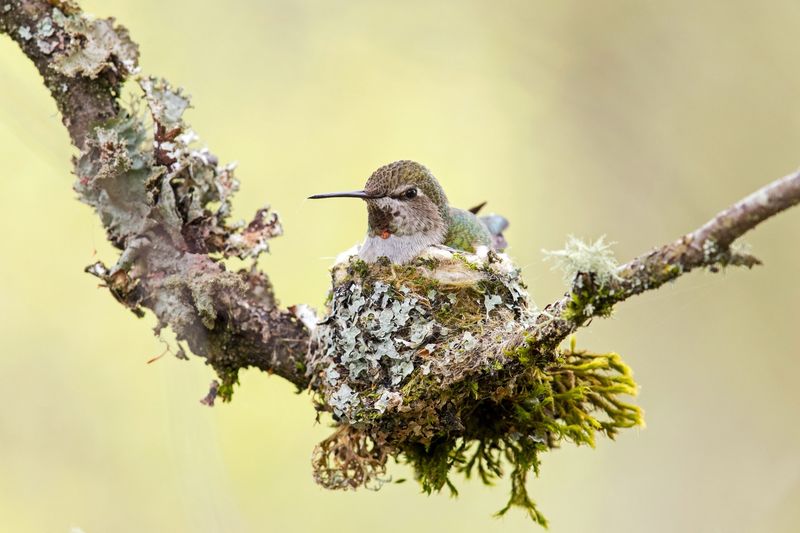
The USDA Forest Service’s California guide says they may begin nesting in November or December after winter rains.
That detail changes how winter looks. A male singing and diving from a perch in midwinter is not killing time.
He may be part of a breeding cycle that is already underway. How often this happens, and whether your yard hosts a nest, will vary by place and by bird, so there is no promise to make here.
It also helps explain why winter presence is not about a migration schedule. These birds are not waiting for a signal to leave.
They are living out their full life cycle in the same region, feeding, defending territory, and in some cases raising young while many other birds are away.
If you notice a hummingbird repeatedly returning to the same shrub, you can keep an eye out for a tiny nest, but do not trim nearby branches or disturb the area while you look. Their winter is part of the year, not a pause in it.
Support the food web, not just the feeder
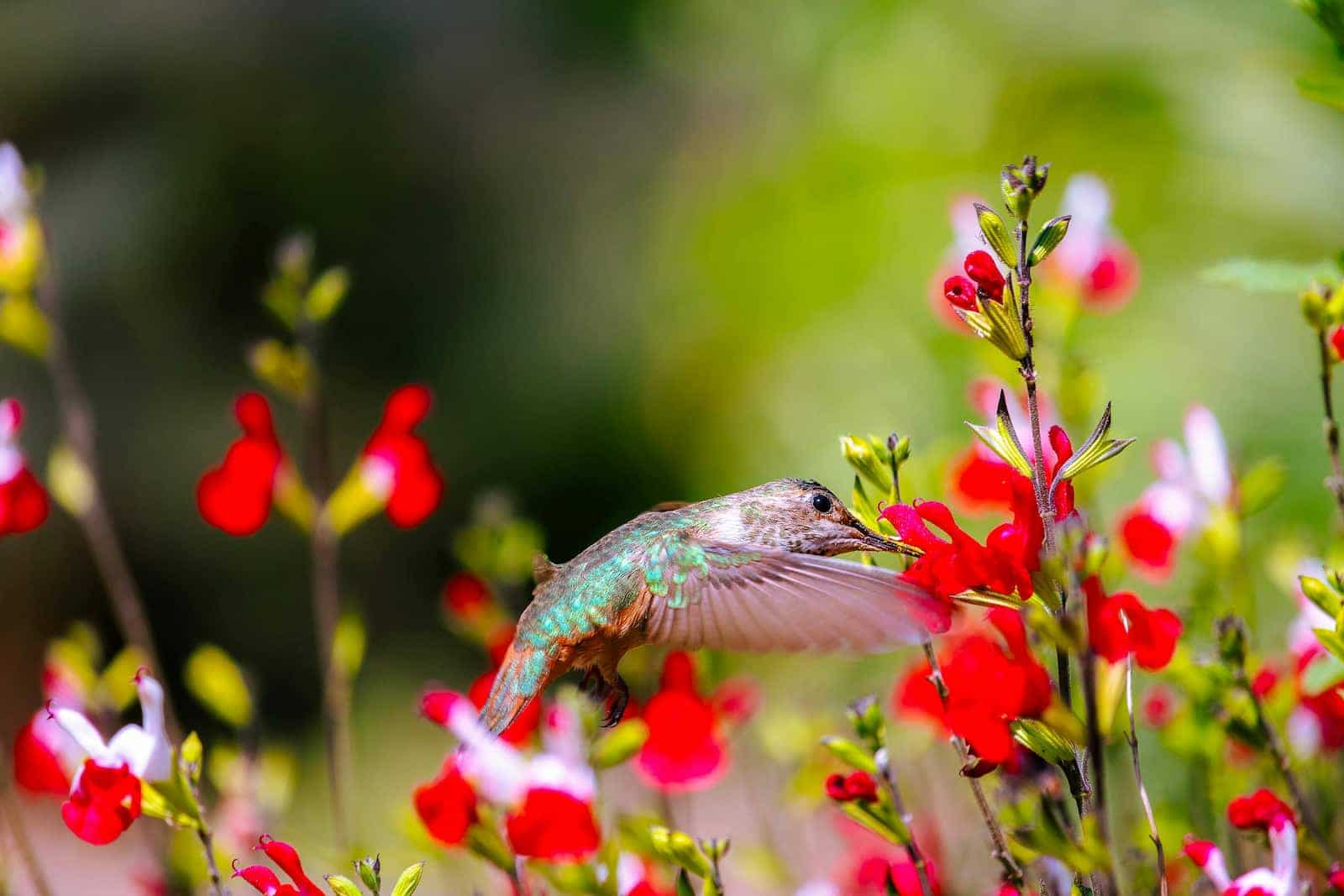
The best winter plan has layers. Choose flowering plants suited to your area, like the Bay Area winter bloomers UC Master Gardeners suggest, and leave room for the insects and spiders that feed the birds.
If you hang a feeder, follow the Smithsonian’s nectar and cleaning guidance and watch for ice on cold mornings.
Your yard is a piece of a much bigger landscape, and the resident birds were here long before any feeder. A hummingbird at your window in January is less a guest you won over than a neighbor who knows the block.