
Fall tomato plants can look healthy and full of yellow blossoms, then leave you with few fruit. Cool nights are one possible reason, and they matter most when they stack up over several days.
Other stresses can cause the same symptom, so a little detective work helps. Here is how to sort out what is going on and protect the tomatoes you already have.
Why repeated cool nights can reduce fruit set
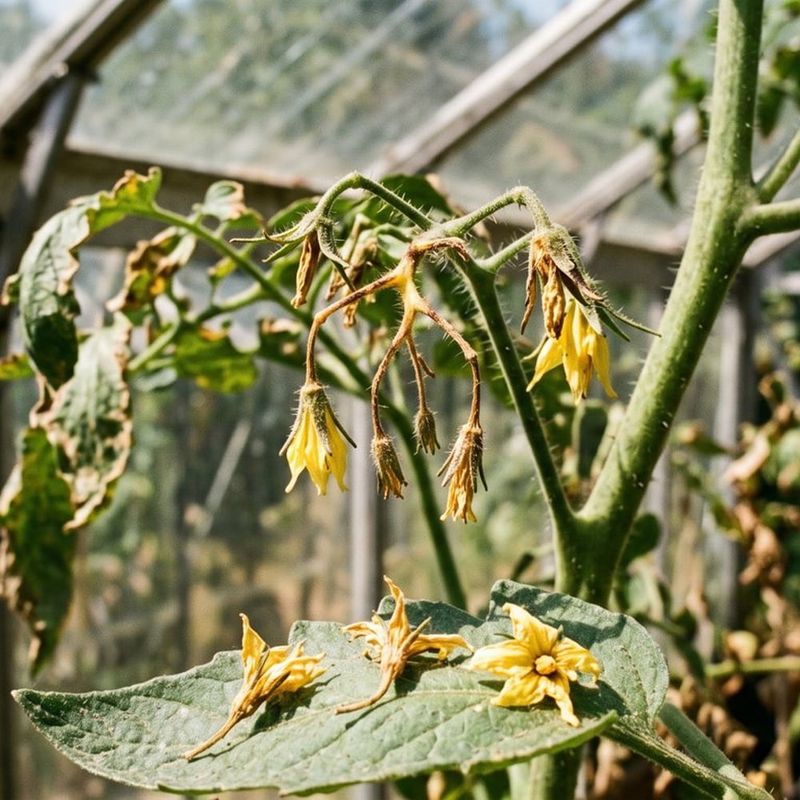
A tomato blossom turns into fruit only when viable pollen reaches the right spot and fertilization follows. Temperature affects that chain.
A UF/IFAS tomato blossom drop paper links flower drop and poor set to several nights below 55°F, along with other stresses.
Think of 55°F as a warning light, not a verdict. One chilly night does not mean every blossom will fall.
The risk grows when cool nights repeat, because pollen development and fertilization can suffer and flowers may fail to set fruit.
Iowa State Extension also lists nights below 55°F, plus daytime highs above 85°F, as conditions that interfere with pollination. So a plant can struggle at either temperature extreme.
A practical clue: if blossoms open, then yellow and drop after a run of cool nights, temperature is a reasonable suspect. It is still only one suspect, which the next sections help you check.
November conditions depend on your region
November does not mean the same thing for every tomato grower. Florida’s planting guide lists tomatoes for August in North Florida, August to September in Central Florida, and August to February in South Florida, according to the UF/IFAS vegetable gardening guide.
A South Florida plant set out in late autumn is at a very different stage than a North Florida plant planted in August.
Texas varies just as much. Texas A&M’s fall guide gives last optimum tomato planting dates from June 25 to September 1 depending on region, and it classes tomatoes as frost-susceptible.
Those calendars give regional context. They do not show that blossoms are dropping across either state right now.
Your own situation depends on local weather, your planting date, and how the plants look.
Before assuming the worst, ask a few simple questions. Where do you garden?
When did you plant? Have recent nights actually been cool where the plants sit?
Check temperatures and other possible stresses
Start with numbers instead of guesses. Put a min-max thermometer near the plants and write down the overnight low for several nights in a row.
Also note daytime highs, since Iowa State lists days above 85°F and nights below 55°F as trouble for pollination.
Then look at everything else. Dry soil, soggy soil, strong wind, and too much nitrogen can all contribute to poor set or blossom drop, as the UF/IFAS blossom drop paper describes.
Poke a finger a couple of inches into the soil. Aim for evenly moist, not swampy and not bone dry.
Lush, dark green growth with few flowers can hint at too much nitrogen, so hold off on high-nitrogen fertilizer.
Blossom drop alone does not prove cold damage. If nights have stayed mild, look harder at water, wind, and feeding.
Use row covers as a limited, temporary buffer
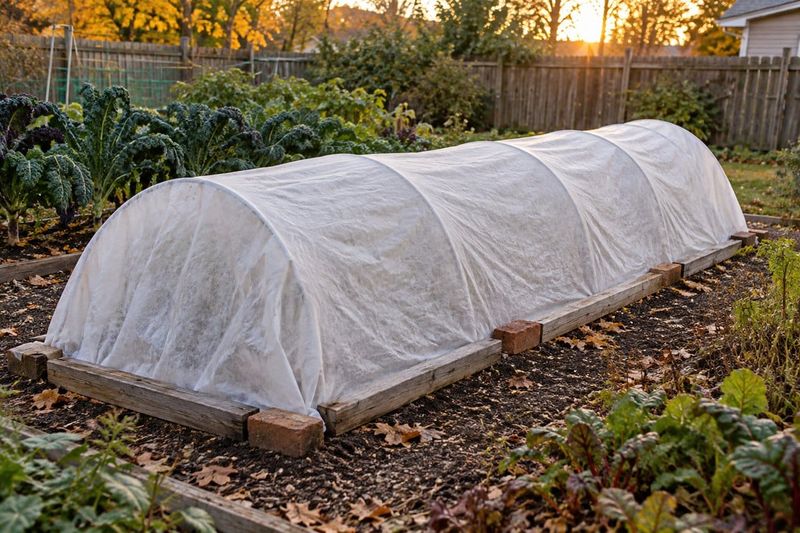
A breathable row cover can take a little of the edge off a cold night. Utah State reports that floating covers can make nights roughly 3 to 5°F warmer, while UF/IFAS cites up to about 3°F of frost protection in its row cover guidance.
Those numbers vary with the fabric, the weather, and how well the edges are secured. A cover will not reliably keep blossoms above 55°F, and it cannot promise successful pollination.
Use it as a short-term buffer on nights when a cold snap is forecast. Drape it over hoops or stakes so the fabric does not press on the flowers.
Sun can heat the space under a cover quickly. Pull it off or lift the sides in the morning, then replace it before sunset.
Gently tap open flowers to assist pollen movement
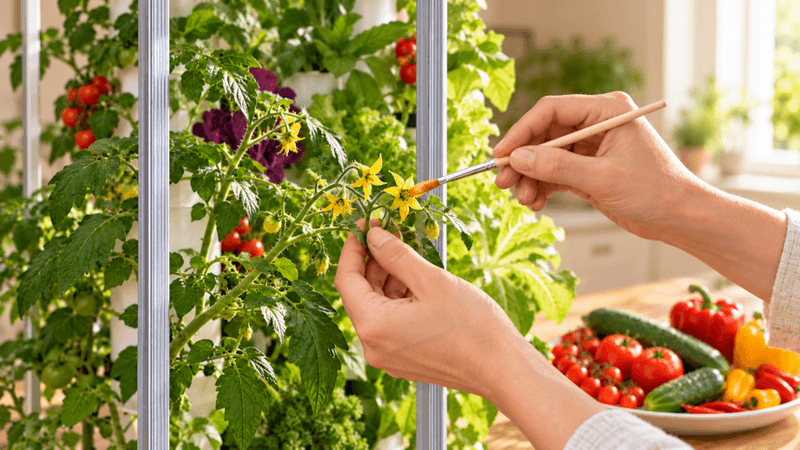
Each tomato flower holds both male and female parts, so plants largely pollinate themselves and do not need bees. Even so, pollen has to move inside the flower.
UF/IFAS notes that wind or mechanical shaking can help, and it names 10 a.m. to 4 p.m. as the main pollination period.
On a dry, sunny day, tap the flower cluster or the stem right behind it with a finger a few times. A light flick is plenty.
You can also tap the support wire or stake.
Be realistic about what this does. Tapping may assist pollen transfer, but it cannot repair pollen that cool temperatures have already harmed.
If blossoms still fall after you tap them on schedule, go back to your temperature log and your water and feeding checks.
Harvest suitable existing fruit before frost
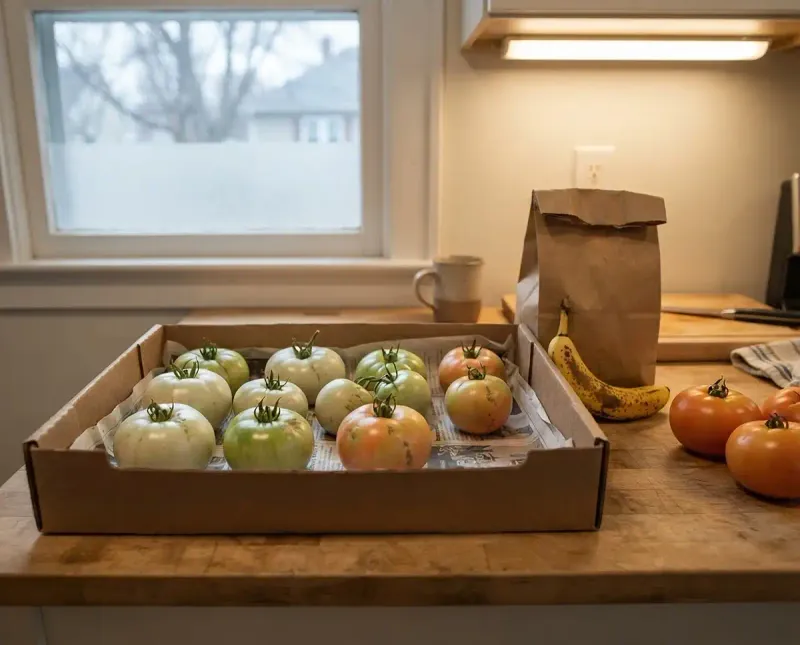
Once blossoms stop setting, shift your attention to fruit that is already formed. Harvesting protects that fruit from frost, but it does not save blossoms and does not guarantee a bigger crop.
Advice differs by source. Iowa State says to pick mature, firm, greenish-white tomatoes without defects before frost and ripen them indoors.
Texas A&M recommends harvesting at the pink stage and ripening indoors, as noted in its fall gardening guide for Texas.
Those are two separate recommendations, so match them to your own situation. Texas gardeners can follow the pink-stage guidance, while the Iowa advice shows how to handle fruit that is mature but still green.
Skip cracked, soft, or damaged tomatoes.
Store picked fruit in a cool spot indoors and check it often. Frost is the deadline, and the plants can only finish so much.