
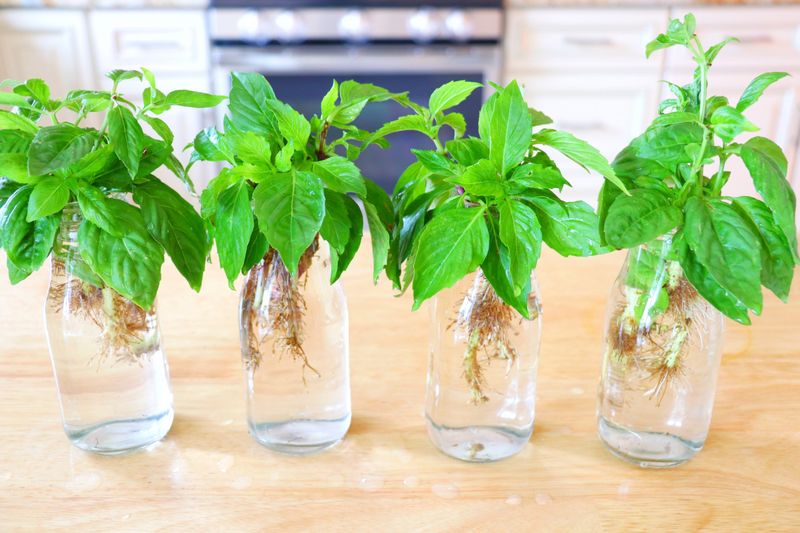
Basil is one of the first herbs to give up when the weather turns cold. But if some of your plant is still healthy, you may be able to start a new one from a small piece of stem.
Rooting a cutting in water is cheap, easy, and fun to watch. Here is how to do it, and what it can and cannot promise.
Check the stems before taking a cutting
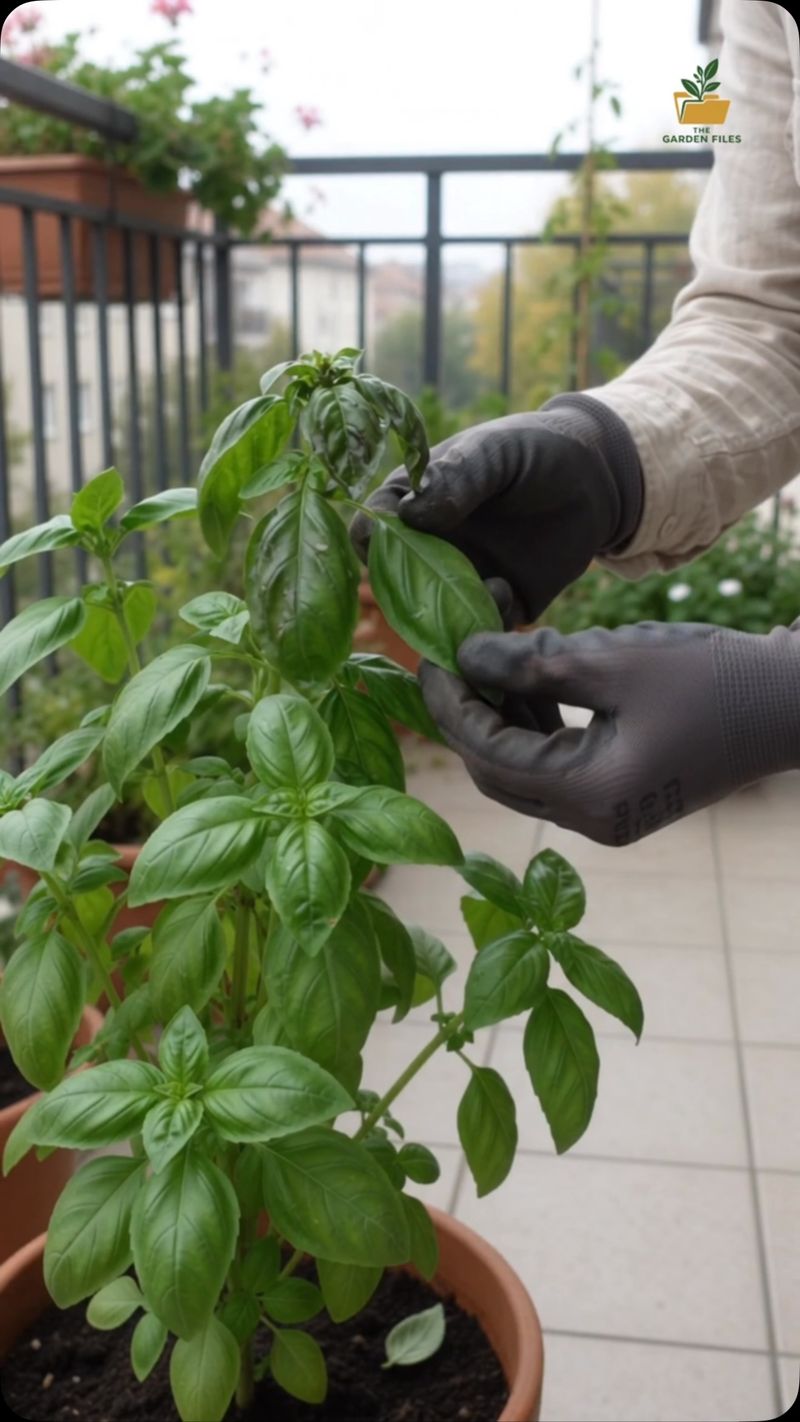
Walk out to the basil patch and look closely before you grab the scissors. Firm, green, upright stems with perky leaves are good candidates.
Stems that are blackened, limp, or mushy are not, and putting them in water will not bring them back.
Basil is sensitive to cold. Rutgers Extension crop guidance reports cold injury below 40°F.
That is a guide for growing basil as a crop, not a hard line for every plant in every yard. A sheltered plant may look fine after a chilly night, while another one nearby is damaged.
The goal here is to copy healthy growth, not to rescue frost damage. The Herb Society of America recommends plant material that is healthy, free of disease and insects, and not wilted.
If you find only a few good stems, that is enough to try. If you find none, plan on fresh seed or a new plant instead.
Go in with realistic hopes. A cutting can root, but nothing about this method is a sure thing.
Prepare a short cutting from healthy growth
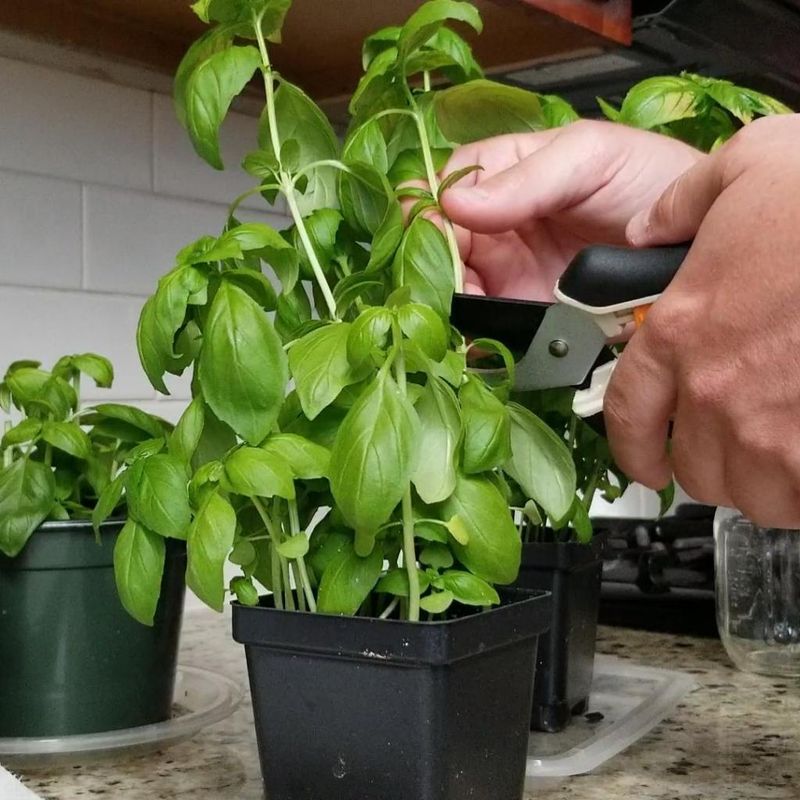
Aim for a piece about 3 to 4 inches long, cut just below a node. The node is the spot where a pair of leaves joins the stem.
University of Tennessee Extension uses this size and cut for basil.
Next, pull off the leaves from the lower part of the stem, the section that will sit in water. Leaves left underwater tend to rot and cloud the glass.
Keep the leaves higher up so they stay dry and the cutting can keep making food.
Choose a stem that looks fresh and not tired. The Herb Society of America points to non-wilted material as the better starting point.
If you have a few good stems, cut several, since not every one will root.
Good prep gives a cutting a fair start. It does not guarantee roots, so treat each one as a small experiment.
Root the cutting in clean water
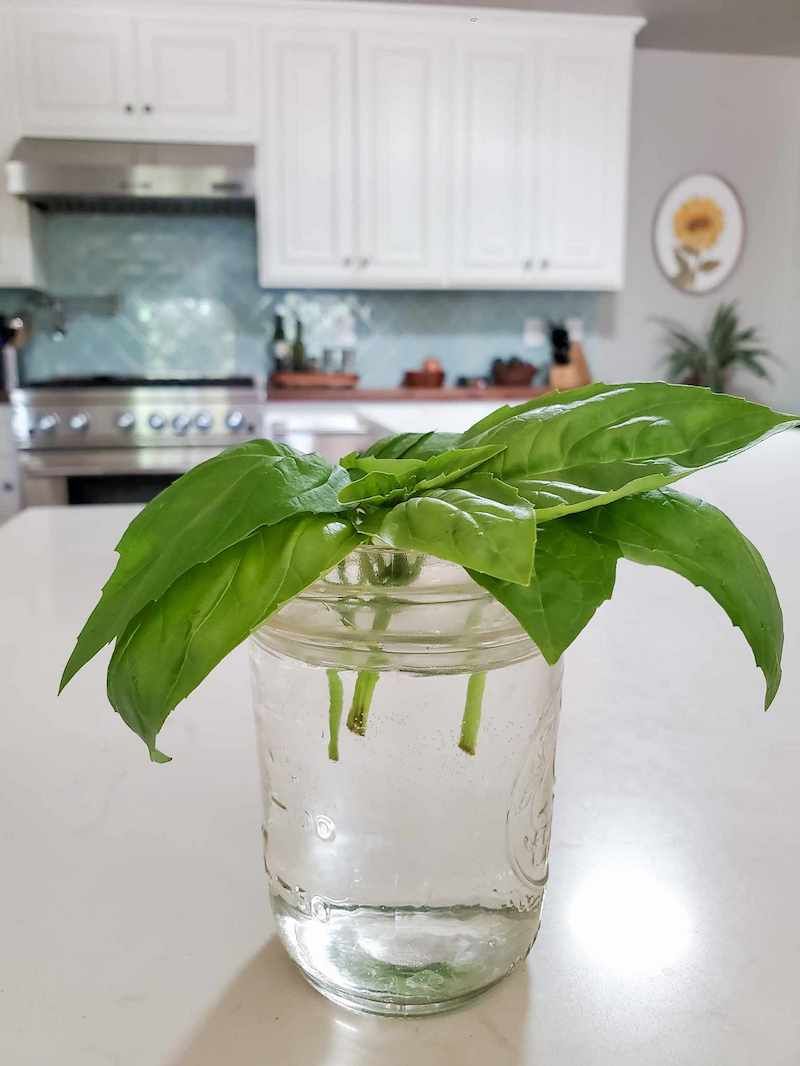
Grab a clean glass and fill it with room-temperature water. Set the cutting in so the bare stem is under the surface and the leaves stay above it.
Park the glass in bright, indirect light, such as a spot near a window but out of harsh direct sun.
Fresh water matters. Change it every 3 to 4 days, as University of Tennessee Extension advises.
A quick rinse of the glass at the same time keeps slime from building up.
Roots may show up in about 2 to 3 weeks. That is a typical window, not a promise, so a slower cutting is not always a failure.
Look for tiny white threads along the bottom of the stem.
If a cutting turns dark, slimy, or limp, toss it and start another from a healthy stem. Keeping a few cuttings going at once gives you backups.
Pot the cutting when roots reach about an inch
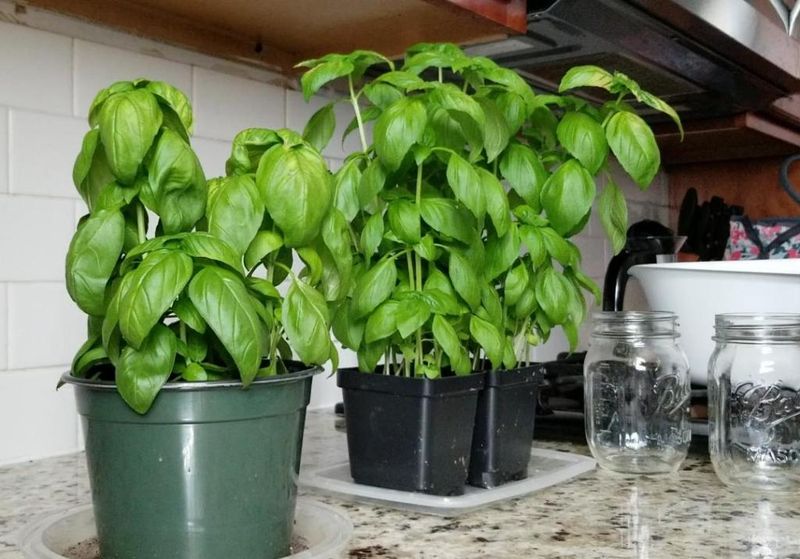
Once the roots are about 1 inch long, it is time to move the cutting out of the glass. Water is a handy way to start a cutting, but it is not meant to be the permanent home.
University of Tennessee Extension says to pot it in mix at this stage.
Pick a container with drainage holes and fill it with well-drained potting mix. Iowa State Extension recommends this kind of setup for herbs grown indoors.
Make a hole, set the roots in, and press the mix gently around the stem.
Give it a drink, let the extra drain away, and place the pot somewhere bright. Do not wait much longer than the 1-inch mark, since long roots grown in water can have a harder time adjusting to mix.
Give the plant suitable indoor light
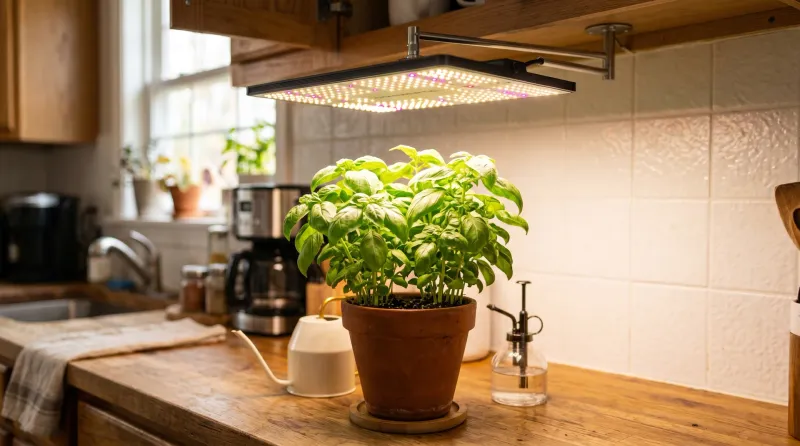
Here is the catch: roots are the easy part. Keeping basil growing indoors is a separate job, and light is usually the hardest piece of it.
Iowa State Extension says herbs often need 4 to 6 hours of direct sunlight. It adds that supplemental full-spectrum light may be needed.
Winter days are short and the sun sits low, so many windows fall short.
If you add a grow light, Iowa State’s grow-light guidance recommends running it 12 to 16 hours a day. A simple outlet timer makes that easy to manage.
A diagnostic clue: if the stems get long and leggy with small, pale leaves, the plant is probably reaching for more light. Move it closer to the window or add a lamp.
Not every home has a sunny sill, so judge your own space honestly.
Water according to the potting mix
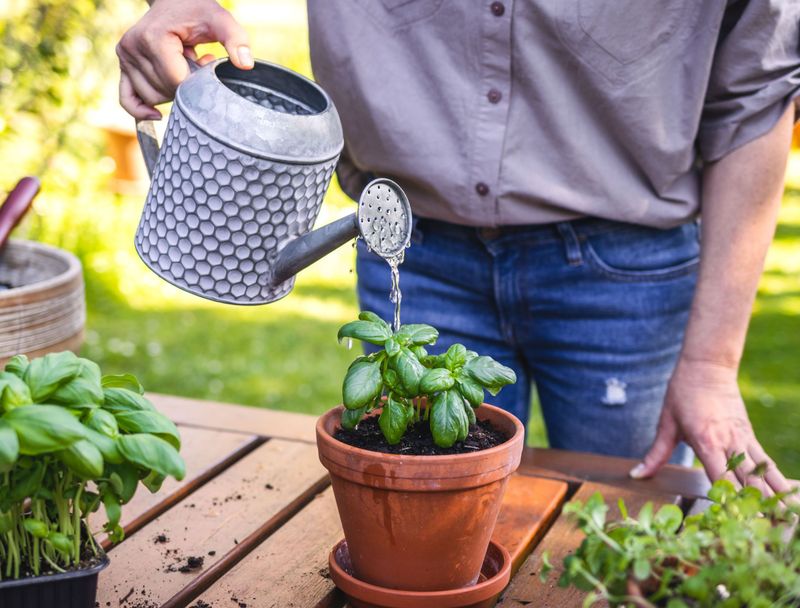
Skip the calendar and use your finger. Press it into the potting mix, and water when the surface feels dry to the touch.
That is the check Iowa State Extension gives for indoor herbs.
When you do water, pour until some runs out of the drainage holes, then empty the saucer so the roots are not left sitting in a puddle. This is where the well-drained mix and the pot with holes pay off.
Soggy mix can leave roots short of air.
No fixed schedule works for everyone. A warm, bright room dries a pot faster than a cool, dim one, and a small pot dries faster than a big one.
Expect the rhythm to shift from week to week.
Drooping leaves can mean thirst, but they can also mean too much water, so check the mix before you reach for the watering can.
Treat winter leaves as possible, not guaranteed
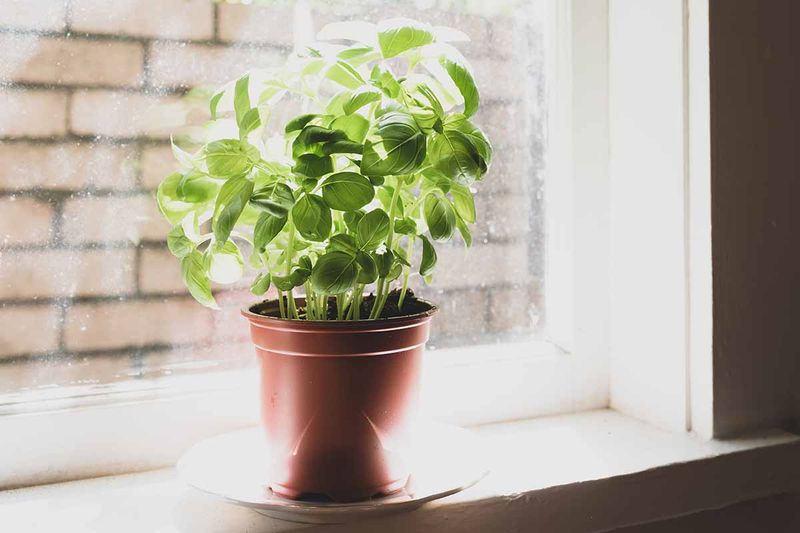
A rooted cutting is a good start, but it is not a promise of a winter harvest. Some plants will thrive, some will sulk, and some will fade.
Light is often the deciding factor, and Iowa State Extension notes that herbs indoors may need extra lighting to do well.
Basil is also an annual, meaning its life cycle is built to end. University of Minnesota Extension notes that it may need artificial light in darker months and can flower and die even indoors.
Pinching off flower buds as they form may help keep leaves coming, but it will not stop the clock forever.
Pick leaves lightly and do not expect a steady or large supply. Think of healthy cuttings as a way to stretch the season and get a few more weeks of fresh leaves.
Even a short run of homegrown basil beats a dead patch.