
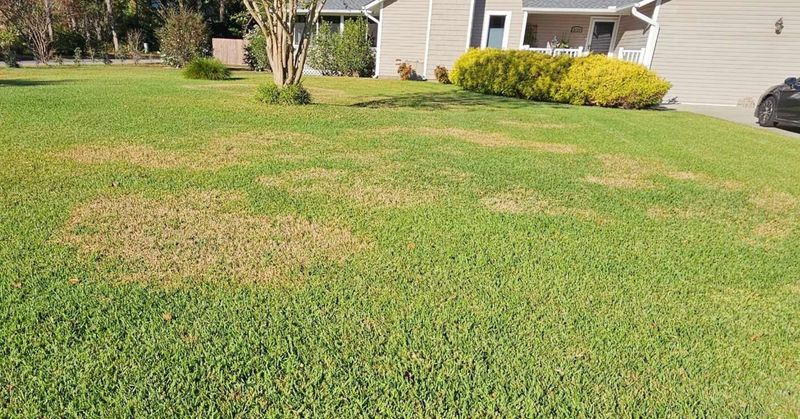
Walk out on a November morning and you might spot tan or brown circles spreading across your St. Augustine lawn. In Texas, those rings can be a sign of a fungal disease called large patch, but looks alone do not tell the whole story.
Other problems can mimic it, and the wrong response can make things worse. Here is how to check your lawn, cut down on conditions that favor the disease, and set fair expectations for spring.
A tan ring is a clue, not a diagnosis
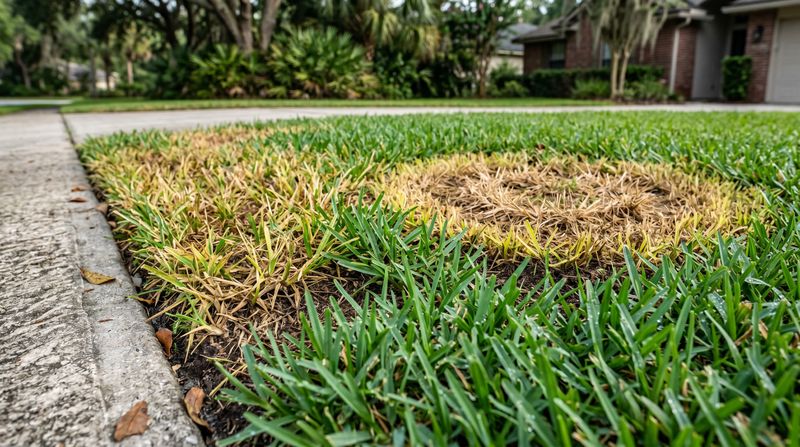
Circular tan or brown patches with yellow-orange borders are a classic look for large patch in St. Augustine. Texas A&M AgriLife Extension describes large patch as a fungal disease of warm-season grasses, caused by Rhizoctonia solani, that often forms circular patches with yellow or orange borders in fall and spring.
Some sources, including UF/IFAS, also list brown patch as another name for it. In Texas, large patch is the more precise term for warm-season lawns like St. Augustine.
Brown patch is the name usually used for a similar disease in cool-season grasses.
A ring that fits the description is consistent with large patch, but it does not prove it. Several St. Augustine problems can leave similar marks, so a quick field check is worth a few minutes.
Go to the edge of a patch, where grass changes from healthy to damaged. Gently tug a few shoots.
Per the St. Augustinegrass management guide, diseased shoots may pull easily from the stolon, and you may see dark lesions near the base of the shoot.
If the shoots slip off and the base looks dark and damaged, large patch becomes a reasonable working guess. If they hold firm or the roots look wrong, keep reading, because another cause may be at work.
Texas look-alikes can point to a different problem
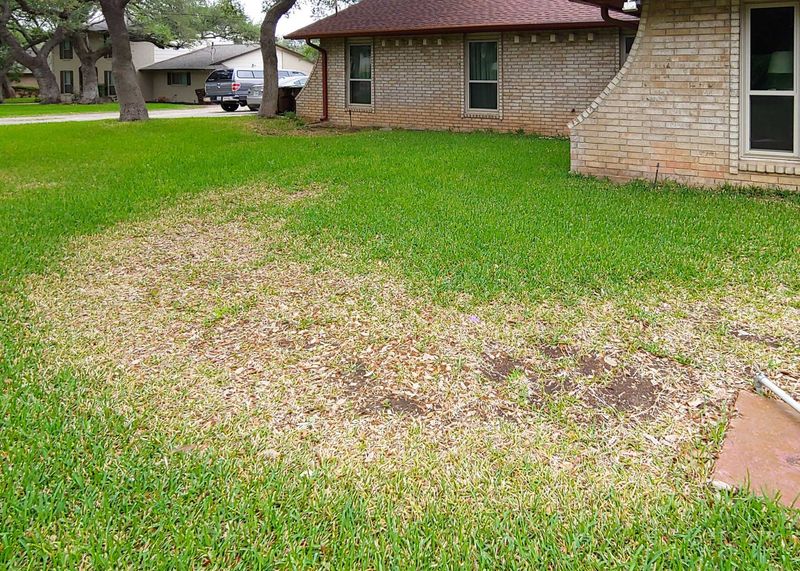
Two Texas troublemakers are worth ruling out before you decide anything. The first is take-all root rot, which also affects St. Augustine.
According to Texas A&M AgriLife, it tends to show up as blackened, rotten roots and stolons.
Dig up a small piece of turf from a patch edge and look underground. Dark, mushy roots and stolons lean toward take-all root rot.
In large patch, the leaves are the part that slips easily from the stolon.
The second is chinch bug. Texas A&M entomology guidance notes that its damage is usually irregular rather than circular and is especially linked to hot, dry conditions.
A tidy ring in a cool, damp stretch points away from chinch bugs, while ragged dead areas in sunny, stressed turf point toward them.
Sometimes the clues overlap or simply do not fit. Maybe the ring is oddly shaped, the roots look mixed, or you are not sure what you are seeing.
In that case, contact your Texas A&M AgriLife county Extension office for help with a diagnosis rather than treating by appearance alone.
Cool, damp conditions matter more than the calendar
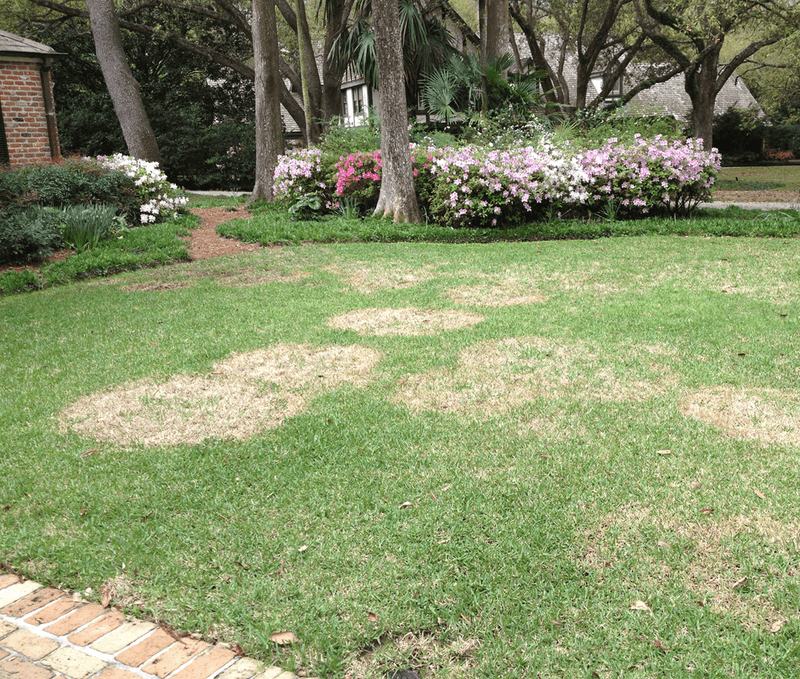
Large patch is favored by cool, wet conditions, which is why it tends to appear in fall and spring. Still, a chilly night by itself is not a diagnosis.
Risk builds from a mix of temperature, moisture, drainage, thatch, soil, and how the lawn has been managed.
For a sense of what favorable looks like, UGA Extension describes thatch temperatures of about 50 to 70 degrees F with continuous moisture for at least 48 hours. Those numbers come from Georgia and describe conditions that favor the fungus.
They are not Texas thresholds, and they do not prove your lawn has the disease.
What this means for you is simple. Pay attention to places where moisture lingers: low spots, shaded corners, areas near downspouts, and sections with thick thatch.
A lawn that dries out between rains is in a different position than one that stays soggy for days.
Texas A&M also lists excess moisture among the conditions that promote the disease. That is why the next step focuses on water, not on guessing from the thermometer.
Reduce excess moisture and avoid moving the disease
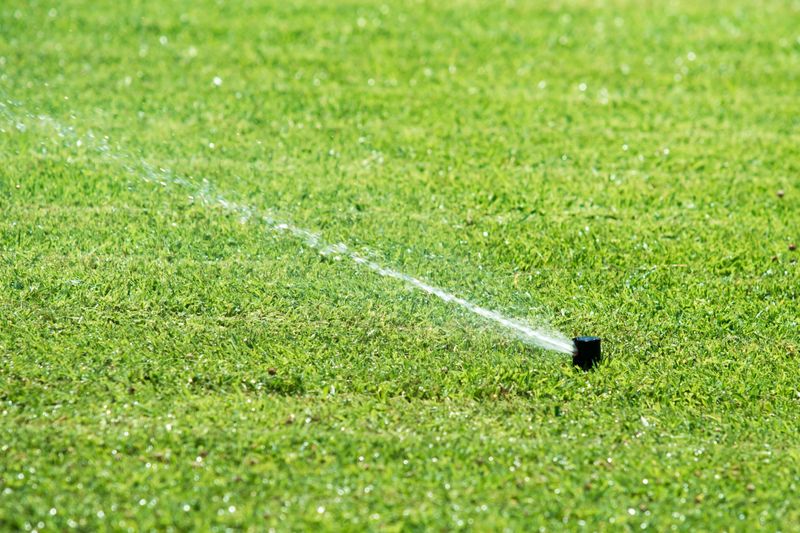
Water is the lever you control most. Texas A&M recommends deep, infrequent irrigation and good drainage.
In practice, that means watering only when the lawn needs it, not on a fixed schedule that ignores recent rain or cool weather.
When you do water, morning is best, so the blades dry out during the day instead of staying wet overnight. Skip evening and nighttime cycles.
Many Texas lawns can go long stretches in cool fall weather without needing any irrigation at all.
Next, look at spots that stay saturated. A downspout dumping onto turf, a low corner, or compacted ground can hold water well after a rain.
Redirect runoff, fill dips, or improve drainage where you can.
Mowing deserves a pause too. Equipment can carry the fungus from one spot to another, so Texas A&M advises avoiding mowing during active disease if possible.
If you must mow, do the healthy areas first and clean the mower deck and blades afterward.
Be realistic about what these steps do. They remove conditions that favor the disease and may limit further spread, but they will not instantly repair grass that is already damaged.
Skip late nitrogen and maintain the lawn appropriately
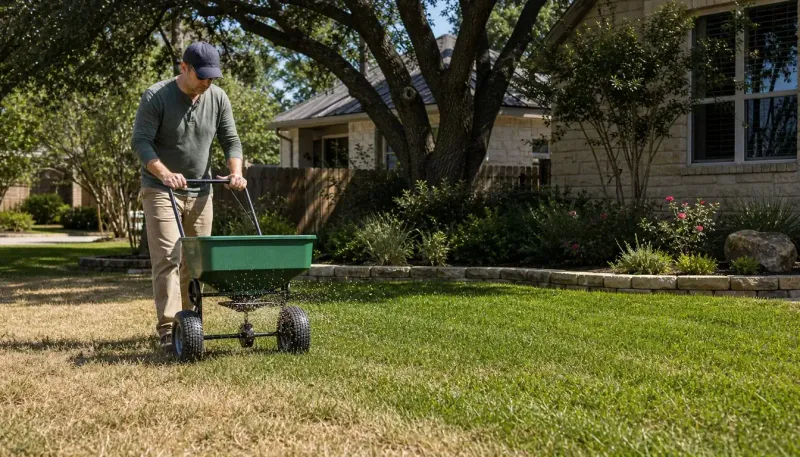
A late dose of fertilizer can feel like a rescue, but it can backfire. Late-fall overfertilization can increase large patch risk, so skip the nitrogen once the season turns.
The Texas A&M St. Augustinegrass guide advises making the final nitrogen application at least four to six weeks before your county’s historic first frost. Texas spans a huge range, so that date is different in the Panhandle than it is along the Gulf Coast.
Use your local average first-frost date, not one statewide calendar day.
Let a soil test guide the rest of your nutrient plan. It shows what your soil actually needs, so you are not adding nitrogen or other products on a guess.
Your county Extension office can explain how to collect and submit a sample.
For general upkeep, keep St. Augustine at the recommended 2 to 3 inches when you do mow. Reducing thatch where appropriate also helps, since a thick layer holds moisture at the soil surface.
Save that work for times when the disease is not actively spreading, in line with the advice to hold off on mowing during an outbreak.
Fungicide is mainly a preventive tool
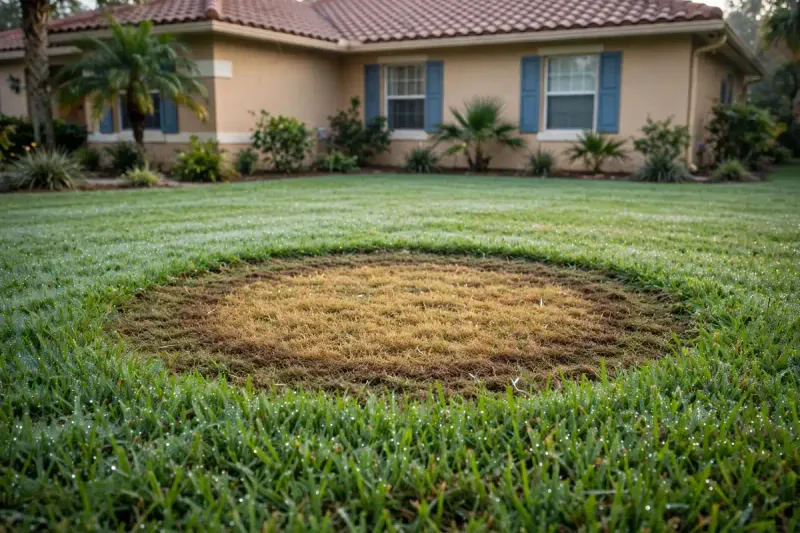
Spray products tempt many homeowners once rings appear, but timing is the catch. According to Texas A&M AgriLife, fungicides work best preventively, before symptoms show up in fall.
Once rings are visible, their effectiveness is limited.
That means an application now is not a cure, and it is not a dependable way to stop visible patches before spring. Texas A&M also notes that spring applications are not cost-effective for large patch.
Damaged turf may simply have to wait for new growth.
If you still want to consider a product, start with the label. Use only a product whose label permits your specific use, such as on a home lawn and on St. Augustine, and follow every direction on it.
Do not add extra irrigation to wash a product in or to push greener growth unless the label calls for it, since too much water feeds the very conditions you are trying to reduce.
Confirm the problem first. A fungicide aimed at large patch will do nothing for take-all root rot or chinch bugs.
If your diagnosis is uncertain, your Texas A&M AgriLife county Extension office can help you decide whether any treatment makes sense.
For next fall, the preventive window is what matters. Note where rings appeared this year so you can plan ahead.
Judge recovery after spring growth returns
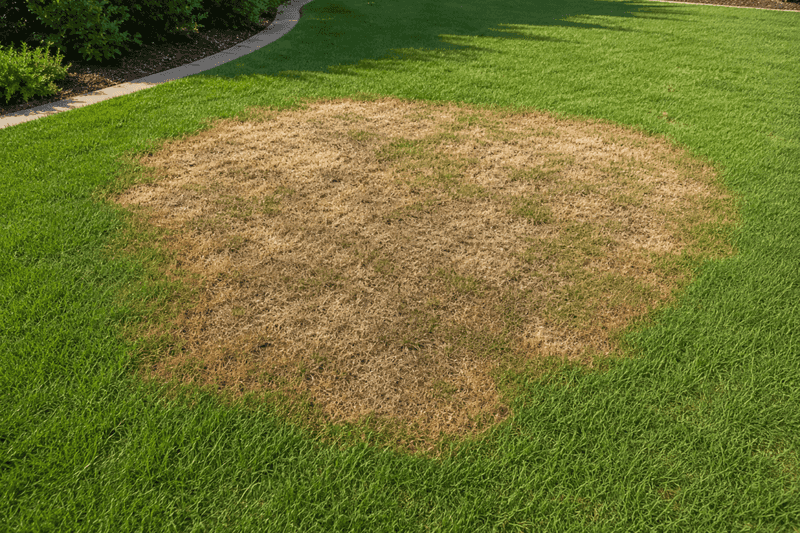
Patience pays off here. As temperatures rise and the grass grows actively again, lightly affected turf may fill in on its own.
Texas A&M notes that damaged turf may recover with later growth.
Extensive damage is a different story. When the crowns or roots are badly injured, new growth may not come back, and those areas may need to be resodded.
Wait until the lawn is actively growing, then check each patch for new green runners before you decide.
Put your effort where it counts: confirm the diagnosis, keep excess moisture down, and set realistic expectations rather than chasing a last-minute spray.
A ring on the lawn is a message, not a verdict, and spring will tell you the rest.