
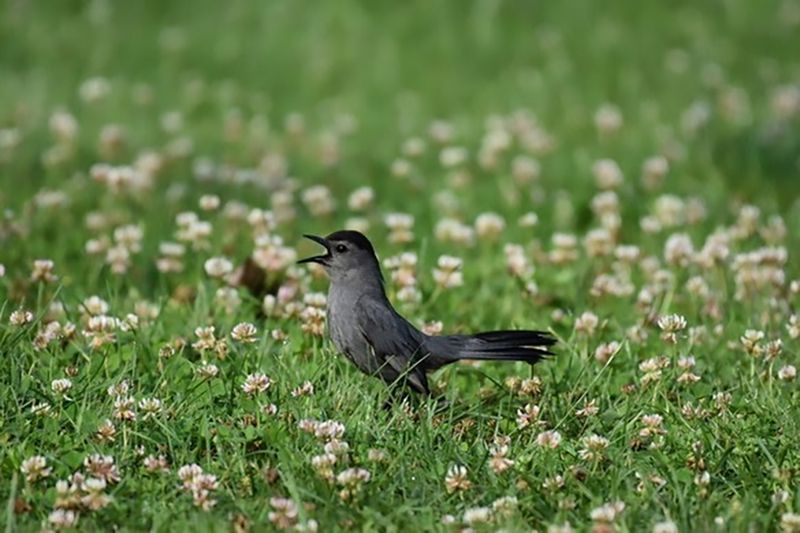
Hear a soft meow from a shrub, but no cat in sight? A gray catbird could be the one making that sound.
These birds are known to spend winters along the Gulf Coast, including Florida. Here is how to check who is calling and how to make your yard friendlier to the birds that pass through.
Could that mew be a gray catbird?
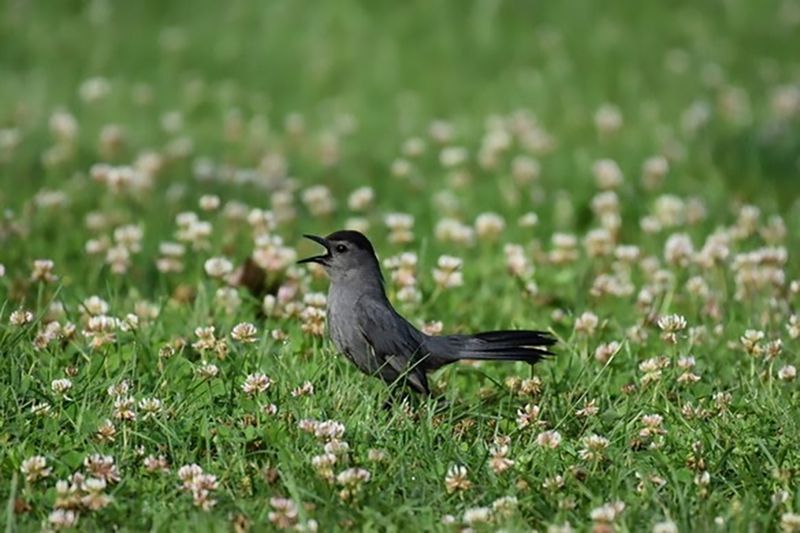
A cat-like mew from a hedge is a good clue that a gray catbird might be nearby. It is only a clue, though.
Sound alone cannot settle the question, so the next step is to find the bird and look at it.
Start with the colors. A gray catbird is slim and gray all over, with a neat black cap on top of its head.
Lift your eyes to the tail and, if the bird turns just right, look underneath for a patch of rusty feathers. That combination of gray body, black cap, and rusty undertail is what to check for, and the Cornell Lab species guide describes these marks and lets you compare the sound with recordings.
Here is where the mystery gets trickier. Catbirds also mimic other sounds, and they sing longer, more complex songs besides the famous mew.
So a call that does not quite sound like a cat could still come from a catbird, and a cat-like call might come from something else. Matching what you see with what you hear is the safest approach.
Another reason people hear a catbird before they see one is the way it behaves. Catbirds like dense shrubs and thickets, and they often stay tucked inside the leaves.
A bird that sounds close can stay hidden for a long time.
Try standing still near the hedge for several minutes, ideally in the morning when birds are active. Keep your movements slow and let the bird come into view.
Binoculars help, but even a clear look at the dark cap and gray body can point you in the right direction. If you only get the sound, simply note it as a possible catbird rather than a confirmed one.
Florida falls within the catbird’s winter range

Catbirds from across North America spend the colder months along the Gulf Coast, from Florida through Texas, and some go farther south. Cornell Lab range information lays out this pattern.
So hearing one in Florida during winter fits what is known about the species.
South Florida is also named among the documented overwintering areas. The Smithsonian’s National Zoo profile lists it as part of the winter range.
That makes a catbird sighting in a Miami or Naples yard unsurprising, not strange.
Still, a range map describes a species, not a single bird. It does not tell you where the catbird in your hedge came from, what route it took, or how long it will stay.
A bird you notice in December could have been there for weeks, or it could be passing through.
The species is also not migratory everywhere. Cornell notes that catbirds are resident in some Atlantic coastal areas and migratory in other parts of their range.
So not every catbird in Florida should be assumed to be a winter arrival.
A useful habit is to jot down the date and place each time you spot one. Over a few weeks, you will learn whether the bird keeps showing up or was just a brief visitor.
That record says more about your own yard than any map can.
Its diet shifts between insects and fruit

Catbirds are not seed-eaters at feeders so much as foragers in shrubs. They eat insects and they eat fruit.
Both matter, and the balance changes through the year.
A U.S. Forest Service species review estimates that insects make up about half of the catbird’s diet overall.
Fleshy shrub fruits make up most of the rest. Think of it as a rough average across many studies, not a rule for every bird on every day.
Season and place change the picture. Insects tend to be easier to find when it is warm and bugs are active, while fruit can take a bigger share when berries are ripe.
A bird in a Florida yard in winter may be eating something quite different from a bird in a northern forest in summer.
It helps to keep this general information separate from specific plants. Knowing that catbirds eat fruit does not mean any given berry bush in your yard is a favorite.
It only tells you that fruit-bearing shrubs are part of the bigger picture of how these birds feed.
If you want to learn what a catbird in your yard is actually eating, watch it. Note whether it is picking at leaf litter, snatching insects from foliage, or pulling berries from a branch.
A few quiet minutes of watching teaches more than any list.
A hedge can offer cover without being a winter roost
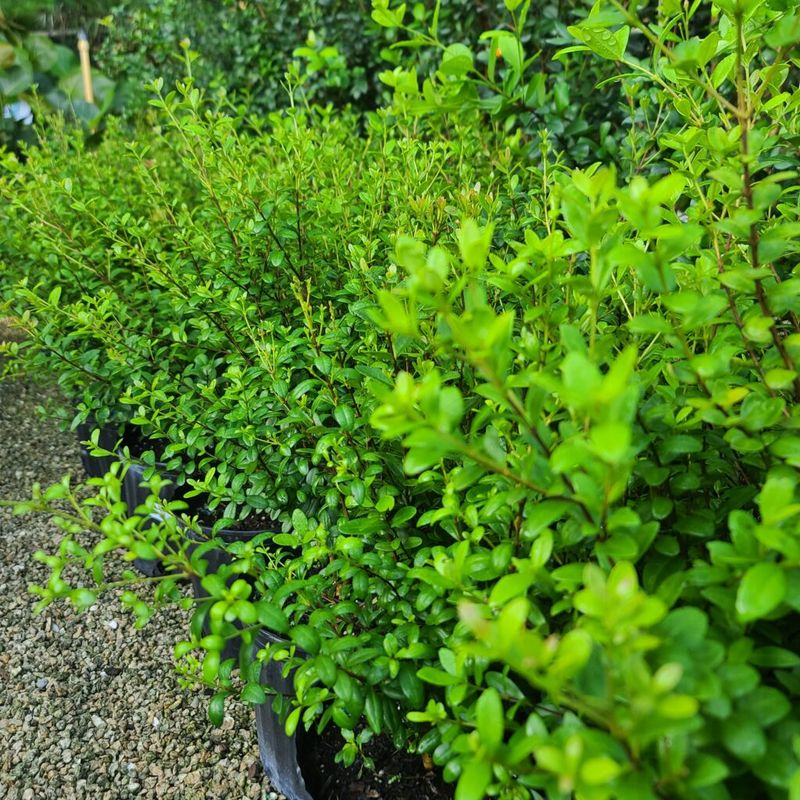
Thick shrubs are typical catbird territory. Dense thickets give the birds a place to hide, move around, and search for food.
The Forest Service review describes this kind of dense, brushy habitat as characteristic of the species.
A hedge can therefore offer real cover. It can also be a handy place to forage, with insects on the leaves and perhaps some fruit.
For a bird moving through the neighborhood, it may be a convenient stop.
What a hedge sighting cannot tell you is where the bird sleeps. Hearing a mew at noon does not mean the bird roosts there at night.
It also does not mean it will stay all winter. The same bird might use several yards, or it might move on in a day or two.
To get a better sense of how your hedge is used, try a simple routine. Check at different times of day over a couple of weeks and note when the bird appears and what it is doing.
If it keeps turning up and feeding in the same spot, that tells you the hedge is useful to it, even if you still cannot say where it spends the night.
Meanwhile, keeping some dense growth in place costs little. A tangle of shrubs gives many small birds shelter from wind and from view, whether or not a catbird ever shows up.
Choose Florida plants that support birds generally
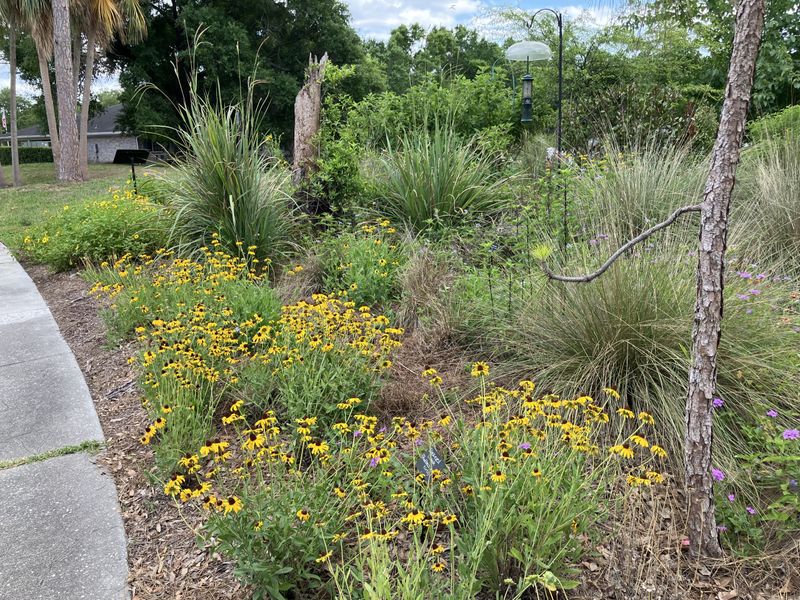
If you want a bird-friendly yard, start by keeping the dense shrub cover you already have. Then consider adding plants that suit Florida’s sandy soil and climate.
UF/IFAS Gardening Solutions lists several good choices for birds in general.
Examples from that list include Simpson’s stopper, native hollies, American beautyberry, wild coffee, blueberry, red mulberry, wax myrtle, and seagrape. Not every plant fits every Florida region, so check your hardiness zone and light conditions before buying.
A shady corner and a hot, sunny strip call for different picks.
Keep expectations realistic. These are general bird-friendly recommendations.
They are not a proven list of catbird favorites, and planting one does not guarantee a catbird will visit. What they do offer is food, cover, or both for many kinds of birds.
Just as important is what to leave out. UF/IFAS names several invasive plants to avoid, including Brazilian pepper, nandina, coral ardisia, asparagus fern, and Surinam cherry.
Birds may eat their berries, but these plants spread into natural areas and crowd out native species. Some may already grow in your yard, so it is worth checking.
A practical plan is to add one or two native shrubs at a time, grouped together so they form a thicker layer. Water them well while they establish, then let them fill in.
Over a season or two, you will have a more useful planting for whatever birds pass by.
Limit pesticide use to protect wildlife
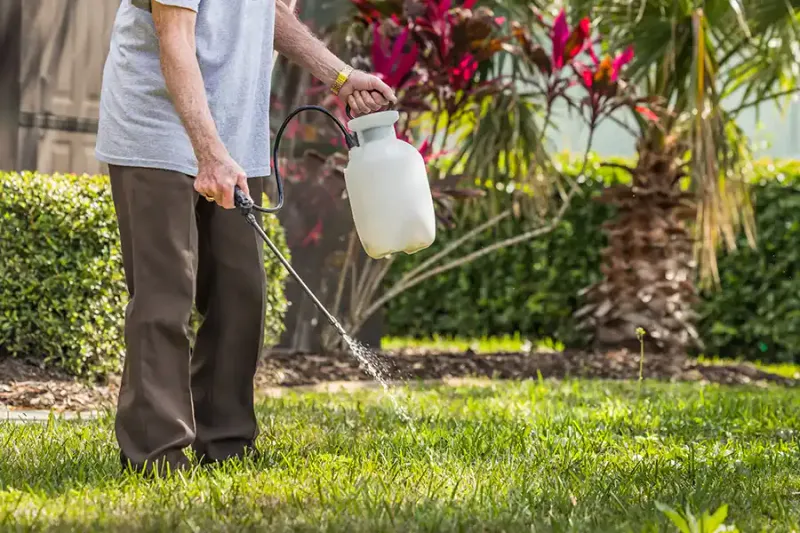
Birds that forage in your shrubs eat insects, and they can also be affected by what is sprayed on them. The U.S.
EPA notes that pesticides can harm non-target wildlife, including birds. EPA tips for reducing pesticide impacts on wildlife offer simple steps any homeowner can follow.
First, use pesticides only when you truly need them. Many leaf nibbles and a few insects on a hedge are normal and do not call for treatment.
Take a closer look at the problem before reaching for a sprayer.
Second, treat only the area that needs it. If one shrub has a pest problem, there is no reason to spray the whole border.
Spot treatment keeps chemicals away from places where birds feed and rest.
Third, follow the label directions every time. The label covers the right amount, the right timing, and safe handling, and it exists for a reason.
Using more than directed does not work better and can raise the risk to wildlife.
Broad spraying is not a good way to manage a wildlife-friendly yard. It can hit helpful insects along with pests, and it can leave residues on plants where birds forage.
A yard that gets a little messy is often a yard that birds actually use.