
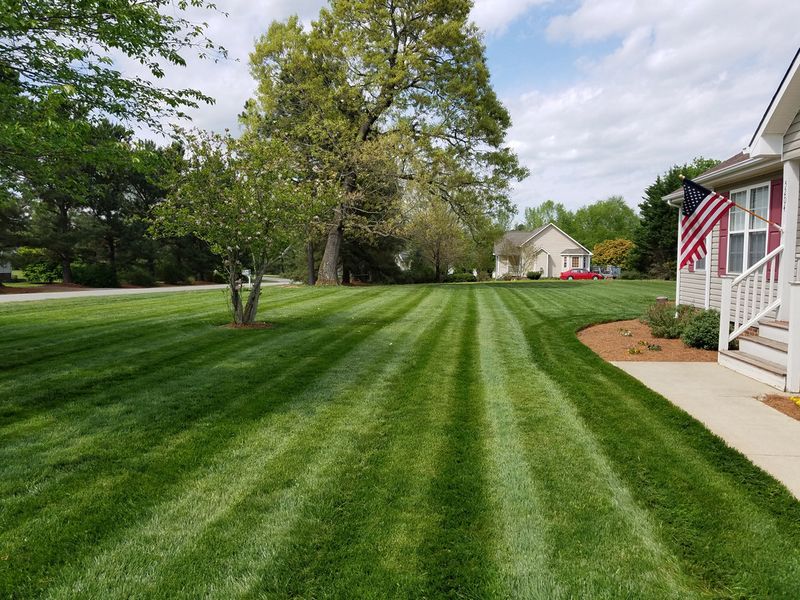
You meant to seed your fescue lawn in September, and now the leaves are down and November is here. Many North Carolina homeowners land in this spot every year.
The good news is that you still have choices, and some are safer bets than others. Here is a calm, realistic plan for each part of the state.
November puts every North Carolina region past its best seeding window
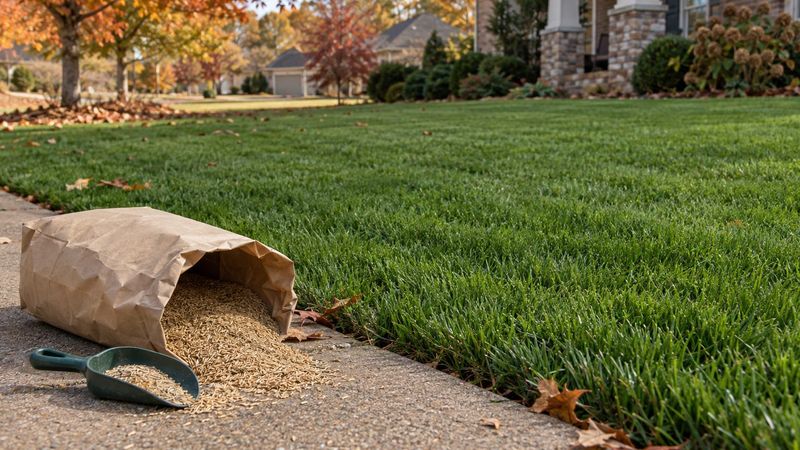
Timing is the heart of the problem. NC State lists recommended optimum tall-fescue seeding windows that differ by region: Carolina Lawns guidance points to Aug. 15 to Sept. 1 in the mountains, Sept. 1 to Oct. 1 in the Piedmont, and Sept. 15 to Oct. 15 in the coastal plain.
Look at the latest of those dates, Oct. 15 on the coast. Even that window closes before November starts, so no part of the state is inside its best timing right now.
Cooling temperatures also reduce germination, which is one reason late seed is a weaker bet than seed sown in the recommended window.
These dates are recommendations, not a rule that every seed sown later will fail. A mild November in Wilmington may treat seed better than a cold one in Boone, and weather in any given year can swing results.
Still, late seed raises the risk of poor establishment and winter injury, and NC State TurfFiles frames fall seeding around those regional dates for good reason.
So the question for your yard is not whether you can toss seed down. It is how much risk you are willing to carry into spring.
The next sections walk through the options from most dependable to least: sod, dormant seeding, and a late-winter or spring attempt.
Need turf sooner? Sod is the more dependable November option

If you want grass covering the ground rather than a seed gamble, tall-fescue sod is the clearest choice. Sod arrives as established turf, so it skips the fragile seedling stage that late seeding struggles to get through.
That makes it the more dependable November route for getting turf sooner.
The main condition is the soil. According to the NC State Extension Gardener Handbook, cool-season sod can be installed when the ground is not frozen.
In much of the Piedmont and coastal plain, that leaves plenty of November days to work with. In the mountains, keep an eye on the forecast, since a hard freeze can close the window.
Careful watering matters just as much. Fresh sod has shallow roots at first, so a lawn that dries out can struggle even though it looked perfect on delivery day.
Check the sod and the soil beneath it often, and adjust to the weather instead of following a fixed schedule.
Sod is not a guarantee. A shaded yard, compacted soil, or neglected watering can still cause trouble.
It does cost more than seed, but compared with the uncertain seed options covered next, it gives you the most predictable path to a green, usable lawn.
Dormant seeding means waiting for spring—not sowing in any November weather
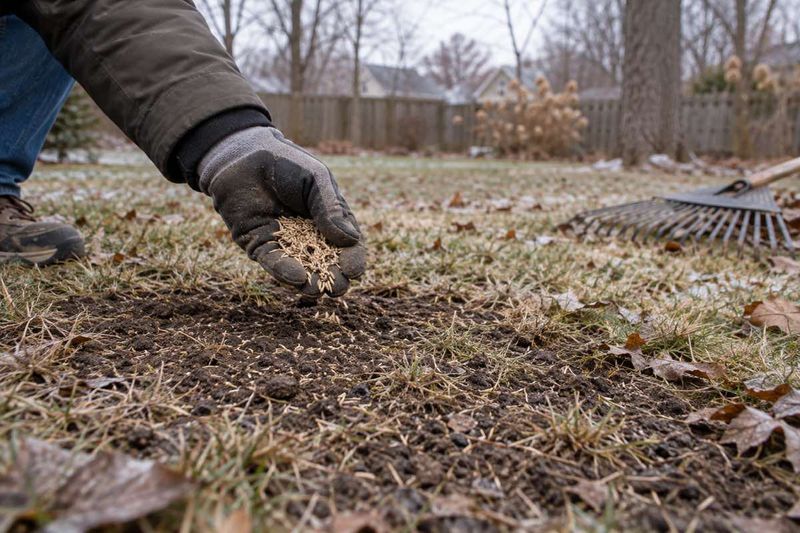
Dormant seeding gets misunderstood. It does not simply mean seeding in November.
It means sowing when conditions are cold enough to keep seed from germinating until spring. Sowing during a mild spell is a different thing, and that is where trouble starts.
The risk is premature germination. If seed sprouts in a warm stretch and a hard freeze follows, the young seedlings can be injured.
University of Minnesota researchers specifically caution that regions with warmer winters face more of this early-germination risk, and North Carolina winters are often milder than Minnesota’s.
Most dormant-seeding research comes from colder states. A 2026 Kansas State and Purdue study found results varied by species and seeding date, including premature germination and winter injury in mid-November plots.
That is useful context, but it is not a North Carolina trial.
For that reason, treat dormant seeding here as an uncertain gamble, not a proven method. Do not borrow northern dates, do not expect guaranteed results, and do not assume that simply adding extra seed fixes the odds.
If you try it, accept that thin spots may need fall reseeding.
Spring seeding is a fallback, not a guarantee of spring-thick turf
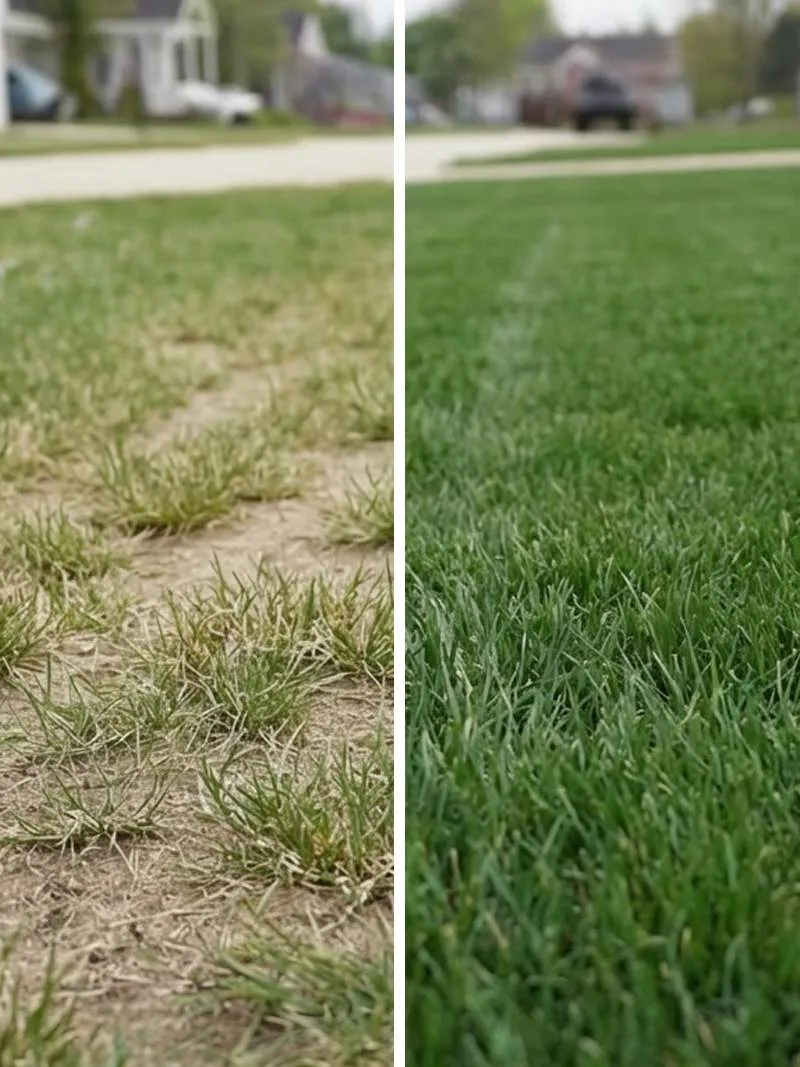
A late-winter or early-spring seed attempt can sometimes salvage bare areas, but it is less reliable than seeding in fall. Spring seedlings have a short runway before summer heat arrives, and young tall fescue has little time to build roots.
NC State’s guidance is not perfectly consistent here. Carolina Lawns names mid-February to early March in the Piedmont as the best alternative if fall seeding was missed.
Coastal areas run about two weeks earlier, and the mountains about two weeks later. It also warns that spring seedlings may be less satisfactory and that a stand may die.
The Extension Gardener Handbook goes further and says spring-seeding tall fescue is not recommended, especially outside the mountains.
The practical reading is that spring seeding is a qualified option, not a promise. It may help patch small bare areas, but it will not reliably give you a thick lawn.
Go in expecting that some areas may need to be reseeded the following fall, and plan your budget and time with that in mind.
Give any seed the contact and moisture it needs
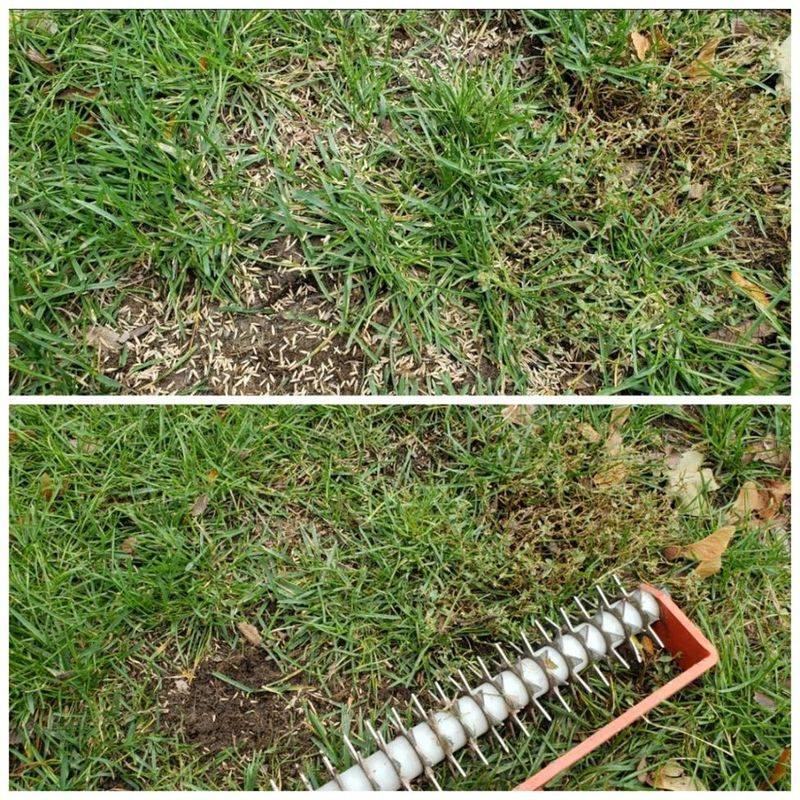
If you choose to seed anyway, good technique improves your odds, though it cannot fix poor timing. Start with the rate.
NC State TurfFiles gives a typical rate of 5 to 6 pounds of uncoated turf-type tall-fescue seed per 1,000 square feet. Coated seed weighs differently because of the coating, so adjust the amount using the bag’s directions.
Seed-to-soil contact comes next. Seed sitting on top of thatch, leaves, or hard ground has trouble rooting.
Rake out debris and lightly work the surface so seed touches loose soil.
Moisture is the other half. According to Carolina Lawns, keep the top 1.5 inches of soil moist.
New seed may need light watering two or three times daily during the first 7 to 21 days, depending on conditions. Cool November days dry soil slowly, so check by hand before you water.
Treat all of this as good practice, not insurance. Even well-seeded ground can lose ground to a cold snap, so keep expectations modest.
Use soil tests and caution to protect new grass

A few supporting choices can prevent avoidable problems, whether you lay sod or seed. Begin with a soil test.
The NC State Extension Gardener Handbook supports basing lime and fertilizer on test results instead of guessing. Do not assume starter fertilizer or extra phosphorus is needed.
Testing is cheap. NC State’s current guidance lists free NCDA&CS soil testing from April through November, with a fee during the December to March peak season.
If you are reading this in November, sending a sample soon can save you money.
On seeded slopes where erosion is a worry, Carolina Lawns recommends weed-free small-grain straw or hay, applied lightly and evenly. Mulch can limit erosion and hold moisture, but it does not make late seeding safe or guarantee that seed will establish.
Be careful with herbicides too. NC State TurfFiles warns that some products can harm new turf and advises waiting until seeded cool-season grass is extensively tillered.
Check the product label and turf-specific guidance first, including the tall fescue maintenance calendar. Also remember that an established lawn’s schedule does not match what new seedlings need.
Choose the least risky route now and plan to reassess in fall

If getting turf sooner matters most and the ground is not frozen, sod is the safer pick. Dormant seeding and a spring attempt are uncertain, and no seed route guarantees a thick lawn by spring.
The Carolina Lawns guide and the Gardener Handbook both keep the best seeding dates in fall.
Look over thin areas next summer and early fall, then plan to reseed in your region’s window. A lawn missed once can still be fixed next year.