
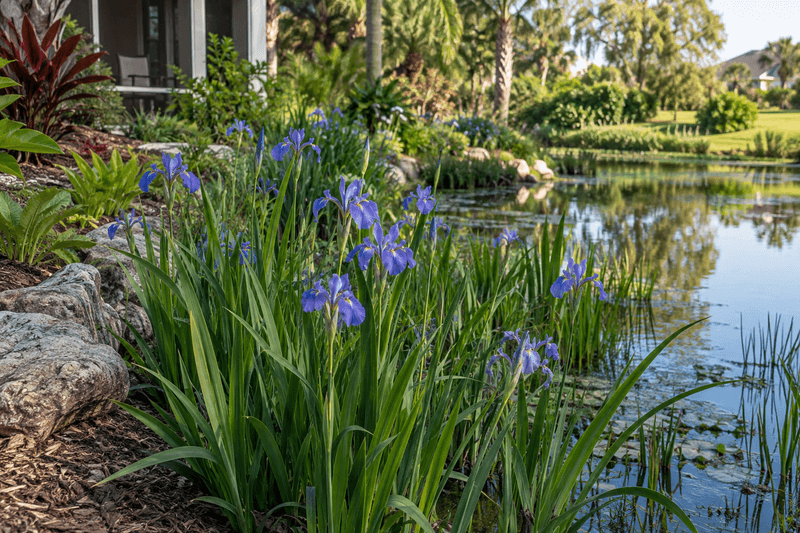
Those purple flowers can hide a growing problem: Mexican petunia spreads by seeds and underground stems, pushing beyond the bed where you planted it. In Florida, it can also escape yards and crowd native plants in wet areas.
These seven Florida natives offer flowers, color, or easy-care structure without Mexican petunia’s invasive behavior, though some naturally reseed or widen into clumps. Choose the one that matches your yard’s sunlight, soil, and moisture, rather than expecting every plant to fit the same spot.
1. Carolina Wild Petunia
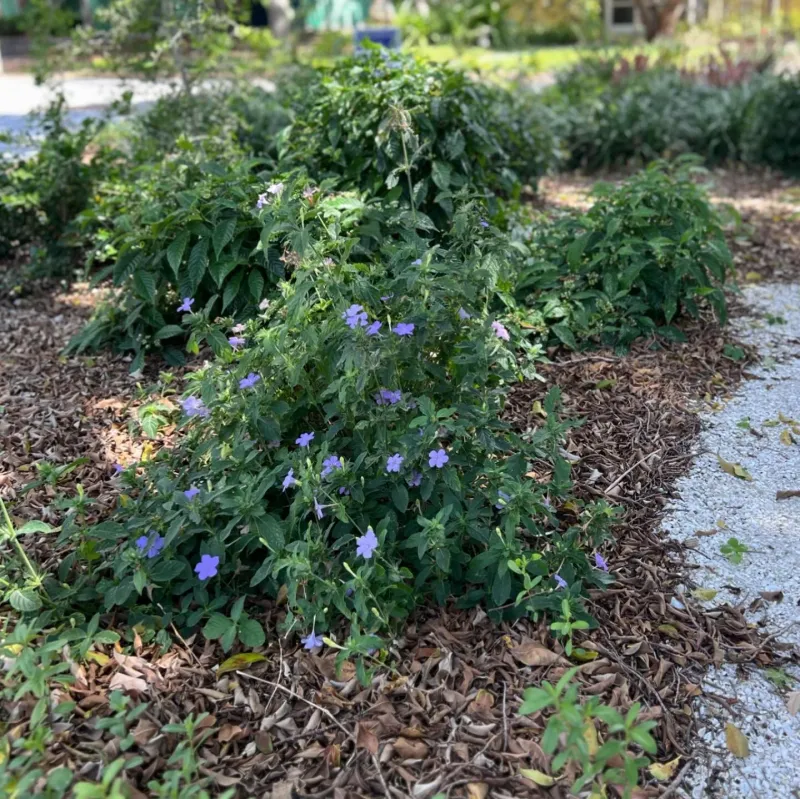
Want to keep the petunia look without keeping the problem? Carolina wild petunia, Ruellia caroliniensis, offers lavender flowers on a smaller native plant that fits comfortably near paths and along informal borders.
Unlike the taller, narrow-leaved Mexican petunia, this species has broader leaves and a lower, looser shape. It generally grows about 1 to 2 feet tall, with individual flowers lasting only a day but new blooms appearing over an extended warm-season stretch.
Give it sun to partial shade and well-drained soil. Once its roots are established, it handles dry spells reasonably well, making it useful in Florida beds that become sandy and thirsty between rains.
Its special value is familiarity: you still get those soft purple trumpets, plus foliage that supports common buckeye butterfly caterpillars. Some chewed leaves are part of that benefit, not a sign that the planting has failed.
Ask a native nursery for the botanical name, since a pot labeled simply wild petunia can be confusing. Expect occasional seedlings, and pull unwanted ones while small; native does not mean a plant stays frozen in place.
2. Stokes’ Aster
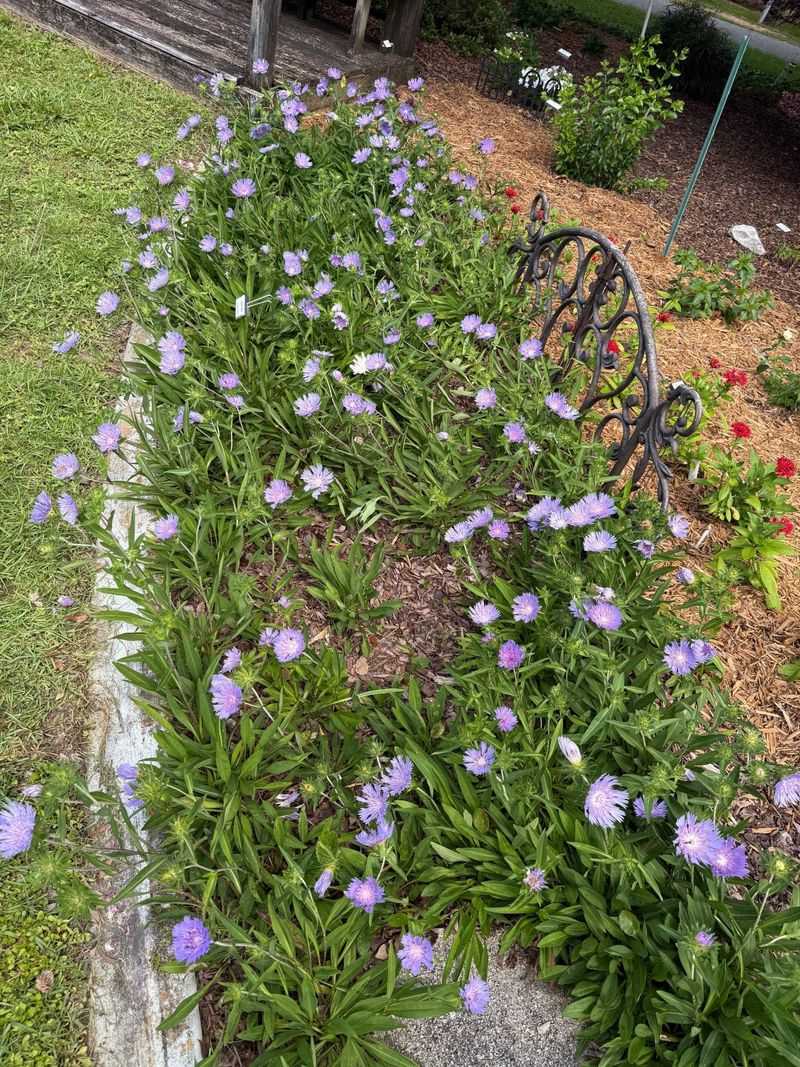
A tidy front walk calls for a plant that looks intentional, not one that keeps crossing the edging. Stokes’ aster, Stokesia laevis, brings large lavender-blue flowers above a low mound of green leaves, giving a border a more polished finish.
This Florida native is best suited to North Florida and appropriate nearby growing conditions, rather than being treated as a statewide choice. Plants commonly reach about 1 to 2 feet tall when flowering, so they work well in front of taller shrubs.
Choose a sunny location with acidic, well-drained soil that holds some moisture. A spot that stays soggy around the crown is a poor fit, even though the plant appreciates watering during dry periods.
The broad, fringed blooms offer a different look from Mexican petunia’s narrow trumpets. Butterflies visit the flowers, and removing spent heads can encourage additional bloom while keeping an entry bed neat.
Use several plants in a repeated group rather than scattering single specimens. Over time, divide crowded clumps as needed, and check with your county Extension office before choosing it for a warmer southern Florida location.
3. Blue-Eyed Grass
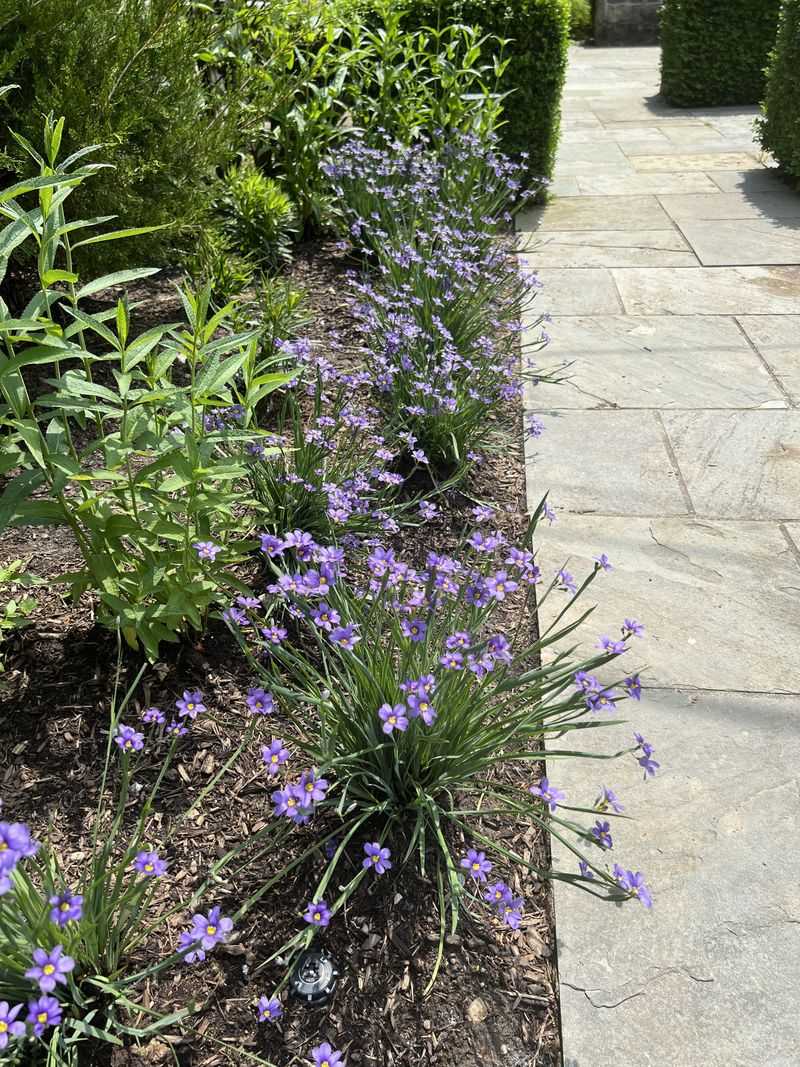
Along a stepping-stone path, smaller flowers often do the best work. Blue-eyed grass, Sisyrinchium angustifolium, adds tiny blue-violet blooms with yellow centers without blocking the walkway or swallowing neighboring plants.
Despite its common name, it belongs to the iris family, not the grasses. Its narrow leaves form compact clumps, usually around 1 foot tall, which makes it a useful replacement where Mexican petunia has become too bulky.
Spring is its main show, so choose it for seasonal sparkle rather than nonstop summer flowers. Repeat clumps along an edge, or mix them with later-blooming natives to avoid a bare-looking border after flowering ends.
A sunny to lightly shaded site with moist, well-drained soil is a good starting point. Florida’s driest sandy strips may need supplemental water, especially while plants establish, so this is not the best choice for a neglected curbside patch.
Check the botanical name when shopping because several native species share the blue-eyed grass label. Select one suited to your part of Florida, leave room for modest clump growth, and remove stray seedlings if you want a crisp edge.
4. Tropical Sage
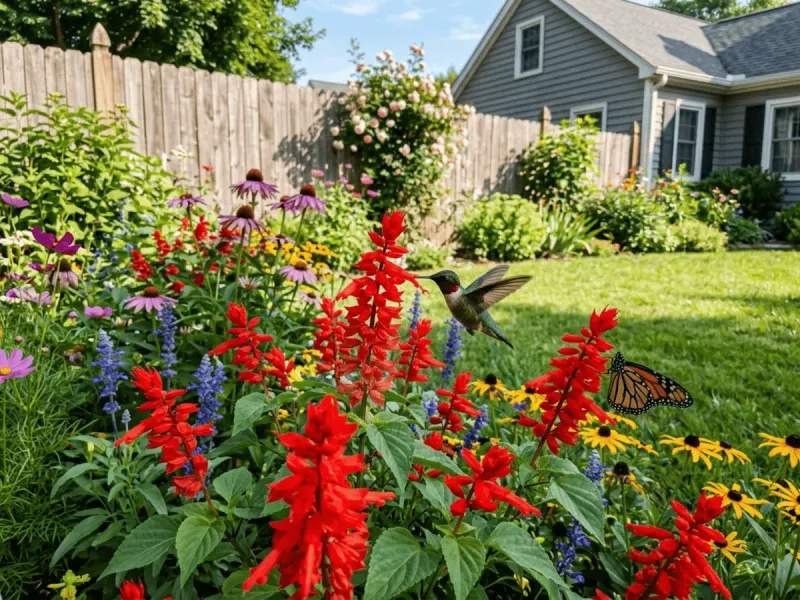
Red flowers can change the whole mood of a bed that once held only purple. Tropical sage, Salvia coccinea, supplies that bright switch, with airy flower spikes that attract butterflies and hummingbirds.
Plants often reach 2 to 3 feet tall, making them useful through the middle of a casual border. Their open shape lets you see neighboring plants rather than creating the dense wall that an established Mexican petunia patch can become.
Sun to partial shade and well-drained soil suit this Florida native. Water new plants until established, then adjust irrigation to rainfall and soil conditions instead of keeping the bed constantly wet.
Expect a long flowering season in warm weather, with frost shortening the display in colder parts of the state. Trim lanky stems to encourage branching, and remove spent flower spikes when the planting needs a quick cleanup.
Here is the trade-off: tropical sage readily reseeds. It does not behave like invasive Mexican petunia, but gardeners who want strict boundaries should remove seedlings and cut seed heads before they mature.
Choose it for a relaxed pollinator bed, not a tightly clipped formal edge.
5. Virginia Iris
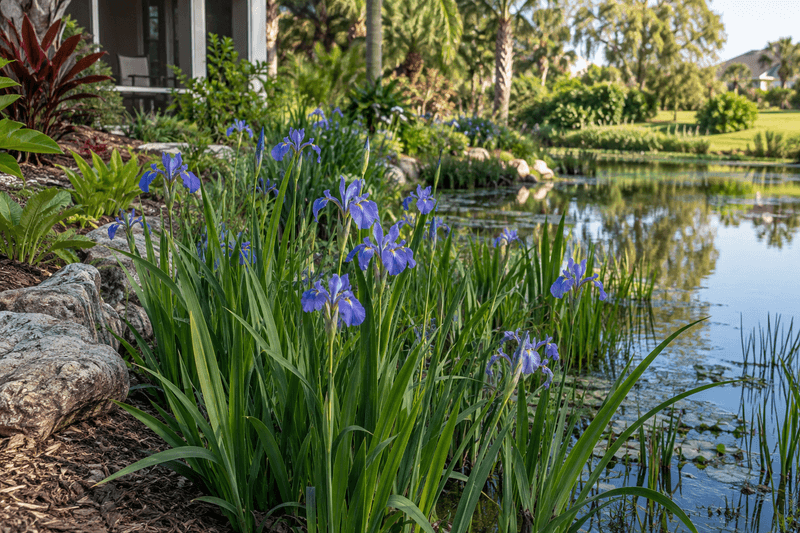
That damp corner beneath the downspout needs a different answer from the dry bed beside the driveway. Virginia iris, Iris virginica, is a Florida native worth considering where soil stays moist or becomes wet after rain.
Its upright, swordlike leaves provide structure even when the blue-violet flowers are gone. Depending on conditions, the foliage and flower stems can reach roughly 2 to 3 feet, giving a rain garden a strong vertical shape.
Plant it in sun to partial shade, with enough moisture to support healthy growth. A rain garden’s wetter zone or a freshwater pond margin can suit it, but a hot, dry sand bed usually means extra watering and disappointment.
Spring flowers are the main attraction, so pair it with natives that bloom later if you want a longer color season. The leaves still help the space look planted and organized between flowering periods.
Virginia iris expands through rhizomes and can form a sizable colony in favorable conditions. That is manageable garden growth rather than Mexican petunia’s invasive behavior, but it still calls for room and occasional division.
Keep it away from pets that chew plants, since irises are toxic if eaten.
6. Leavenworth’s Tickseed
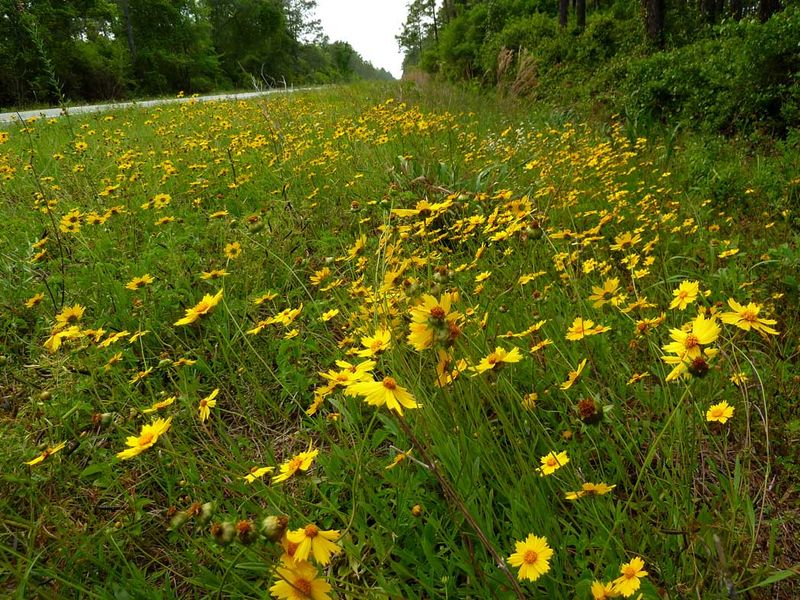
For a cheerful patch that looks more like a miniature meadow, yellow beats purple. Leavenworth’s tickseed, Coreopsis leavenworthii, fills open space with small golden daisies held on slender, branching stems.
This Florida native commonly grows about 1 to 3 feet tall and offers an airy look rather than a solid hedge. It fits sunny wildlife gardens, informal front-yard islands, and borders where flowers can mingle instead of staying in separate blocks.
Choose a site with moisture available, especially during establishment and extended dry spells. Although it occurs in Florida’s sandy landscapes, it is often associated with moist sites, so do not assume every dry roadside-like bed will suit it.
Its strongest role is quick seasonal color and food for flower-visiting insects. Plants are often annual or short-lived, making successful reseeding part of keeping the display going.
That means some movement within the bed is normal. Leave a few seed heads for renewal, remove unwanted seedlings, and avoid covering every open patch with thick mulch if you want the next generation to grow.
For homeowners seeking a permanent, tightly bounded clump, another choice on this list will be easier to manage.
7. Muhly Grass
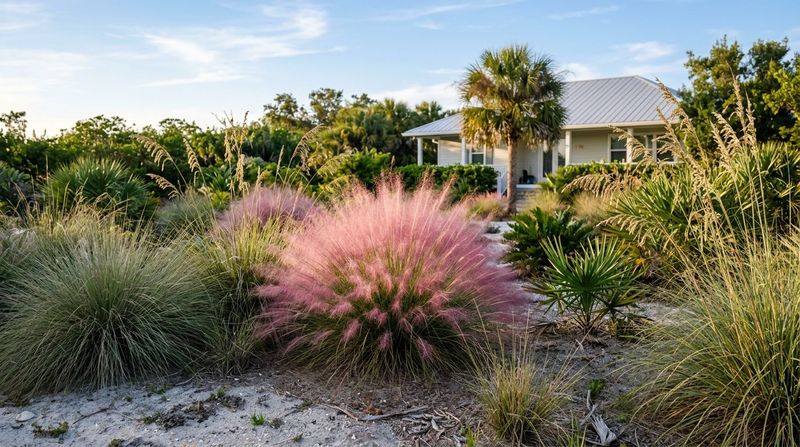
Not every replacement needs to copy a flower. Muhly grass, Muhlenbergia capillaris, trades Mexican petunia’s repeated purple blooms for neat grassy clumps and a cloud of pink fall flowers.
That seasonal shift is useful near a porch or front walk, where texture can carry the planting through much of the year. Mature plants generally stand about 2 to 3 feet tall, with flower stalks rising higher, and need roughly 3 feet of space to show their shape.
Full sun produces the strongest display. Well-drained sandy soil suits it, and established plants tolerate dry periods, making muhly a practical option where a thirsty flower bed has become too much work.
Avoid placing it where standing water persists. Also resist squeezing young plants together for an instant full look; crowded clumps lose the open outline that makes this grass attractive.
Before installing any replacement, remove Mexican petunia’s underground stems as thoroughly as possible and monitor for regrowth. Bag seed-bearing material rather than moving it elsewhere in the yard.
Then plant muhly at the right spacing and water during establishment. Occasional grooming or a late-winter cutback is usually more useful than frequent shearing.