
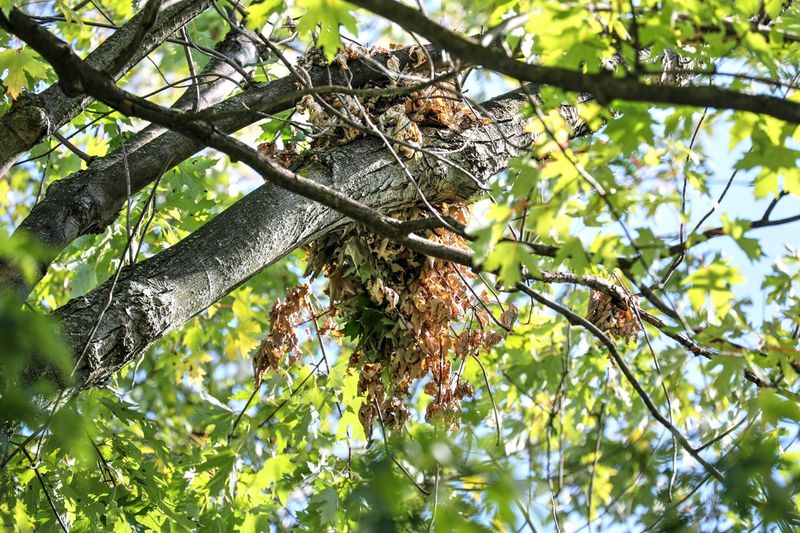
Once the leaves drop, many North Carolina yards suddenly show round, messy clumps way up in the branches. Most people wonder if a bird built it or if something is wrong with the tree.
Often the answer is a squirrel leaf nest, but a few other things can look much the same. Here is how to read the clues, and when to simply leave things alone.
Leaf drop makes canopy clumps easier to spot
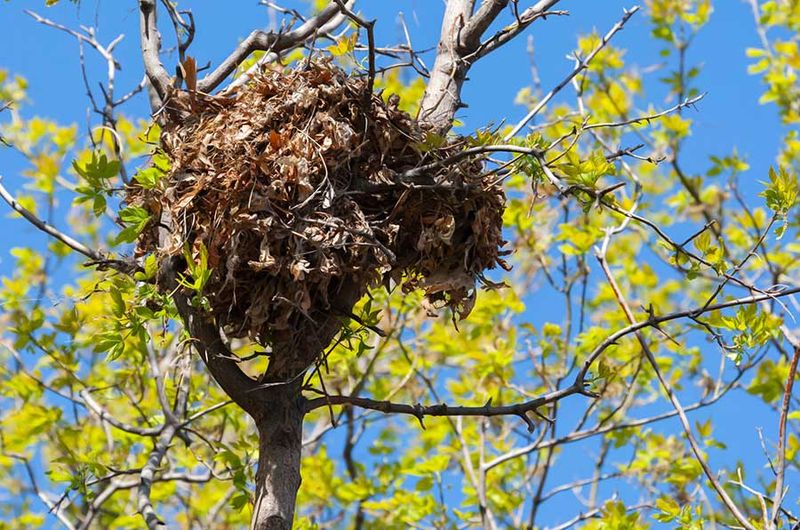
Walk outside in December and you may notice something that was there all along. In summer, a full canopy hides what sits in the branches.
Once the leaves fall, every clump, knot, and nest stands out against the sky.
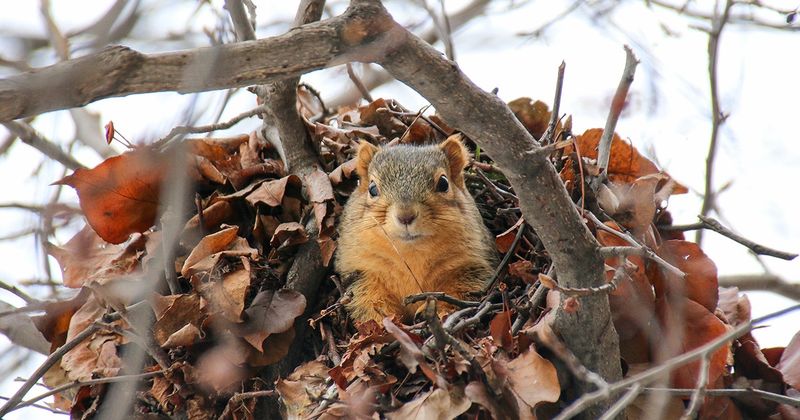
Many of those clumps are squirrel leaf nests, sometimes called dreys. Squirrels do not hibernate, according to NC State Extension wildlife guidance, though they may stay tucked in their nests during bad weather.
That means a cold, windy week can leave a nest looking quiet even when an animal is inside.
A visible clump does not mean it is occupied, and it does not mean it was built this season either. Some nests are old and some are newly patched, and from the ground you usually cannot tell which.
Gray squirrels also have other options for shelter, as described in NC State’s eastern gray squirrel profile.
This article offers clues, not a final answer. Binoculars from your patio can help you notice shape, color, and position.
They cannot confirm who made the structure or whether anyone is home. Whether you are in the mountains, the Piedmont, or the coastal plain, the same rule holds: look, wonder, and keep your feet on the ground.
A squirrel leaf nest has a stick framework
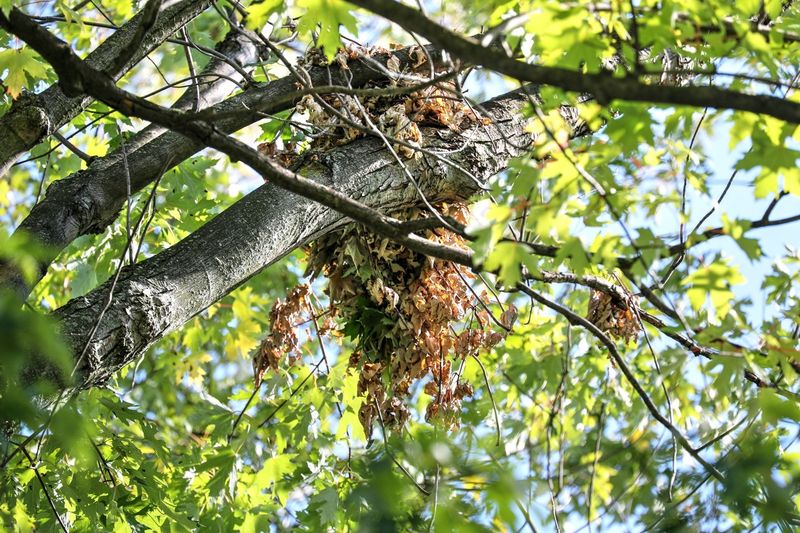
Think of a squirrel leaf nest as a small woven house. Eastern gray squirrels build a stick framework, fill it with dry leaves, and line it with leaves or other soft material, according to NC State Extension.
The result is often a loose, bulky ball tucked into a branch fork or near the trunk.
Educational material from the Cornell Lab of Ornithology also points to large leafy winter clumps as squirrel nests. You can see this in a Cornell Lab bird-cam lesson.
Leaf ends sticking out in every direction and a scruffy, untidy outline are good clues.
Here is a twist. Squirrels prefer tree cavities when they can find them, so a leafy ball is not the only sign a squirrel lives nearby.
A yard with a hollow limb or old woodpecker hole may shelter squirrels you never see in a nest.
So treat a leafy clump as a common possibility, not a confirmed identification. Nobody has counted how many clumps across North Carolina are squirrel nests, so a clue is all you really have.
Stick framework plus dry leaves points toward a squirrel, but it is still a guess from the ground.
What else could that clump be?
Not every clump is a nest. A loose pile of leaves and twigs sitting in a branch crotch fits the squirrel pattern described by NC State Extension.
A few lookalikes are worth knowing.
A witches’ broom is a dense mass of small branches that seems to grow from a single point. It is an abnormal growth on the tree, as explained by Penn State Extension.
Unlike a nest, it is made of living branches, not gathered leaves.
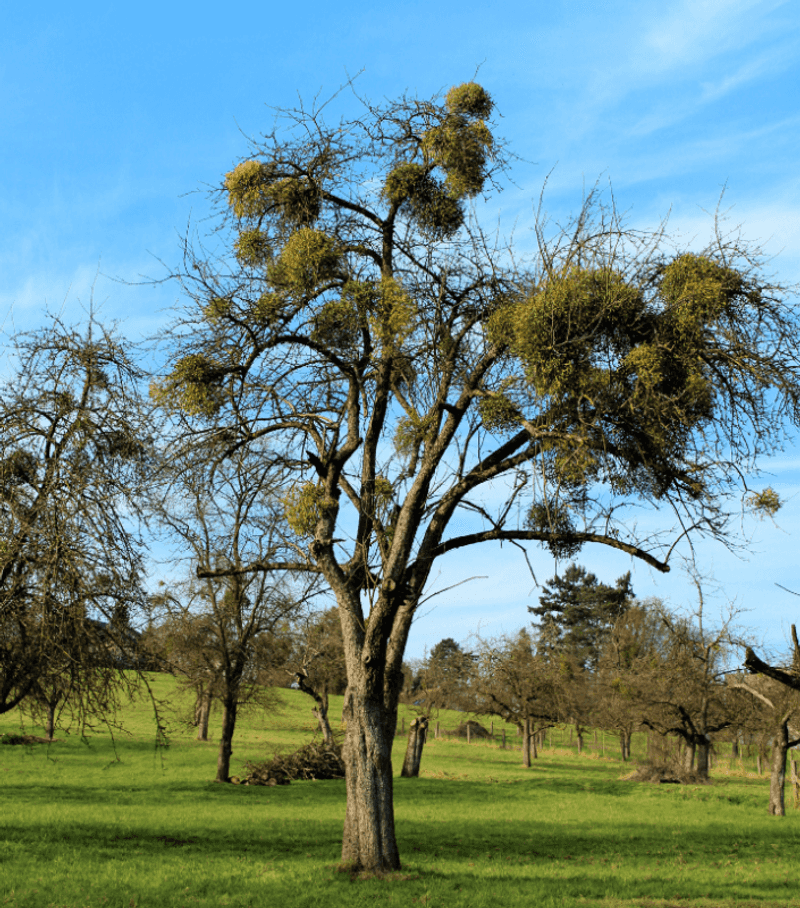
Mistletoe is another one. A clump that stays green in a bare deciduous tree may be this evergreen plant growing on its host, and N.C.
Cooperative Extension notes it can affect the tree. A witches’ broom or mistletoe may point to a tree issue, so they are not always harmless.
Birds complicate things too. They build nests in many shapes and materials, and Cornell Lab’s nest design guide shows how varied they are.
A rounded shape cannot rule out a bird nest.
None of these clues is a test you can pass from the lawn. If identification matters, for example because the tree is valuable, contact your local Extension office.
Please do not prune based on a distant guess.
A winter clump does not reveal who is inside
Picture two identical clumps in neighboring maples. One holds a warm squirrel curled up against a cold snap, and the other has been empty since summer.
From your yard they look the same.
Squirrels may use tree cavities instead of leaf nests, as NC State Extension describes. So an empty-looking nest might be a spare, while the real den sits in a hollow limb nearby.
They may also stay in nests during harsh weather, which is why a nest can be busy on a freezing day and quiet on a mild one.
Timing adds another surprise. Female gray squirrels may give birth in midwinter as well as in June, according to the same source.
A ragged, weathered nest therefore does not prove nobody is using it, and seeing it in January does not prove it is occupied either.
Squirrels also are not hibernating through the cold months, as NC State’s wildlife chapter makes clear. They stay active, come and go, and use shelters as needed.
The practical takeaway is simple. Treat any clump as possibly in use.
Enjoy it from a distance, and resist the urge to poke, shake, or check inside.
A clump alone is not a reason to intervene
Good news for your weekend: a nest-like ball by itself generally does not need to be removed. The tree has carried it without trouble, and the wildlife chapter from NC State Extension does not suggest action just because a nest is there.
Often the best move is to enjoy the view.
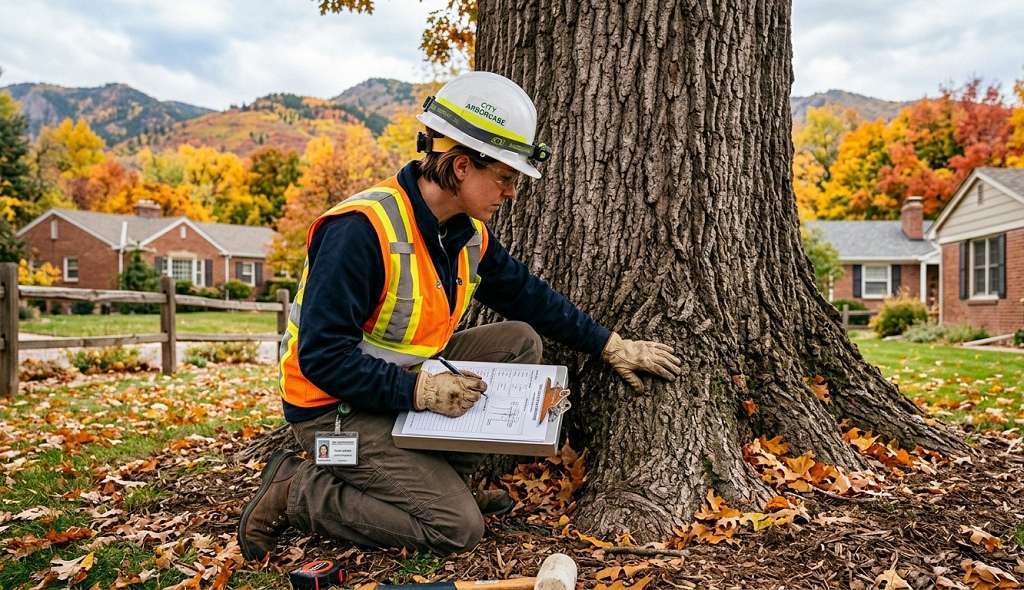
Wildlife identification and tree safety are two separate questions. A clump may be harmless, or it may sit on a cracked, dead, or hanging branch that could fall.
Look at the branch holding it. Does it look broken, hang low, or lean over the house, driveway, or play area?
If so, call a certified arborist. NC State’s woody ornamentals guidance recommends an arborist for trees too large to prune from the ground.
It also says not to prune trees that touch power lines, so leave those to the utility company or a qualified professional.
Skip the ladder, the pole saw, and the reaching. High nests, big limbs, and winter ice are a bad mix for a homeowner.
A trained climber has the gear and the know-how.
For everything else, make a note of where the clump is and watch how it changes through the season. Squirrel activity near it is a clue, though not proof of anything.
Leave a suspected active bird nest undisturbed
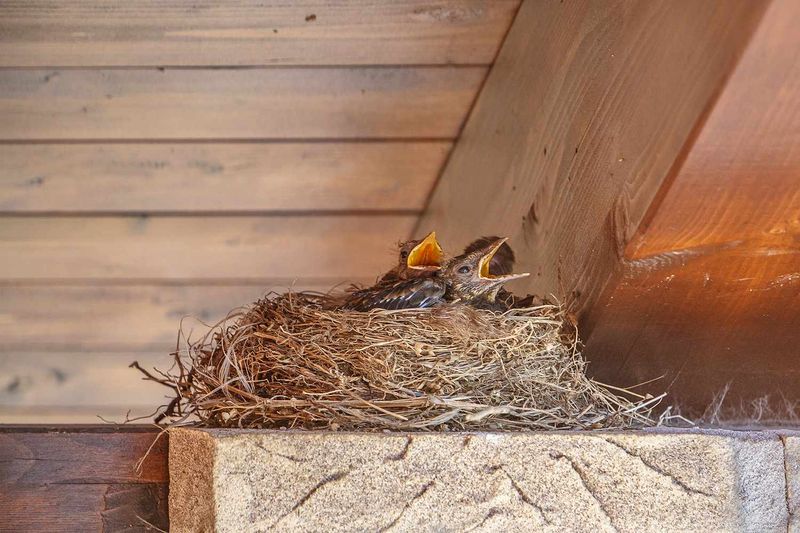
Some nests belong to birds, and those come with legal protection. Federal rules cover protected migratory birds, their eggs, and in-use nests, as explained by the U.S.
Fish and Wildlife Service. If you suspect a nest holds eggs or dependent young, do not disturb it.
Eagle nests are handled even more strictly. The agency explains those separate rules in its eagle disturbance permit guide.
That does not mean every clump in your oak is protected, only that some nests are, and you often cannot tell which from the ground.
If you need work done near a nest you cannot identify, ask first. Your local Extension office or a certified arborist can help you decide whether to wait.
Waiting is often the easy answer.
A messy ball of leaves in a bare branch can be a squirrel’s home, a bird’s nest, or a quirk of the tree itself. Sometimes the kindest yard work is none at all.