
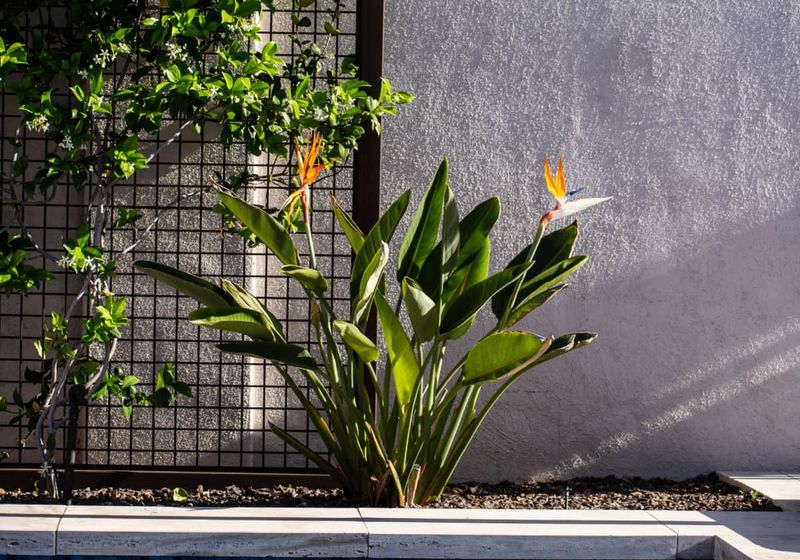
A bird of paradise with big, glossy leaves looks healthy, so it is confusing when no flowers ever show up. Many California homeowners go through this with plants by a window or in a sunny bed.
The cause can be the plant’s species, its age, or how much light it gets. Here is how to sort out which one fits your plant, and what to try next.
Which bird of paradise do you have?
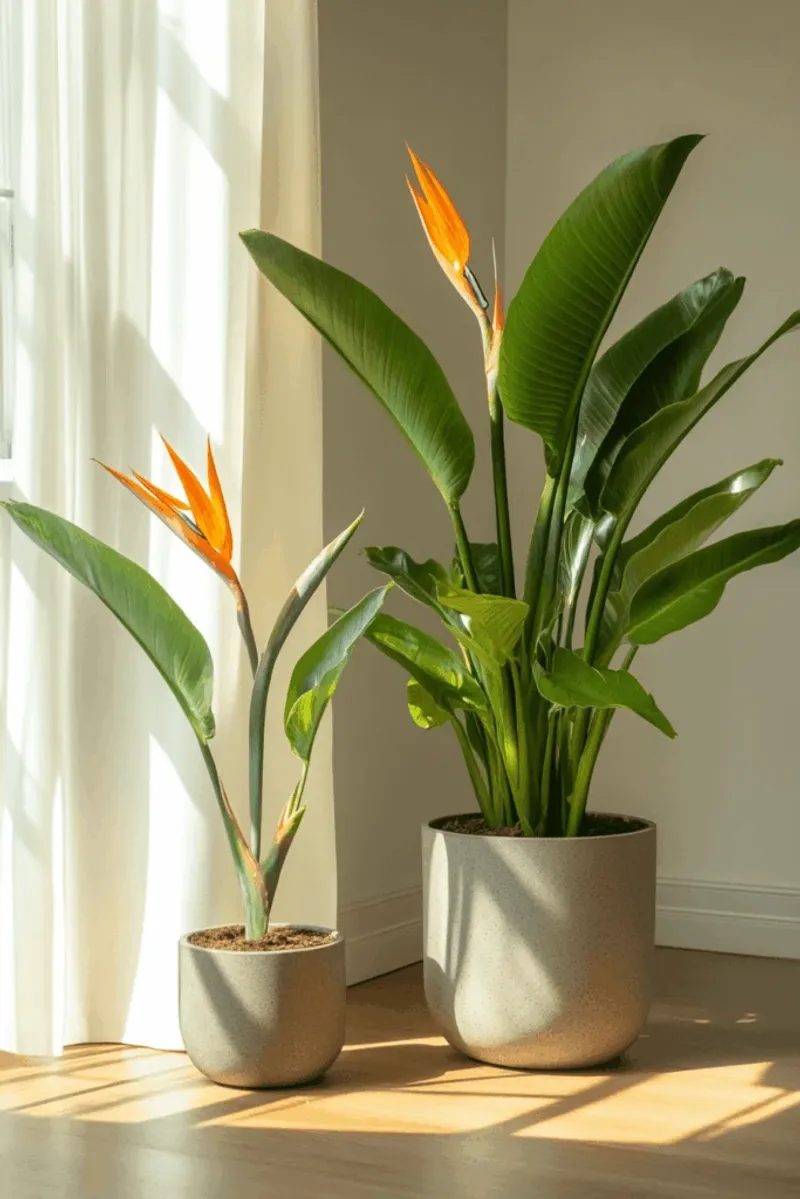
Garden centers sell several plants under the name bird of paradise, and they do not all behave the same way. The familiar orange-and-blue flower belongs to Strelitzia reginae.
Its leaves are fairly compact, paddle-shaped, and sit on long stalks, and the plant usually tops out at a few feet tall.
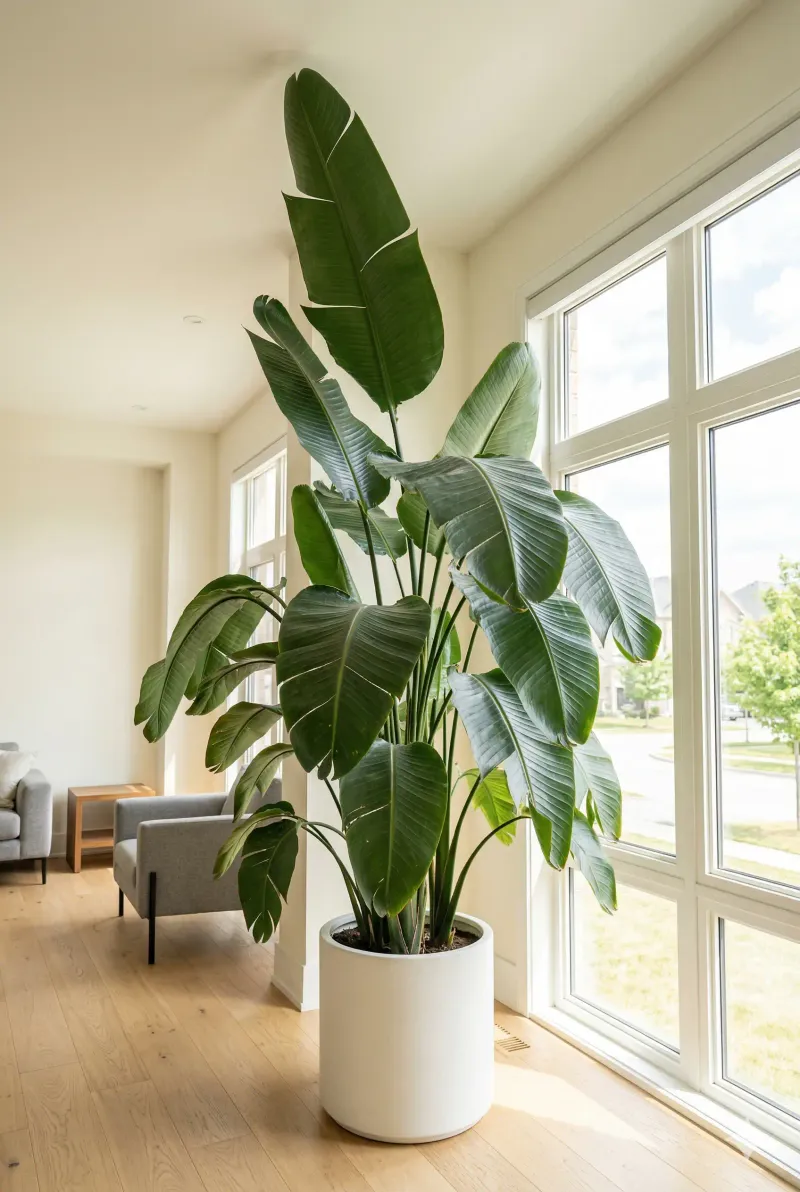
White or giant bird of paradise, often Strelitzia nicolai, is a different species. It can grow very tall with banana-like leaves, and University of Wisconsin Extension notes that this giant type does not flower until it is quite mature.
If your plant is towering and leafy, you may be looking at this one.
The Royal Horticultural Society says that some Strelitzia, including S. nicolai, are grown mainly for their foliage. So a common name on a plant tag is not proof that you should expect showy orange-and-blue blooms.
Check the leaf shape, the overall height, and the tag or receipt if you still have it. Knowing the species first keeps you from fixing a problem that may not exist.
A young plant may not be ready to flower
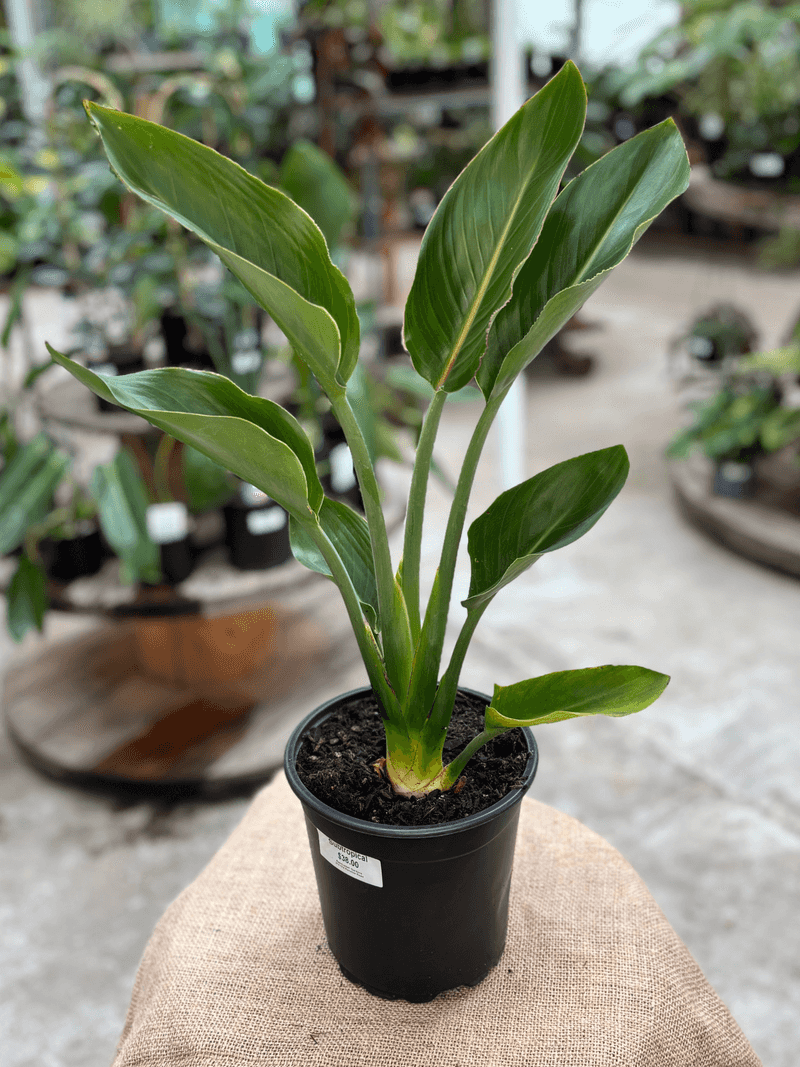
Age can explain a lot. A plant started from seed needs time to build up enough size before it can set a flower, no matter how well you care for it.
The Royal Horticultural Society says seed-grown plants may take five or more years to reach flowering size. Wisconsin Extension gives a range of about four to seven years for seed-raised plants.
Treat those numbers as rough guides, not a deadline for every plant.
If you bought a small plant or grew it from seed, a lack of flowers is not proof that you did something wrong. Plants from a nursery may be older than they look, but you may not know their age.
A useful clue is the plant’s overall size and the number of mature leaf stalks. A young plant with only a few leaves is likely still growing up.
A well-established clump that has been in your yard or home for many years is a better candidate for the light check in the next section.
For a mature S. reginae, low light is a strong suspect
Picture a plant that is clearly old enough, healthy, and full of leaves, yet never sends up a flower stalk. For a mature Strelitzia reginae, too little light is one of the more common reasons.
University of Wisconsin Extension lists inadequate light as a common reason mature plants flower poorly. It suggests nearly full sun in summer and as much light as possible in winter.
Plants can still make plenty of leaves in dimmer spots, so green growth does not tell you the light is enough. A plant tucked into a shady corner or under a deep eave may look fine and still skip flowering.
Light is a likely factor, not a sure answer. Species, age, and other growing conditions all play a part, and brighter light does not guarantee blooms.
Think of it as the first thing worth testing once you know your plant is the right species and old enough.
Clues that light may be short include a plant that leans toward a window, long stretched leaf stalks, or a spot that gets sun for only a short time each day.
Where should you add light in a California home?
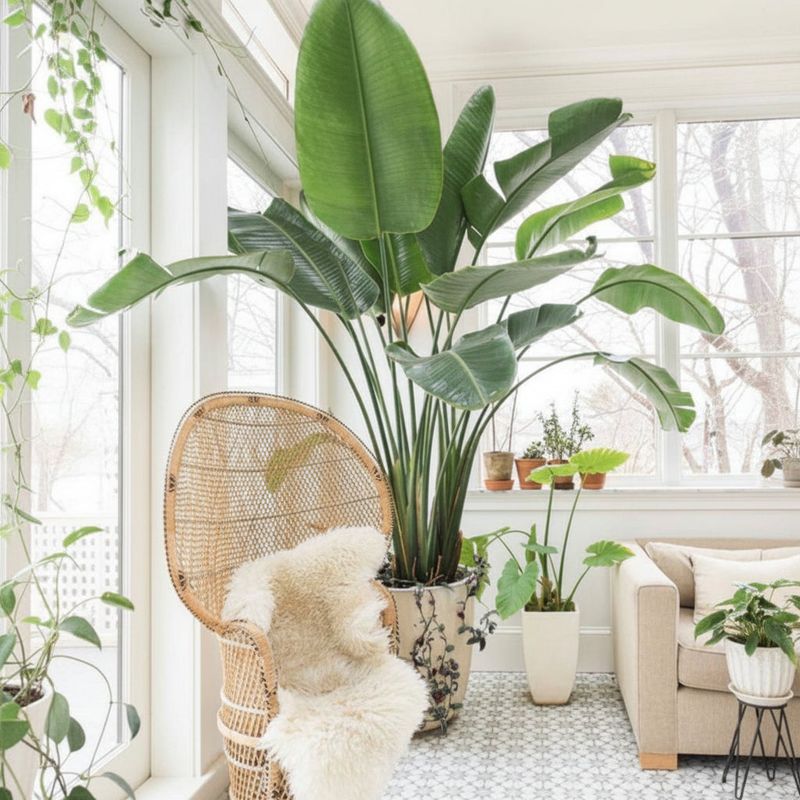
Indoors, try the brightest sunny window you have. The Royal Horticultural Society suggests a spot beside a large sunny window or in a conservatory.
There is no proven number of indoor sun hours that triggers flowers, because window brightness varies a lot.
Outdoors, a UC Master Gardener newsletter says plants bloom best with six to eight hours of direct sun, or partial shade where summer sun is intense. That figure is outdoor guidance, not a rule for windows.
California is not one climate. UC IPM says bird of paradise does well in full sun but needs some shade in the hottest climates.
In an inland valley, afternoon shade may help. Near the coast, more sun may be fine.
Go slowly when you increase light. Wisconsin Extension warns that a sudden change can sunburn leaves.
Give the plant an hour or two of stronger light at first, then add more over a couple of weeks.
Outdoor plants also need protection from frost. In colder spots, plant near a warm wall or cover plants on freezing nights, and bring potted plants indoors.
More fertilizer and disruptive repotting are not bloom shortcuts
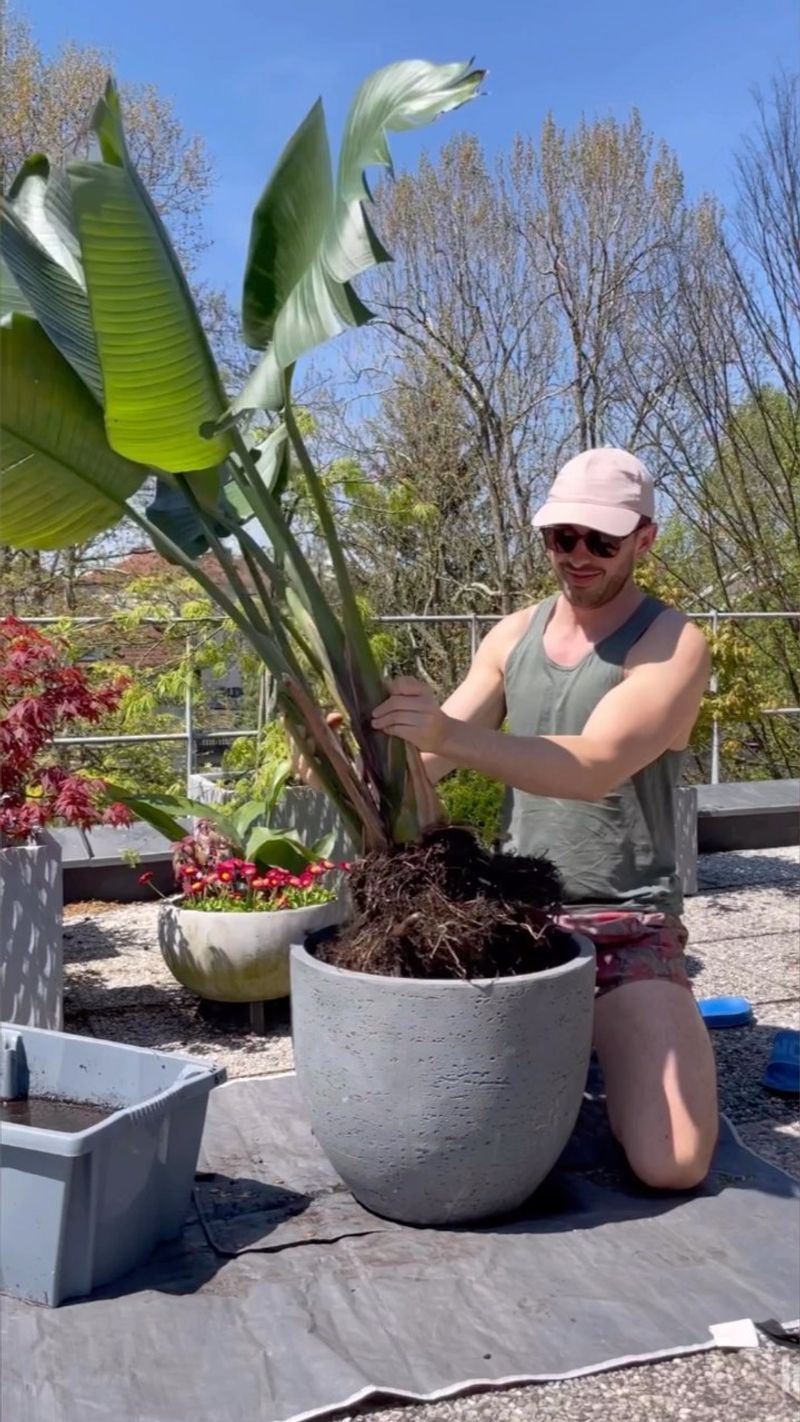
When flowers do not show up, extra fertilizer feels like an easy fix. It can backfire.
A UC Master Gardener source warns that overfertilizing can promote excess foliage and interfere with flowering. A plant that is already leafy likely does not need more food.
Roots are another common worry. The RHS says slightly pot-bound conditions tend to encourage flowering, yet it also advises repotting once roots fill the container.
UF/IFAS says plants may flower more freely when crowded and are best left undisturbed.
Slight crowding is fine, but it is not a goal. Do not squeeze a plant into a failing pot, and do not hold off on repotting when roots truly have no room.
Skip dividing a healthy clump unless it needs it.
Drainage matters too. UC IPM lists water excess among the plant’s disorders, so use a pot with drainage holes and let the soil drain well.
None of these steps promises flowers. They simply keep the plant healthy while you work on light.
Check the plant before changing its light
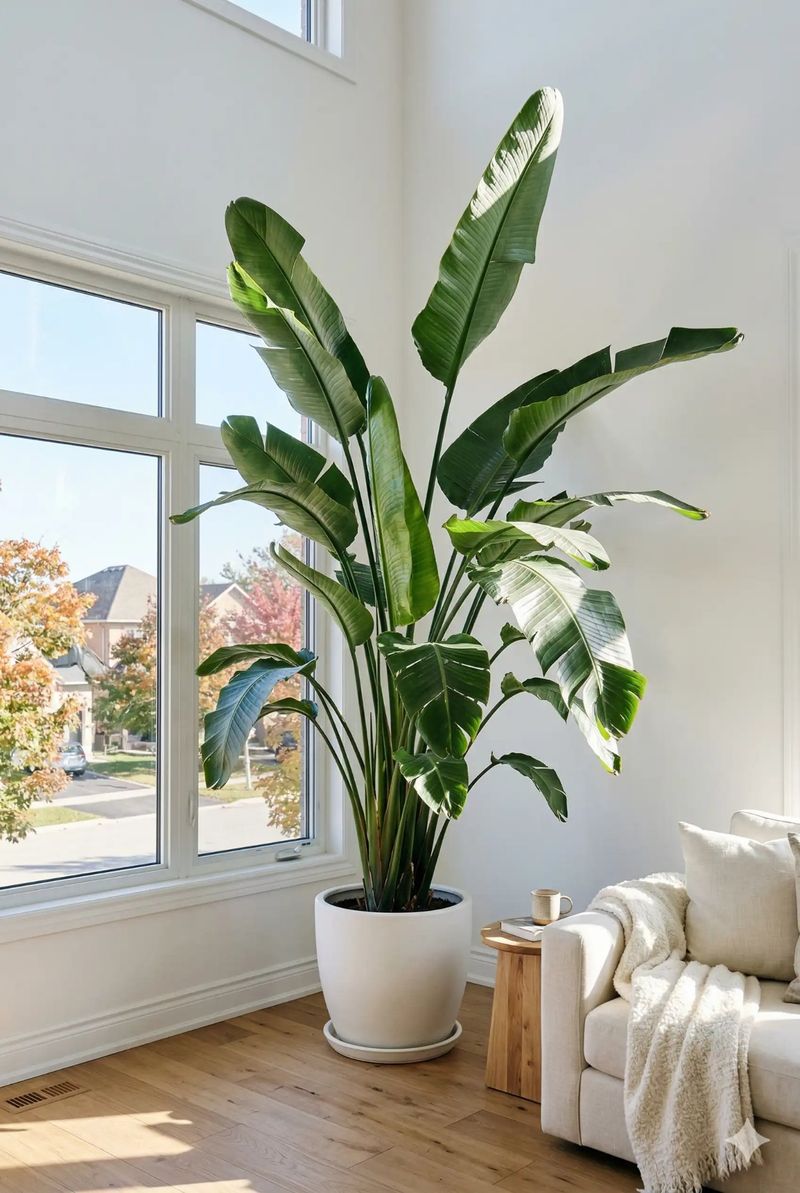
Start with the species: is it Strelitzia reginae, or a giant type such as S. nicolai, often grown for foliage? Next, ask whether the plant is old enough, since seed-grown plants can take years.
Then improve light to suit your window or your local yard.
Brighter light may help a mature S. reginae, but it cannot promise blooms. Some plants simply bloom on their own schedule.