
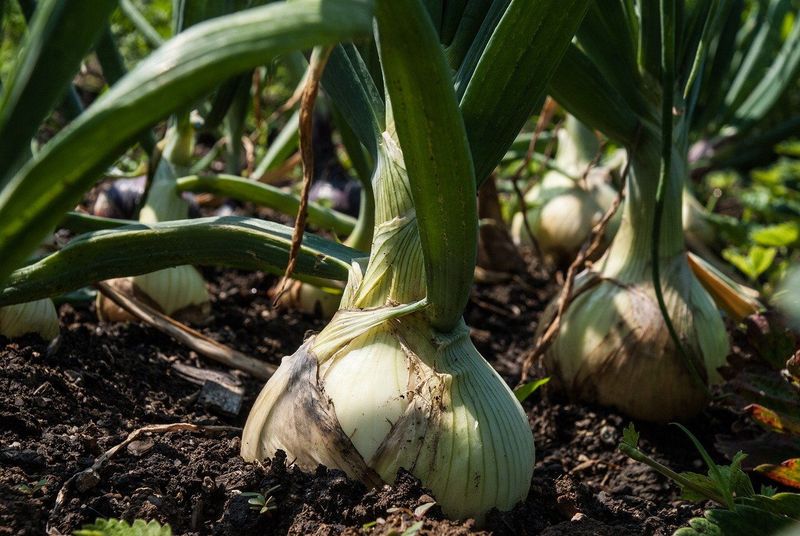
Plant an onion in the wrong spot on the calendar or the wrong day-length type, and you may end up with a tall flower stalk instead of a fat bulb. Many Southern gardeners hear that short-day onions stop that from happening, but the real story is a little different.
Day length, cold weather, and plant size all play a part, and the right timing depends on where you live and whether you start from seed or transplants. Here is how to sort it all out for November 2026.
Day length affects bulbs, not the flower stalk
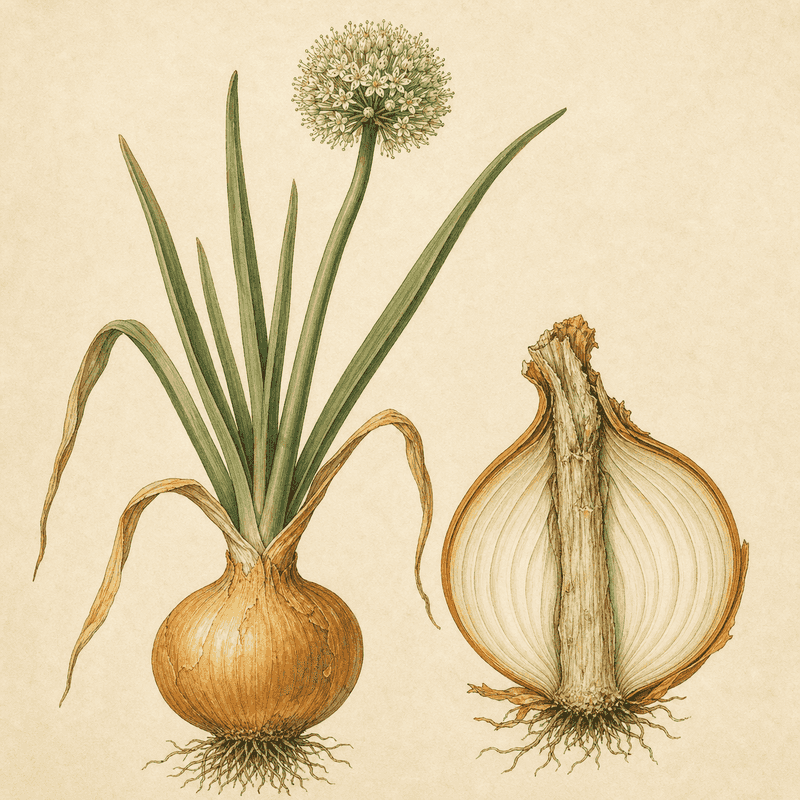
Picture two onions in the same bed. One swells into a firm bulb, and the other shoots up a hollow flower stalk.
Those are two different events, and day length only drives one of them.
Onion types are labeled short-day, intermediate-day, or long-day, and that label describes when the plant starts forming a bulb. Texas A&M AgriLife’s growers handbook describes day length as influencing bulbing, not flowering.
Flowering is bolting, and it follows its own triggers.
Short-day onions suit many Southern growing conditions, and UF/IFAS Gardening Solutions recommends them for fall growing in Florida. Choosing the wrong day-length class is more likely to give you small, poorly formed bulbs than a flower stalk.
So the title’s popular claim needs a fix. A short-day variety helps bulb formation, but it does not guarantee your onions will skip the flower stalk.
Cold exposure and plant development can raise bolting risk
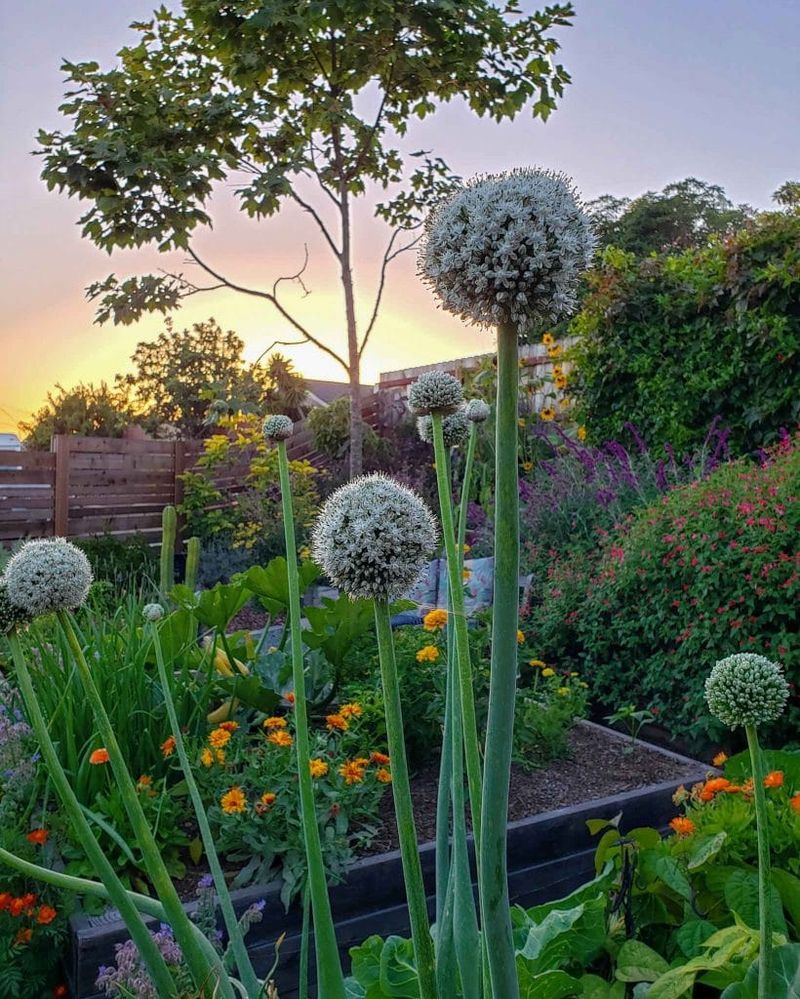
A flower stalk on an onion is the plant trying to reproduce. Cold exposure and how developed the plant already is both seem to push it in that direction.
Texas A&M guidance says onions at the fifth-to-seventh-leaf stage that spend two or more weeks at 38 to 40°F may bolt. That is a useful warning for plants that are already well grown when a cold stretch arrives.
University of Missouri Extension describes it a bit differently. It says onions need cold exposure to start flowering, that plants around five leaves can respond, and that prolonged temperatures below 50°F are a risk.
Those numbers come from different places and contexts, so treat neither as a rule for every garden or cultivar. Nobody can know in advance what November 2026 weather will bring, which is why day-length class alone cannot predict bolting.
A practical clue: if cold snaps hit a plant that is big and leafy, watch it more closely than a small, young one.
November timing varies by state, region, and planting method
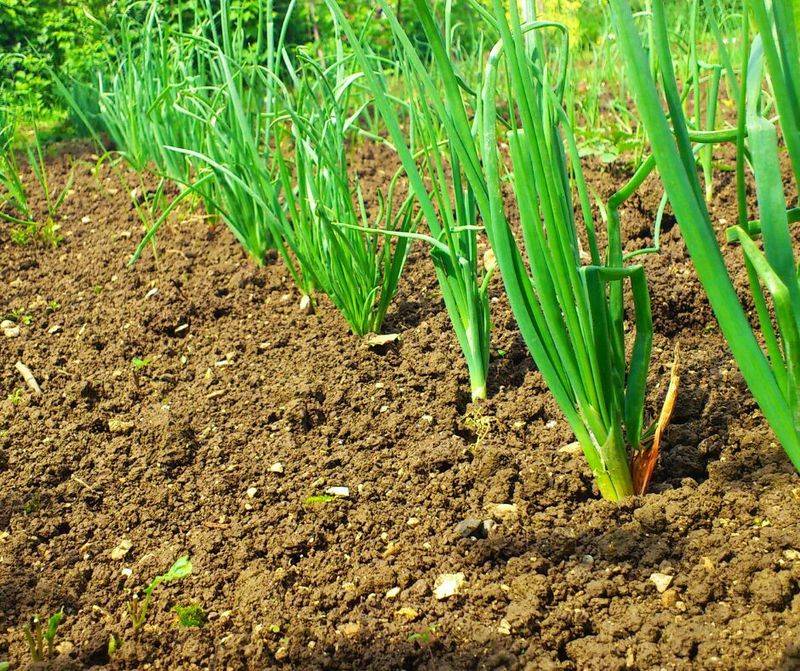
November does not mean the same thing for every onion gardener. Method and region matter more than the month on the calendar.
In Texas, Texas A&M’s home-garden guidance points to sowing bulb-onion seed from October through December. Transplants are typically set out in January and February.
So in Texas, November fits seed sowing, not transplanting.
Florida is broader. UF/IFAS Gardening Solutions gives a wide September-through-December planting window for home gardens.
The UF/IFAS production guide is more specific, listing transplant dates of November to January in North Florida and December to January in Central and South Florida. Those are commercial production recommendations, not a universal home-garden schedule.
Check your own region and method before you buy plants, and do not assume both states are setting out transplants this month.
Choose a locally adapted day-length class and variety
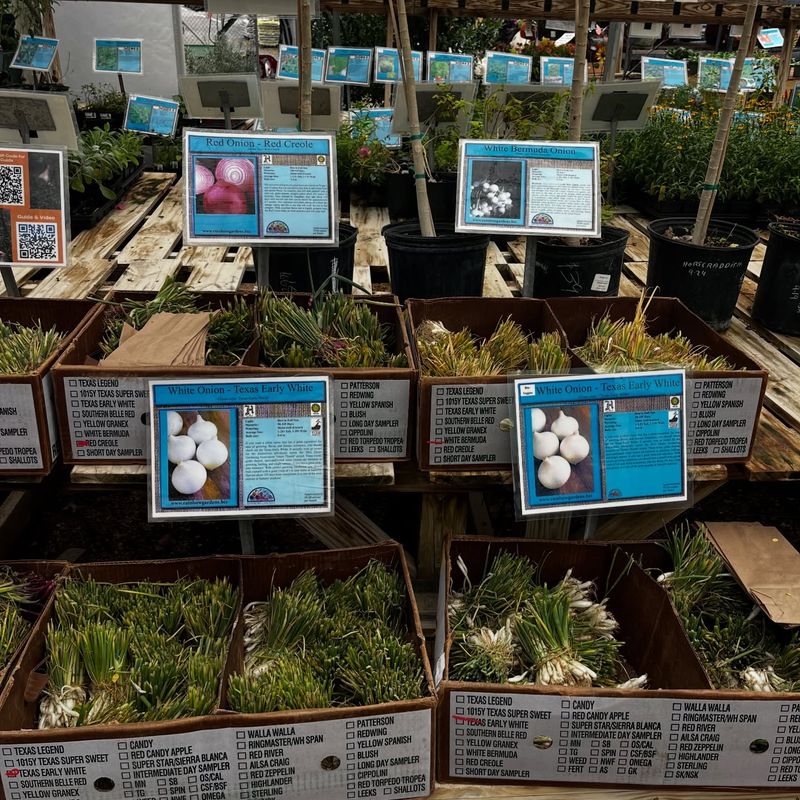
Picking a variety is where the day-length idea becomes a shopping decision. Look for a type matched to your area, not just the one with the most familiar name.
For Florida fall growing, UF/IFAS recommends short-day varieties. Short-day types are also a good fit for many other Southern conditions.
Texas is not a short-day-only state, though. Texas A&M’s onion guide lists short-day choices such as Texas 1015Y alongside intermediate-day ones such as Cimarron and Sierra Blanca.
Those are examples from the guidance, not a statewide list or a promise of results.
Adaptation shifts across Texas, so the Texas vegetable growers handbook and your county Extension office are good places to confirm what suits your area.
Next action: ask a local nursery or Extension agent which cultivars have done well nearby.
Consider transplant size and planting setup
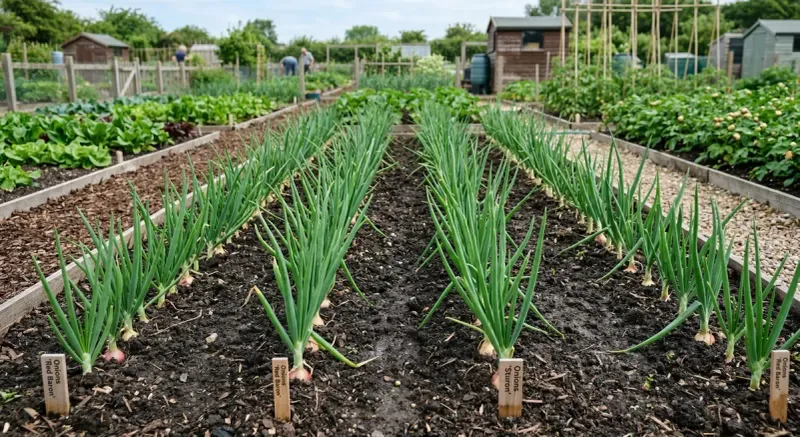
Bigger is not always better with onion transplants. Utah State University Extension says sets or transplants over 5/8 inch in diameter are more prone to bolting, and that ones planted too early can bolt too.
Treat that as general background. It is not a Texas or Florida cutoff, but it is a good reason to be wary of oversized plants.
Planting setup depends on the system you are using. For home gardens, Texas A&M advises planting about 3/4 inch deep and 3 inches apart, and not setting transplants deeper than 1 inch.
The UF/IFAS production guide gives 4 to 6 inches between transplanted onions. That figure comes from a commercial production setting.
Do not blend the two numbers. Follow spacing that fits your chosen system and variety, and keep depth shallow so bulbs have room to swell.
Use location, method, and plant condition to make the decision
Start with your zip code, not the calendar. Check which day-length class and variety your local Extension recommends, since that sets up bulb formation.
Next, confirm what November means for your method. The Texas A&M home-garden guide separates seed sowing from transplanting, and Florida advice shifts by region, so match the guidance to your plan.
Then look at the plants themselves. Large, leafy transplants facing a long cold spell deserve extra attention, and Texas A&M’s handbook ties bolting to cold at a certain growth stage.
If you grow in Florida, UF/IFAS Gardening Solutions is a handy home-garden reference.
A short-day onion gives you a better shot at a bulb, but the garden still gets a vote.