
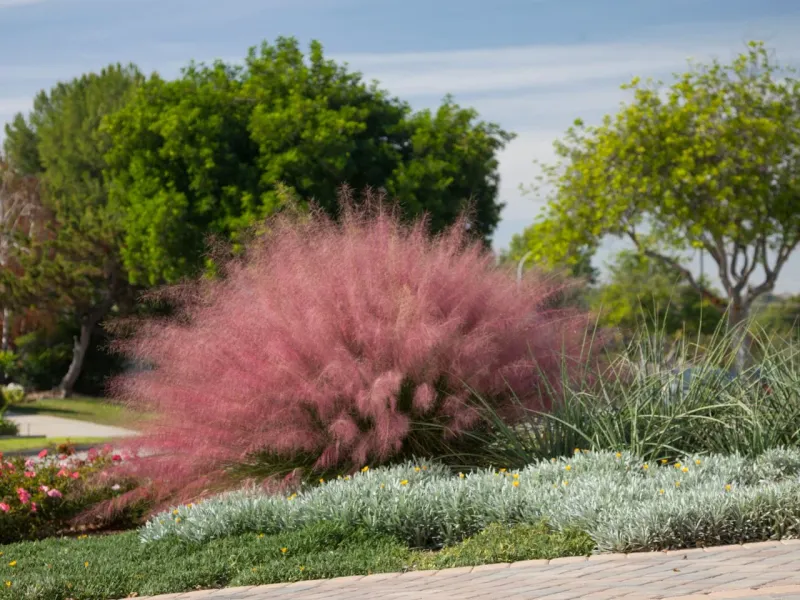
Those pink clouds of Gulf muhly in October are hard to beat, so it can be a letdown when the color drains away. Many Texas gardeners reach for the shears right away, but that may not be the best move.
The plant is changing with the seasons, and a little patience can pay off. Here is what is happening to your clump and when a cutback makes sense.
Tan Plumes and Brown Winter Foliage Are Different Seasonal Changes
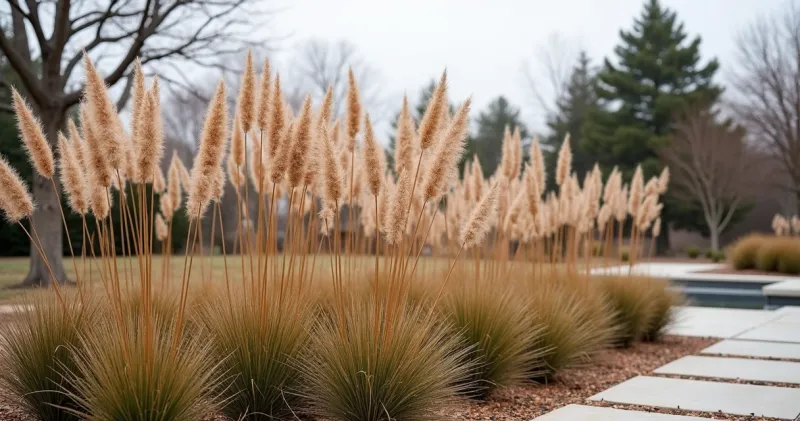
Pink muhly (Muhlenbergia capillaris) is a clumping perennial grass known for its fall flowers. As the season moves along, those pink plumes can fade to tan while the seed heads mature, and University of Georgia Extension notes that the seed plumes can persist into winter.
Winter is a separate change. The foliage itself can turn brown once the cold settles in, and the NC State Plant Toolbox describes this kind of winter look as part of the plant’s normal cycle.
So the phrase “brown after bloom” can mean faded plumes, dormant leaves, or both, and it does not mean the whole plant browns the moment flowering ends.
A word of caution is in order. Seasonal tan plumes and brown winter blades are well described, but color alone cannot tell you why a plant looks the way it does.
If a clump turns brown at an odd time, such as in the middle of summer, look at the whole picture, including watering, drainage, and recent weather, before drawing conclusions. In the fall and winter, a tan and tawny clump is not a signal to grab the shears.
LSU AgCenter pruning guidance points toward waiting for the right season instead.
Why Leave the Clump Standing Through Winter?
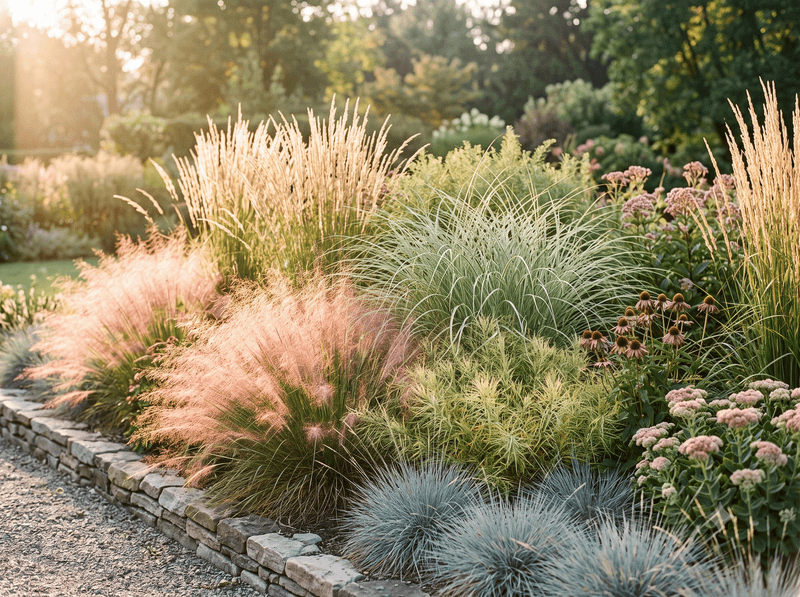
Wintertime is when a standing clump earns its keep. Even after the pink is gone, the tan seed heads and golden blades add texture to a landscape that otherwise looks bare.
Mississippi State Extension promotes pink muhly for exactly this kind of winter garden color.
There is a practical side too. A dense clump of grass offers cover for small wildlife during cold snaps, and LSU AgCenter’s guidance describes waiting to prune partly to preserve that winter shelter.
Birds and beneficial insects can make use of the leaf litter and standing stems.
Holding off on the annual cutback is a sound default, not a strict rule. If a clump has flopped into a walkway, crowds a neighbor, or sits near a structure where dry grass is a concern, trimming it sooner is a reasonable call for your yard.
For most beds, though, patience through the cold months costs nothing and keeps the look you already have.
When Texas Gardeners Should Cut It Back
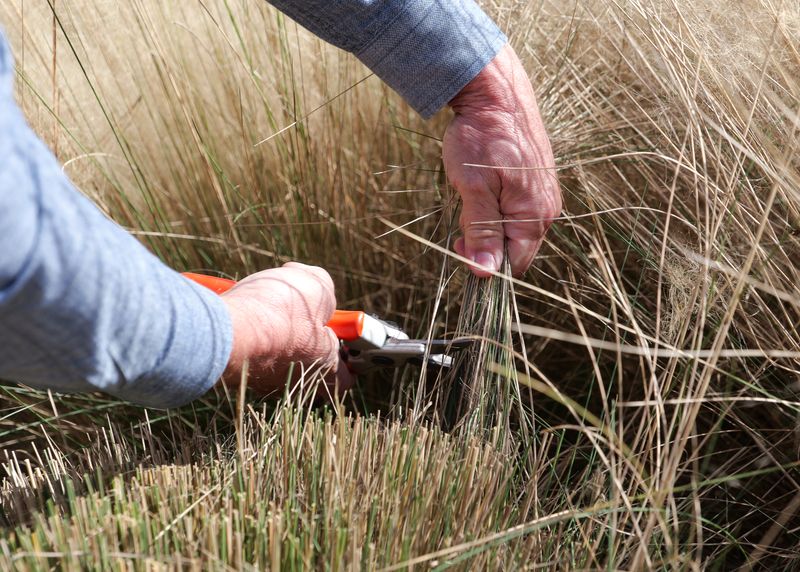
Aim for the stretch between late winter and early spring, and cut before substantial new growth gets going. Instead of a calendar date, use your own yard as the clock.
When you spot the first green shoots at the base, the time is close, and you want to finish before those shoots have grown tall enough to be clipped.
Texas is a big state, so the window shifts. A gardener near the Gulf Coast may see growth stirring weeks before someone in the Panhandle or the Hill Country.
Freeze risk matters as well, so keep an eye on your local forecast and your last frost patterns.
LSU AgCenter’s 2026 guidance suggests waiting until March in Louisiana, both to keep winter shelter in place and to lower the chance that a new flush gets hurt by a late freeze. That is Louisiana advice, so treat it as a useful reference point rather than a Texas date.
Mississippi State Extension likewise recommends cutting back before spring growth starts, which fits the same idea of watching the plant itself.
How Much to Cut Off
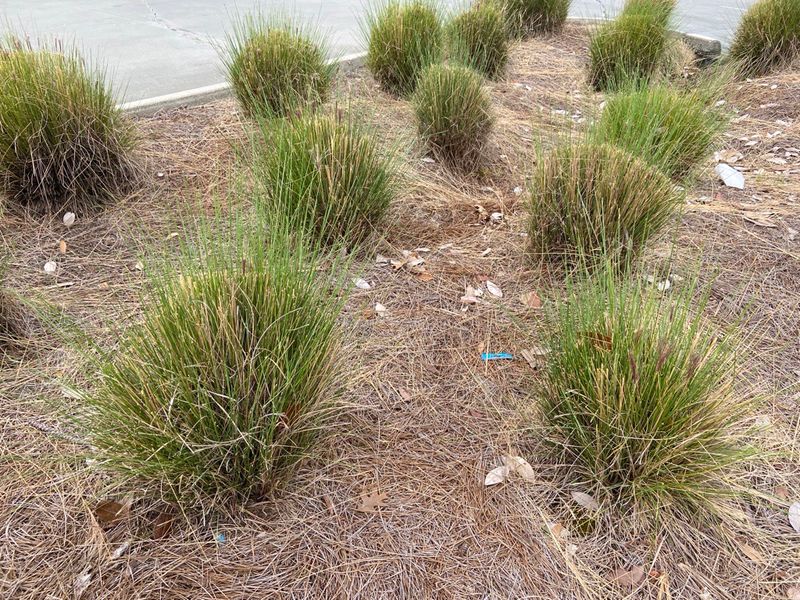
Ask three university sources and you get three slightly different answers. Mississippi State Extension recommends cutting to about 6 inches.
LSU AgCenter’s Super Plants publication says 8 to 12 inches.
UF/IFAS offers another option: cutting to the ground if you want to remove the brown foliage before new growth appears. So there is no single agreed measurement, and no one method is the only correct one.
A practical middle path is a low cut that leaves several inches of stubble. That clears out the old brown growth, leaves a tidy mound, and sits comfortably within the range the sources describe.
Treat it as a starting point, not a mandate.
One more caution: none of these sources promise that cutting lower, earlier, or more often will give you fuller pink plumes. The point of pruning is fresh growth and a neat clump.
Make Cleanup Easier
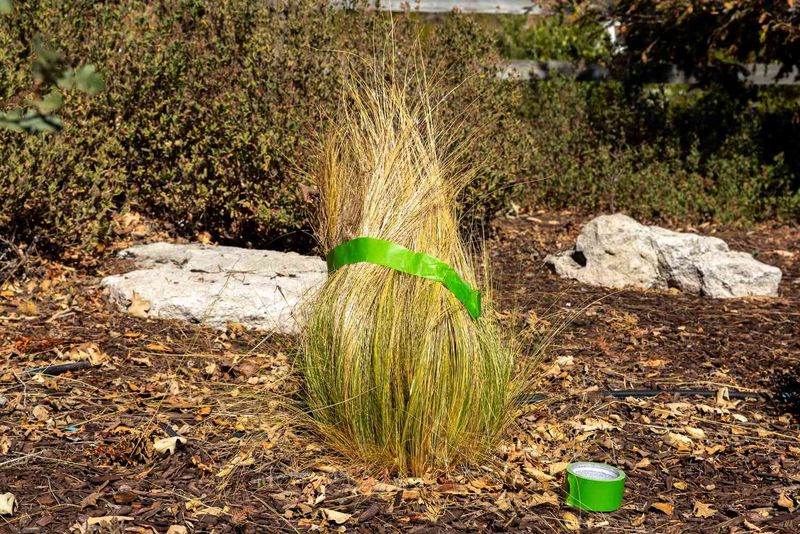
Cutting a big clump of loose grass can leave you chasing stray blades all over the bed. Tying the clump together with twine before you cut gathers everything into one bundle, so the trimmed material comes away in a single armful.
It is an optional step that simply makes handling simpler.
Gloves are a smart idea too. The Texas Master Gardener ornamental grass guide advises gloves when combing grasses, and the same habit helps with any grass foliage, which can have rough edges.
Keep in mind that this is general ornamental grass advice, not a pink muhly protocol. Tying and gloves are about easier cleanup and comfort.
They are not steps that protect new growth, so the timing and height guidance still do that work.
Good Growing Conditions Support Fall Plumes
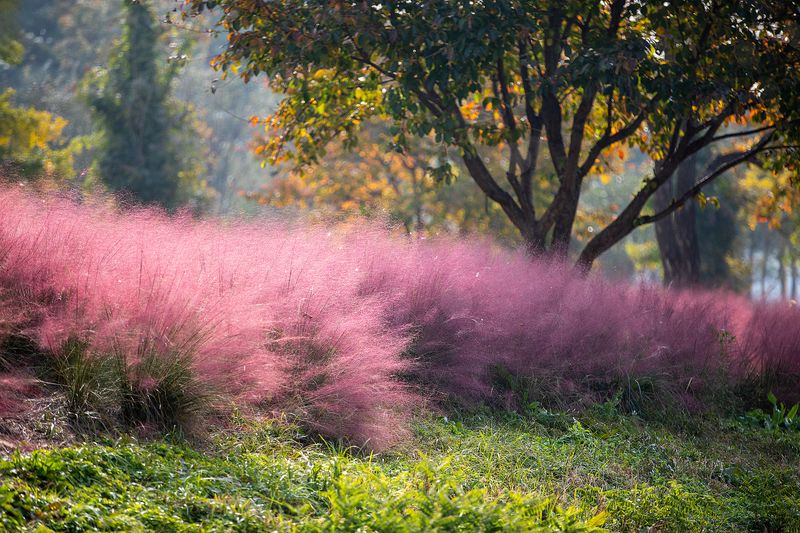
If you want a stronger October show, start with where the plant sits. LSU AgCenter notes that full sun supports better bloom quality, and shade can reduce it.
For Texas yards, that usually means a spot that catches strong sun for most of the day.
Soil is a separate matter. The NC State Plant Toolbox lists pink muhly as needing well-drained soil, so skip low spots where water stands after heavy rain.
That is general guidance for keeping the plant healthy, not proof that drainage itself makes plumes fuller.
As for feeding, muhly is not a heavy feeder. LSU recommends only light fertilization in spring, and fertilizer is not the key to flowering.
Neither extra fertilizer nor a special haircut guarantees a bigger display. Sunshine, a well-drained site, and a seasonal cutback are the basics that make sense.
Division Is Separate From the Annual Cutback
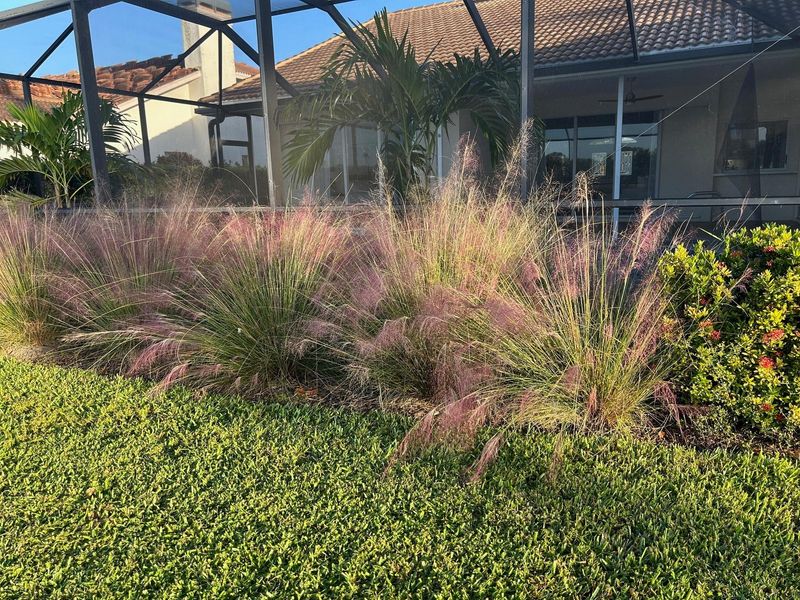
Cutting back and dividing are two different jobs. The cutback is the yearly trim that clears old foliage.
Division means splitting a clump into smaller pieces, which gives you more plants.
LSU AgCenter lists dividing clumps as one way to propagate Gulf muhly. That is all this article claims about it, so it is best seen as an option when you want more plants for another part of the yard.
Because the sources here do not give a season or a specific reason for dividing, it is wise to check with your local county extension office before you pick up a shovel. Division should not be counted on as a way to make next fall’s plumes fuller.
Keep the Clump Through Winter, Then Prune Before New Growth
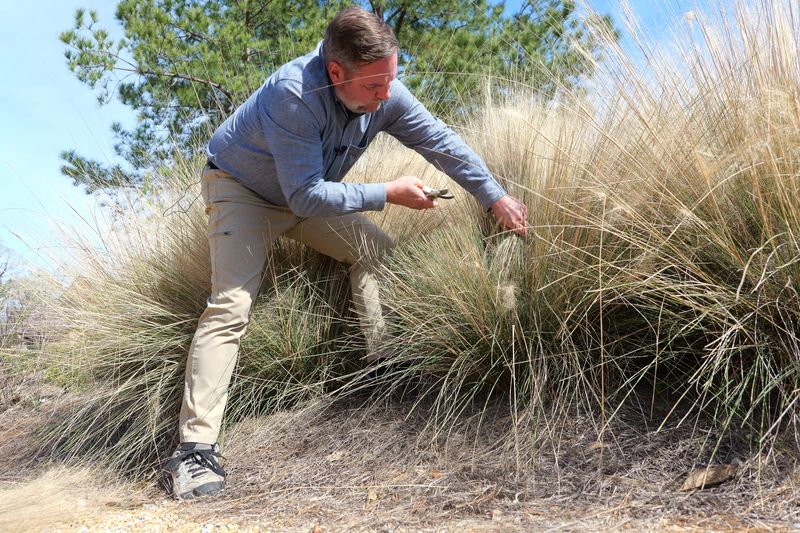
Tan plumes are a stage, not an emergency. Leave the clump standing through the cold months, then trim it in your local late-winter-to-early-spring window, before substantial new growth appears, as Mississippi State Extension and LSU AgCenter both describe.
Let the green shoots, not the calendar, give you the cue. The grass has already done its showing off, and waiting a few months is the easiest part of the job.