
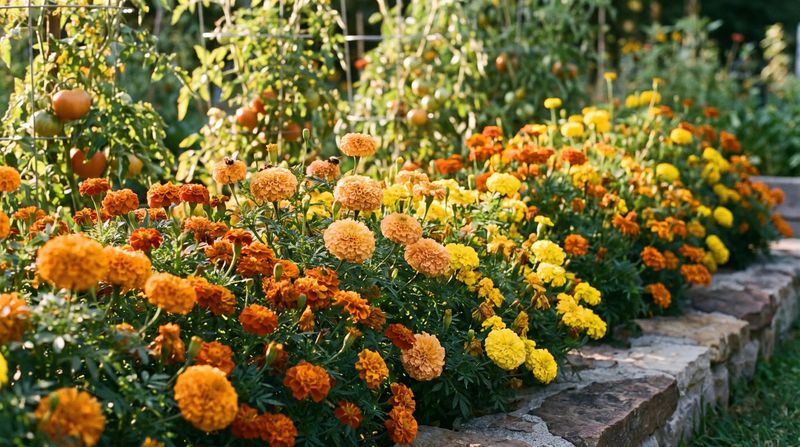
Those crispy, faded zinnia and marigold blooms standing in your North Carolina beds may be holding seed. If you collect it, you might skip buying some seed next spring.
Seed saving does not come with guarantees, but it is a simple habit that costs very little. Here is how to spot good heads, collect the seed, and plan for what may come up.
Wait for dry, mature heads—not a calendar date
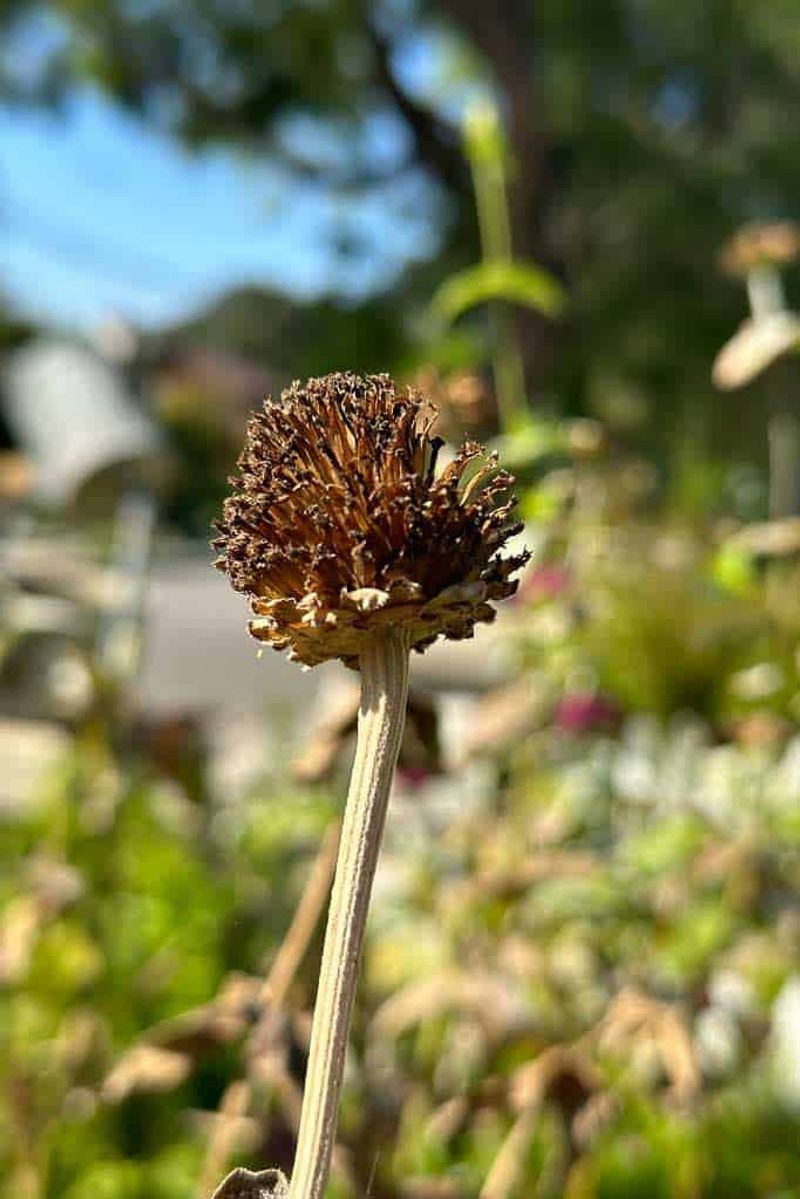
Patience is the first tool in seed saving. Leave a few of your best blooms on the plant until the heads turn brown and dry, and feel crisp when you touch them.
A head that is still green, soft, or colorful is not ready, and seed pulled too early often does not develop fully. UC Master Gardener seed saving instructions describe waiting until zinnia and marigold heads are brown and dry before harvesting.
North Carolina is a big state, so no single date works for everyone. A garden in the mountains, one in the Piedmont, and one on the coastal plain can be at very different stages.
The NC State Climate Office offers freeze information by weather station, which shows how much conditions differ from place to place, and that ground-level frost can happen even when standard readings stay above freezing.
Instead of watching the calendar, watch the flowers. Every plant, and even every bloom on the same plant, matures on its own schedule.
A rainy stretch can keep heads damp and slow the drying, while a run of sunny days can speed it up.
A simple test is to pinch the base of the head. If it feels papery and the petals have shriveled to brown, it is a good candidate.
If it still feels moist or bends easily, give it more time on the stem and check again in a few days.
Mark your favorites with a bit of yarn while they are still blooming. That way you can find the best plants later, once everything in the bed has faded to the same shade of brown.
Some spent blooms will not yield collectable seed
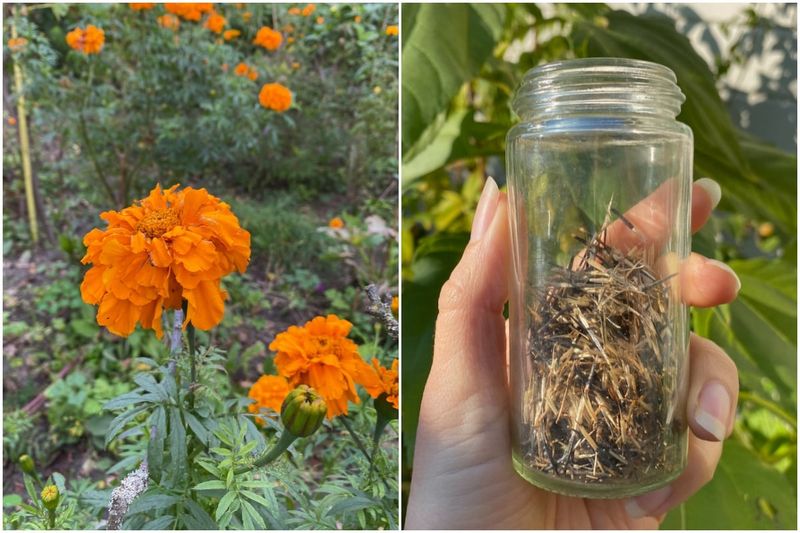
Before you start snipping, it helps to know that not every faded bloom will hand you seed. Mature, dry heads can contain seeds, and N.C.
Cooperative Extension in Beaufort County points to zinnias and marigolds as approachable flowers for beginners. Still, how many seeds you find will vary from head to head and plant to plant.
Some modern cultivars are bred to be tidy. According to the NC State Extension Gardener Handbook, certain cultivars are self-cleaning or sterile, so they drop spent flowers quickly or make little to no seed.
If your heads crumble into empty husks, that may be the reason.
One head is also not the same as a store-bought packet. You may find a handful of seeds in one head and almost none in another, so collect from several plants if you can.
Treat the harvest as a chance to try growing flowers, not a promise.
A word about names matters here. The marigold steps in this article apply to Tagetes, the familiar garden marigolds with ruffled orange, yellow, and rust blooms.
The seed saving guidance from UC Master Gardeners covers Tagetes types such as patula and tenuifolia, not Calendula, which is also called pot marigold.
A quick check can save you effort. Look for plump, firm seeds that look fully formed, and expect that flat, pale, or papery ones may not be worth keeping.
Separate seeds from the dry heads
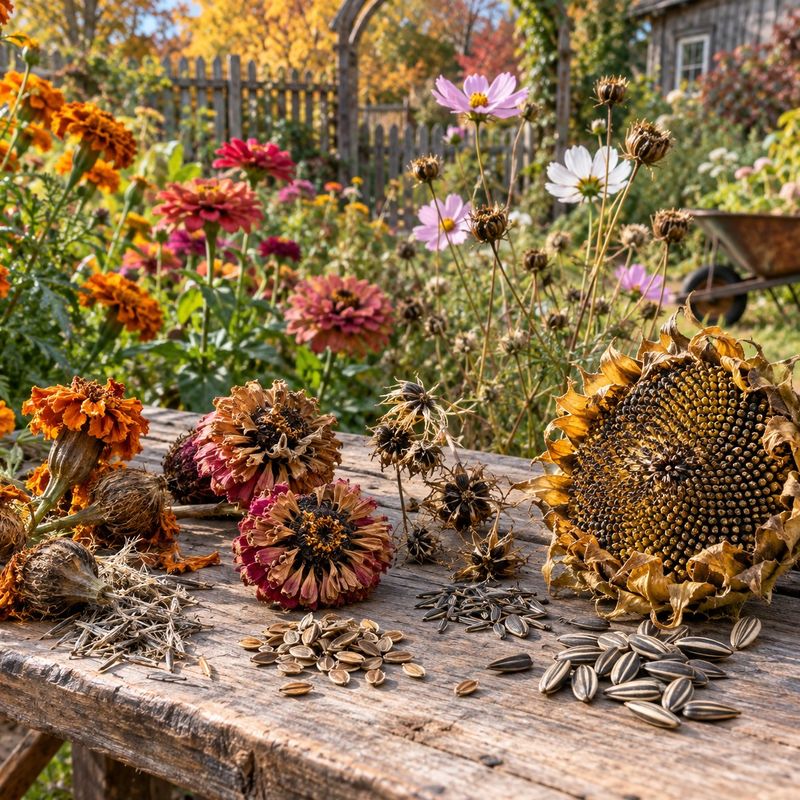
Once a head is brown and fully crisp, snip it off with a short piece of stem. Work over a bowl or tray so nothing gets lost.
Zinnia seeds sit in the center of the flower head, tucked at the base of each dried petal and scale, while Tagetes marigold seeds are held inside the head in a cluster of slender, dark seeds with pale tips.
The UC Master Gardener instructions suggest gently crushing fully dry heads so the seed separates from the chaff. Chaff is the dry bits of petal, husk, and stem that mix in with the seed.
Rub the head between your fingers or roll it lightly in your palms.
For marigolds, you can also pull the dry petals back and shake or pick out the seeds from the base. Zinnia seeds tend to be flat and arrowhead shaped, so you may need to pick them out from the scales one by one.
Next, sort the pile. Blow softly across the bowl or tilt it, and let the lighter chaff drift off while the heavier seed stays put.
Picking out the plump seeds by hand works well for small batches.
Go at your own pace. The time this takes depends on how many heads you have and how stubborn they are, so there is no need to rush.
If a head resists crushing, it is probably not dry enough, and it can wait for the next step.
Let damp seed finish drying before storage
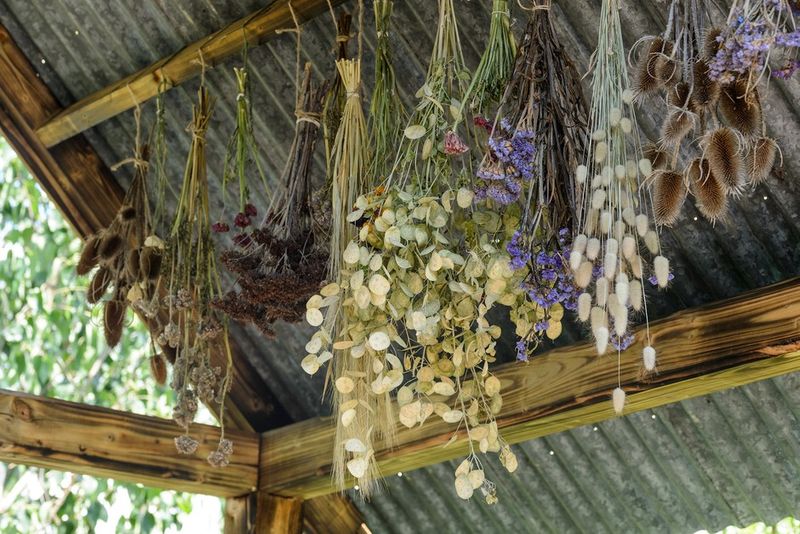
Sometimes a head looks done on the outside but feels a little soft inside, especially after a damp stretch of North Carolina weather. If a head is not fully dry when you pick it, spread it out in a dry, airy place out of direct sun and let it finish.
UF/IFAS Extension seed saving guidance recommends this extra drying time.
A paper plate, screen, or tray works well. Keep the layer thin so air can move around every head, and choose a spot like a covered porch, spare room, or garage shelf.
Avoid steamy kitchens and bathrooms, and skip the hot windowsill, since strong sun can be too much for seed.
The reason to wait is simple. Damp seed that gets sealed away can mold or rot, and you could lose the whole batch before spring.
A little patience now protects the seeds you worked to collect.
Stir or turn the heads every day or so. Dry time will depend on how wet the heads were and how humid your home or porch is, so check by touch rather than by counting days.
Seed that snaps or feels hard and dry, with no cool or soft spots, is ready to move on. Seed that already felt thoroughly dry when you collected it can skip this step and head straight to a labeled container.
Label each batch and keep it dry
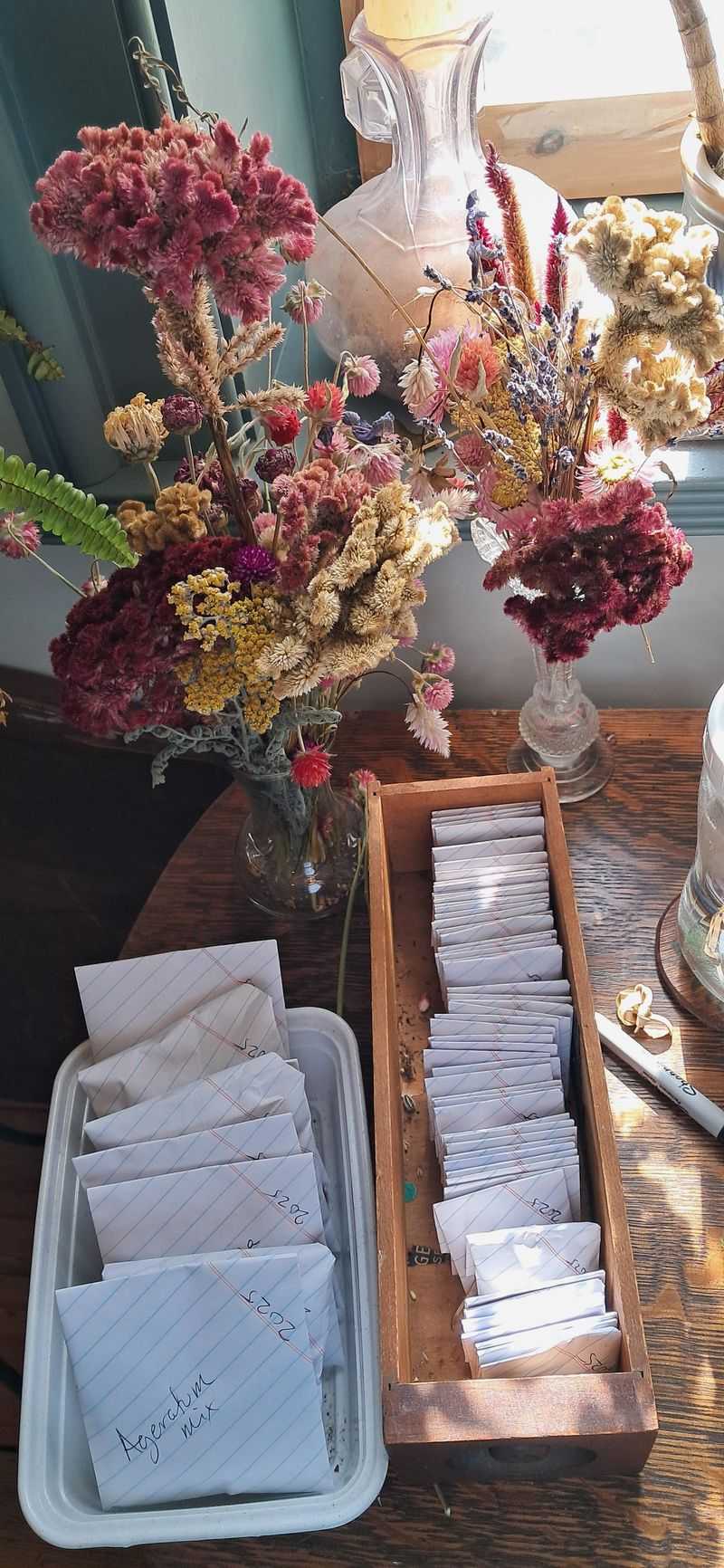
Labels sound fussy, but by next spring you will not remember which envelope holds what. Write the flower type, the variety if you know it, and the harvest date on each batch.
Paper envelopes with a pencil or pen note work well, and a small tag inside the container adds backup if the outside gets smudged.
A note about color can help too. Jotting down something like tall pink zinnia from the back fence gives you a clue about what you hoped to grow.
If you collected from several plants, keep those batches separate.
Only thoroughly dry seed belongs in storage. UF/IFAS Extension advises keeping it in a cool, dry place, and notes that airtight storage helps keep dry seed from reabsorbing moisture.
Glass jars with tight lids or sealed containers fit that job. Paper envelopes can go inside the jar, so you get labeling and protection together.
Pick a spot away from the stove, sunny windows, and humid spaces, such as an interior closet or a cool pantry shelf.
Check the container once in a while over winter. If you see fog on the glass or any musty smell, the seed may have been damper than you thought, and it is worth pulling out and drying again.
Next year’s flowers may look different
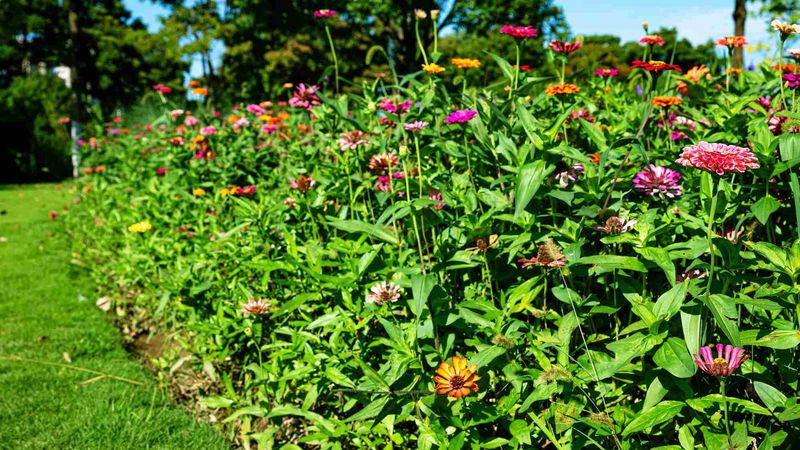
Saved seed gives you a chance, not a promise. Seeds may not sprout, and the flowers that do grow may not match the plant you saved from.
For more predictable results, start with open-pollinated or heirloom plants. As the UC Master Gardener guidance explains, zinnias can cross-pollinate, so nearby varieties may mix, and seed from F1 or hybrid plants may not keep the parent’s traits.
Surprises are part of the fun. A saved zinnia seed might give you a different color, height, or petal shape, and some gardeners enjoy that.
If you want a specific look, grow a single variety in a spot away from others.
Seed saving is also a way to build a garden around what you already grow, and it may cut down what you buy. A good plan is to keep the saved seed and also buy a fresh packet of a favorite as a backup, since germination can vary.
So leave a few suitable dry heads on the plants this fall, and see what spring sends up. Some of the best garden stories begin with a flower you did not quite plan.