
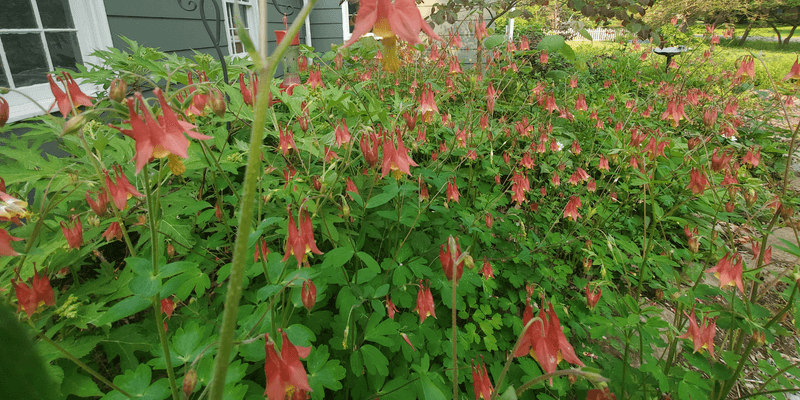
Spring color starts with what you plant before the holidays. November gives many Florida natives time to grow roots before warmer weather brings fresh flowers.
These seven plants offer everything from low purple blooms to bright yellow vines, with choices for different parts of the state. Match each one to your region and yard conditions, since bloom times and planting success vary across Florida.
1. Walter’s Viburnum
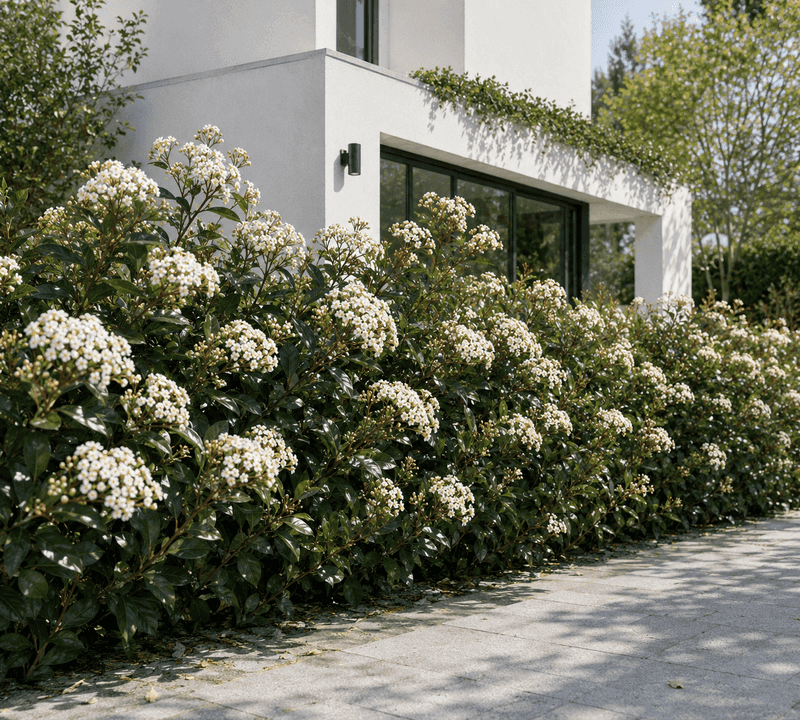
A shrub covered in tiny white flowers can make the whole front yard look awake. Walter’s viburnum (Viburnum obovatum) often blooms in late winter or early spring, giving beds a bright backdrop while many warm-season flowers are still resting.
Its main advantage is structure. Unlike a short-lived splash of bedding flowers, this Florida native can serve as a hedge, screen, or large accent plant long after its bloom season ends.
Plant it in sun to partial shade, choosing a spot with enough room for the variety you buy. The straight species can become a large shrub or small tree, while compact selections stay smaller, so read the nursery label rather than guessing.
November planting works well where the soil remains workable and you can water during dry spells. Keep the top of the root ball level with the surrounding ground, and place mulch around it without piling mulch against the stems.
Flowers attract visiting insects, and dense branches offer shelter for birds. Avoid shearing before spring bloom, which removes flower buds; if shaping is needed, wait until flowering finishes.
2. Carolina Jessamine
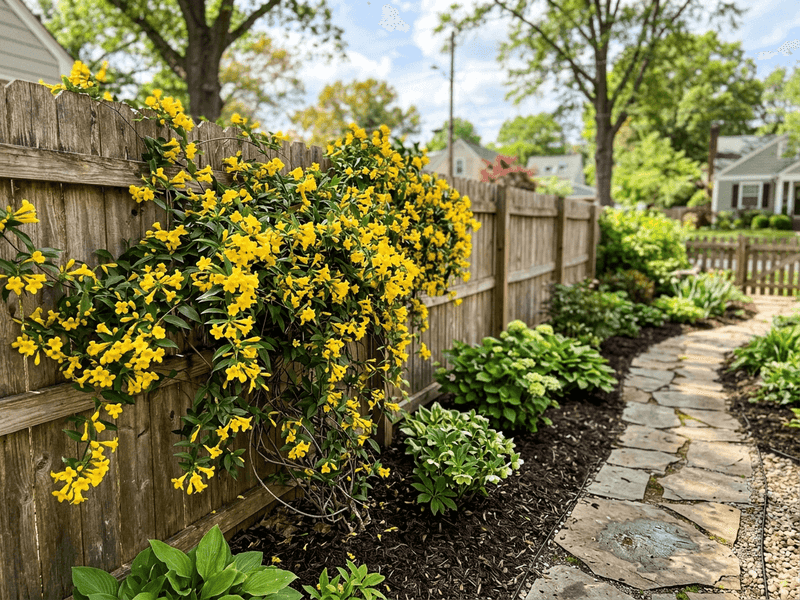
Give a bare trellis a yellow spring coat. Carolina jessamine (Gelsemium sempervirens) brings color above ground level, making it useful where a narrow bed leaves little space for a spreading shrub.
This native vine is especially suited to North and Central Florida. Its fragrant, funnel-shaped flowers commonly appear in late winter and early spring, although weather and location affect the schedule.
Choose a sunny site for the strongest flower display, with well-drained soil and a sturdy support. Partial shade is workable, but flowering may be lighter, and stems may reach toward brighter spots.
Set a nursery-grown plant in place during November and guide its stems onto the trellis while they are young. Water the root ball as it establishes, and do not assume a drought-tolerant mature vine can manage without water immediately after planting.
There is one firm safety rule: all parts are poisonous if eaten. Keep it away from places where children or pets might chew plants, and never confuse it with an edible flower.
Prune after flowering if growth needs containing. Its early yellow display can frame an entry or fence without taking over the entire flower bed.
3. Lyreleaf Sage
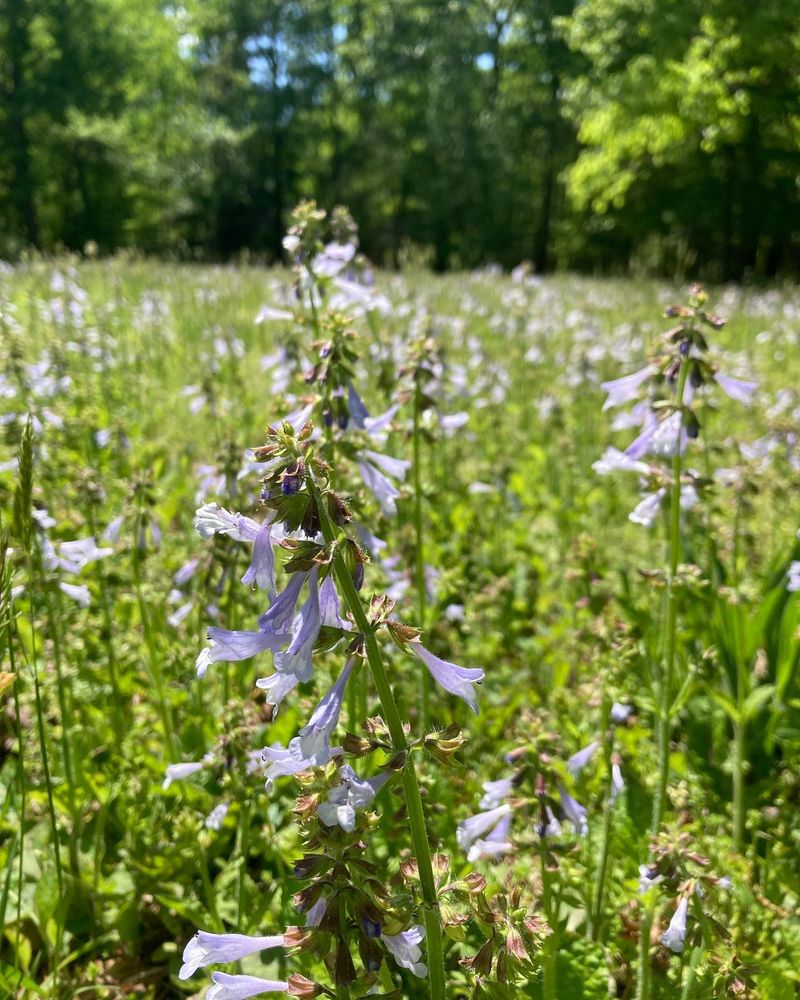
Look close to the ground for one of spring’s quieter surprises. Lyreleaf sage (Salvia lyrata) forms a low leafy rosette, then sends up slender stalks carrying pale blue to lavender flowers.
That small footprint makes it a useful choice along paths, at the front of a native bed, or in a loosely managed lawn edge. Spring flower spikes often rise roughly 1 to 2 feet above the leaves, adding height without creating a bulky plant.
Across much of Florida, it grows in sun or partial shade and handles a range of soils, provided the site is not severely dry during establishment. November is a good time to install plugs or small nursery plants and let the roots settle before spring growth.
Plant a loose group rather than a single specimen. Several flower stalks together are easier to see, and bees can move between nearby blooms.
Expect some reseeding when conditions suit it. If you want a tidy border, remove unwanted seedlings while small; if you want a natural patch, leave some seed stalks standing.
Delay mowing until plants have flowered and set seed where you want them to spread. Cutting too early removes the very spring show you planted them for.
4. Lanceleaf Coreopsis
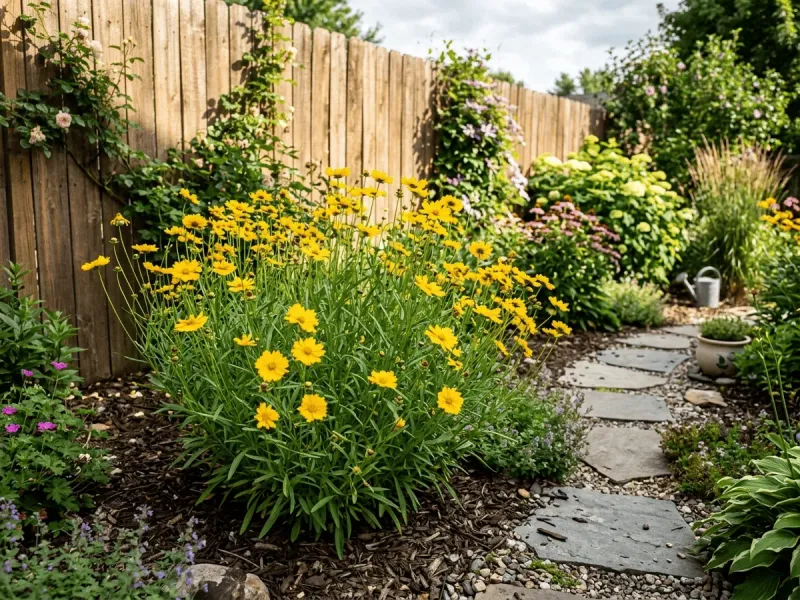
For a sunny bed that needs a cheerful focal point, golden daisies are hard to beat. Lanceleaf coreopsis (Coreopsis lanceolata) supplies that bold color in spring, with flowers held above narrow green leaves.
Think of it as the bright, open-space choice on this list. It fits best in sunny, well-drained beds, especially in North and Central Florida, rather than a shaded corner or a low spot that stays wet.
Start with nursery-grown plants in November if your goal is a stronger display the following spring. Seed can also work, but flowering from seed depends on sowing time, growing conditions, and plant maturity.
Allow roughly 12 to 18 inches between plants, adjusting for the nursery’s guidance. A group near a mailbox or along a walk reads as a clear band of yellow instead of a few scattered dots.
Water during establishment, then adjust to rainfall and soil moisture. Rich soil and heavy feeding are not necessary, and too much fertilizer can encourage leafy growth at the expense of a balanced display.
Remove spent flowers to keep the planting neat and encourage more bloom. Later, leave a portion to form seed if you would welcome new plants in nearby open ground.
5. Downy Phlox

Pink flowers soften a bed in a way bright yellow never quite does. Downy phlox (Phlox pilosa) produces clusters of small spring blooms, creating a gentle ribbon of color around taller plants.
This is a strong candidate for North and parts of Central Florida, especially in a natural-style border or open woodland garden. Choose plants grown from a suitable regional source, since Florida’s climate changes considerably from the Panhandle to the southern peninsula.
Give it sun to light shade and well-drained soil. An airy spot beneath widely spaced pines can suit it better than either deep shade or a soggy planting pocket.
November planting gives nursery-grown plants a head start on root growth, but keep them watered while they settle in. Space them according to their expected width, often around 12 to 18 inches apart, instead of crowding them for an instant carpet.
The flowers offer nectar to visiting butterflies and other insects. Keep nearby mulch light enough that it does not bury the plant’s crown or small shoots.
Check the botanical name when shopping. Downy phlox is not the same plant as the annual phlox often sold in colorful seed mixes, and the two should not be treated as interchangeable.
6. Eastern Red Columbine
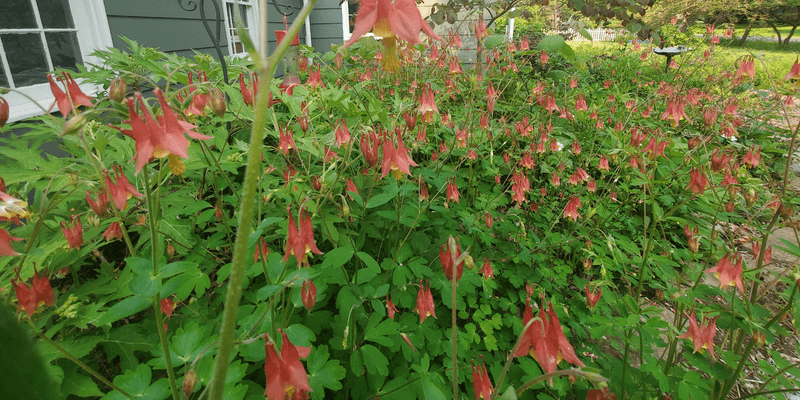
A shady North Florida corner does not have to miss the spring show. Eastern red columbine (Aquilegia canadensis) carries nodding red-and-yellow flowers that look almost like tiny hanging lanterns.
Its value here is specific: it offers a spring-flowering option for suitable woodland-style gardens in northern Florida. It is not a dependable statewide recommendation, and gardeners in Central or South Florida should choose a better-adapted plant from this list.
Look for a partly shaded site with good drainage and soil that holds some moisture without staying waterlogged. Morning sun with afternoon shade is often a sensible starting point in a home landscape.
Plant nursery-grown specimens in November, keeping the crown at soil level. If your sand dries almost immediately after watering, consider a more suitable bed rather than expecting this woodland plant to behave like a dry-scrub wildflower.
The flower shape suits hummingbirds and certain long-tongued insects. Place a small group near a shaded sitting area where you can see the dangling blooms up close.
Foliage may decline as summer heat builds, so mark the planting spot before adding anything nearby. Treat its spring appearance as a seasonal feature, not a promise of lush leaves through every Florida month.
7. Oakleaf Fleabane
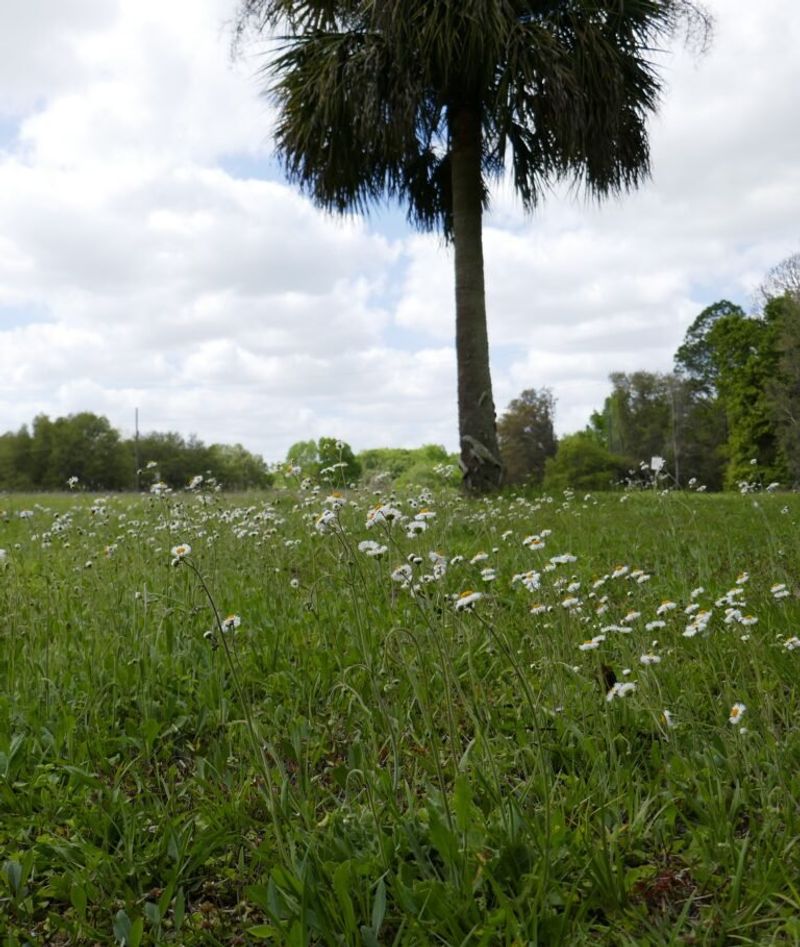
Some of the best spring flowers look as though they arrived on their own. Oakleaf fleabane (Erigeron quercifolius) has that relaxed charm, with small white to pale lavender daisies surrounding yellow centers.
This Florida native works well in informal borders, meadow-style patches, and lightly managed yard edges. It offers a softer, finer-textured display than lanceleaf coreopsis and can flower over a long period where conditions allow.
Choose sun to partial shade and a site with reasonable drainage. Its presence in varied Florida habitats makes it a useful candidate across much of the state, but locally grown plants remain the best starting point.
Install plugs or small plants in November, water them in thoroughly, and check moisture during dry weather. A new planting still needs attention even when the mature species is considered easygoing.
Small bees and other flower visitors use the blooms. Leave some flowers to form seed if you want the patch to renew itself, or trim spent stems where a cleaner edge matters.
Because seedlings can appear beyond the original planting, give it a place where a little movement is welcome. Buy from a native nursery rather than digging roadside plants, which may be misidentified or exposed to herbicides.