
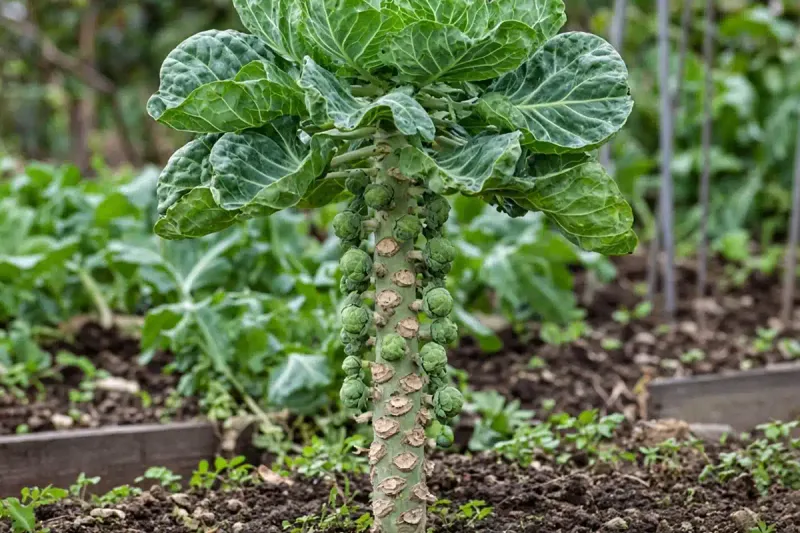
You head out to check your Brussels sprout stalks and find little tufts of open leaves where tight green buds should be. It is a frustrating sight after months of waiting.
The cause is not always the same, and a wrong guess can make things worse. A close look at the sprouts and the plant can point you toward safer next steps.
First identify the kind of loose sprout
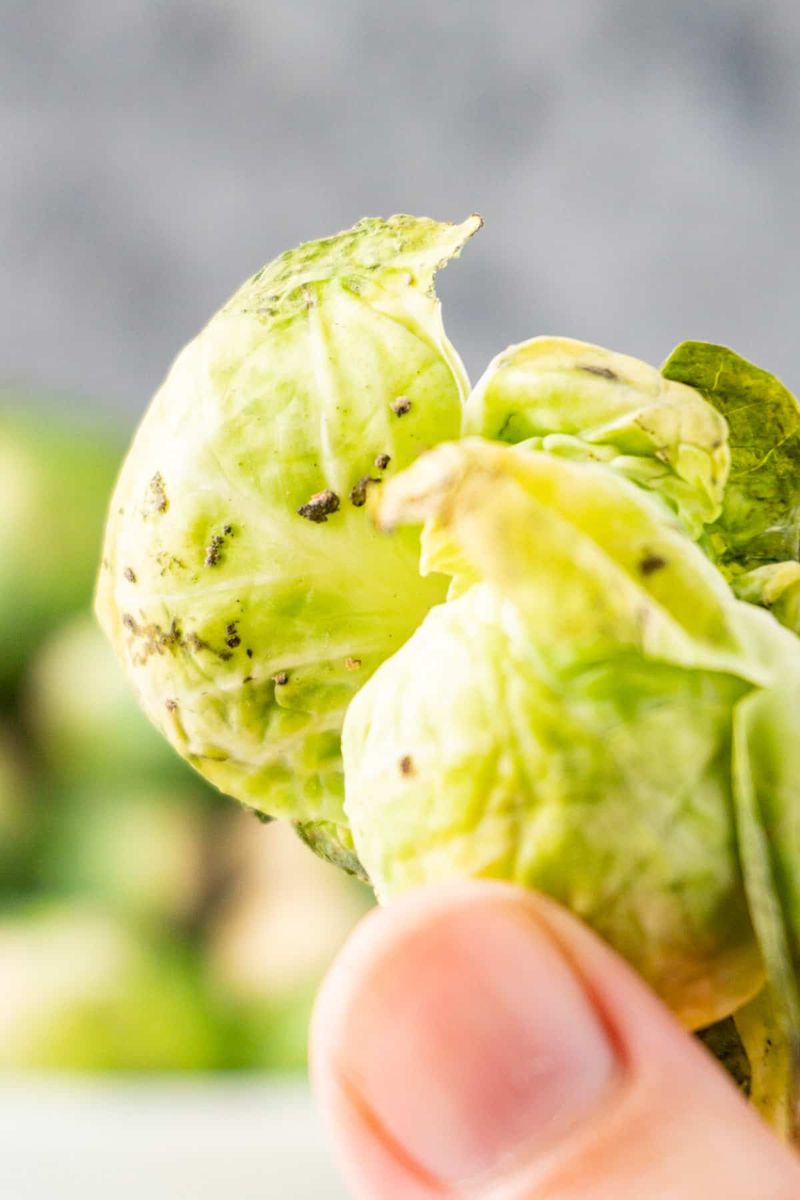
Start by picking a few of the loose ones and squeezing gently. A fluffy sprout has leaflets that stand open like a tiny rosette of leaves, and it feels light and airy.
A soft sprout feels spongy, and a split sprout has a crack running through the bud.
The two symptoms are not the same, and they point toward different possible causes. The Royal Horticultural Society describes fluffy, loose-leaved sprouts as usually linked with poor soil, limited growth, and non-hybrid cultivars.
Utah State University Extension, on the other hand, warns that excess nitrogen during sprout formation can produce loose, soft sprouts and splitting.
Now step back and look at the whole plant. Is it tall, with deep green leaves and a sturdy stalk, or small and slow?
Did you plant a named hybrid or seed from an unknown packet? Write down what you see, because one symptom alone rarely proves a nutrient problem.
Nitrogen is not a one-way explanation
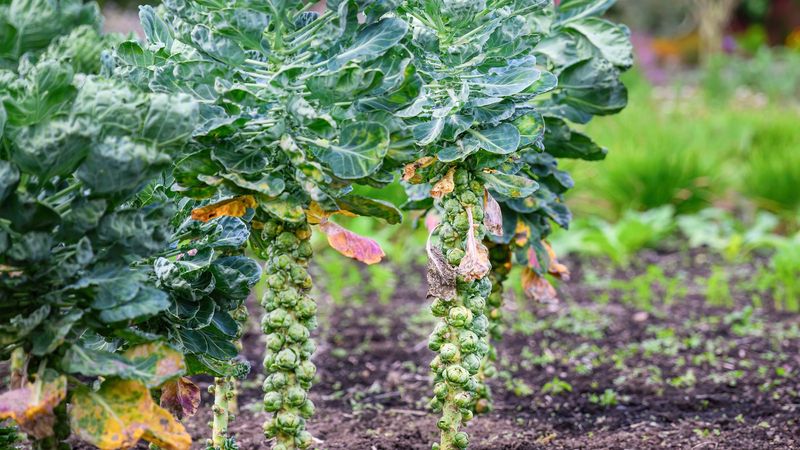
Many gardeners assume loose sprouts mean the plants went hungry for nitrogen early on. That guess is not well supported.
Several different things can produce a loose sprout, and nitrogen can even sit on the opposite side of the problem.
The RHS links fluffy sprouts to poor soil, limited growth, and non-hybrid cultivars. Utah State guidance on soil and fertility cautions that too much nitrogen while sprouts are forming can lead to loose, soft buds and splitting.
Extension advice on fertilizer timing is not uniform either. A University of Georgia home garden circular recommends repeated nitrogen applications during growth, while Utah State says to hold off once sprouts begin forming.
Because of that disagreement, no single rescue dose fits every garden. Your soil test and your local Extension office are better guides than a general rule.
Check heat and moisture conditions
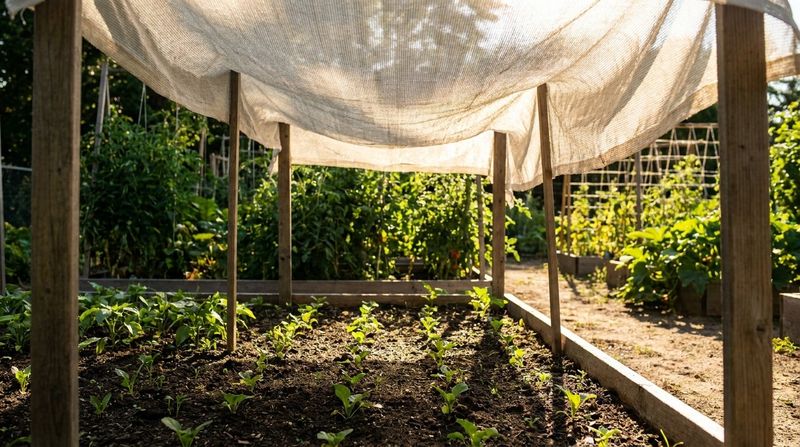
Weather can play a part too. Maryland Extension notes that Brussels sprouts are a long-season, cool-weather crop, and that plants maturing in hot, dry conditions may fail to form compact sprouts.
A warm fall stretch in Texas or Florida could be a contributor, though it is not a guaranteed explanation.
Water swings may matter as well. Utah State links moisture fluctuations during heading with splitting and bitter flavor.
Letting beds bake dry and then soaking them is the pattern to avoid.
Aim for reasonably even moisture, not soggy ground. Texas A&M AgriLife warns in its fall gardening guide that waterlogged soil can cause root rot and stunting.
Push a finger two inches into the soil. If it feels damp, wait before watering again.
Care for the crop without a blind fertilizer rescue
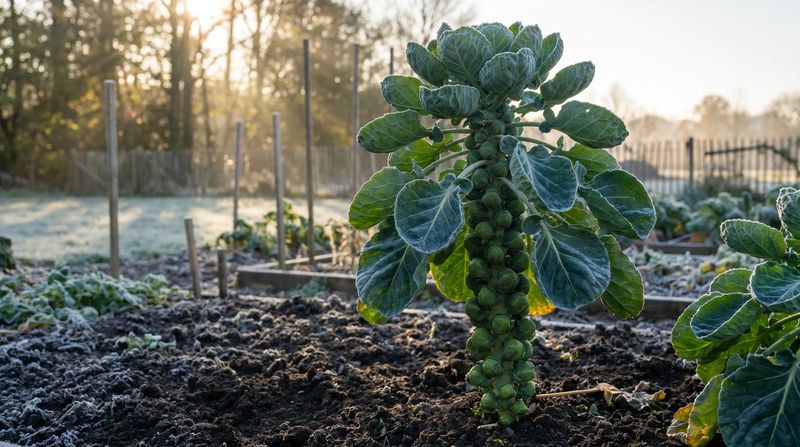
Once sprouts are forming, resist the urge to dump on fertilizer. Utah State advises avoiding extra fertilizer during sprout formation, since it may lead to loose, soft sprouts and splitting.
Nothing found in extension sources shows that adding fertilizer will tighten sprouts that have already formed.
Safer steps are simple. Keep moisture steady, add a layer of mulch to slow drying, and watch drainage so roots are not sitting in water.
Texas A&M notes that soggy soil can stunt plants.
If you suspect a nutrient problem, get a soil test and read the results with your county Extension office. The Utah State soil fertility page explains why timing matters.
Skip homemade borax mixes as well. University of California IPM notes that excess boron can injure plants and should be diagnosed with proper testing first.
Harvest the firm sprouts that are ready
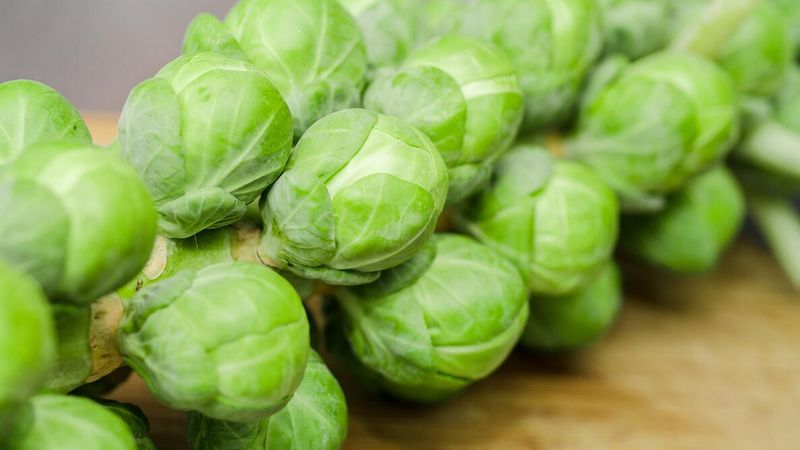
Even a imperfect stalk can give you a meal. Texas A&M says to pick the early sprouts repeatedly before they open and yellow.
Start at the bottom of the stalk, where the oldest buds sit, and work upward as others firm up.
Choose sprouts that feel solid and tightly wrapped. Twist or snip them off close to the stalk.
Leave smaller buds higher up for another round in a week or so.
Loose tufts can still be useful in the kitchen, though harvesting them does not repair anything. Brussels sprout leaves can be eaten as greens, so you can sauté or steam the leafy parts.
Treat this as making the most of the crop, not as a fix.
Plan the next crop around local timing and tested soil
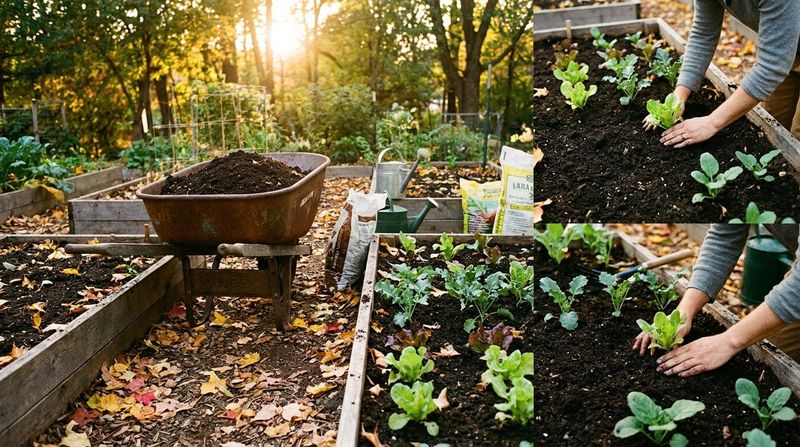
Brussels sprouts need a long, cool stretch to mature, which is why timing matters so much in the South. Maryland Extension calls them a long-season, cool-weather crop.
Heat arriving at the wrong stage may undercut sprout quality.
Planting dates differ across our region. Texas A&M lists different Brussels sprout planting dates by region, and UF/IFAS gives separate windows for North, Central, and South Florida.
Check your own county’s calendar instead of copying one schedule.
Before planting, send in a soil test and ask your Extension office how to read it. Fertility advice, such as the Utah State soil fertility guide, stresses crop stage, so match applications to your results.
Picking a named hybrid may help, but it will not guarantee tight sprouts by itself.
Good soil and good timing give next year’s stalks their best shot.