
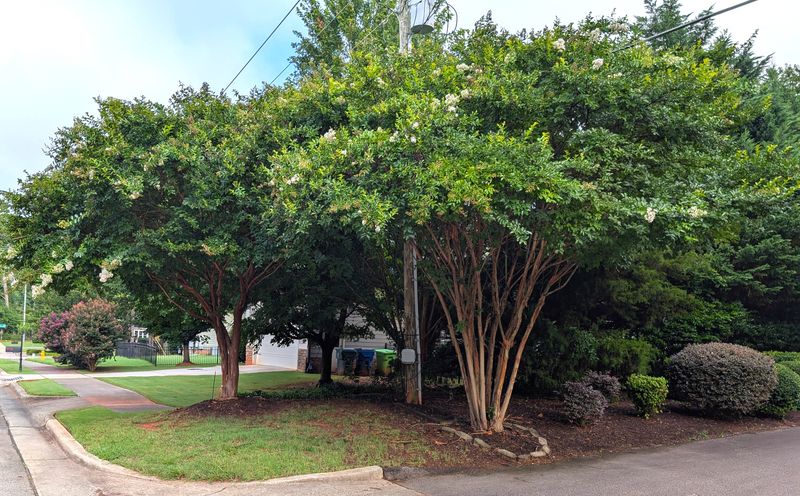
Those thin shoots popping up around the bottom of your crape myrtle can make a tidy yard look scruffy fast. Many North Carolina gardeners hear that cutting them at the base only makes them come back thicker.
Extension guidance tells a more useful story, and it points to a simple routine you can finish in a few minutes. Here is what to cut, how to cut it, and what to expect afterward.
Crape myrtles naturally produce suckers
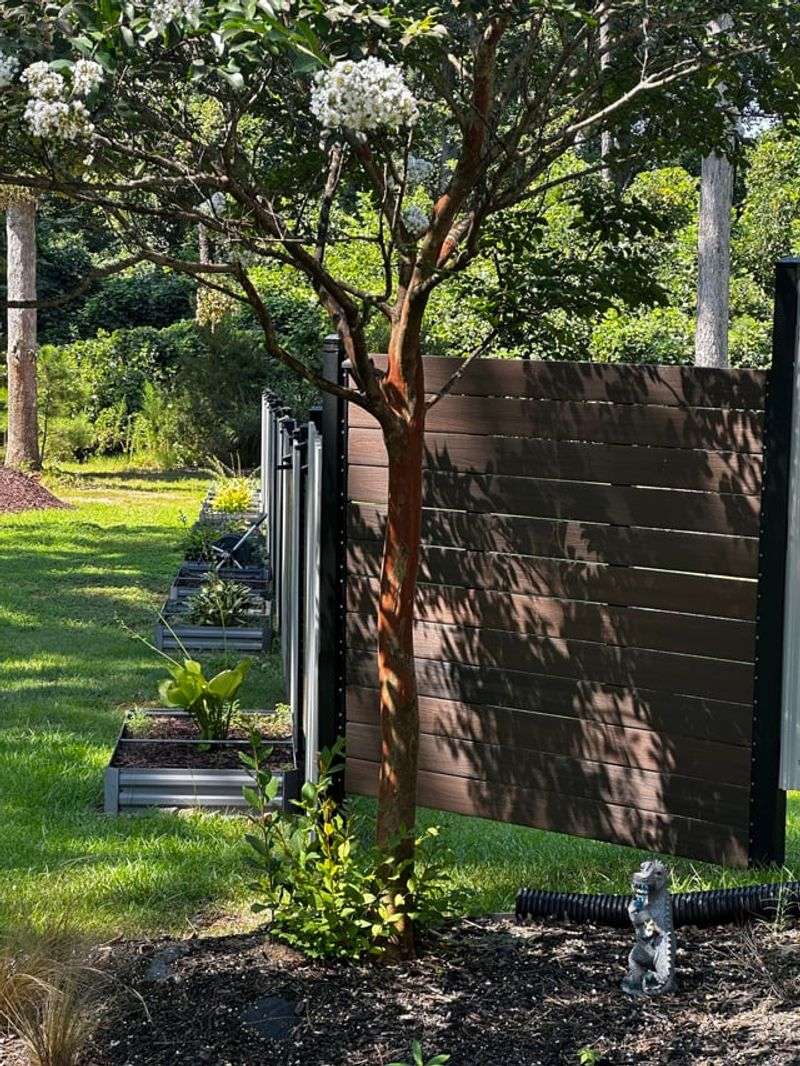
Walk around any neighborhood in Raleigh, Charlotte, or Wilmington and you will spot crape myrtles with a fringe of skinny shoots at their feet. Those shoots are suckers, which are new stems that rise from the roots or from the base of the tree.
Extension guidance on crepe myrtle suckers notes that the tree produces them naturally.
How many show up depends on the cultivar and on growing conditions. One tree in a sunny, well-drained bed may send up only a few each year, while a neighbor’s tree of a different variety may produce a crowd.
A thick patch of suckers does not mean you did something wrong.
Appearance alone cannot tell you what caused a shoot. A sucker that looks stout may simply be a vigorous one from a vigorous tree.
It does not show that an earlier cut triggered it.
That matters because of a popular claim: that slicing a sucker off at the soil line makes it return thicker. The extension guidance reviewed for this article does not back that up.
Removing suckers at the soil line is the standard advice for a living tree.
Think of suckers as a routine chore, like pulling weeds from a bed. They are a normal part of owning this tree, and a plan for handling them keeps your crape myrtle looking its best through the long Carolina growing season.
Does cutting an individual sucker at the base make it grow back thicker?
Short answer: no guidance found for this article says so. Extension advice for a living tree is to remove individual suckers at the soil line or close to where they start.
If that cut made shoots come back thicker, the advice would be the opposite.
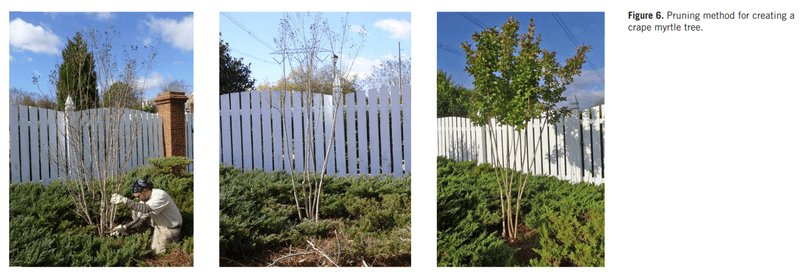
The confusion likely comes from two different jobs getting lumped together. NC State Extension in Pender County warns that cutting whole trunks close to the ground can lead to profuse suckering.
That is about chopping the main stems of the tree, not trimming off one small shoot.
Florida experts say something similar. UF/IFAS pruning guidance explains that hard pruning can stimulate sprouts from the roots and the base of the trunks.
Again, the trigger is severe pruning of the tree itself.
So here is a quick way to sort it out. If you are snipping a pencil-thin shoot from a healthy tree, that is routine care.
If you are cutting down whole trunks, expect the tree to answer with a flush of new growth.
Keep those two practices separate in your mind, and you can skip the worry about flush cuts on suckers. You can also pass the tip along to a neighbor who swears the base cut backfires.
Remove small suckers from a living tree at the soil line
Grab sharp bypass pruners and head out when the soil is workable. Early is better, because small suckers are easy to snip and have not yet turned woody.
UF/IFAS recommends taking them out while they are small.
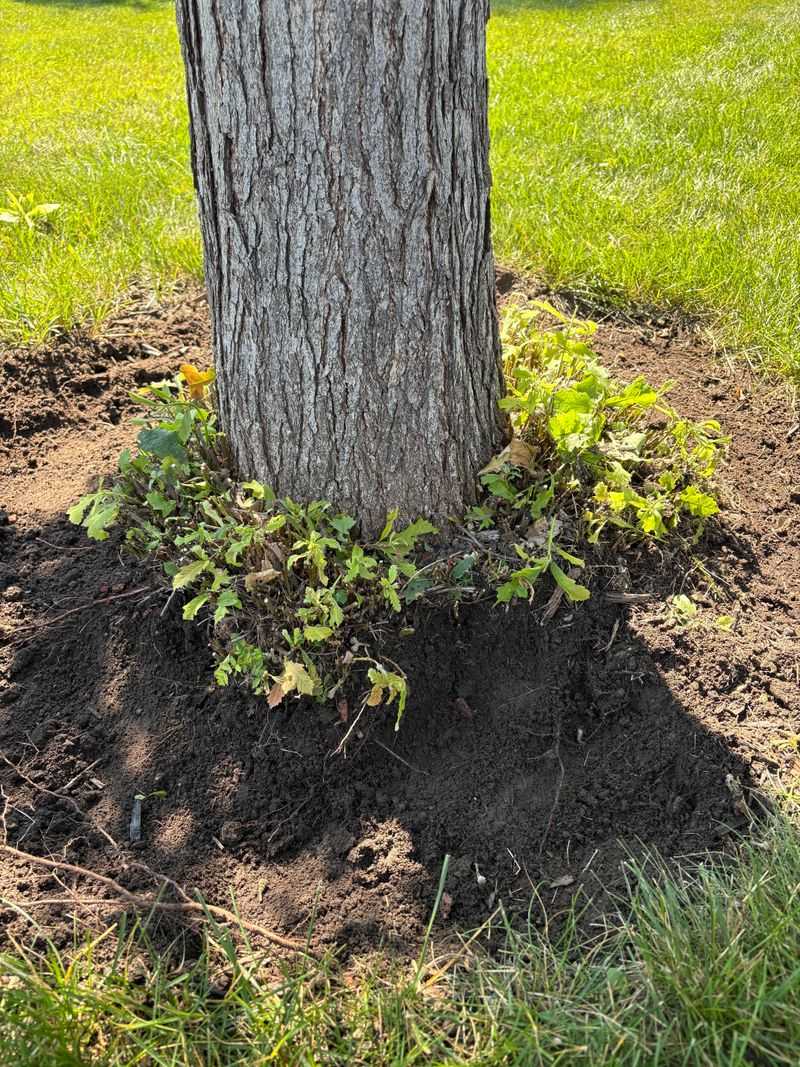
Cut each shoot at the soil line. If you can gently expose the spot where it begins without disturbing the tree, a cut just below the soil surface may help, according to Maryland Extension’s sucker advice.
Brush aside a little mulch, make the cut, then replace the mulch.
Here is the part to watch. Avoid cutting the supporting roots themselves.
Those roots feed the living tree, so skip any digging or slicing around the root zone beyond what it takes to reach the base of the shoot.
A handy example: a sucker that comes up three feet from the trunk is probably attached to a shallow root. Trace it only as far as you need to make one clean cut, and leave the root alone.
This method is for suckers on a tree that is alive and staying put. Shoots that appear after a tree has been removed are a separate problem, and they get their own approach in a later section.
Expect recurring shoots to need follow-up
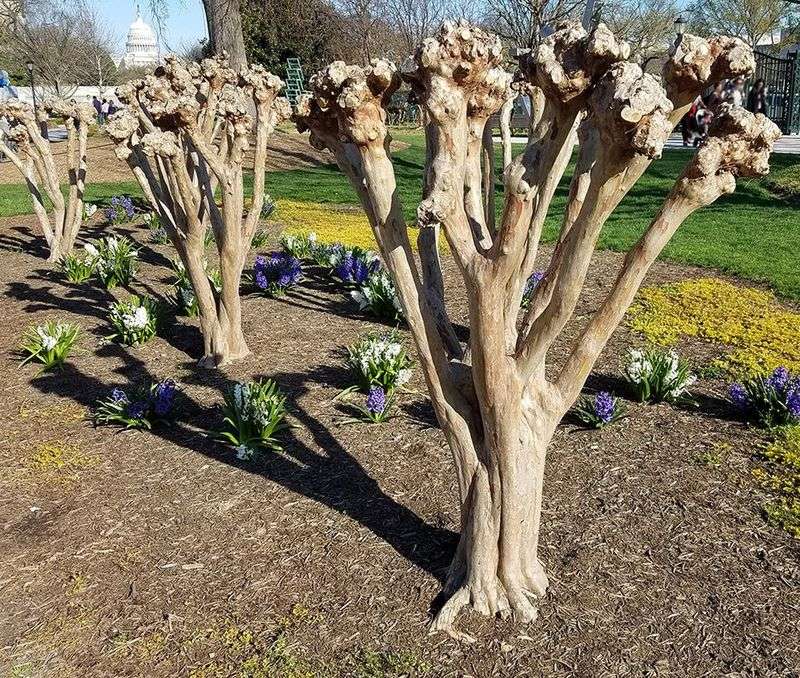
Nobody likes a surprise, so here it is up front: suckers tend to come back. A single session rarely ends the story.
Several pruning sessions may be needed, and extension guidance leans on periodic removal.
A reader in Florida asked why sprouts kept appearing at the bottom of a crape myrtle, and the answer from UF/IFAS Extension in Nassau County pointed toward repeated removal. The advice fits North Carolina yards too, from the coastal plain to the mountains.
New shoots after a cut do not prove that the first cut caused thicker growth. A tree that makes suckers by nature will keep making some.
Fresh ones are simply the tree doing what it does.
Try a simple habit. Each time you mow, edge, or refresh mulch, glance at the base of your crape myrtles and snip anything small.
Two minutes now saves you from a tangle later.
Resist the urge to hack deeper in hopes of a final fix. Digging harder is not a guaranteed cure, and it could harm roots your tree depends on.
Steady, small-scale upkeep is the plan that holds up.
Shoots from roots left after tree removal need a different approach
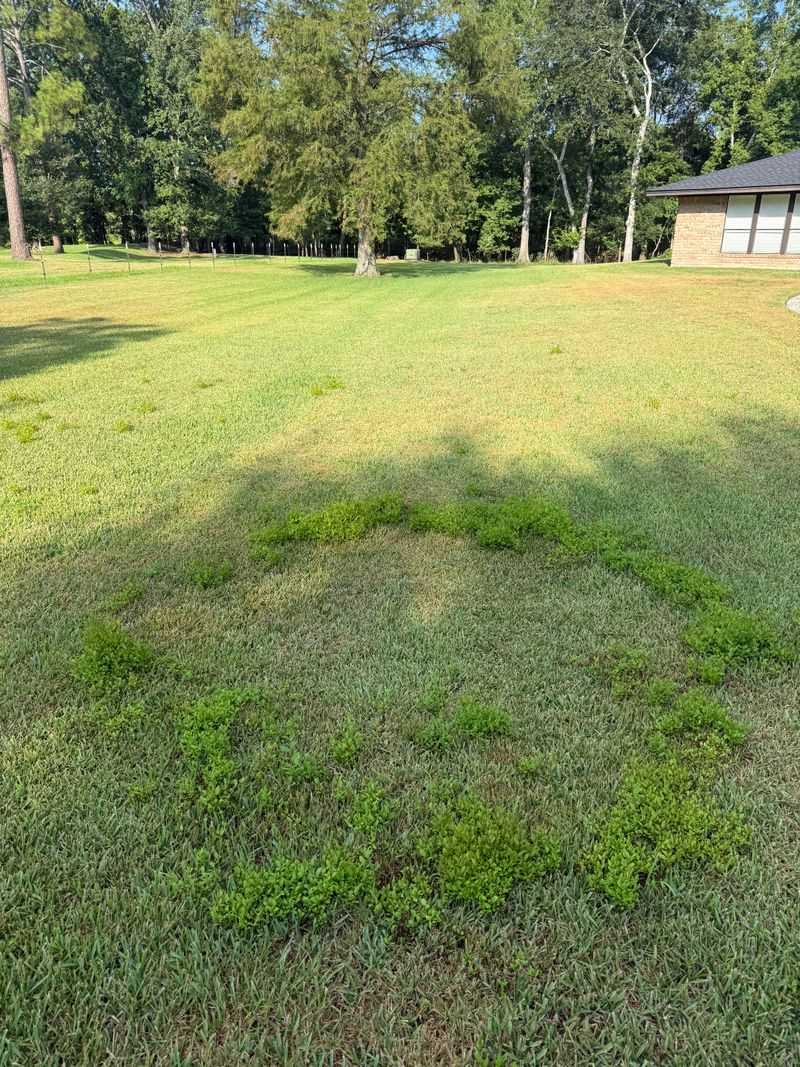
Picture this: you had a crape myrtle taken out last year, and now green shoots keep rising from the spot. Roots that stayed in the ground are still alive, and they keep sending up growth.
That is a different problem from suckers on a healthy tree.
NC State’s Ask Extension response to a Wake County question about root shoots that will not quit offers two options. You can mow the shoots repeatedly, or dig a few inches below the ground to remove them.
Either way, the goal is to use up the energy stored in the roots over time.
Expect patience to be part of the job. One removal or treatment may not be enough, so plan on returning every time new growth appears.
Roots with plenty of stored reserves can outlast the first round or two.
Here is the limit on that advice. Digging a few inches below ground applies to the post-removal situation, where there is no tree left to protect.
Do not copy it on a living crape myrtle, where digging around or cutting roots could hurt the tree.
If shoots pop up in the middle of a lawn, regular mowing may handle them. In a planting bed, careful hand digging works better.
Stay consistent and the roots may weaken gradually.
Treat sucker-control sprays as an uncertain option
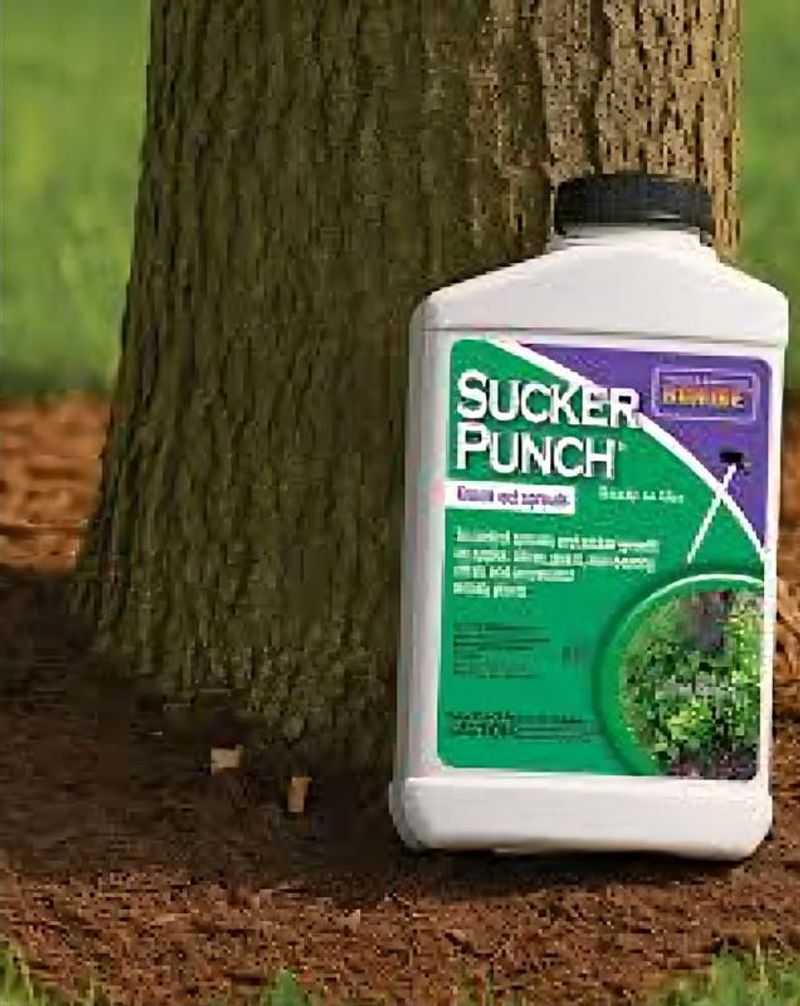
Store shelves offer sprays that promise to stop suckers, and they sound easy. The research behind them is thin, though.
Iowa State Extension says studies on sucker-prevention sprays are limited, the sprays may damage the parent tree, and they do not eliminate suckers completely.
Herbicide deserves extra caution. Maryland Extension warns that a systemic product can harm the rest of the tree, since the chemical can move beyond the sucker you meant to treat.
On a living crape myrtle, it is not a simple or guaranteed fix.
If you still decide to consider a pesticide, start with the label. The EPA explains that pesticide labels are legally enforceable and spell out directions and precautions for use.
Check that crape myrtle or the situation you have is covered before you buy.
Pruners cost less, carry less risk, and give you full control over what gets removed. A quick snip leaves the tree’s bark, leaves, and roots untouched.
A crape myrtle with a few suckers is still a handsome tree, and a little regular trimming keeps it that way.