
Plant a strawberry a little too deep or a little too shallow, and the plant can struggle before it ever sets a berry. Gardeners in Texas and Florida often set plants out in fall, but the calendar is different in each place.
Getting the crown in the right spot helps young plants settle in. Here is how to do it, plus what to expect if your plants go in later than the usual window.
Planting dates differ across Texas and Florida
November is not one planting season across the South. UF/IFAS production guidance lists September 20 to October 15 for North Florida, September 25 to October 25 for Central Florida, and October 1 to November 1 for South Florida.
Texas schedules run later. Texas A&M’s commercial guidance recommends late September to early November, and Austin home-garden advice says mid-September to early November.
The commercial numbers are timing context, not a yield forecast for a backyard bed.
By November 11, 2026, that date falls past every window listed above. These are recommended schedules, not proof that later planting fails.
Still, Texas guidance warns that delaying fall transplanting can reduce spring yields, so plan on a smaller or later harvest and give plants good care.
Set the crown midpoint level with the soil
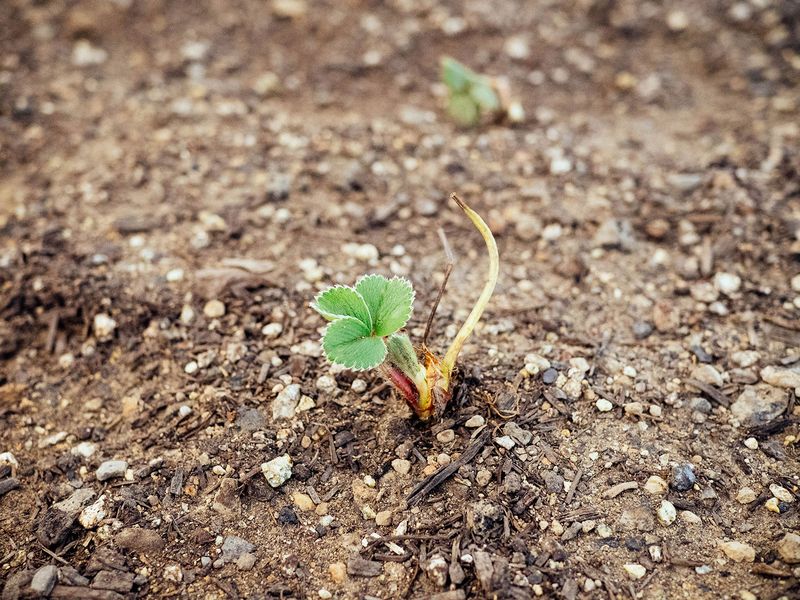
The crown is the thick, short stem between the roots and the leaves. Set each plant so the middle of the crown sits level with the finished soil surface, as Texas A&M AgriLife advice for Austin describes.
Cover the roots, but leave the growing point, where new leaves emerge, uncovered.
Both mistakes cause trouble. NC State Extension notes that planting too deep can weaken plants and contribute to crown rot, while planting too shallow exposes roots, which can dry out, root poorly, or let the plant shift.
Think of depth as a good start. It helps a plant establish, but it does not decide the harvest on its own.
Timing, moisture, and variety all play a part too.
Spread bare roots before covering them
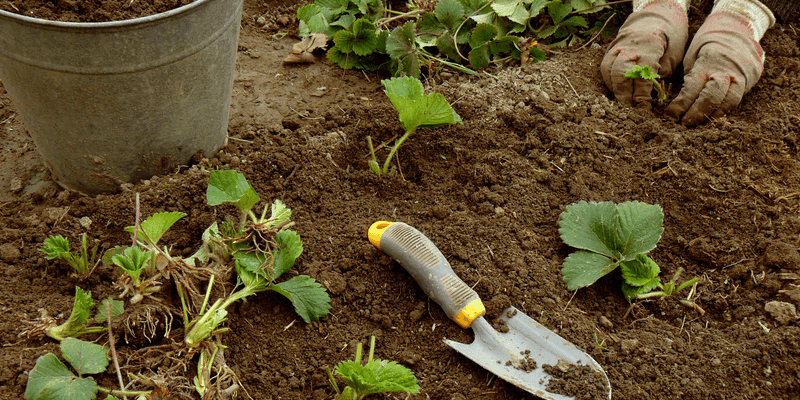
Planting day goes smoothly when you work in order. Keep bare-root plants’ roots moist until the moment they go in, since dry roots struggle to restart.
Dig a hole wide enough to fan the roots out instead of bunching them. Hold the plant so the crown midpoint lines up with the soil surface, then add soil around the roots until they are fully covered.
Texas A&M’s home-garden guide says to cover the roots without covering the crown.
Press the soil gently around the plant so it holds steady. Skip two shortcuts: do not bury the crown to anchor the plant, and do not leave roots showing to keep the crown dry.
The Austin guidance backs the middle path of covered roots and an open crown.
Manage moisture and drainage without promising disease prevention
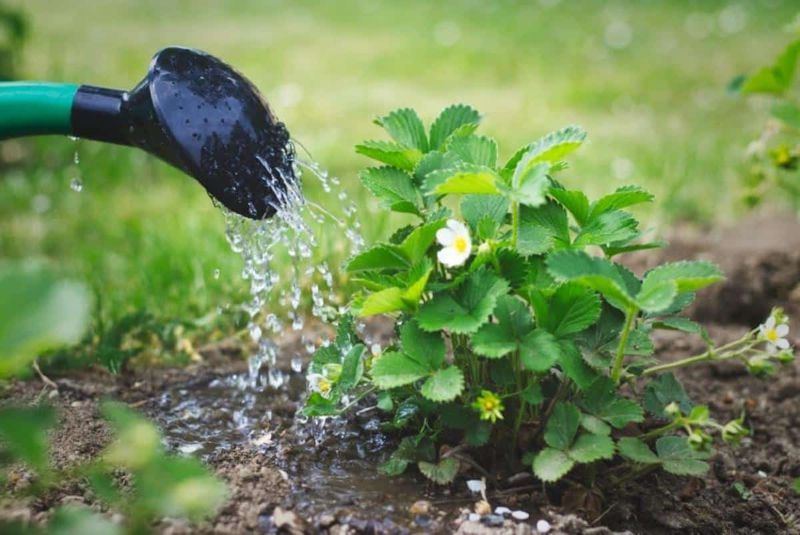
Water right after planting. The Austin guidance recommends keeping the soil moist but not soggy while plants establish, so check the bed often during the first weeks.
Drainage deserves as much thought as watering. Texas A&M recommends well-drained soil and raised beds where the ground holds water.
If puddles linger after rain, a raised bed is a practical fix.
UF/IFAS reports that Phytophthora crown rot is usually less common at better-drained sites. That means good drainage can lower the risk, but it does not remove it.
Neither does perfect planting depth.
Stick to steady, moderate watering and a bed that sheds extra water. That is plenty for home gardeners at this stage.
Crown rot is not just a planting-depth problem
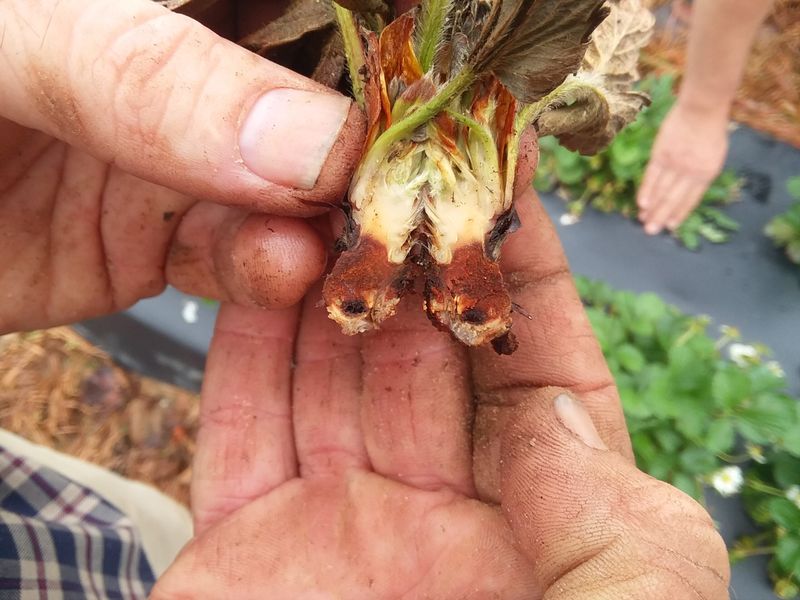
A struggling plant with a buried crown is not automatically a case of crown rot. Phytophthora crown rot is a disease, and UF/IFAS notes that drainage and how susceptible the variety is also matter.
Planting too deep can weaken plants and contribute to rot, according to NC State Extension. But depth is one factor among several, and right depth does not prevent the disease.
So look at the whole picture when plants wilt or fade. Check whether the crown is sitting below the soil line, whether water stands in the bed, and which variety you planted.
Resist the urge to replant everything at a new depth. Changing depth alone may not fix a problem caused by wet soil or a susceptible variety.
Set realistic expectations for spring harvests
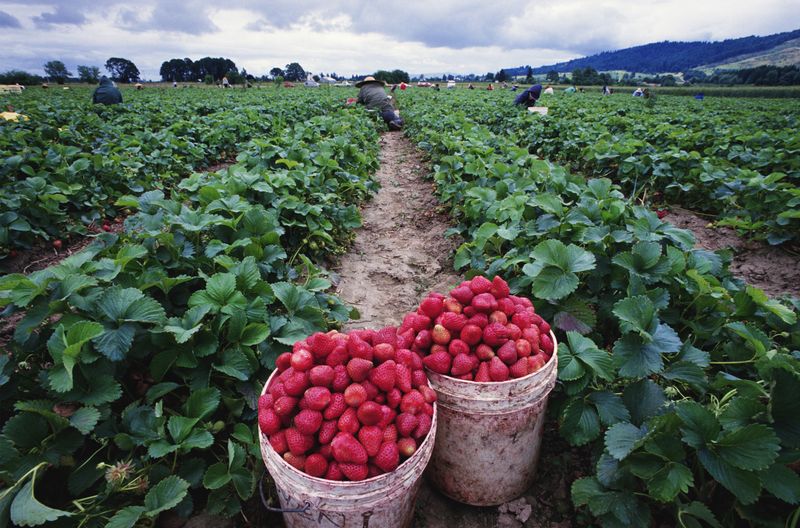
Harvest time depends on where you live and how the winter behaves. Central Texas guidance places the main spring harvest from late February into early May.
A broader Texas home-garden guide describes peak harvest from March to early May. Those are typical ranges, not promises, and a late planting may fall behind them.
Florida runs on a different rhythm. UF/IFAS home-garden advice says plants may flower and fruit from November into April or May, in cycles that vary and can be interrupted by freezes.
For a November 11 planting, treat any berries as a bonus and do not count on a March crop or heavy fruiting. Good care still gives plants their best chance.
Check the planting before you finish
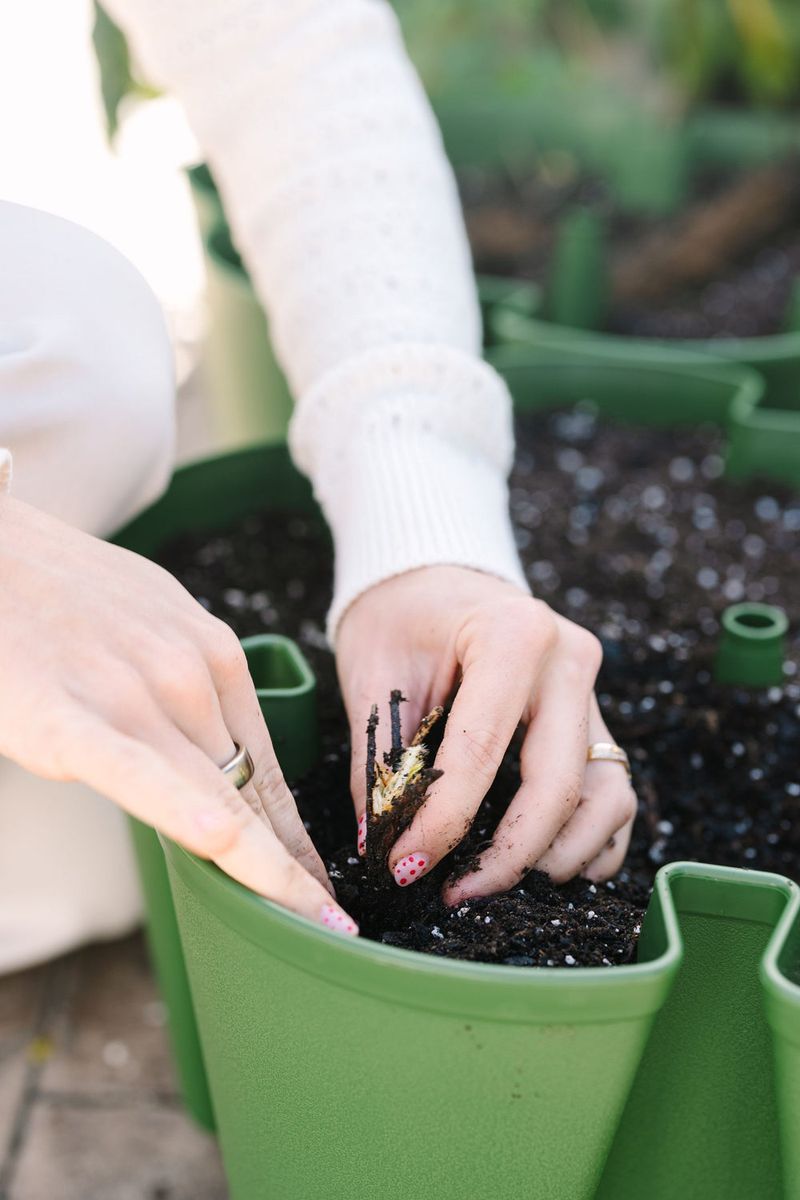
Walk the row once more before you put the trowel away. Roots should be covered, the crown midpoint should be level with the finished soil, and the growing point should stay uncovered.
Austin guidance also says to keep the soil moist but not soggy while plants settle in, as Texas A&M AgriLife describes.
If rain or watering has washed soil away, gently tuck it back so no roots show. If soil has crept over a crown, brush it off.
Texas A&M’s guide uses the same covered-roots, open-crown rule.
A correct start is a sound foundation, not a crop guarantee. A strawberry plant asks for very little, just roots in the soil and a crown in the open air.