
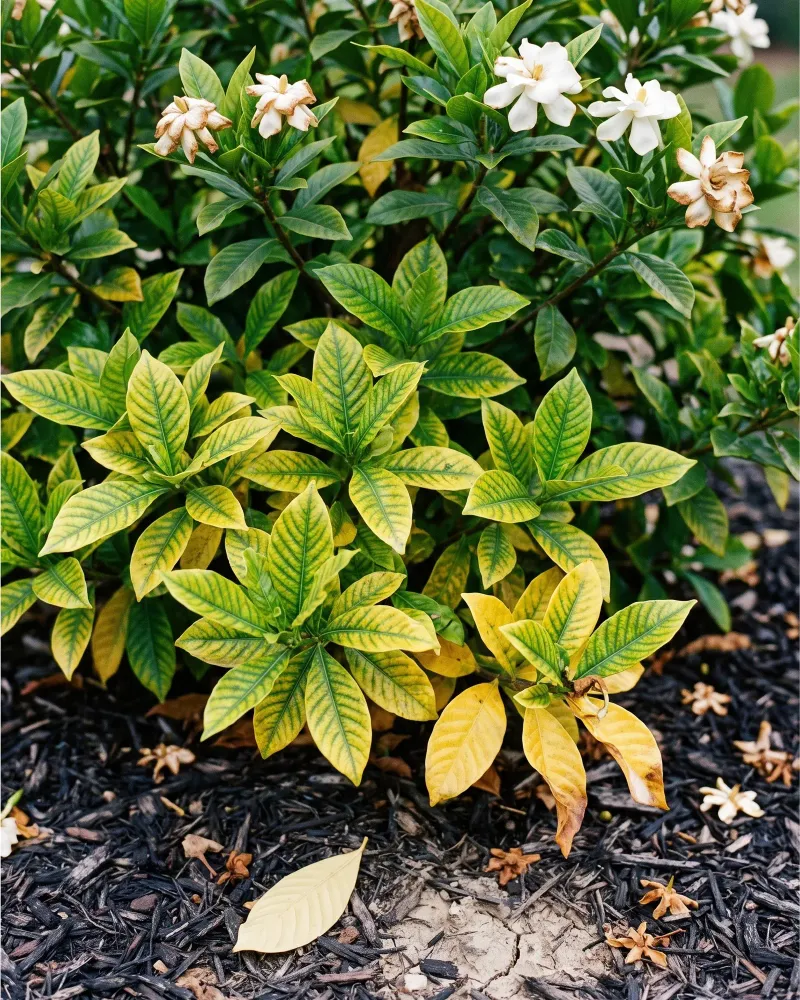
Yellow gardenia leaves can make any Southern gardener worry. Sometimes the cause is a plant that cannot get enough iron, and sometimes it is just fall doing its thing.
A few quick checks can tell you which one you are dealing with. Once you know, you can pick a fix that actually fits your yard.
Start with the leaves that are yellowing
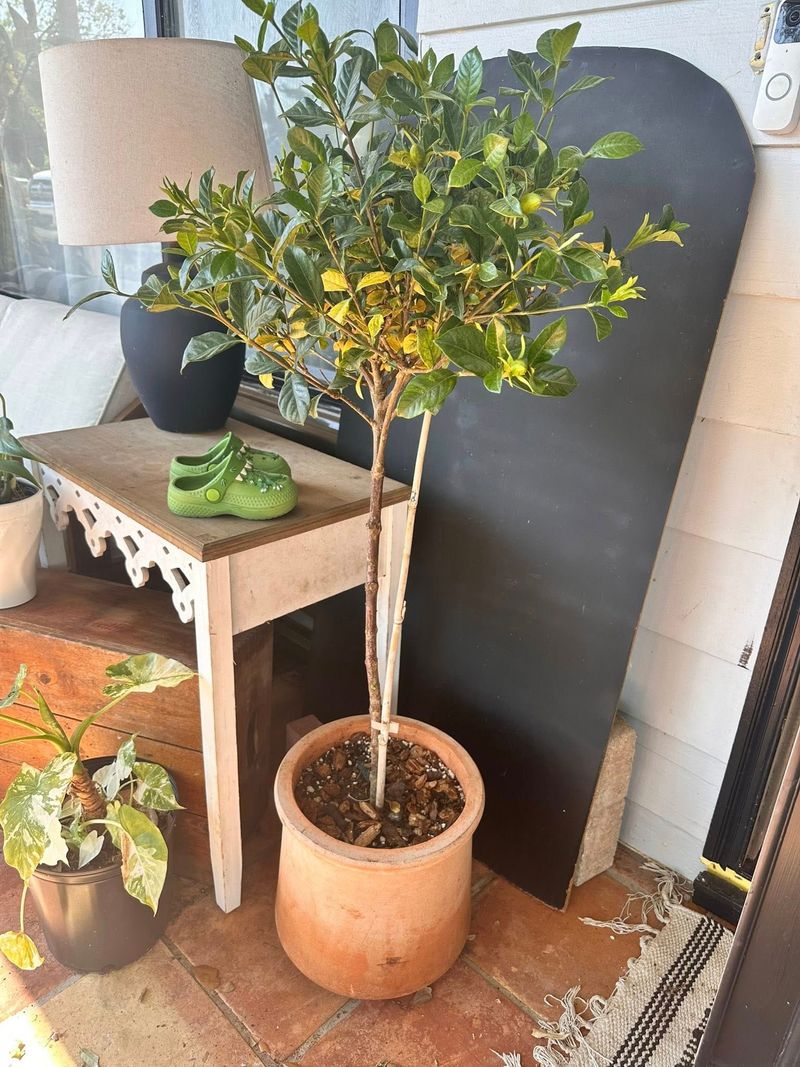
Grab a close look at your shrub before you buy anything. Note whether the yellow shows up on the newest leaves at the branch tips or on the older leaves lower down.
Yellow tissue between greener veins on young growth is consistent with iron chlorosis, according to Iowa State Extension. The leaf looks like a green net laid over a yellow sheet.
Older leaves tell a different story. Gardenias can yellow and drop some of their oldest foliage in fall, and UF/IFAS gardenia guidance treats that as a normal change.
So the pattern is a clue, not a diagnosis. Green veins alone do not prove the soil has locked up iron, and the next few checks help you rule out other causes.
High pH can make iron harder for gardenias to use
Gardenias like acidic soil. When soil pH climbs too high, iron that is already in the ground can become harder for roots to take up.
That is why iron chlorosis does not automatically mean the soil is short on iron. The iron may be there, just out of the plant’s reach, which is common in alkaline soils found in parts of Texas and Florida.
Target ranges differ by region. UF/IFAS Gardening Solutions gives a pH of 5.0 to 6.5 for gardenias, while Mississippi State Extension lists 5.0 to 6.0.
Treat those as regional references, not one rule for every yard. Your own soil and water will shape what is going on.
Check water, drainage, temperature, and roots
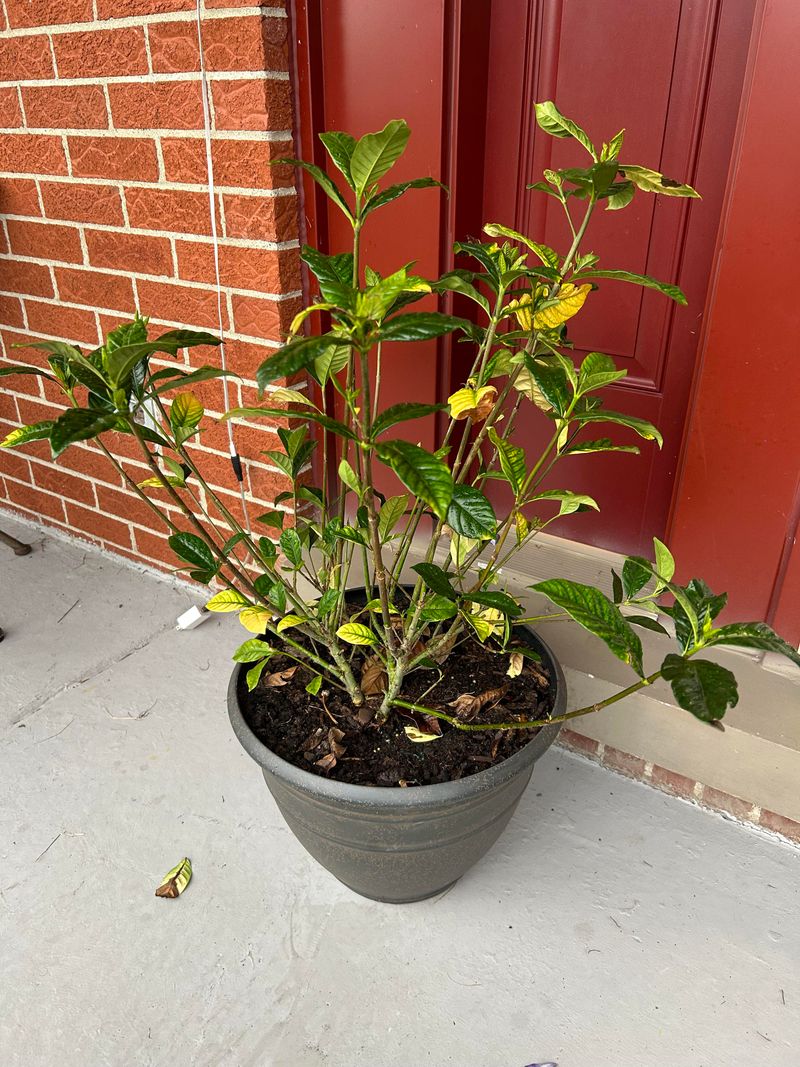
Before treating the leaves, look at the roots’ surroundings. Soil that stays soggy, a bed where water pools after rain, or a cold snap can all keep iron from reaching the plant.
Wet or damaged roots take up nutrients poorly, and Iowa State Extension lists poor drainage, overwatering, and cool conditions among the causes of similar symptoms.
Poke a finger a few inches into the soil. If it feels soggy days after watering, ease off the hose and look at drainage.
Gently check for stunted, discolored, or swollen roots too, since Clemson Extension covers root problems such as nematodes in gardenias.
Fixing the growing problem may matter more than adding iron. Without that, a treatment can fade quickly.
Test the soil before changing its pH
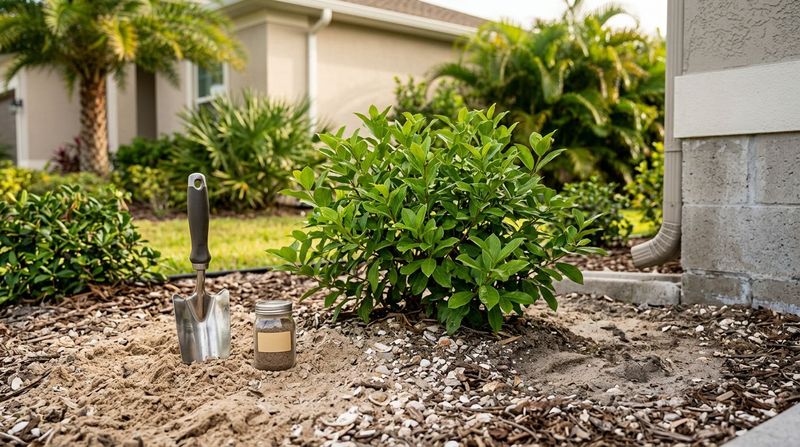
Here is a simple order of steps for this weekend. Look at which leaves are yellow, check whether the root zone stays wet, and then collect a soil sample.
Your county Extension office can usually point you to a soil pH test. UF/IFAS advises contacting the local Extension office about soil testing, and results tell you whether pH is really the problem.
Resist the urge to guess. Colorado State Extension cautions that sulfur may not suit soil with free lime and warns about possible aluminum toxicity from aluminum sulfate.
Let the test result guide any pH change. If the number is already in range, the yellowing likely has another cause.
Foliar iron may help, but results can be incomplete or temporary
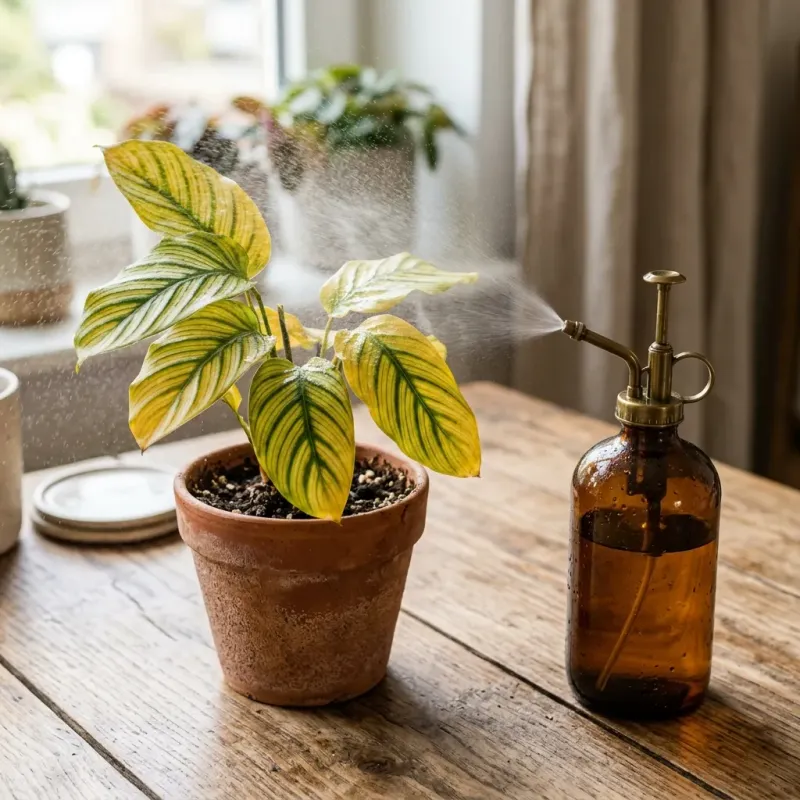
If the leaf pattern fits iron chlorosis, a foliar iron product labeled for the plant may give a faster response than changing soil pH. Leaves can green up in days or weeks.
Expect limits, though. Utah State Extension describes foliar sprays as a quicker option, and the greening can be patchy or fade.
It also does not fix whatever kept iron from the roots.
Read the label and follow it exactly. Too strong a mix can burn foliage, and iron can stain concrete, siding, and pavers, so cover nearby surfaces first.
Spraying in cooler, shaded hours is a common label suggestion.
The Colorado State guidance also treats iron products as part of a plan, not a stand-alone cure.
Choose longer-term care for the soil and region
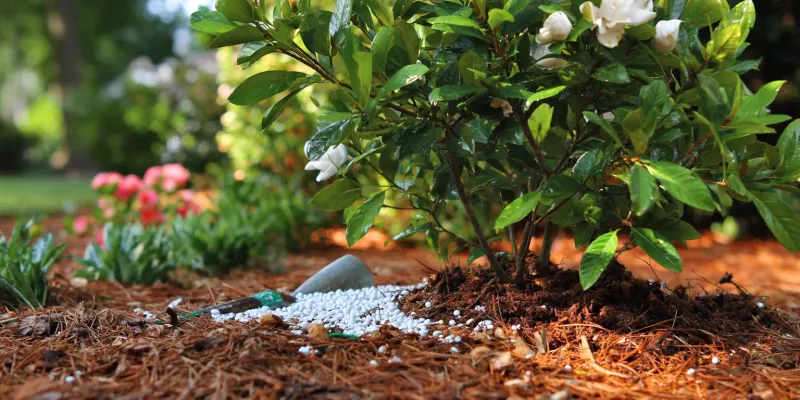
Lasting results usually come from the soil. Where it is practical, lowering high pH and using an acid-forming fertilizer can help, but only in line with your test results and the product label.
Water matters too. Colorado State Extension notes that hard irrigation water can counter acidification, so a bed watered from a hard-water well may keep drifting back up.
Fall feeding depends on where you live. UF/IFAS lists October as a normal application time in South Florida and September in North Florida.
Clemson Extension advises against fall fertilizing in South Carolina because tender growth can get hurt by winter cold.
Routine seasonal feeding is not a rapid cure for yellow leaves. Match your plan to the leaf pattern, your soil test, and local conditions.
A gardenia rewards the gardener who reads the leaves first and reaches for the bottle second.