
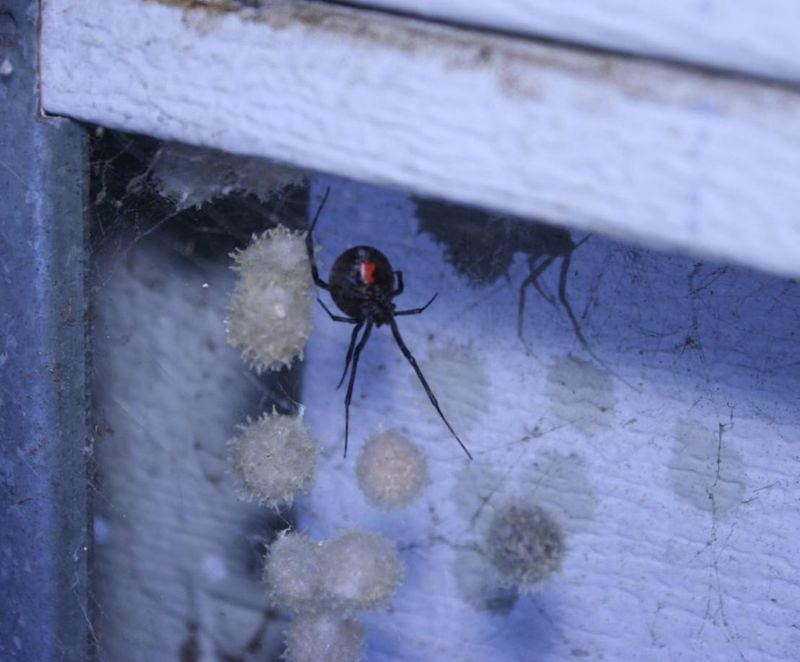
You move a box in the garage and spot a small silk ball tucked in the corner. Is it a black widow egg sac, or something else?
Looks can offer a few clues, but they rarely give a firm answer. Knowing what those clues mean, and where they stop, helps you clean up safely.
A sac’s shape cannot settle the question
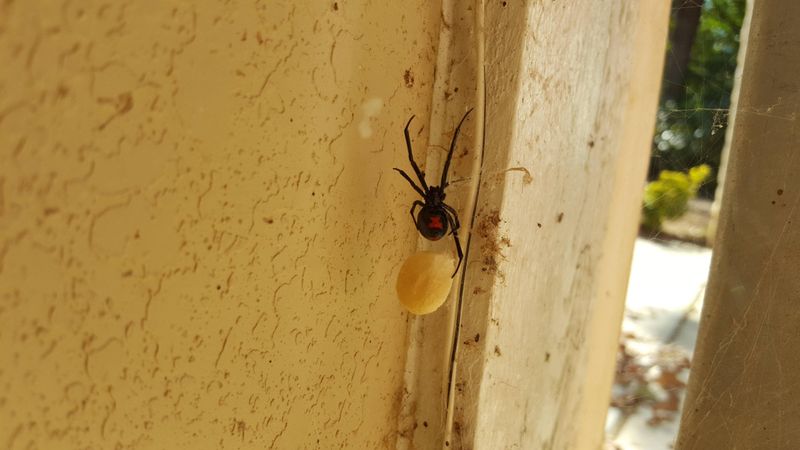
Many people hope a quick look at shape will give the answer, but it does not work that way. UC IPM describes the western black widow’s sac as typically pale yellowish, clearly outlined and tough, and often teardrop-shaped.
Yet another UC IPM page on spiders in general describes it as mostly spherical and about half an inch across.
That mismatch is the reason round versus teardrop is not a test. Both descriptions come from the same trusted source, so a sac that is round is not ruled out, and a sac that is teardrop-shaped is not confirmed.
Sacs also vary from one spider to the next.
Color and texture are useful, but only as hints. A pale yellowish, tough-looking sac fits the typical western black widow description.
Still, other spiders make sacs in similar colors, and a sac that looks different from the textbook version could still belong to a widow.
So no single feature gives you a dependable field check. A sac you cannot identify should not be called a black widow sac, and it should not be called harmless either.
Treat the shape, color and texture as notes to jot down, then look at the surroundings for more context.
The web, location, and spider add context
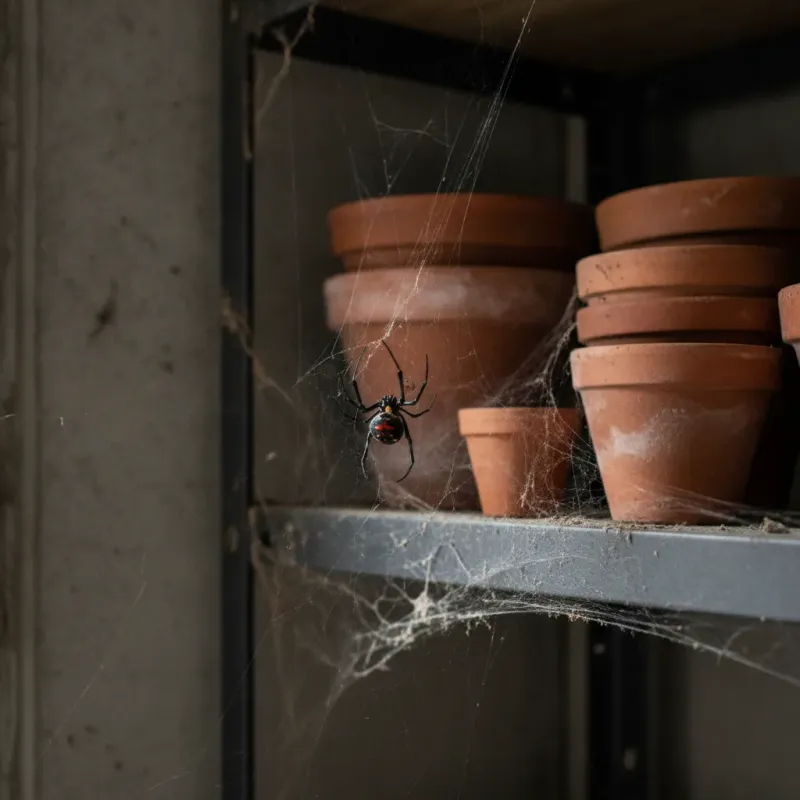
Where a sac sits can tell you something. In California, western black widows are common around homes and often use dark, dry, sheltered, undisturbed spots, including garages near doors and vents, according to UC IPM.
A cluttered shelf corner or the back of a stack of stored boxes fits that description.
The web is another clue. Widow webs tend to look irregular and tangled rather than neat and wheel-shaped.
A sac hanging in a messy web in a sheltered corner raises the odds of a widow, but many other spiders also like garages.
If you see a spider, look from a distance. An adult female western black widow is shiny black and usually has a red marking on her underside, though that marking can vary.
Immature black widows can look quite different from adults, so a spider without a red hourglass is not proof of anything.
Think of the web, the spot and the spider as pieces of a puzzle, not an answer. Even with all three, a photo sent to an expert gives you more confidence than a guess made over a cardboard box.
Other spiders make sacs that can confuse a quick check
Widow spiders are not the only ones leaving silk sacs behind. UC IPM identifies two widows in California, the western black and the brown widow.
Brown widow sacs are characteristically bumpy, covered with silk protuberances like a pollen grain. Bumps point toward a brown widow, not a black widow.
False black widows add more confusion. Their sacs look like cotton balls with indistinct margins.
A cottony, fuzzy sac is therefore not a safe sign of a harmless spider, since a sac that looks like that could still come from a spider you would rather not disturb.
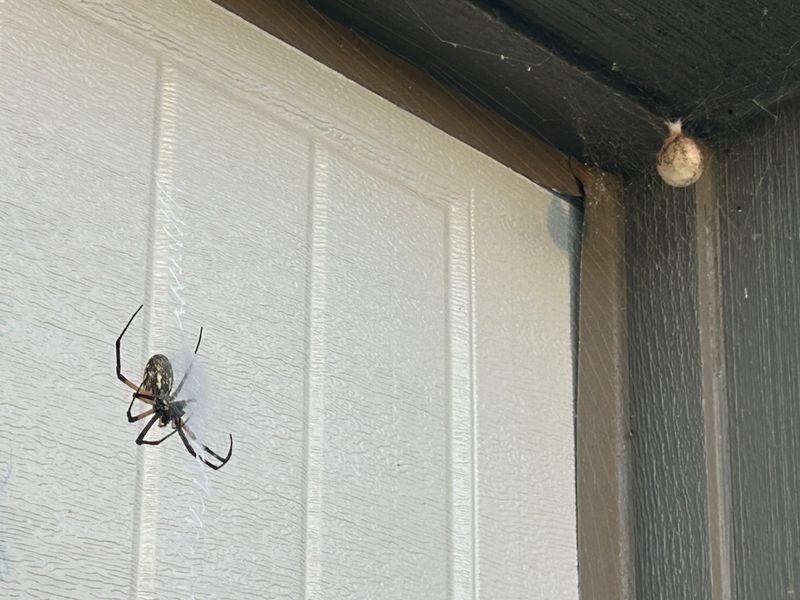
Garden spiders offer another comparison. As one example, UF/IFAS describes yellow garden spider sacs as white, multilayered, woolly teardrops suspended in the spider’s web.
That is one garden spider, though. Garden spiders are not a single species with a single kind of sac.
These comparisons can help you notice differences, but they cannot sort every sac you find. If your sac matches none of the descriptions, or matches several, that is a sign to stay back and ask for help rather than decide it is nothing.
Keep your hands out of an unidentified sac’s hiding place
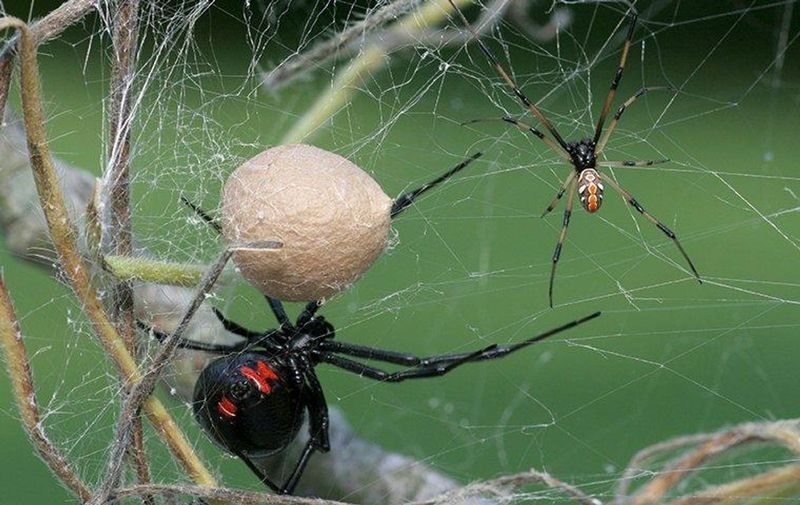
Because looks can mislead, the safest rule is simple: do not touch, poke, squeeze, open or pick up a sac you cannot identify. Handling it to test a guess gains you nothing and puts your hands close to a spider that may be nearby.
Gloves and long sleeves matter during cleanup. California Poison Control advises wearing them when emptying boxes or handling stored items and firewood.
UC IPM also recommends gloves when clearing garage clutter.
Avoid reaching blindly into dark, cluttered gaps. Lift items slowly, look first, and shine a flashlight into corners before putting a hand anywhere.
Bites are rare even where black widows are common, so careful habits go a long way.
If the sac sits somewhere you cannot reach easily, or you are unsure how to remove it safely, step back. Keep people and pets away from the area and call a local pest-control company or an identification service, as UC IPM’s guidance on widow spiders points toward.
Taking a clear photo from a distance can help them advise you.
Reduce clutter and sheltered hiding places

Spiders favor quiet, cluttered corners, so fewer hiding places make your garage less appealing. UC IPM recommends reducing clutter and the hiding places it creates.
Sealed plastic bins, shelves lifted off the floor, and a clear gap along the walls all help.
Regular tidying keeps the job manageable. Wear gloves, look before you lift, and work through one section at a time.
Pay extra attention to spots near doors and vents, where widows are known to settle.
On the outside of a building, UC IPM says webs and spiders can be swept, hosed or vacuumed off when it is safe to do so. That advice is about webs and spiders you can clearly see and reach, not a reason to grab an unknown sac.
Insecticides are not a lasting fix. UC IPM notes they do not provide long-term control, so a spray can may give a false sense of security.
Cutting back clutter keeps working long after a spray has worn off.
A possible bite calls for practical next steps

Bites are rare, but if someone may have been bitten, act calmly. California Poison Control advises washing the area with soap and water and applying an ice pack.
Next, call Poison Control at 1-800-222-1222 for advice. The line is there for questions like this, and you do not need to be sure what kind of spider it was.
Seek emergency care for severe symptoms. Not every bite leads to a serious reaction, but you should not wait it out if symptoms are strong or getting worse.
If you can do so safely, a photo of the spider can help, but never try to catch it with bare hands.
Use clues from a safe distance
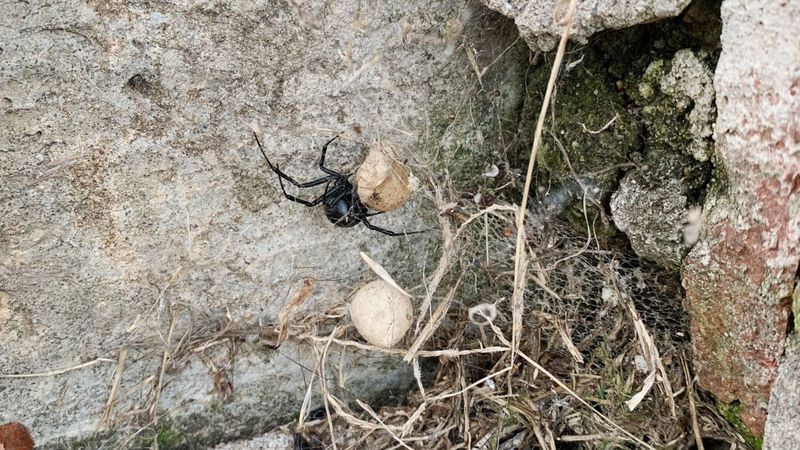
Shape, color, web, location and any visible spider all make useful notes, but none is proof. As UC IPM’s widow spider page shows, even trusted descriptions of one sac differ.
Skip any urge to handle a sac to test a guess. If access is awkward or removal feels uncertain, ask an expert to identify it or remove it.
A photo from a few feet away tells you more than a closer look ever will.