

Ragged holes in your collard leaves can make a gardener’s heart sink. Cabbage loopers are one possible cause, but they are not the only one.
A little detective work will tell you who is really eating your greens. Once you know, a few simple checks and a hands-on habit can help protect the harvest.
Loopers are possible in fall, but November varies by region
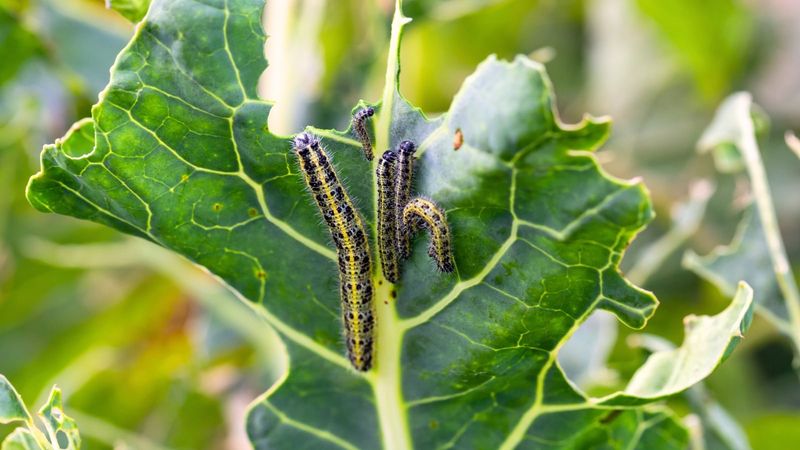
Fall is a classic time for cabbage looper trouble. UGA Extension describes loopers as especially damaging in early summer and fall in Georgia, where they feed on collards and other leafy greens.
Larger larvae chew large holes.
The calendar only tells part of the story, though. UF/IFAS reports that the insect stays active and keeps reproducing through winter in southern Florida, south of Orlando.
A Florida gardener may see loopers in January, while a gardener farther north may see them fade as nights turn cold.
Texas shows the same pattern. Texas A&M AgriLife lays out fall planting calendars that vary a lot across the state, so local conditions matter.
So treat November holes as a reason to look closer, not as proof. Holes tell you something chewed your collards.
They do not tell you what.
Look for the caterpillar, not just the holes
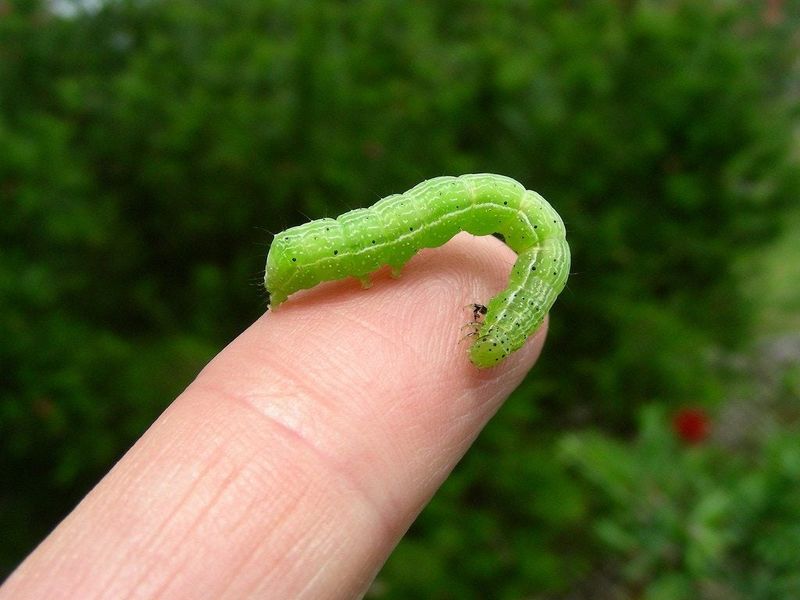
The caterpillar itself is your best clue. A cabbage looper larva is pale green with white stripes along its sides.
It crawls by arching its middle into a loop, like a tiny inchworm, which is how it got its name.
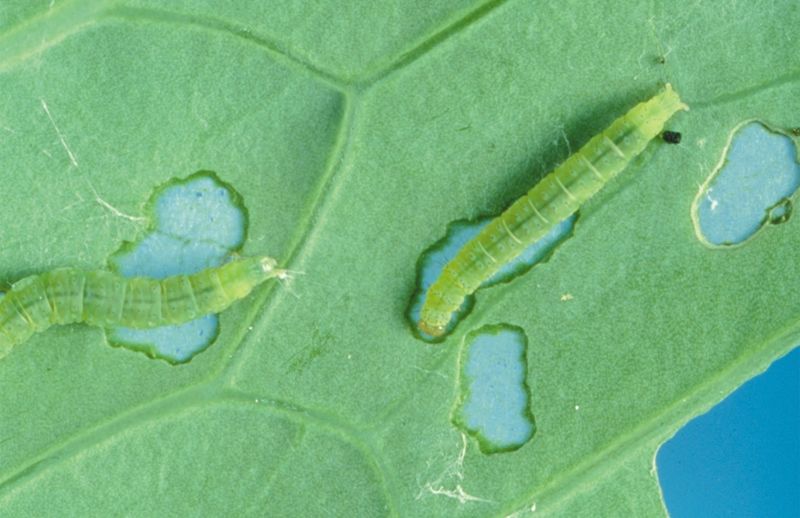
The damage changes as the larva grows. University of Maryland Extension notes that young larvae feed mostly on leaf undersides and can leave windowpane-like patches where they scrape the surface.
Older larvae chew larger, ragged holes.
Keep in mind that those patterns are clues to check, not proof. Other collard pests also chew leaves, and Mississippi State Extension describes looper larvae as one of several caterpillars that feed on cole crops.
If you spot a green caterpillar that loops as it moves, you have a much stronger lead than any hole alone could give you.
Inspect both sides of damaged leaves
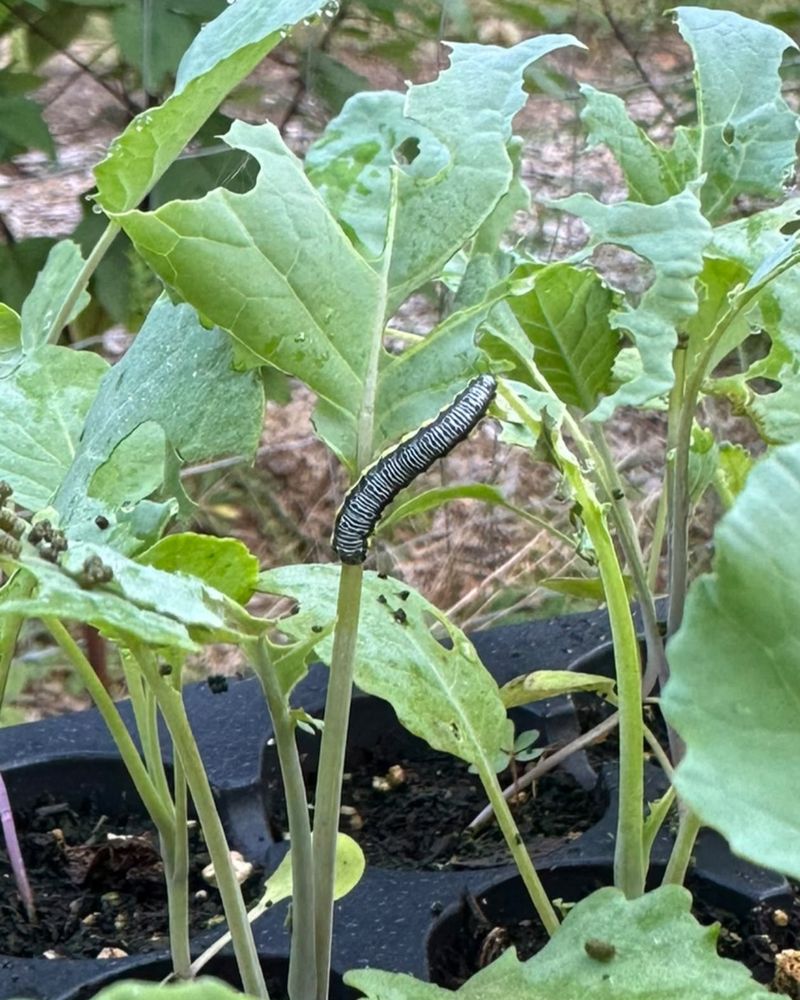
Grab a good light and make a slow pass through your patch. Turn leaves over and check both surfaces.
Undersides deserve extra attention, and so do the older, lower leaves where feeding often starts.
Search near fresh damage for live caterpillars and for frass, the small dark droppings they leave behind. Utah State Extension recommends regular monitoring of cole crops, and droppings can point you toward a larva you would otherwise miss.
Loopers blend in well. Their green color matches the leaf, so a first glance may show nothing at all.
University of Maryland Extension notes that larvae can be hard to spot, which is why a quick look often misses them.
If you find holes but no caterpillars after a careful search, do not assume the culprit is a looper. Make a note of the damage and check again in a day or two.
Other pests can make similar damage
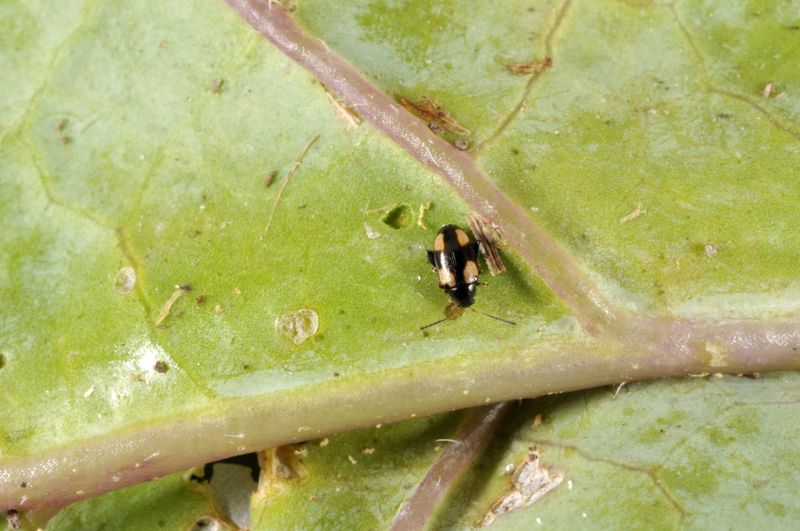
Before settling on loopers, consider the other suspects. Mississippi State Extension lists imported cabbageworms, diamondback moth larvae, and cross-striped cabbageworms among the caterpillars that attack collards.
Each can leave chewed leaves that look a lot like looper damage.
Flea beetles tell a different story. Texas A&M AgriLife describes their injury as many tiny rounded or irregular holes that make leaves look peppered with fine shot.
Here is a simple way to sort it out. Large, ragged holes make you look for caterpillars.
A leaf covered in pinprick holes sends you looking for small beetles that may hop when you disturb the plant.
Either way, the next step is the same: find the actual insect before choosing a response.
Handpick visible larvae to reduce feeding
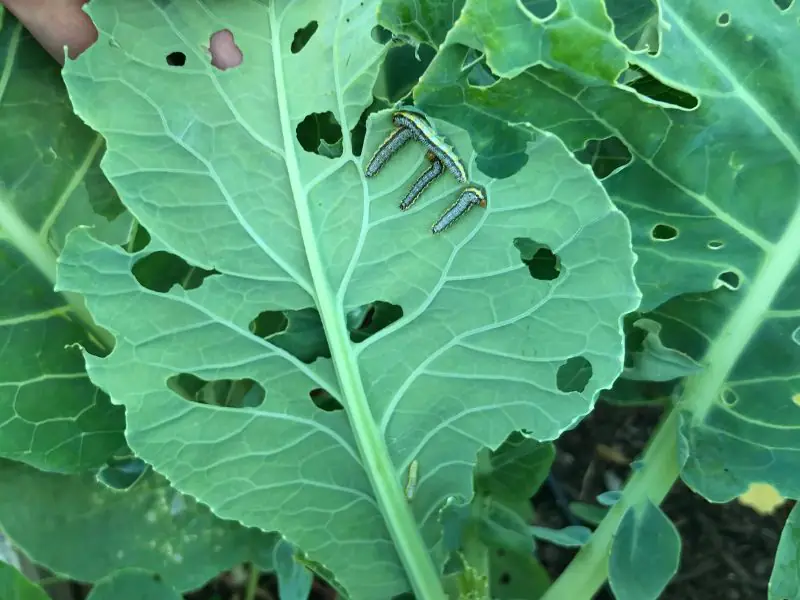
If you only find a few caterpillars, your own fingers are a safe tool. Utah State Extension suggests physically removing larvae where practical, and University of Minnesota Extension advises dropping them into soapy water.
Dusk is a fine time to do this if it fits your schedule. The reason people mention it is that UF/IFAS notes cabbage looper moths are active at dusk and night.
That is about moths, not caterpillars, so it does not show larvae are easier to find or pick then.
Pick whenever you have good light and time to look. A flashlight can help in the evening, and the University of Maryland Extension guidance on camouflage is a reminder to check both leaf surfaces.
Handpicking can reduce feeding, but it will not guarantee the damage stops. Eggs and other larvae may still be on the plant.
Keep monitoring and use labeled treatments carefully
After a handpicking session, plan to look again over the next several days. New larvae can hatch from eggs you missed, and a single pass rarely clears a plant.
Fresh droppings or new chew marks are your signal that more are present.
If caterpillars keep showing up, there is a cautious option. Utah State Extension lists Bt kurstaki, a bacterial product, for young larvae.
Mississippi State Extension also covers it for home vegetable gardens.
Bt only works when larvae eat it, so thorough coverage matters, including leaf undersides. Choose a product whose label specifically authorizes use on collards.
Always follow the label for any pesticide on edible leaves, including the preharvest interval. The National Pesticide Information Center explains that this is the wait time before harvest, and it can differ by product.
Numeric treatment thresholds meant for commercial fields are not a rule for your backyard bed.
A few minutes of looking each week can keep small problems small.