
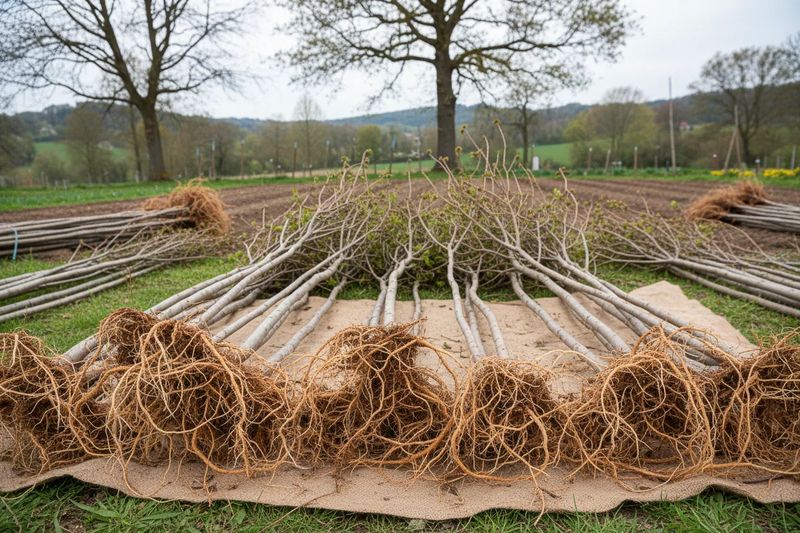
Peach trees arrive in Central Texas nurseries as bundles of bare sticks and roots in the coldest part of the year. That odd timing is on purpose.
Planting while the tree sleeps gives roots a chance to settle in before spring growth begins. Getting the site, the planting steps, and the variety right can make a big difference in how your tree handles its first Texas summer.
Why plant a dormant peach in winter?
Walk through a Central Texas nursery in December or January and you will find peach trees with no leaves and no soil around their roots. These are dormant bare-root trees, and winter is when they are meant to go into the ground.
Texas Cooperative Extension recommends planting fruit trees in January so roots can develop before spring growth starts.
That is the real advantage, and it is a modest one. A tree set out while it is dormant has a few cool months to begin settling in before it has to push out leaves and blossoms.
It does not mean roots grow nonstop all winter, and it does not mean a bare-root tree will establish faster than one grown in a container. It also does not protect a tree from a brutal triple-digit summer.
The January recommendation is also about fruit trees in general. It is not a rule that every peach tree, in every form, can only go in during December or January.
The advice here is aimed at dormant bare-root trees, which are sold and planted in that cold window.
Timing is only the first decision. A winter planting date will not make up for a soggy spot, dried-out roots, a poor variety match, or neglect after planting.
The sections ahead walk through each of those choices in order: where to put the tree, how to plant it, which cultivar fits your winter, and how to water it as it establishes.
Think of winter as opening the door. What happens next depends on the site and the care the tree gets.
A good site needs drainage as well as sun
Before you buy a tree, walk your yard and judge the spot. Peaches need soil that drains well, and Travis County Extension says they need at least 24 inches of well-drained soil.
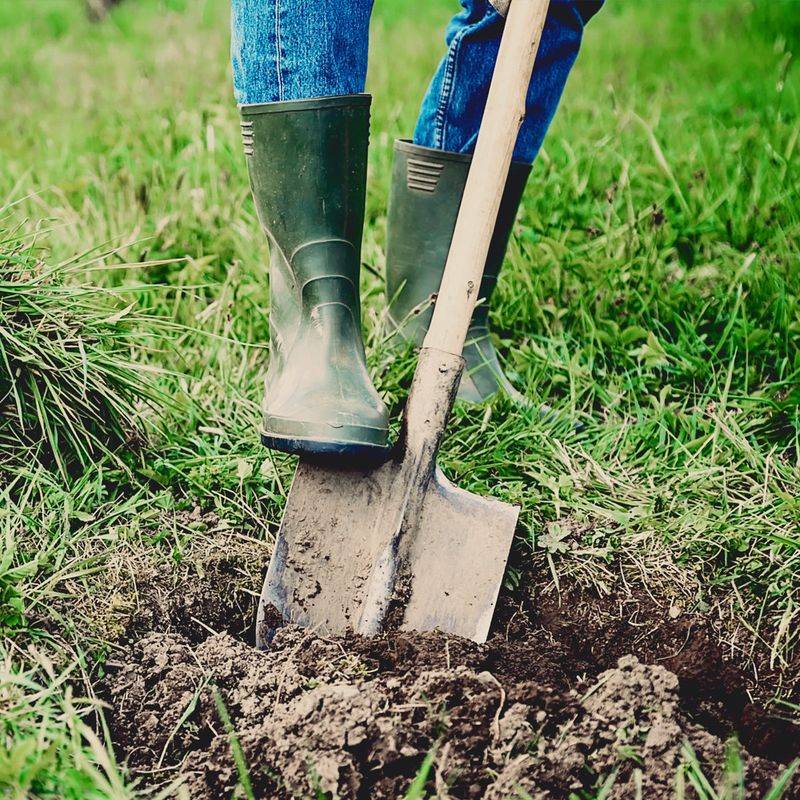
Many Hill Country yards sit on thin soil over rock, so a quick test hole can save you a lot of trouble.
Dig a hole after a good rain and watch it. If water lingers for a long time, or you hit rock or hard clay a few inches down, that spot is a poor choice.
Peach roots need air, and Texas A&M peach guidance notes they do poorly in waterlogged soil. A low spot where runoff collects is the wrong place for one.
Low areas bring a second problem, which is cold air. On still, clear nights, cold air drains downhill and settles in the lowest part of a yard.
Peach blossoms are vulnerable to frost, so a pocket that gets colder than the rest of your property raises the risk of losing flowers.
That means you are balancing two things. You want ground that drains well, and you want to avoid the spot where cold air pools.
A gentle slope or a slightly raised area often does both, though every yard is different.
Finally, give the tree plenty of sun. A bright, open location with good drainage and some air movement is a solid starting point.
Keep bare roots moist from purchase to planting
Bare roots are the weak point of this whole plan. Once they dry out, damage can happen fast, so treat the trip from the nursery to the hole as a race.
Keep the roots moist and out of the sun, wrapped in damp material or sitting in a bucket of water, until the moment you plant.
Plant as soon as you can after bringing the tree home. Both University of Georgia and Oklahoma State extension guidance cover the basics of setting out peach trees.
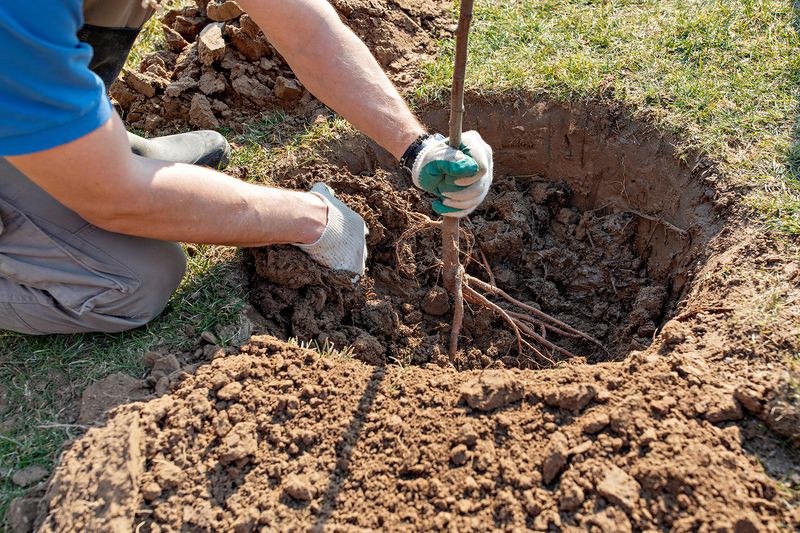
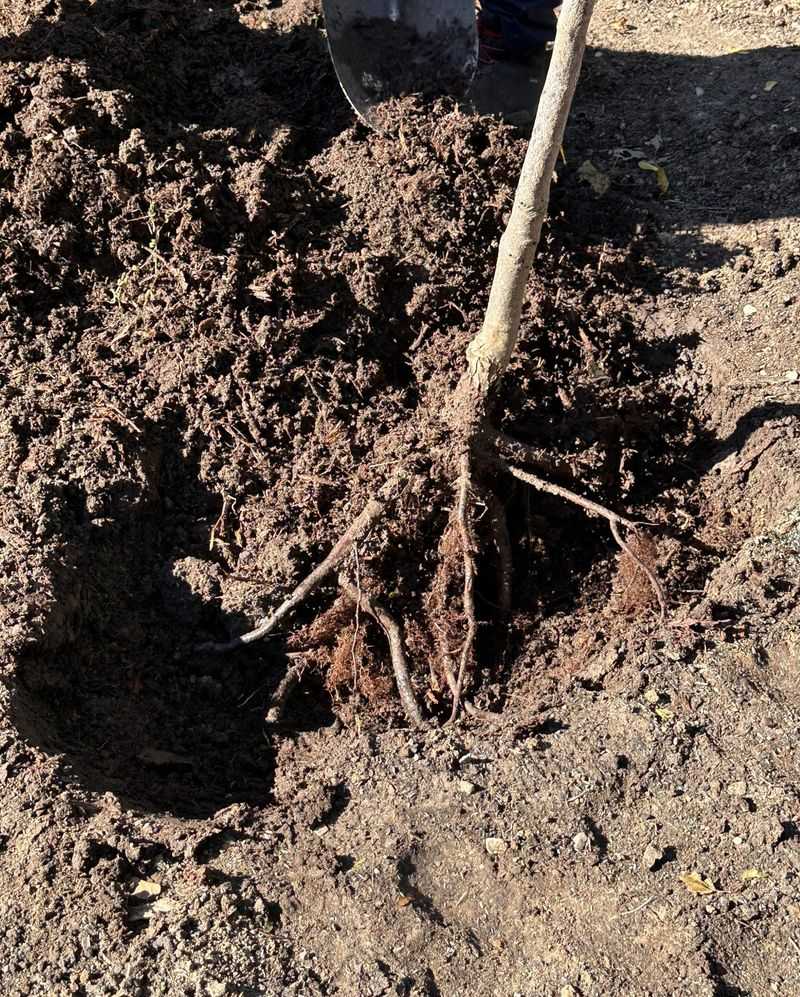
Dig the hole wide enough that the roots can spread out naturally instead of being bent or crammed. Set the tree at the same depth it grew in the nursery.
You can usually spot that depth by the change in bark color near the base of the trunk.
Hold the tree upright, spread the roots, and backfill with the soil you dug out. Firm it gently so the tree stands straight, without packing the soil so hard that air is squeezed out.
Then water thoroughly to settle the soil around the roots.
These steps are for dormant bare-root trees. A container-grown tree has its roots in a soil ball and a different set of needs, so do not assume the same handling applies.
If a surprise cold snap or rainy week delays you, keep those roots covered and damp rather than letting the tree sit exposed.
Chill hours must fit the orchard’s actual winter

Peach trees need a certain amount of cold weather each winter to wake up properly in spring. That requirement is measured in chill hours, and every variety has its own number.
It is tempting to pick the lowest number and call it safe for Texas, but it is not that simple.
Texas A&M’s peach guide explains the tradeoff. A variety that needs too little chill for your site may bloom early and face more frost risk.
One that needs more chill than your site receives may break dormancy late and fail to set fruit.
So the goal is a match, not a minimum. Your tree should bloom after the worst of the late freezes but still get enough cold to grow and fruit normally.
Chill also varies from place to place. Travis County Extension says chill accumulation in the Austin area varies locally, and the Texas A&M peach program’s adaptation zone guidance separates Texas regions by winter chilling.
A broad label like Central Texas or Hill Country cannot settle the question for your yard. Your own location, elevation, and local winter patterns matter, so check with your county Extension office before you commit to a variety.
Austin’s cultivar chart is a starting point, not a Hill Country guarantee
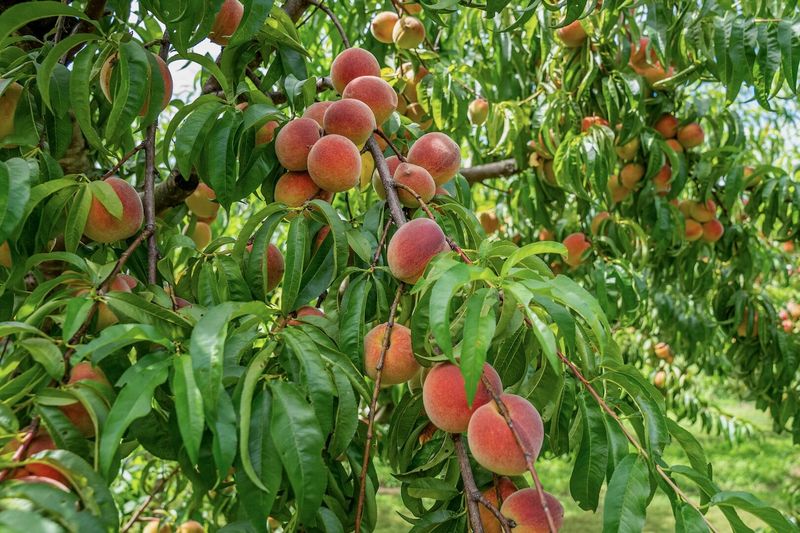
Texas A&M’s Austin and Travis County list gives a useful picture of the range. It runs from Texstar at 450 chill hours up to Dixiland, Gala, and Harvester at 750, according to Travis County Extension.
That is a wide spread, and it shows why variety choice is not one-size-fits-all.
Keep in mind that this is local guidance. It was written for the Austin area, not as a universal Hill Country list.
Chill accumulation varies even around Austin, so a gardener west of town, on a hilltop, or in a sheltered valley could see different winters.
Use the chart to narrow your options, then check each cultivar’s requirement against what your own location tends to get. The Texas A&M peach program’s zone page can help you see how your region fits.
The same program also offers Texas-developed low- and medium-chill series. Its cultivar page lists the Tropic peaches and the medium-chill Zest series.
Treat these as options to investigate, not automatic picks.
Ask a nursery or your county Extension office which varieties have done well locally, and read the specific chill requirement on each tag. A little homework before buying beats guessing at the counter.
Water through establishment without saturating the roots
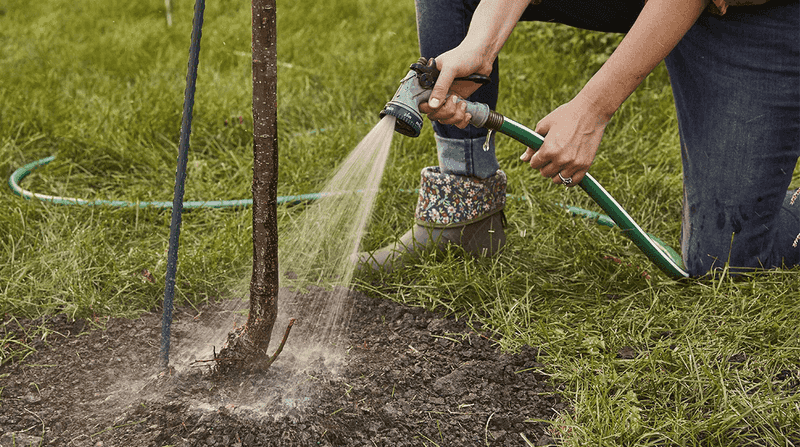
Planting day is the start of the job, not the finish. A young tree has a small root system and relies on you for moisture while it gets established.
Texas A&M Forest Service advises watering newly planted trees through the establishment period.
Watching the weather matters. Warm, dry stretches pull moisture from the soil quickly, so check the ground near the roots instead of following a rigid calendar.
A simple finger test a few inches down tells you more than guessing.
The other side of the coin is too much water. Peach roots need air, and Texas A&M peach guidance says they do poorly in waterlogged soils.
This is why drainage came up when choosing the site.
If the soil stays soggy, the leaves look tired, or water pools around the trunk after you irrigate, ease off and recheck drainage. If the soil is dry and the tree wilts in the heat, it needs a deeper drink.
The aim is steady moisture without saturation. Slow, thorough watering at the base is usually better than frequent light sprinkling, and the right amount will shift with your soil and the season.
Next summer’s crop is possible, not promised
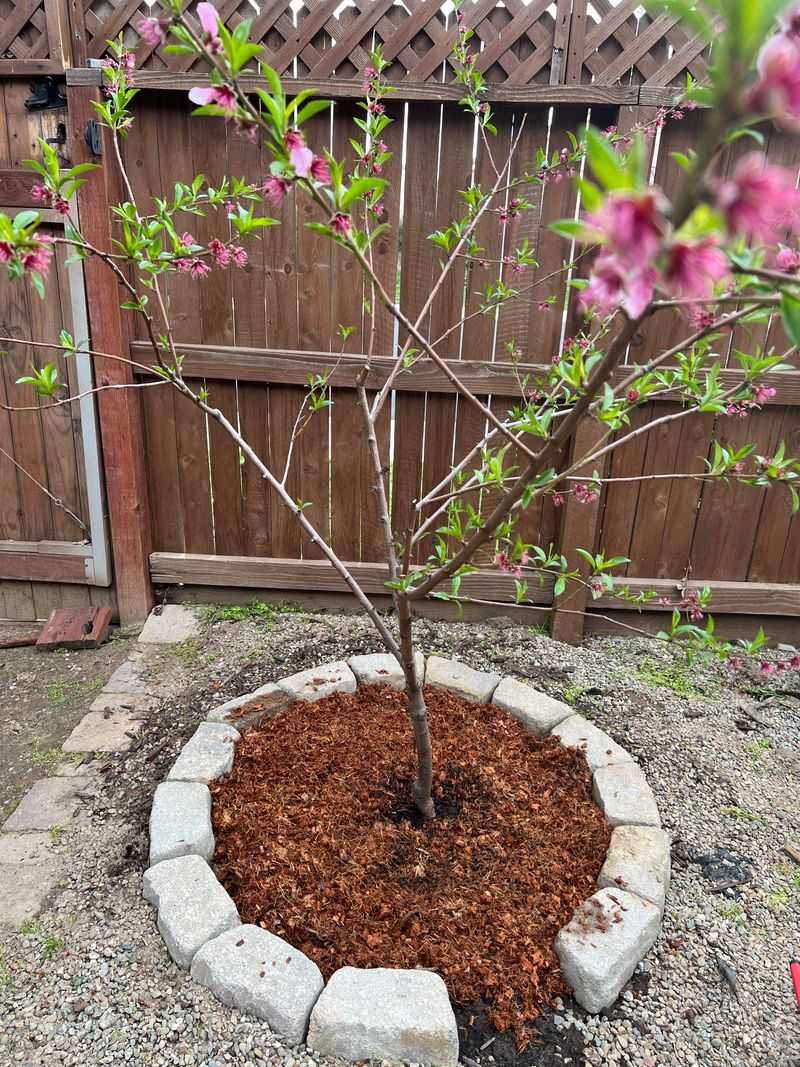
Winter planting can give roots time to develop before spring, but it cannot guarantee fruit the following summer. Texas A&M says fruiting in the second year is possible with proper care, not assured.
A late frost can take the blossoms, and site, water, and variety all play a part, as Travis County Extension notes about frost-prone blooms.
So the goal is simple. Plant a suitable tree well, then keep caring for it.
A peach tree is a long game, and the best part of it is still ahead of you.