
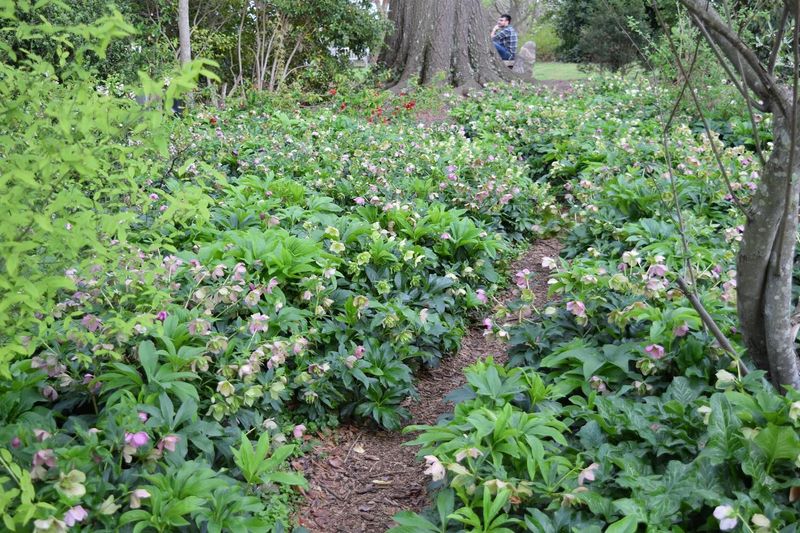
Most shady North Carolina yards look bare by December. Hellebores can change that with leathery evergreen leaves and nodding flowers that open when little else does.
Planting in autumn gives them time to settle in, but the bloom date depends on the type you choose. Here is how to pick, place, and plant one for the best shot at winter color.
Hellebores bring color to shady winter gardens
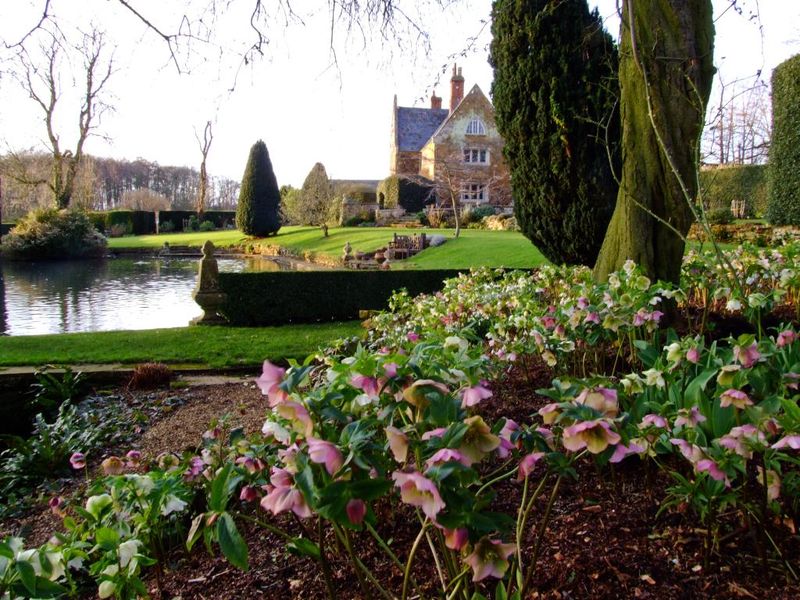
Shady corners are the hardest spots to keep interesting between December and March. Hellebores fit that gap well, since they pair flowers with foliage that stays green through the cold months.
North Carolina gardeners have noticed this for years. N.C.
Cooperative Extension in Lee County describes hellebores blooming from late December through February, which puts them right in the stretch when most beds are dormant.
The flowers last a long time and tend to face downward, so a gentle tip of the bloom with your fingers shows the color inside. Shades run from white and green to pink, plum, and near black, and many have speckles or ruffled petals.
Not every hellebore blooms on the same schedule, though. Types differ, and Clemson Extension notes that early, mid, and late bloomers exist.
That means one plant may open in the holiday season while its neighbor waits until late winter.
For a yard under tall oaks, pines, or along the north side of a house, hellebores offer a dependable way to get winter interest without much fuss. Once established, they usually return each year and ask for little beyond a bit of water in dry spells.
Think of them as a winter backbone for the shade garden. The leaves carry the look all season, and the flowers arrive on their own timeline.
Christmas rose does not mean a guaranteed Christmas bloom
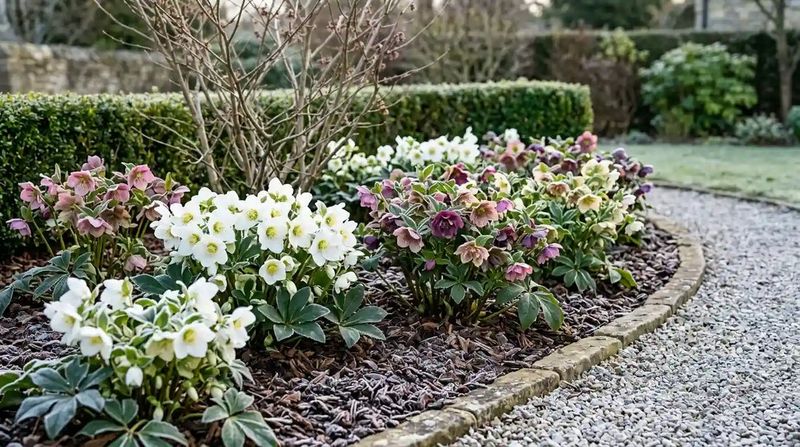
The name sounds like a promise, but a bloom date is never set by a common name. True Christmas rose is Helleborus niger, a white-flowered species.
Lenten rose usually refers to H. orientalis and related hybrids, which generally open later in winter.
North Carolina sources give a range. Lee County Extension reports bloom from late December through February.
An older N.C. State Extension article says Christmas rose may bloom in January or early February, while Lenten rose typically flowers in February.
So Christmas-season flowers are possible, but they are not dependable for every plant or every part of the state. Local weather, the plant’s age, and the exact cultivar all play a part.
Names are also tangled. An N.C.
State Plant Toolbox page lists Christmas Rose among the names used for H. orientalis too, so a label that says only Christmas rose does not settle the question.
Look for the Latin name or the cultivar name on the tag. If it is missing, ask the nursery staff what the plant is and when it usually flowers.
A few minutes of checking beats guessing in December.
Choose a plant already close to flowering
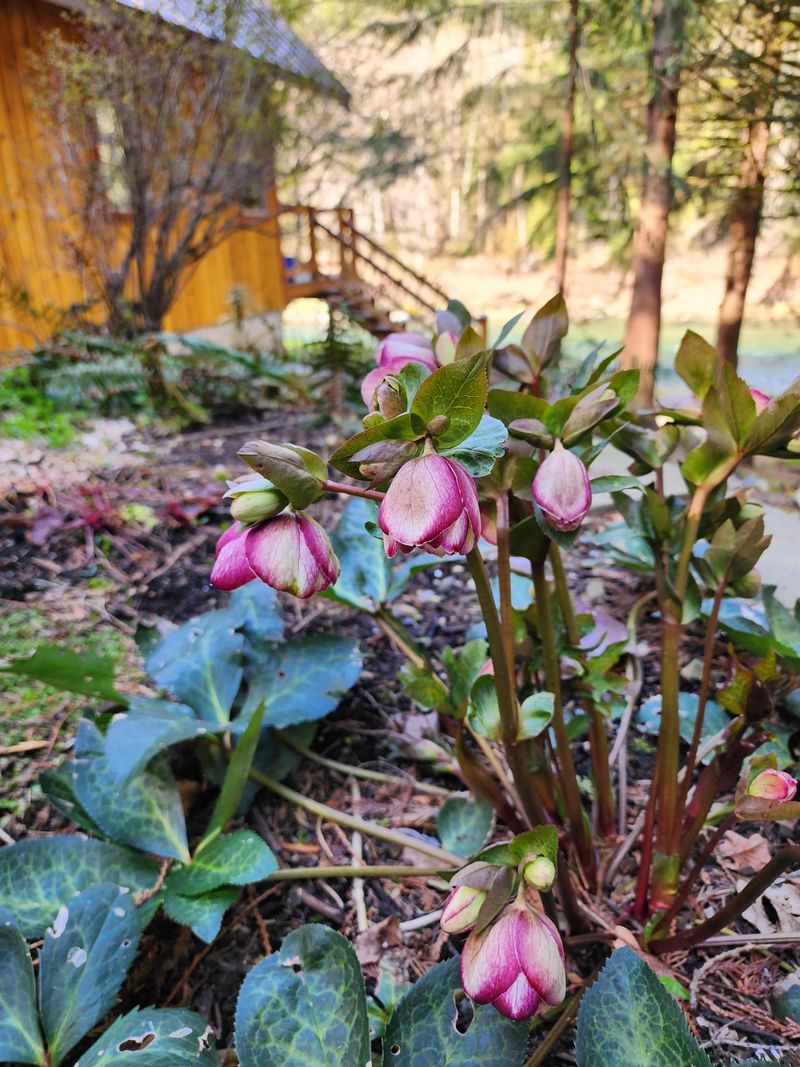
If Christmas color matters to you, shop with your eyes. A hellebore that is already showing buds or open flowers is far closer to a display than a small plant that has yet to bloom.
Pair that with a plant identified as an early bloomer. The N.C.
State guidance separates Christmas rose from later Lenten rose types, and Clemson Extension describes early, mid, and late bloomers. Ask which group your cultivar belongs to.
This approach improves your odds, but it cannot fix a date. Cold snaps and local conditions can still shift when buds open.
An unspecified young plant is a different bet. It may spend its first season building roots and leaves, and the flowers may come later or be sparse at first.
When you bring a budded plant home, check the pot too. Look for firm, healthy leaves and a root ball that is not soggy.
The Royal Horticultural Society notes that hellebores can be planted from autumn to spring, so there is no rush to grab the first plant you see. Take the one with a clear name and visible buds.
Give hellebores shade without trapping them in wet soil
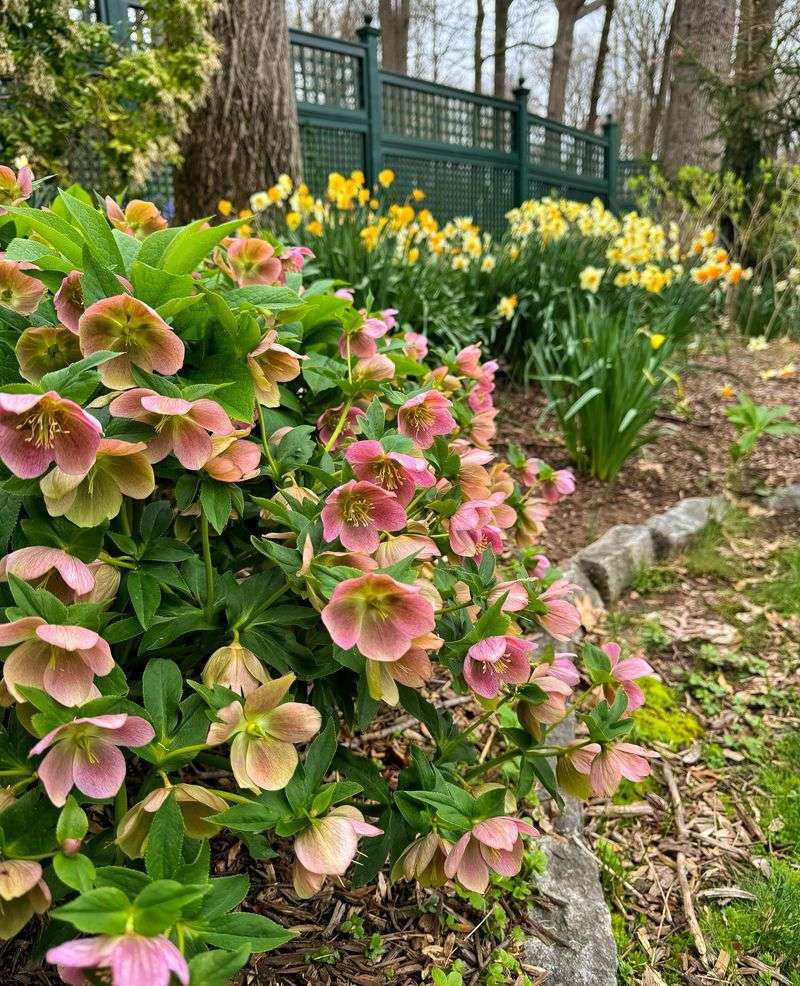
Shade is only half the story. Hellebores want moist soil that also drains, so a damp low spot under a tree is not automatically a good home.
For light, N.C. State Extension recommends afternoon shade in Piedmont and coastal gardens.
Older statewide guidance says mountain gardens can handle about half a day of sun, since summers there run cooler.
Before you dig, do a quick drainage test. Fill a hole about a foot deep with water, let it drain, and fill it again.
If water is still standing hours later, pick another spot or build up the planting area.
Wet or waterlogged soil can harm hellebores, a point the Royal Horticultural Society and Clemson Extension both make. Where drainage is poor, a raised bed or a large container is a sensible workaround.
Heavy red clay is common across the Piedmont. Mixing in compost can loosen it and help it hold moisture without turning soggy.
Good spots include the edge of a woodland border, the north side of a house, or beneath deciduous trees that let winter light through. Lee County Extension also points to shady settings for hellebore plantings.
Plant at the nursery depth and water while it establishes
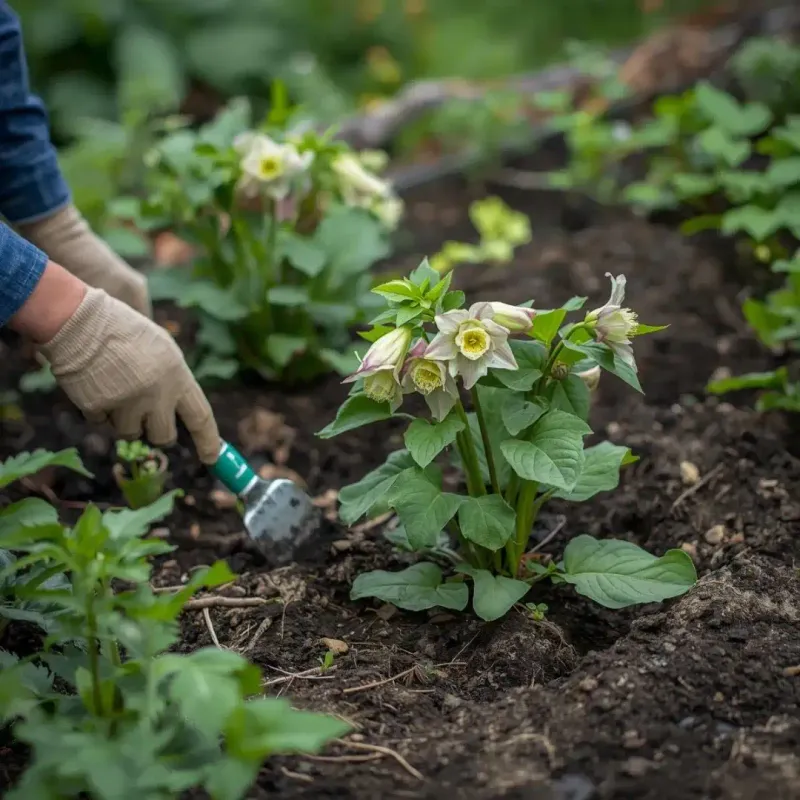
Planting day is simple. Dig a hole about as deep as the pot and a bit wider, then loosen the sides so roots can spread.
Set the plant so the top of the root ball sits at the same depth it grew in the nursery pot. The Royal Horticultural Society advises against burying it too deeply, since a buried crown can struggle.
Backfill with the soil you removed, press it gently, and water well. A slow soak helps settle the soil around the roots.
Newly planted hellebores need watering while they establish. Check the soil every week or so, and water when the top couple of inches feel dry, especially during a dry autumn spell.
A layer of mulch nearby can help hold moisture, but keep it off the crown.
Autumn sits inside the planting window, which runs from autumn through spring. That gives roots a head start before the coldest weeks.
Good planting does help the plant settle and grow. It does not set the day the first flower opens, so treat any early blooms as a pleasant bonus.
Plan for winter interest beyond one holiday
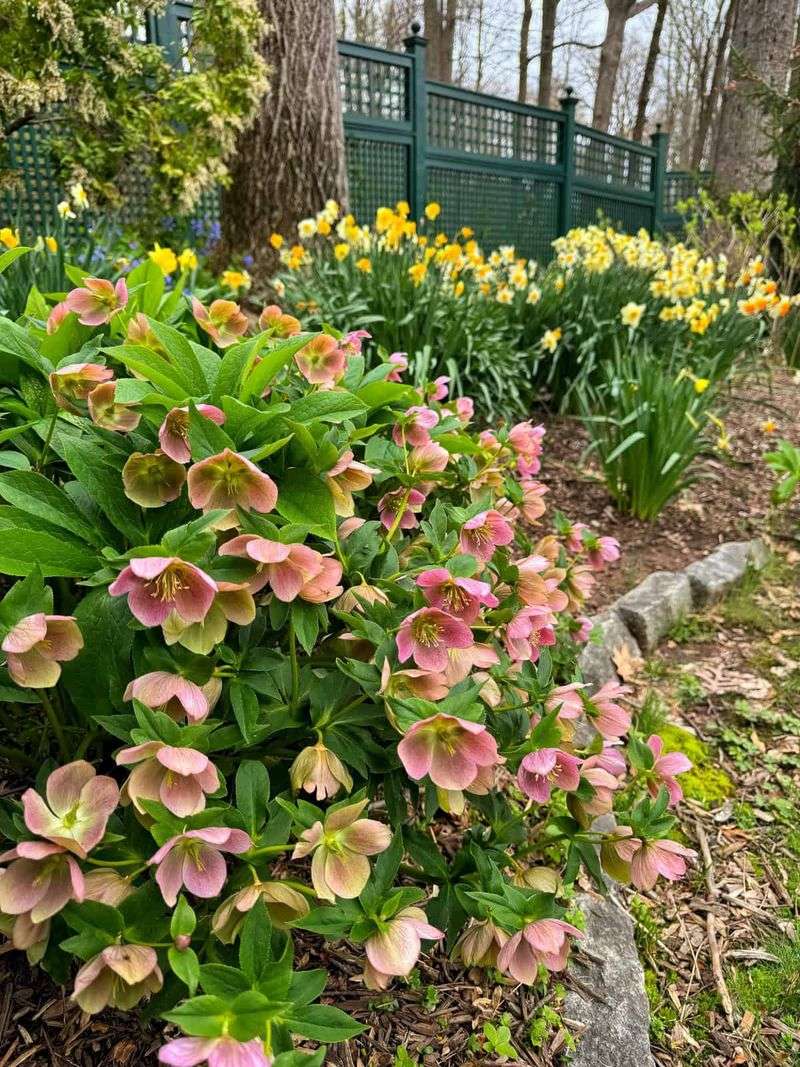
A single Christmas bloom is a short goal. A better plan stretches color across the whole cold season.
Hellebore leaves stay evergreen in many gardens, so beds keep texture even before flowers appear. When buds finally open, they add color against that dark foliage.
Because types bloom at different times, you can mix them. Clemson Extension suggests choosing early, mid, and late bloomers to extend a display from December into April.
In practice, that might mean planting one budded early type near a path you walk often, then adding later types a few feet away. Even if the early plant is slow, the others pick up the show.
North Carolina reports already show wide timing. Lee County Extension places blooms anywhere from late December through February, so a mixed planting spreads your chances.
Group plants in threes or fives for a fuller look, and leave room for them to grow. Over a few seasons, a modest planting can turn into a reliable winter feature in a spot that once looked empty.
Handle hellebores carefully around people and pets
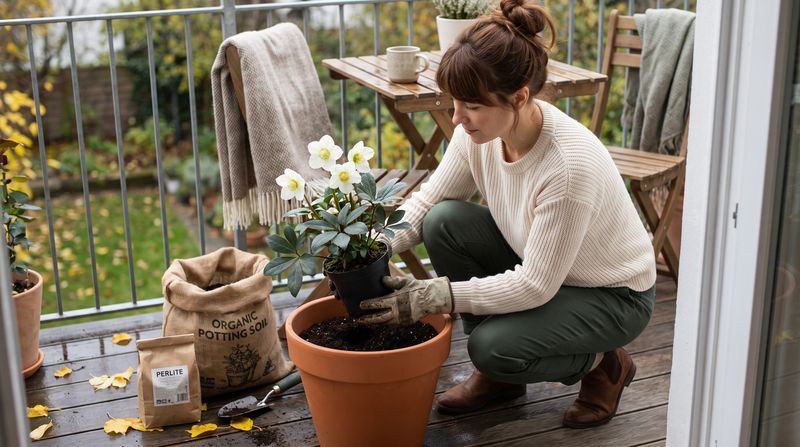
Pretty plants can still cause trouble. Put on gloves when you plant, divide, or cut back hellebores, and keep your hands away from your face while you work.
If sap or leaves touch bare skin, wash the area promptly. Poison Control lists hellebore among plants that can cause skin irritation.
Eating any part is a separate concern. N.C.
State Extension identifies hellebores as toxic if ingested, and the ASPCA lists Helleborus niger as toxic to dogs, cats, and horses.
If your dog or cat likes to chew plants, plant hellebores where they cannot reach, or skip them.
You may hear that hellebores are deer resistant. Clemson Extension notes that deer and rabbits tend to avoid them.
That says nothing about safety for people or pets, so never treat any part as edible.
Keep hellebores’ nonnative status in view
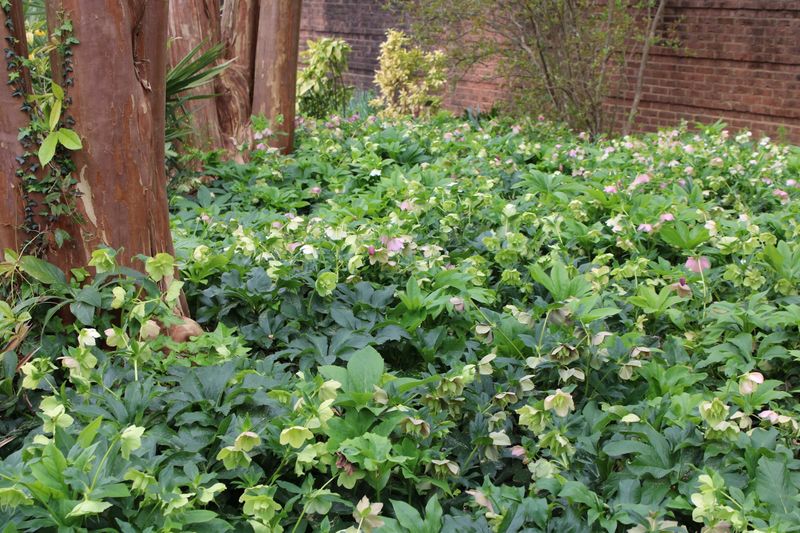
Hellebores are not native to North Carolina, and they are good at making more of themselves. Seedlings can pop up around the parent plant, sometimes farther away.
According to N.C. State Extension, the N.C.
Invasive Plant Council considers hellebores potentially invasive, though it rates the threat as low. That is a small concern, not an alarm.
A few easy habits keep it in proportion. Pull or pot up extra seedlings each spring, and avoid planting next to natural woods or stream banks where seeds could wander.
If you want shade plants that support local wildlife, consider mixing hellebores with native woodland perennials rather than relying on them alone. That keeps your garden useful for pollinators and birds while you enjoy winter flowers.
Treat Christmas flowers as a possibility, not a planting guarantee
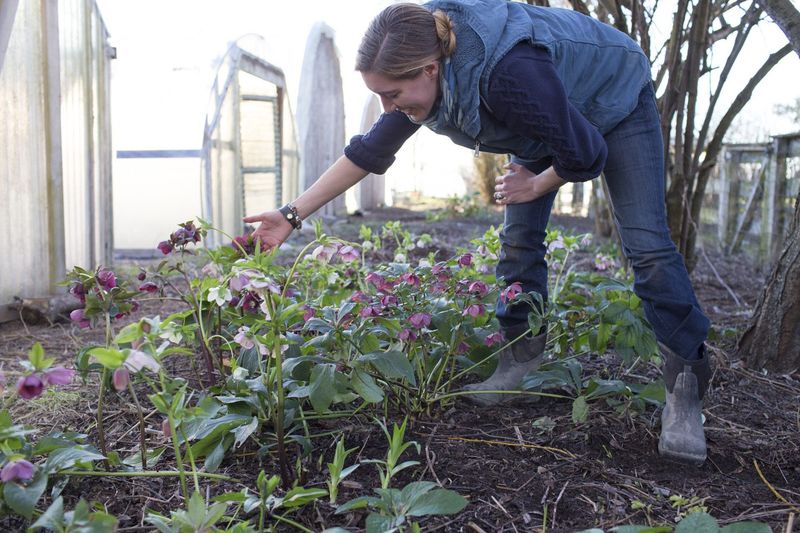
The plan is straightforward. Pick a shady spot with good drainage, plant at nursery depth this autumn, and water while the roots settle.
If holiday color matters, start with an identified early bloomer that already has buds, as N.C. State guidance on species timing suggests.
Planting is also open through spring, according to the Royal Horticultural Society, so there is no deadline to fret over.
Bloom dates will vary from yard to yard. A hellebore that waits until January is simply keeping its own calendar, and it will be worth the wait.