
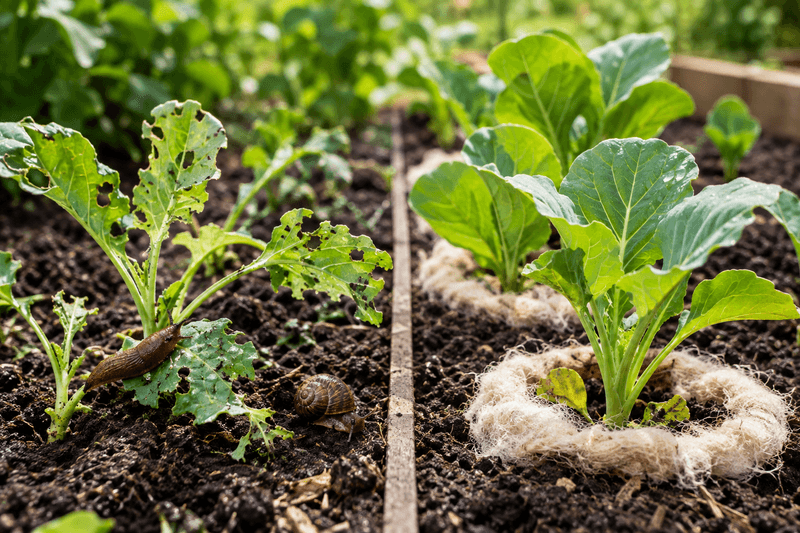
You plant a neat row of lettuce seedlings, and by morning half of them look chewed or have vanished. Slugs are a common suspect, but they are not the only one.
A few quick checks, some at night and some the next morning, can help you work out who is feeding in your bed. A simple board may also help you find out.
Slugs are one possible cause of overnight lettuce damage
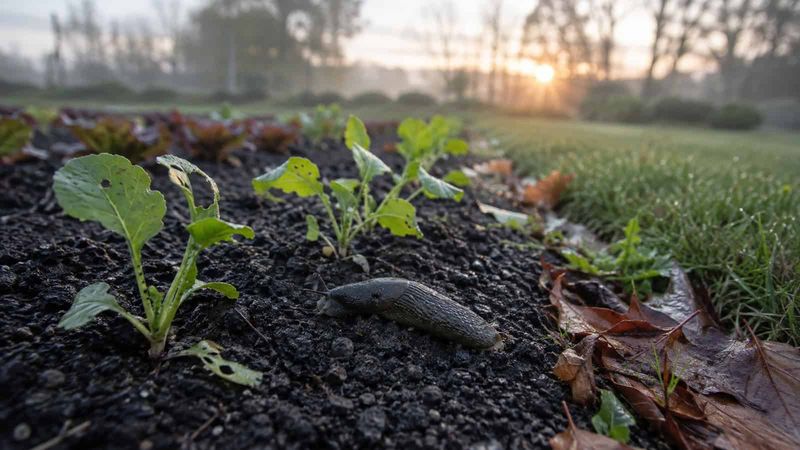
Tender seedlings make an easy meal. Texas A&M AgriLife’s guide says slugs and snails can devour young vegetable seedlings overnight, and lettuce is exactly that kind of soft, young growth.
Slugs also keep a night schedule. UF/IFAS notes that these mollusks feed mostly after dark, so you rarely catch them in the act when you walk out with your morning coffee.
Still, a missing seedling does not prove slugs did it. Other night feeders can leave a bed looking much the same.
Think of the empty spot as the start of a case, then gather clues: what the leftover leaves look like, what the stems look like, and what is hiding nearby. The next few sections walk you through those checks.
Check for slime trails and irregular leaf holes
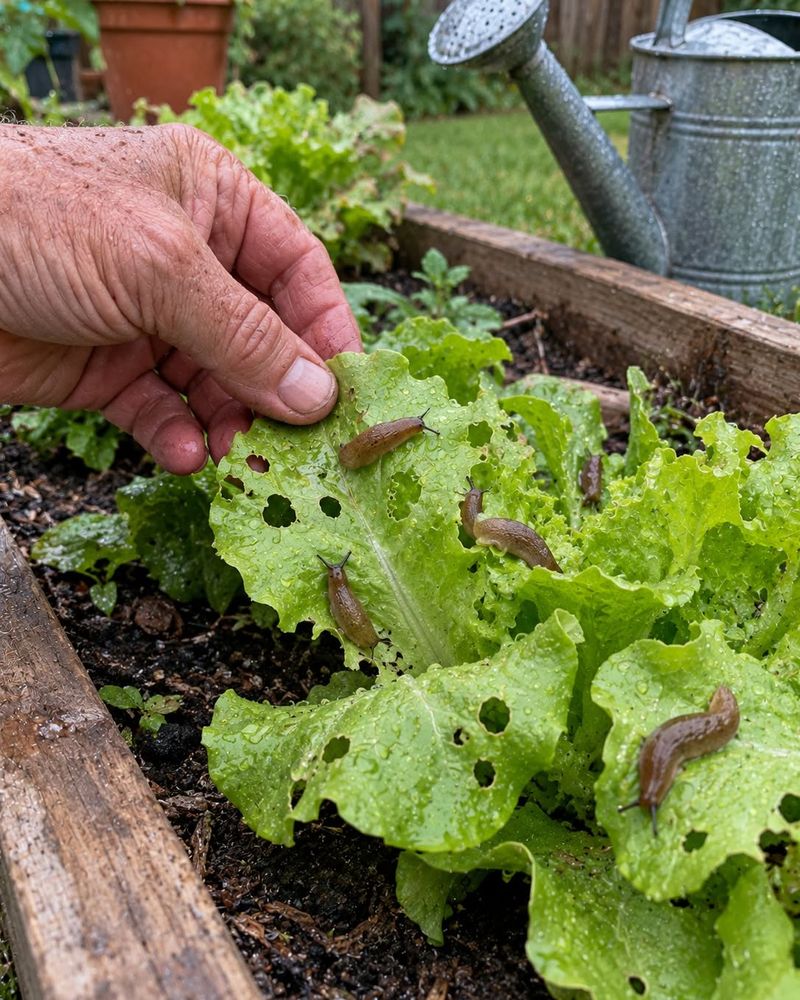
Leaf damage tells a better story than a bare patch of soil. Slugs tend to leave irregular holes in the leaves, and UF/IFAS lists mucus trails as another sign.
Look at the soil, the leaves, and the edges of the bed for shiny, dried silvery streaks, and tilt your head so the morning light catches them.
Next, look for hiding spots. Slugs may tuck under low leaves, flower pots, mulch, or garden litter during the day.
Lift a few of these gently and see what is underneath.
Do not be discouraged if you find nothing at first. Slugs that fed at night may be gone or tucked out of sight by the time you check, so a clean daytime search does not rule them out.
Holes and trails together make the slug case stronger. A vanished seedling alone does not.
Cut stems near the soil line may point to cutworms
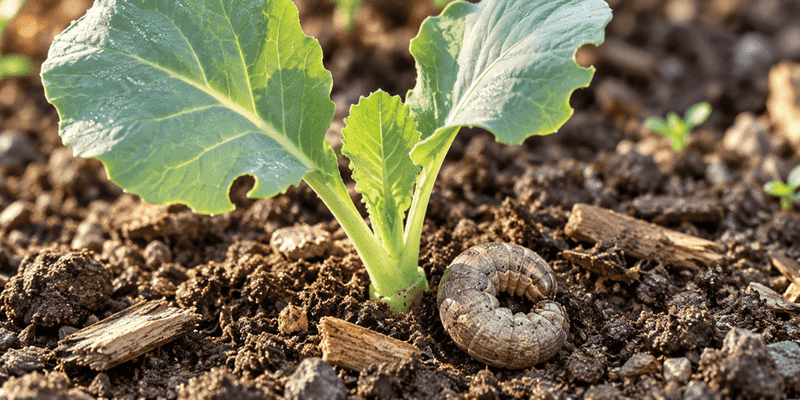
If your seedlings are snipped off at ground level, pause before you blame slugs. Cutworms also feed at night, and University of Minnesota Extension describes them as caterpillars that can sever young plants near the soil line.
Kneel down and look closely at what is left. A clean cut stub with the top lying nearby or missing suggests cutworms more than the ragged holes slugs usually make.
Then dig a little. Scratch through the top inch or two of soil around the stub and check under clods and debris.
A fat, dull-colored larva that curls into a C shape when disturbed is a strong clue. Finding one does not clear slugs completely, since a bed can have both problems, but it tells you which clue to follow first.
Use a board as a daytime shelter trap
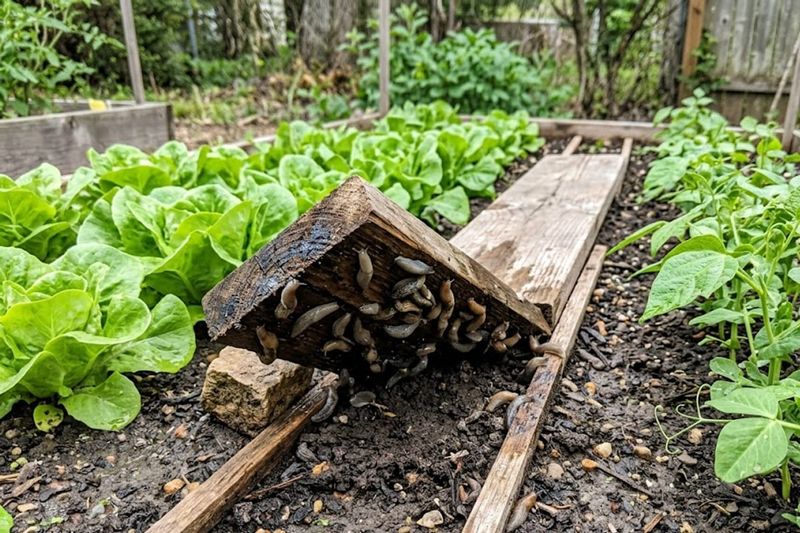
A board works because slugs look for dark, damp places to rest when the sun is up. Lay a flat board, shingle, or piece of damp cardboard in a shady spot close to the damaged seedlings.
Then wait. It will not catch slugs at dusk, because it is a shelter they settle under later.
Check underneath the next morning or sometime during the day, and remove any slugs you find. University of Minnesota Extension describes this kind of refuge trap, and it only works if you actually check and clear it.
Finding slugs there supports your diagnosis, but the board alone does not prove they ate your lettuce. Look carefully before you clear everything out.
UF/IFAS cautions that boards can also shelter beneficial ground beetles, which are worth sparing.
Scout for active feeders with a flashlight after dark
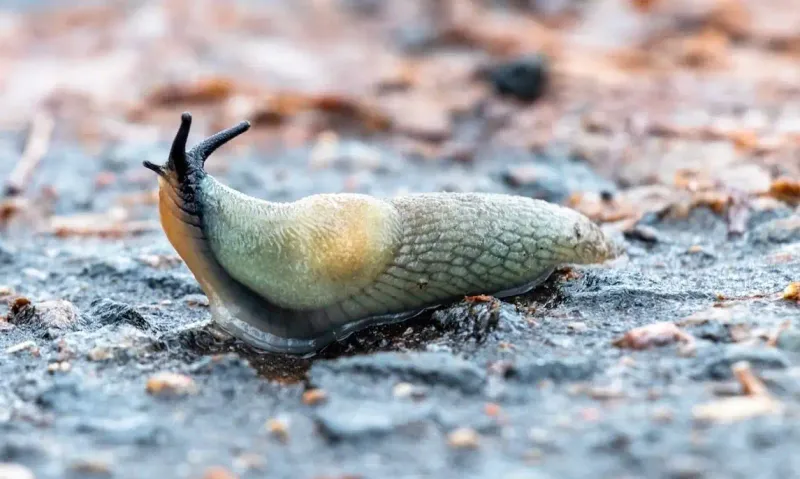
The board catches sleepers. A flashlight helps you find the feeders.
Wait until it is fully dark, then go out and sweep the light over your lettuce, the soil around it, and the edges of the bed.
Check the undersides of leaves and the base of each plant, where slugs often rest between bites. University of Minnesota Extension suggests nighttime searching as a way to spot slugs while they are active.
If you find some, you can remove them right then.
Keep your expectations realistic. A cool, damp evening may bring them out, while a dry, breezy one may not, so coming up empty on one night does not clear slugs.
Use the flashlight check and the next-morning board check together, and they can fill in each other’s gaps.
Repeat checks and reduce nearby shelter and excess moisture
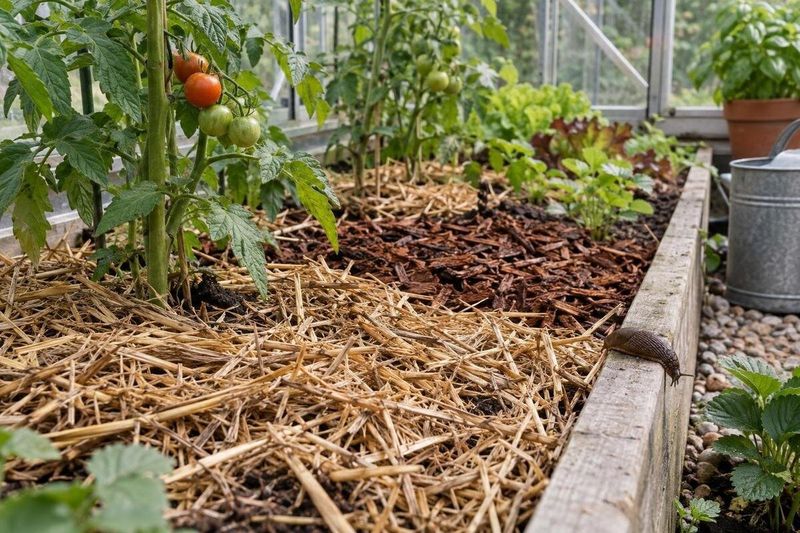
Slug control rarely works in one night. Keep checking and clearing the board, and University of Minnesota Extension advises repeating until the damage stops.
Also make the bed less inviting by cutting back on watering, watering at the base when practical, and clearing extra leaf litter and debris near seedlings, since UF/IFAS points to moisture and shelter as things slugs favor. Skip salt, which can harm plants and soil, and do not count on eggshells or diatomaceous earth.
If damage continues, you could consider a bait, but only one labeled for slugs on lettuce, and follow its label. Baits are not all alike, so a product label such as this EPA-hosted example shows how directions are specific to each product.
Finally, expect variation. UF/IFAS describes one Florida slug as most active in cool, wet weather, so pressure can shift by season and place, and Texas beds may differ.
Your own checks are the best guide.
Lettuce does best when you watch it at both ends of the day.