
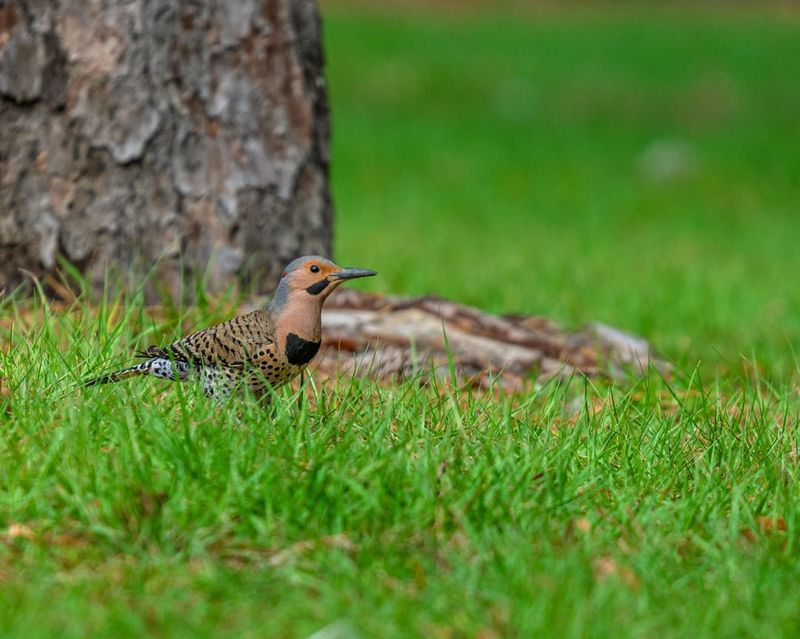
A woodpecker walking across your lawn and jabbing its beak into the turf can look like trouble. Northern Flickers do this often, and many California homeowners wonder if they should shoo the birds away.
The bird is probably hunting for food, and ants may be one of the things it finds. Here is what the bird is doing, what it does not prove, and how to check your lawn the smart way.
A flicker on the lawn is usually searching the ground
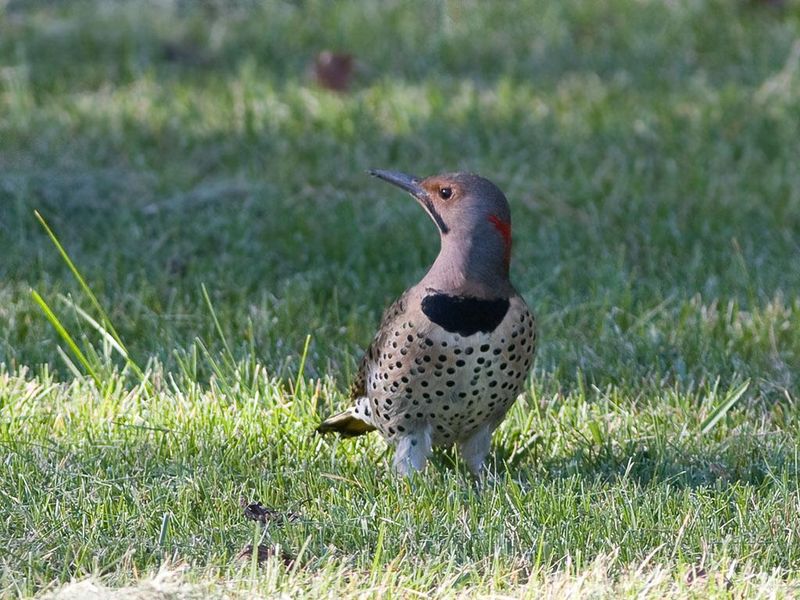
Most woodpeckers cling to tree trunks, but the Northern Flicker is different. It spends a lot of time on the ground, hopping across open grass and bare soil.
Cornell’s All About Birds profile describes a diet made up mostly of insects, especially ants and beetles, and notes that flickers use their curved bills to probe and dig for them.
That makes a flicker on your lawn easy to explain. It is likely foraging.
Its bill works like a small pick, tapping and prying at the surface to expose whatever is tucked just below.
What the bird finds is a different question. A peck in the grass does not tell you if it pulled up an ant, a beetle larva, or nothing at all.
A peer-reviewed study in The Auk describes flickers taking ants, larvae, pupae, and eggs from on or beneath the soil surface. That fits what you see on a lawn, but it does not mean the bird is digging out an entire colony.
So ants are one possible target among several. Think of the visit as a snack stop.
A flicker working a patch of turf tells you it is hunting, and that is about all it tells you.
Watching for a few minutes can be rewarding. You may see it step, tilt its head, jab, and move on.
That quick, repeated pattern usually means it is sampling the ground rather than settling in to wreck your yard.
Winter changes what a flicker eats
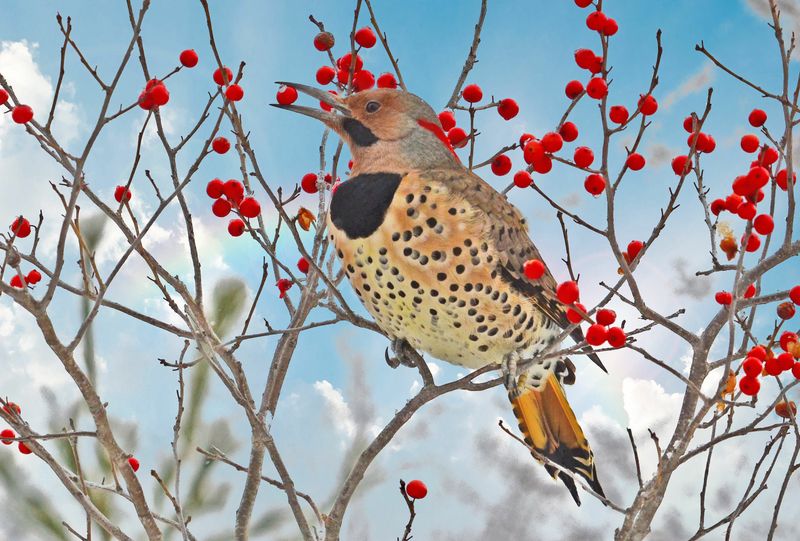
Seeing a flicker in January does not mean it is feasting on ants. According to the California Department of Fish and Wildlife species account, flickers eat more plant matter in fall and winter, including berries, fruit, seeds, and acorns.
Animal prey is eaten mainly in spring and summer.
The same account says ants make up roughly 50 to 75 percent of the flicker’s animal diet. That figure covers only the animal portion, not everything the bird eats in a year.
Plant foods make up a substantial share of the annual diet, so ants cannot be called the bird’s main food in winter.
Flickers also stay in California year-round in most areas. They are mainly migrants in parts of the desert and are absent year-round from high mountains.
In much of the state, then, the flicker on your lawn is a local resident getting through the cooler months.
In practice, a winter flicker may be switching between foods. It might sample the lawn one hour and visit a fruiting shrub or an oak the next.
Ants and beetles still count, but they are part of a changing menu.
If you want to support the bird, a yard with native berry-producing shrubs and oaks gives it options besides your turf.
Eating ants does not make a flicker an ant-control service
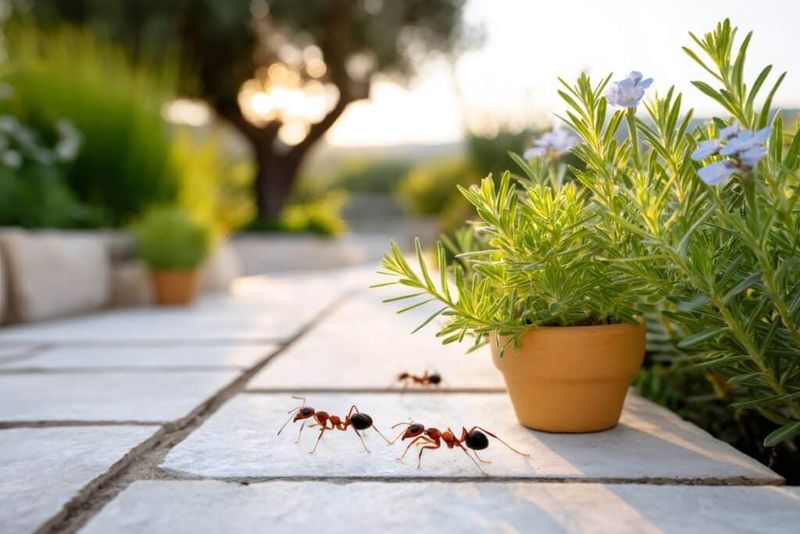
A bird eating ants and a bird fixing an ant problem are two separate things. Flickers do eat plenty of ants, and the CDFW account lists them as a key part of the animal diet.
That does not show that one lawn visit shrinks the colony under your yard to a level you would notice.
Colonies can be large, with many workers and often more than one nest. A bird taking a few mouthfuls on a winter morning is a small dent.
Nothing in the research tells us flickers reliably cut ant numbers around a home.
UC IPM offers a cautious note on this. Its ant FAQ says birds and spiders may eat ants but not enough to keep them under control.
That FAQ dates to 2009, so treat it as a sensible caution and not as a current measured estimate.
Here is a practical example. If ants are trailing into your kitchen, a flicker working the lawn outside will not solve that.
You would still need to find the trail and deal with it directly.
The flip side is also worth knowing. A flicker visit does not signal an ant infestation.
Appreciate the bird as a wild neighbor, not as pest control you can count on.
What does lawn-pecking actually tell you?
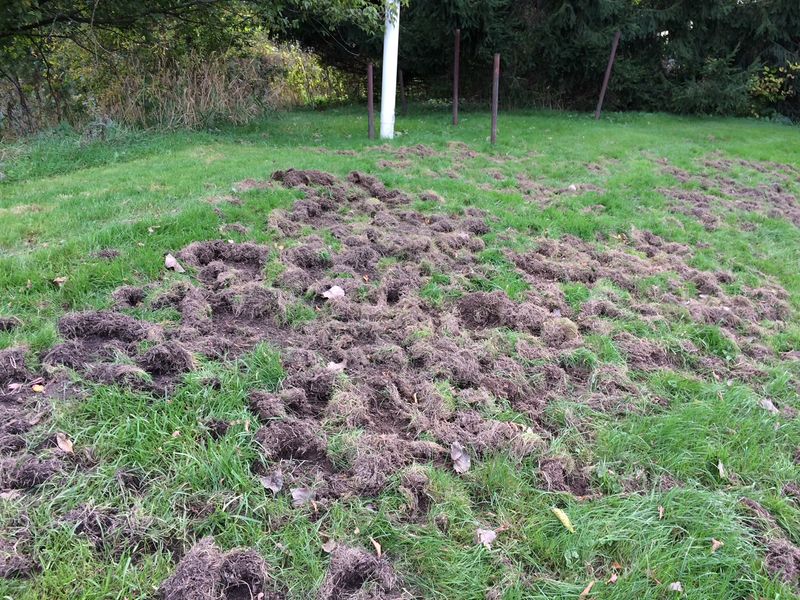
Bird digging is a clue, but a weak one. UC IPM’s lawn insects guidance says birds digging can point to lawn insects, but it is not a reliable sign.
Birds may be eating earthworms, or they may return to a spot that was productive once even after the pests are gone.
Flickers add another wrinkle. California sources name ants and beetles as flicker prey.
UC IPM talks about birds in general as possible predators of white grubs, not flickers specifically. So a flicker in your lawn does not prove grubs.
Lawn damage in California also has many non-insect causes. Insects are not a common cause of residential lawn damage here.
Poor care, unsuitable grass, watering problems, and disease can all leave brown or thinning patches that look alike.
Start with the turf itself. Look at where it is damaged and how.
Is the grass dry, patchy, or pulling up easily like loose carpet?
If you suspect white grubs, peel back a section of turf and look beneath the thatch and around the roots. Count what you find in a square foot.
UC IPM says control may be needed above roughly six white grubs per square foot.
That number is a guide for confirmed grub counts. It is not a reason to treat because a bird showed up.
Identify the cause first, and treat only if the problem is real.
Manage only an ant problem you have confirmed
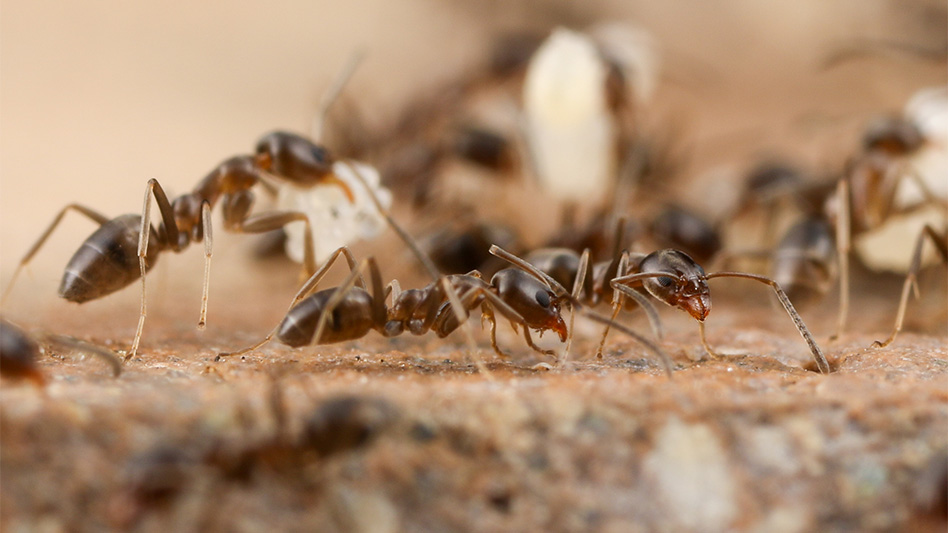
Ants are not always the enemy. UC IPM’s guidance on ants in gardens and landscapes notes that many California ant species are not pests.
Some improve soil conditions, and some prey on pests.
Act when ants cause a specific problem. Common examples are ants marching into the house or ants tending honeydew-producing insects such as aphids on garden plants.
In those cases, you have a target worth managing.
For the garden case, dealing with the sap-sucking insects and keeping ants from climbing plants can matter more than the ants alone. Watch which plants have ant traffic before you decide on a plan.
When control is warranted, UC IPM favors suitable slow-acting baits over broad outdoor sprays. Worker ants carry the bait back to the nest, which can reach the colony instead of just the ants you see.
Sprays tend to hit only the visible ants and can harm helpful insects.
Bait choice matters. Effectiveness depends on the ant species and what kind of food it prefers, so watch what the ants are feeding on before you buy.
Always follow the product label. Place baits as directed, and keep pesticide products away from children, pets, and wildlife.
A flicker should never be able to reach what you put out.
Leave the flicker alone and assess the yard separately
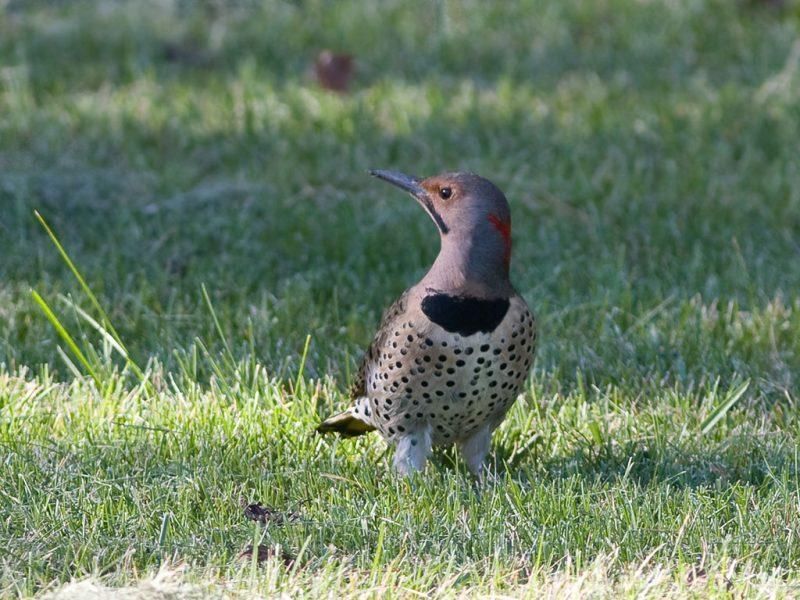
Treat the bird and the lawn as two separate questions. The flicker is probably just foraging, and it does not need to be chased off.
If your turf shows damage, inspect it directly and act only on a problem you have confirmed.
There is a legal side too. Northern Flickers are on the federal protected-bird list in Title 50, Part 10 of the Code of Federal Regulations.
Under the Migratory Bird Treaty Act, taking protected migratory birds, including killing or capturing them, requires authorization, subject to applicable exceptions.
That rule is about take. It does not mean every kind of disturbance counts as take.
Still, there is no good reason to harass a bird that is simply looking for lunch.
Skip pesticides aimed at stopping its foraging, too. Unneeded treatments can hurt helpful organisms and will not tell you what is going on in the lawn.
Enjoy the show while it lasts. A flicker on your grass is a small piece of California wildlife stopping by your yard.