

Your sprinkler timer may still be running on the same settings you chose back in July. But once the weather cools, most Florida warm-season lawns slow down and ask for less help from the hose.
Adjusting your timer can save water and keep your grass healthier. Here is how to do it without letting the turf dry out or breaking local rules.
Why Florida lawns often need less water in cooler months
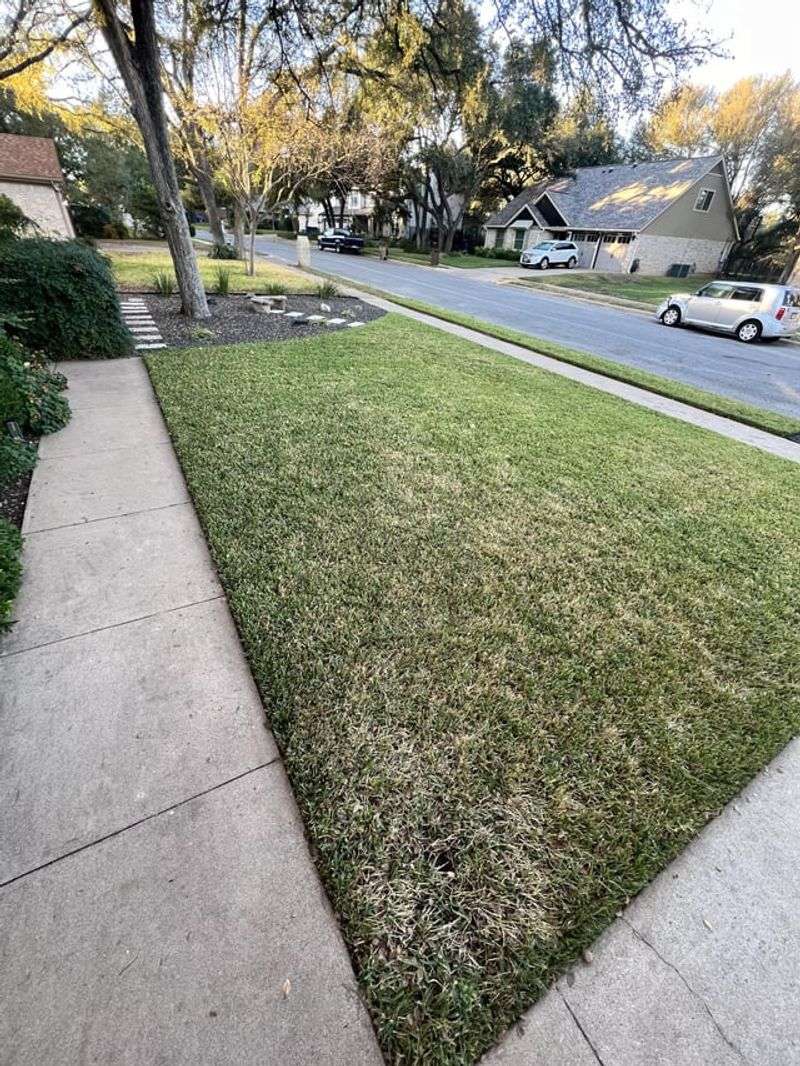
Come winter, Florida’s warm-season grasses such as St. Augustinegrass, bermudagrass, zoysiagrass, and bahiagrass shift gears. UF/IFAS Gardening Solutions explains that these grasses can slow their growth or go dormant when conditions turn cooler.
Slower growth means the lawn uses less water than it did during the summer.
Cooler nights get a lot of the credit, but they are only one piece. Shorter days, lower daytime temperatures, and less evaporation from soil and leaves all play a part.
Together they lower the amount of water a lawn loses and needs to replace.
What your lawn looks like in winter depends on where you live and what the weather has done. Some lawns stay mostly green, especially farther south.
Others fade to tan or brown, particularly in North Florida after a frost. A brown lawn is not automatically a thirsty lawn, since dormant turf is resting.
UF/IFAS irrigation guidance, summarized in its turf and landscape irrigation recommendations, treats the cooler season as a time to scale back supplemental watering for established lawns. It does not set one statewide cut, and your yard may need more or less than a neighbor’s.
That is the reason to look at your timer now. Settings built for hot, dry summer weeks may be delivering water your grass cannot use.
The next sections show how to find the right level for your own yard.
Winter watering intervals vary across Florida
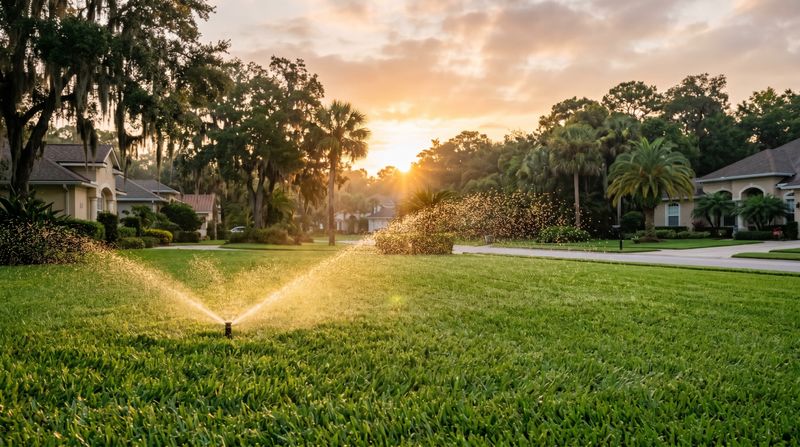
A handy starting point for established lawns is to water about once every 10 to 14 days in winter, but only when rain has not supplied enough. UF/IFAS irrigation recommendations frame this as skipping a week of irrigation compared with a typical routine.
Think of it as a benchmark to test against your lawn, not a rule for the whole state.
UF/IFAS examples show how much the answer can move. Central Florida lawns may need water weekly or every other week.
North Florida lawns may go three to four weeks between irrigations. Farther south, a UF/IFAS table for St. Augustinegrass lists a winter interval of 3 to 10 days for Miami, and that table assumes no rainfall.
Why such a spread? Climate is the big driver, since North Florida winters are colder and slow the grass much more.
Grass type matters too, because species differ in how much water they use and how deeply they root.
Site conditions shift things further. Sandy soil drains fast and holds little water, while heavier soil holds more.
Shade slows evaporation, and open, windy yards dry out sooner. UF/IFAS lawn watering guidance cautions that rainfall and conditions like these change the interval.
So use the 10 to 14 day figure as a first guess. If your lawn handles it well, you may stretch it.
If it shows stress sooner, shorten it a little.
Use drought stress, not the calendar, as your trigger

Your grass can tell you when it needs a drink, and it is a better guide than a timer. For established turf, UF/IFAS Gardening Solutions recommends watering when roughly 30 to 50 percent of the lawn shows signs of drought stress.
Look for three clues. Blades fold or curl lengthwise, the lawn takes on a blue-gray cast, or footprints stay visible long after you walk across the grass.
Check several spots, including sunny edges and areas near pavement, which tend to dry first.
A programmed run day means nothing about the lawn’s real thirst. If it rained over the weekend, or a cool, cloudy stretch kept the soil damp, the turf may be fine skipping a cycle.
Poke a screwdriver into the soil, and if it slides in easily, there is probably still moisture.
This approach ties neatly to the regional examples from UF/IFAS irrigation recommendations. Those numbers are starting guesses, and the stress check is how you confirm or adjust them for your own yard.
One caution applies to brown winter grass. Dormant turf can look dull even when it has enough water, so rely on the folding, blue-gray, and footprint clues rather than color alone.
Measure irrigation instead of guessing at minutes
When a stressed lawn does need water, the usual target is about one-half to three-quarters of an inch per irrigation event, according to UF/IFAS Gardening Solutions. Soil and site conditions can change the right amount, so treat it as a general range.
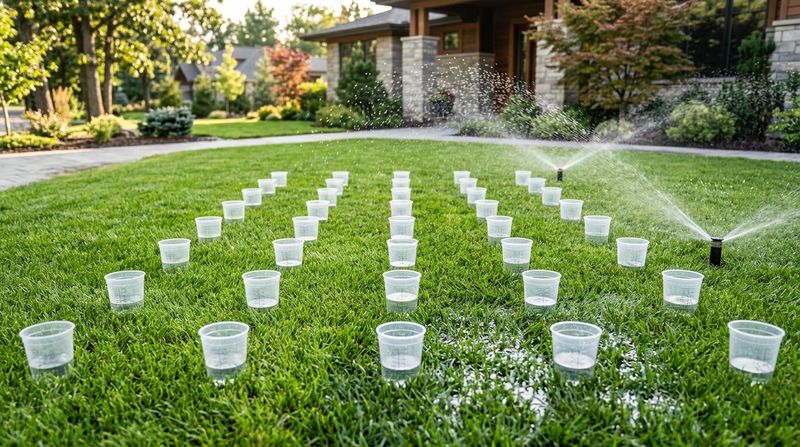
Timer minutes cannot tell you how much water lands on the grass, because sprinklers differ a lot. Catch cans solve that.
Scatter straight-sided containers, such as empty tuna cans, across one zone, run the zone for a set time, then measure the depth in each can with a ruler. Averaging the readings shows what that zone really delivers, as described in the UF/IFAS irrigation summary.
Watch the ground while you test. If water pools or runs onto the sidewalk before you reach your target, stop and adjust.
Running a zone in shorter bursts with a pause between lets the soil absorb the water instead of shedding it.
Timing matters too. Early morning is the best window, since the grass dries as the day warms.
UF/IFAS lawn watering guidance notes that late-morning or afternoon watering can extend the time the blades stay wet from dew, which can favor disease.
Test each zone separately, since shady, sunny, and sloped areas often behave differently. A few minutes with cans once can save many gallons over the winter.
Reducing excess irrigation is not a cure for weeds or disease
Cutting back on water helps in some ways, but it is not a magic fix. Too much or too frequent irrigation can raise the risk of turf disease, according to UF/IFAS turf irrigation guidance.
Many things contribute to disease, though, and large patch, for example, shows up from fall to spring on St. Augustinegrass and zoysiagrass even in well-managed lawns.
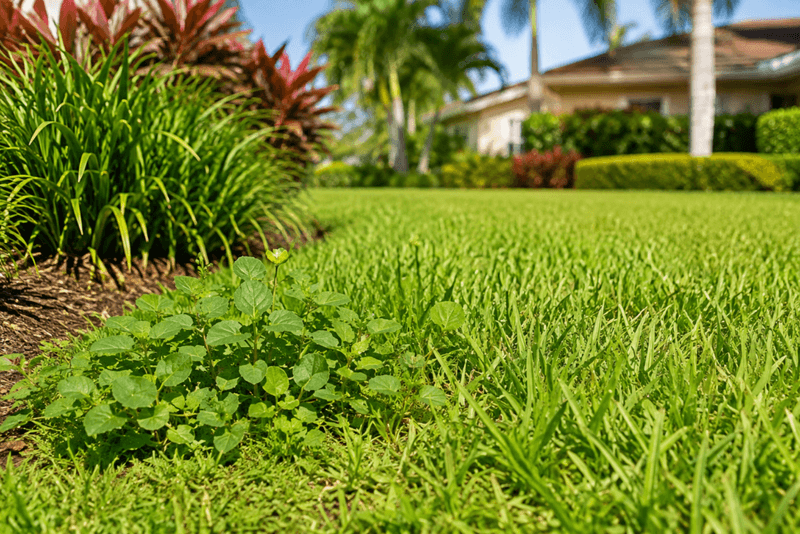
Weeds follow a similar pattern. UF/IFAS notes that some weeds, including dollarweed and sedges, can thrive in continuously wet or compacted soil.
If you see them in a soggy spot, check for overwatering or poor drainage.
Yet weeds also move into thin or weakened grass, as the UF/IFAS weed management guide explains. Both overwatering and underwatering can weaken turf, so a lawn left chronically dry can open space for weeds too.
An Okaloosa County Extension handout, Let Your Lawn Tell You When To Water, makes a similar point about long stretches without rain or irrigation thinning turf.
The goal is balance. Skip watering the lawn does not need, but do not turn the system off indefinitely and hope for the best.
Review the timer and maintain the rain shutoff
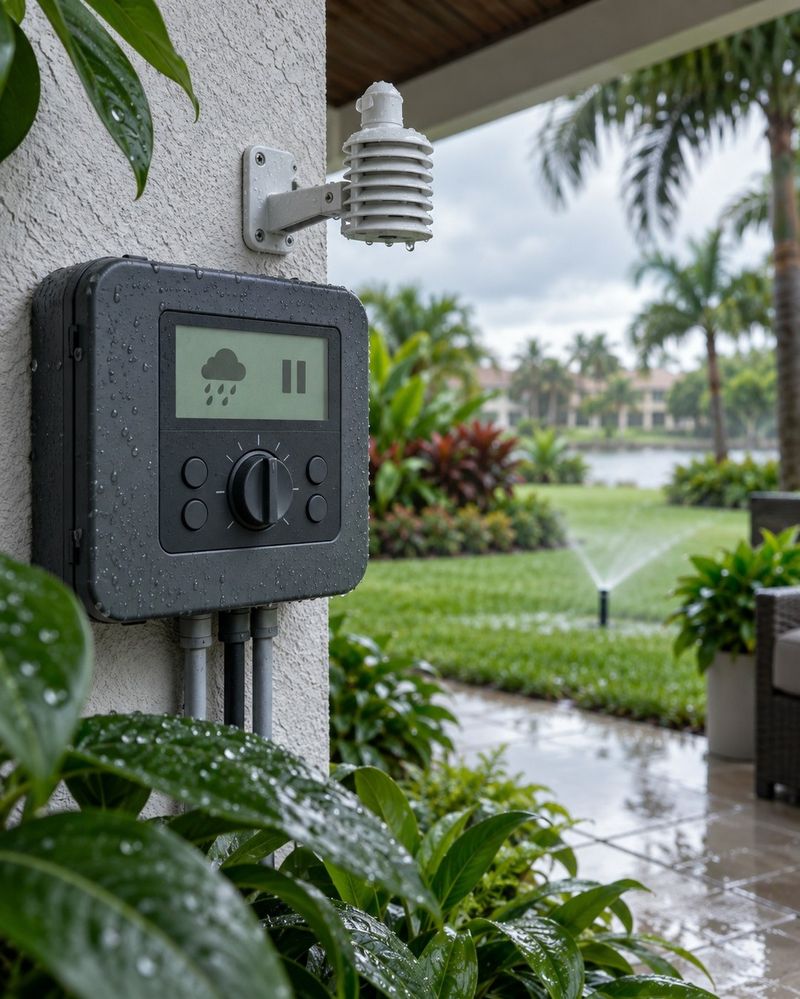
Start with the controller itself. Many timers still hold summer programs, with several run days and long cycles.
Look at which days are active, how long each zone runs, and whether any program no longer fits the season.
Then look at recent weather. A timer cannot know it rained unless something tells it.
If the ground is already wet, skip the cycle by hand or use the controller’s pause or rain delay feature, and let the lawn’s condition guide whether to resume. The UF/IFAS irrigation recommendations support watering based on need instead of a fixed routine.
Next, test the rain shutoff. Florida law, in section 373.62 of the Florida Statutes, requires people operating automatic landscape irrigation systems to maintain and operate technology that interrupts or inhibits irrigation during sufficient moisture.
That means the device should be working, not just installed.
UF/IFAS information on rain sensors describes how these devices work. Check for debris, damage, or wiring problems, and confirm the controller responds when the sensor is triggered.
A working shutoff is a backup, not a replacement for your own eyes. It will not tell you whether the lawn is stressed, and no single controller setting fits every yard.
Check local restrictions and treat new sod separately
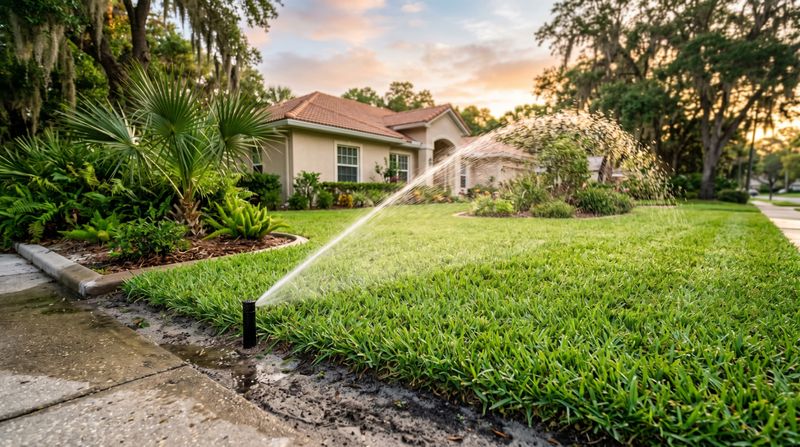
Two cautions deserve their own attention. First, local watering rules.
Restrictions set when irrigation is allowed, not how much water your lawn needs, so you may need to water less often than the maximum permitted. The St. Johns River Water Management District FAQs explain how these limits work in its area.
Rules differ among water management districts, counties, and cities, and they can change during dry spells. The South Florida Water Management District publishes its own landscape irrigation restrictions.
Check your current local ordinance before setting permitted days and times.
Second, new sod is a different case. Newly installed turf has short roots and needs more frequent watering while it establishes.
UF/IFAS establishment guidance reduces the frequency gradually before moving to as-needed irrigation.
So do not apply the 10 to 14 day winter benchmark to new sod. If you laid sod this fall, follow the establishment schedule and ask your local extension office about timing in your area.
New turf may also be covered by special rules, so confirm that with your water provider.
A practical winter reset
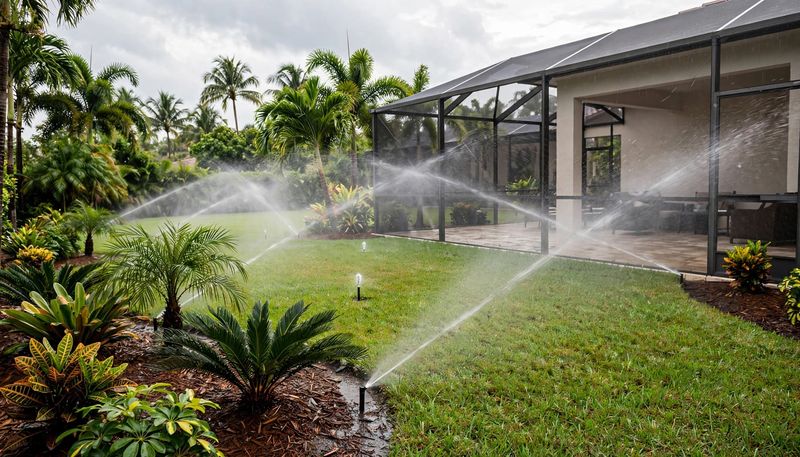
Review your summer timer and trim cycles that no longer fit. Use regional UF/IFAS guidance as a starting point only.
Let rainfall and visible stress guide watering, measure what each zone applies, and confirm local rules.
The aim is less wasted water, not a dry lawn. Your grass will tell you the rest.