
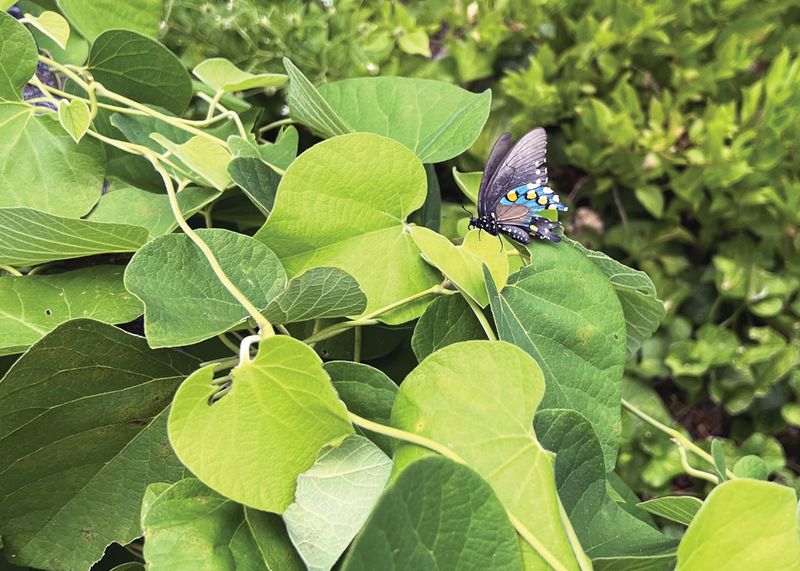
Some butterflies can only raise their young on one kind of plant, and the pipevine swallowtail is one of them. Its caterpillars eat pipevines, so a well-chosen vine near your fence can give this dark, shimmering butterfly a place to breed.
A vine will not guarantee a visit, but it gives you a real chance to watch the whole life cycle in your own yard. Here is how to pick, plant, and protect one in Central Texas.
What a pipevine can—and cannot—promise
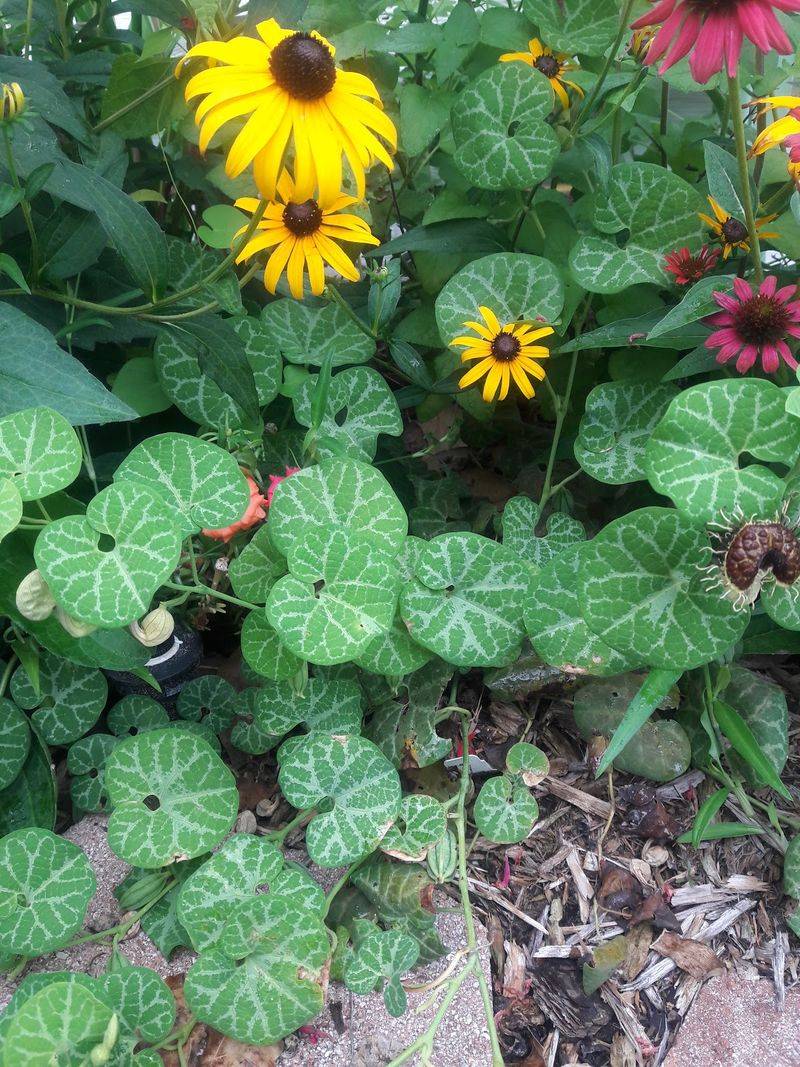
Pipevine swallowtail caterpillars feed on plants in the genus Aristolochia, and females lay their eggs on those host plants. UF/IFAS describes this life history, including the way larvae depend on pipevines to grow.
That relationship is the reason a pipevine belongs in a wildlife garden.
Here is the catch. A host plant is an invitation, not a contract.
A female butterfly has to pass near your yard, notice the vine, and accept it before she lays a single egg.
Even then, eggs are tiny and caterpillars do not always survive to adulthood. Weather, predators, and plain luck all play a part.
That is true for every wild butterfly, no matter how perfect the plant.
Timing matters too. A vine planted this winter has to settle in, root, and grow leaves before it can be useful.
Some gardeners see eggs within a season, and others wait longer, so treat any spring butterfly as a bonus rather than a deadline.
Think of the project as building a nursery with the door left open. You supply the right plant, steady care, and patience.
The butterflies make their own decisions, and that is part of what makes the first caterpillar so rewarding.
With that expectation set, the rest of this guide covers the practical choices that give your vine its best shot at becoming a working host plant.
Choose a pipevine suited to your part of Central Texas
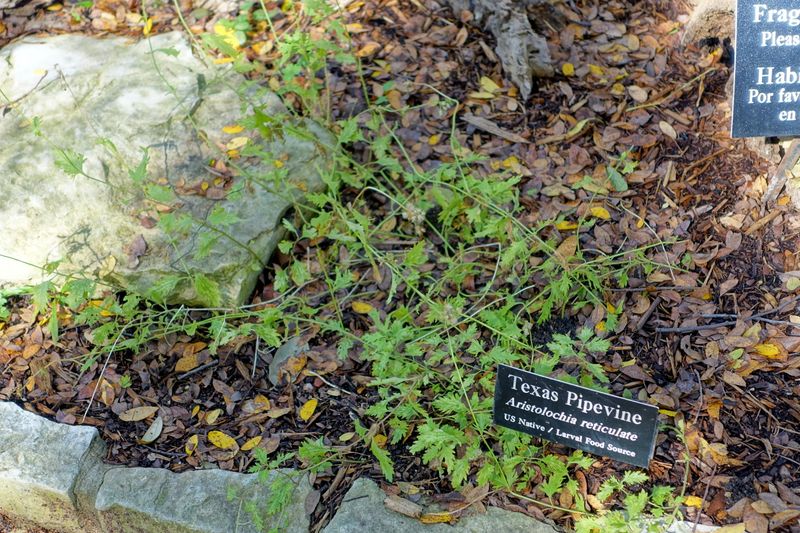
Pipevine is not one plant. Several species of Aristolochia grow in Texas, and they differ in size, range, and the conditions they like.
Before you buy, find the scientific name on the plant tag and make sure it fits your yard.
Woolly pipevine, Aristolochia tomentosa, is a good example of why this matters. Texas Parks and Wildlife lists it as a woodland climber found across the eastern half of the state, with shade and moisture preferences tied to that setting.
Now look at how species vary by place. The Lady Bird Johnson Wildflower Center’s answer for Denton County names both A. tomentosa and A. erecta.
Denton County is in North Texas, so that list is only an example, not a rule for your lot.
Central Texas covers a lot of ground, from Hill Country limestone to blackland clay to sandy pockets near the Post Oak Savannah. A vine that thrives in one yard may struggle in another.
Your best move is to ask a local native plant nursery, a county Extension office, or a native plant society chapter which species suits your soil, light, and county. Confirm the name before you plant, and do not assume woolly pipevine is the answer for everyone.
Check the fence, support, and growing conditions
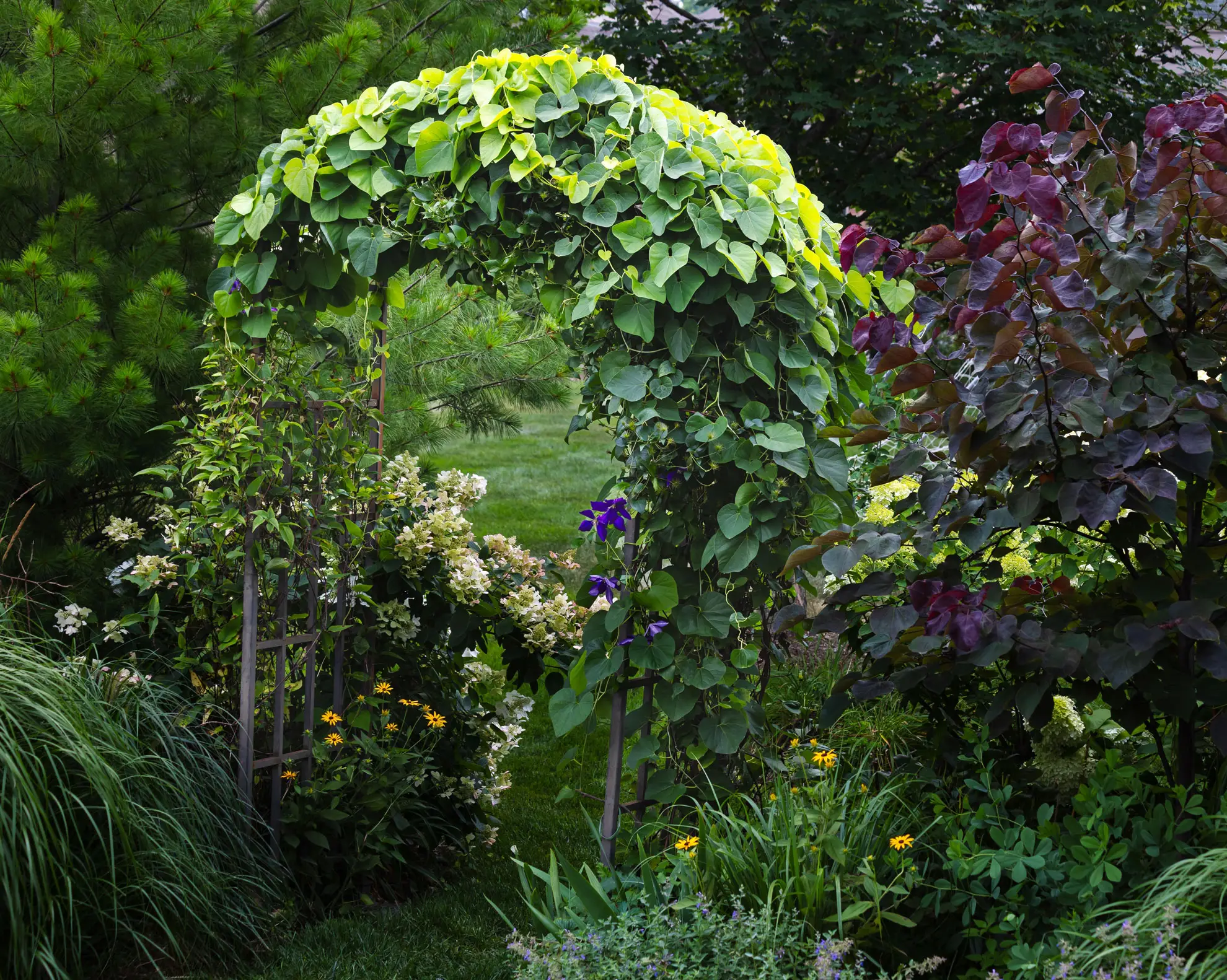
Walk your fence line before you dig. Notice where the sun lands in the morning and afternoon, how the soil drains after rain, and what the fence is made of.
A few minutes of looking now saves a lot of trouble later.
The details below apply to woolly pipevine specifically. TPWD reports that it can reach 50 feet, prefers part or dappled shade, and does best in mesic, well-drained soil.
It also needs support, and TPWD notes it can be planted beside shrubs to climb.
Other pipevines may be smaller or have different needs, so check the tag or ask the nursery before assuming the same rules hold.
Size is the big question. A vine that can climb that high is a heavy load for a thin or aging fence.
Consider a sturdy post, a trellis, or wire attached to solid supports instead of leaning everything on weak pickets.
Shrubs nearby can also serve as a living ladder, which may suit a spot where the fence is not strong enough. Leave room so you can reach the plant, and keep it clear of gutters, power lines, and neighbors’ property.
Finally, think about light. A fence that bakes in afternoon sun may be harder on a shade-leaning vine than one with a tree overhead.
Pick the spot that matches the species you chose.
Plant when you can support establishment
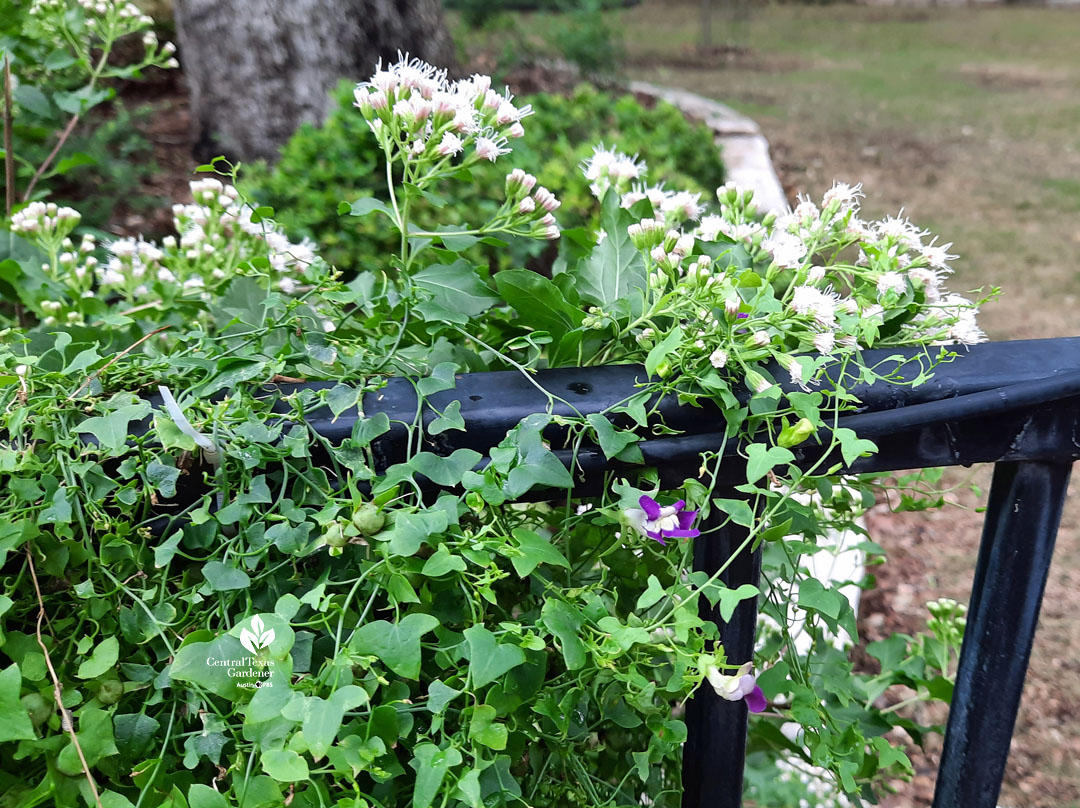
Cool-season planting can work well in Texas, because roots can grow without the stress of summer heat. Still, winter is not automatically the right moment for every pipevine.
What matters is whether you can find the plant you want and keep it watered while it settles in.
Austin’s Grow Green guidance favors fall planting for Central Texas. In its November 2026 newsletter, Texas A&M AgriLife stresses that newly planted trees need consistent moisture and says to follow local water restrictions.
Neither source sets a winter rule for pipevines, so use them as general planting sense.
Ask yourself a few practical questions. Is the species you want actually in stock?
Is the ground frozen, soaked, or workable? Does the soil drain well?
Can you water by hand or with a drip line even during a dry stretch?
If the answer to any of those is no, waiting a few weeks is fine. A vine planted a little later with good care beats one planted on schedule and left to dry out.
Check your city’s watering rules before you start, since some limit hose and sprinkler days. A slow soak at the base, a layer of mulch kept off the stem, and regular checks after dry, windy days will carry most new vines through.
Watch for eggs without setting a spring deadline
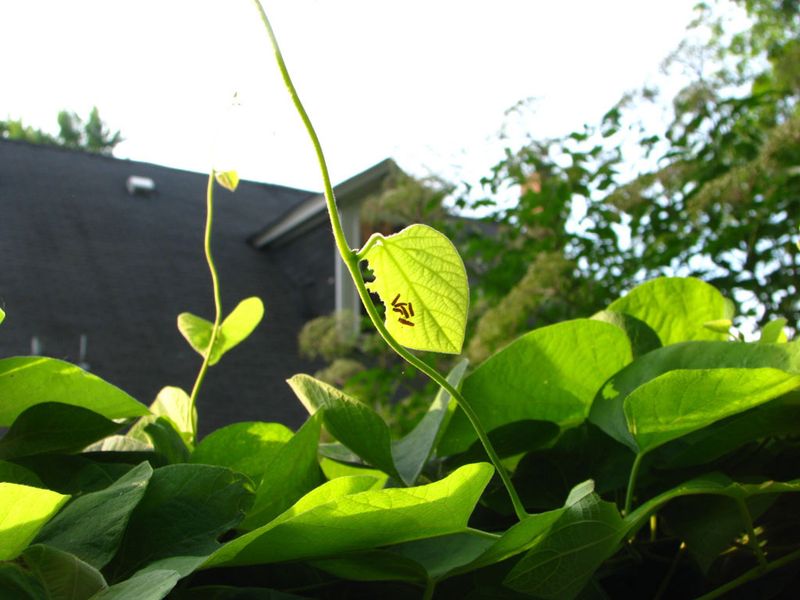
Once your vine starts growing, make a habit of checking it. Look closely at fresh leaves and tender tips.
UF/IFAS reports that new leaf growth can be more attractive for egg-laying, though that does not mean eggs will appear.
Eggs and young caterpillars are small and easy to miss. Check the undersides of leaves and along stems, and look again over several days, since a quick glance can easily pass over them.
Resist the urge to pin hopes on a date. The USA National Phenology Network reports pipevine swallowtails across Texas and describes general flight activity in the South as year-round.
That broad picture cannot tell you when one particular yard will see eggs or larvae.
Your neighborhood matters more than the map. Nearby wild areas, creek corridors, and other gardens with pipevine can all change how often butterflies pass by.
A simple notebook or a few phone photos can help. Jot down the date, how the vine looks, and anything you spot.
Over a season or two you will learn its rhythm and know what a visit looks like.
If nothing shows up at first, keep the vine healthy and keep looking. Patience is part of the hobby.
Let caterpillars feed
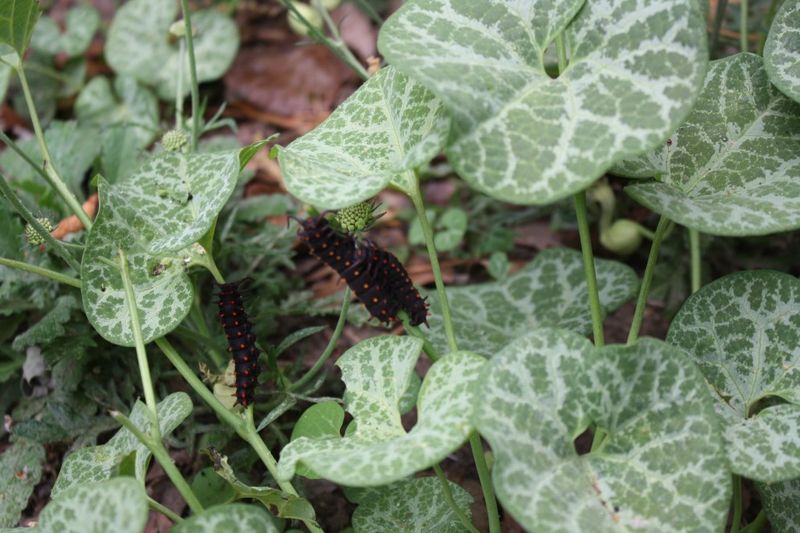
When chewed leaves show up on your pipevine, that is the plan working. The vine is there to feed caterpillars, so ragged edges are a sign of success rather than a problem to solve.
The caterpillars are dark with orange or reddish bumps, and they can look a little alarming at first. Learn to recognize them so you do not mistake them for a pest.
Skip the sprays. TPWD advises using insecticides sparingly in butterfly gardens.
That includes caterpillar-targeting products such as Bt, which are made to kill caterpillars and can harm the very ones you hoped to raise.
Drift matters too. A spray used on a nearby rose or lawn can land on the vine, so think about the whole yard, not just one plant.
Talk with neighbors or your lawn service if treatments happen close to the fence.
If you want to help, the best tools are simple. Keep the vine watered so it can put out new leaves, and leave caterpillars where you find them.
Enjoy watching them grow. Few garden sights are as satisfying as a hungry caterpillar on a plant you put in the ground yourself.
Add nectar plants and handle pipevine safely
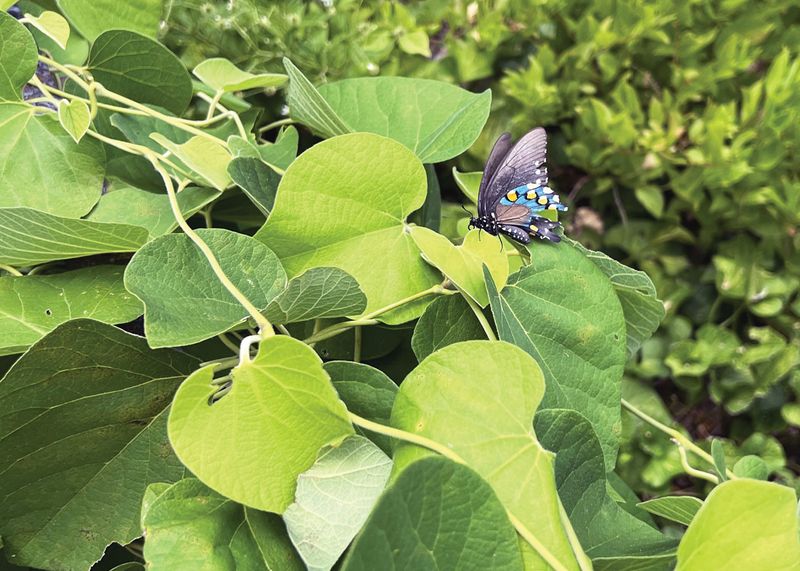
Caterpillars and adult butterflies have different needs. UF/IFAS describes Aristolochia as a larval host plant, which means it feeds the young.
A pipevine alone does not give adults a place to sip nectar.
Plant flowers nearby that bloom across the seasons, and choose ones that do well in your part of Central Texas. Ask a local native plant nursery for nectar plants that match your sun and soil.
A word on safety. Do not eat Aristolochia or use it medicinally.
The National Cancer Institute and the FDA warn about health risks from aristolochic acids in products taken by mouth. Growing the plant and enjoying it in the garden is a separate matter, and those warnings are about ingestion.
Keep the cautions simple: do not brew it, do not use it as a remedy, and share that with family members who might be curious.
A locally suitable, established vine gives pipevine swallowtails an opportunity, as UF/IFAS notes about egg-laying, but visits are never promised. Plant the vine, set out the flowers, and let the garden do the inviting.