
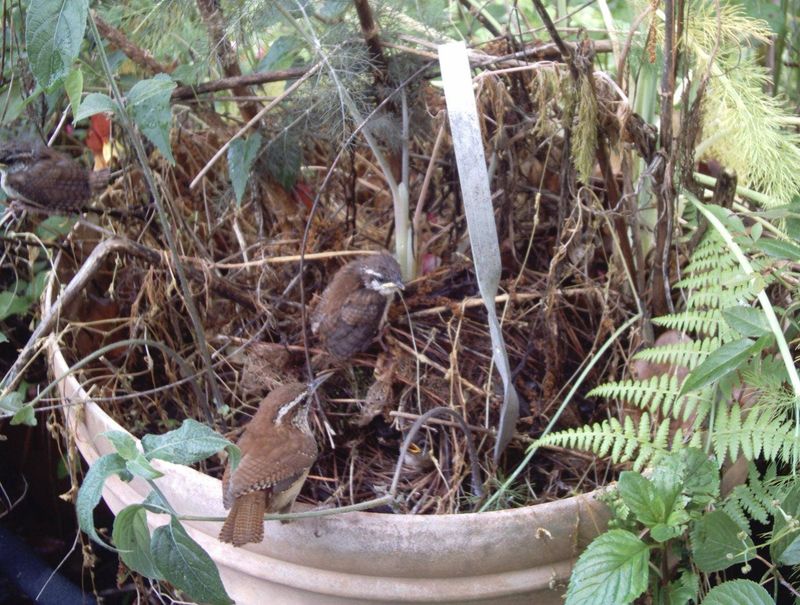
A small brown bird keeps showing up at your porch planter, poking around in the soil before you have finished your coffee. It is easy to wonder what it wants, and the answer matters because the pot might hold either a meal or a nest.
Carolina wrens are common across North Carolina, so many homeowners see this habit up close. Here is what we know, what we can only guess, and how to watch without causing harm.
Morning visits show a pattern, not its cause
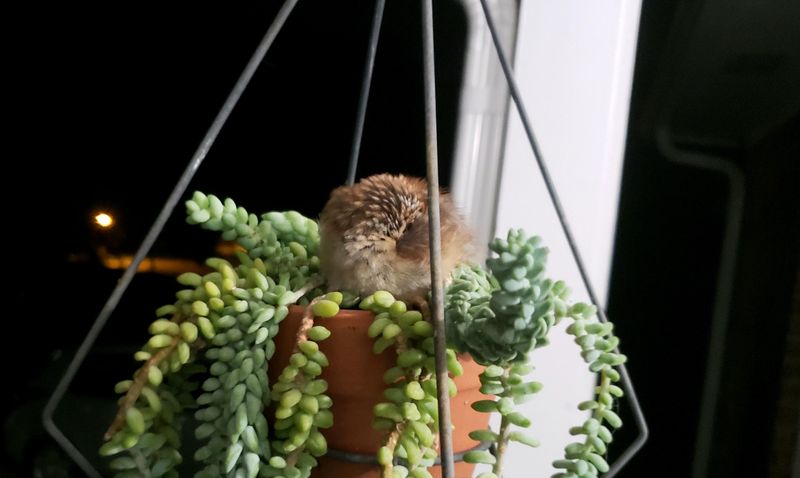
Maybe you have noticed the wren arriving at the same hour each day, hopping into the planter while the porch is still quiet. That is a real observation, and it is worth writing down.
But a repeated time of day tells you when you happen to see the bird, not why it comes.
You are likely to be outside or near a window in the morning, so you may simply notice the visits then. The sources I reviewed do not link morning timing to a feeding schedule or any special meaning.
A bird that visits at breakfast time could be feeding, nesting, or doing a bit of both.
The Cornell Lab life history page describes a bird that forages busily in low spots, and the Missouri Department of Conservation field guide notes that it also nests in odd human-made places. Both explanations fit what you see at the pot.
Keep an open mind, and gather clues before you decide anything.
Carolina wrens forage for small invertebrates

Insects and spiders make up much of a Carolina wren’s diet. According to Cornell Lab of Ornithology, these birds turn over decaying vegetation and probe crevices as they search for food.
The Audubon field guide also describes them working through ground cover, foliage, bark, and tangled growth.
Picture your porch pot from the bird’s point of view. It has loose soil, maybe some mulch, dropped leaves, and shady gaps between the plants and the container.
That looks a lot like the low, cluttered spots a wren already checks in the yard.
So a planter can be a fine place to hunt. Still, general habits do not tell us what this bird wants in this pot.
Nobody can say from a few glances whether it finds a spider, a beetle, or nothing at all.
If you want a clue, watch whether the bird pokes at the soil surface and flits away with something in its bill. That points toward foraging, though it does not prove it.
Winter foraging is plausible, but the prey are unknown
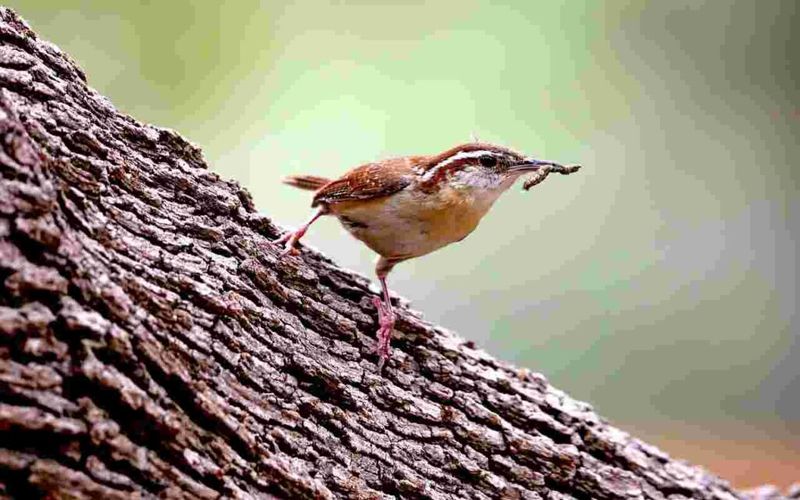
Cold months leave fewer bugs out in the open, so winter food can be harder to find. The Missouri Department of Conservation says Carolina wrens stay put year-round and look for dormant insects, cocoons, and egg cases in winter.
That gives us a reasonable guess. A planter full of old stems, leaf bits, and soil could hold tiny hiding creatures, and a wren might check it the way it checks other sheltered spots.
Here is the limit. That source describes the bird’s general winter habits, not what is inside your pot.
We cannot say the wren is after overwintering spiders or insect eggs there, and we cannot say it finds anything at all.
In North Carolina, winter weather varies from the mountains to the coastal plain, so food availability may differ too. Treat winter foraging as one possible reason, and keep watching for other clues before you settle on it.
A porch planter can also be a nest site
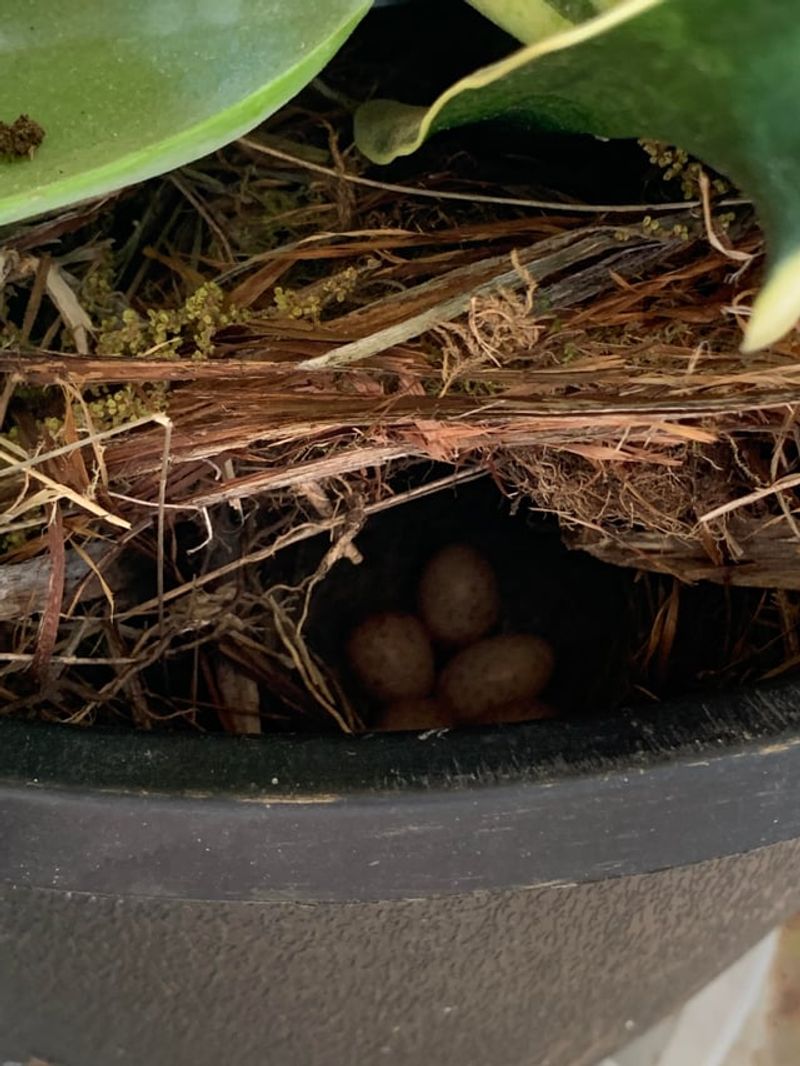
Wrens are famous for choosing odd nest spots. The Missouri Department of Conservation notes that Carolina wrens may nest in porch planters and other human-made places.
A pot with thick foliage or a sheltered corner can look like a cozy cavity to a bird.
That is why nesting deserves a place on your list before you change anything. Moving, dumping, or spraying a pot could harm a nest you have not spotted yet.
A visit alone does not prove a nest is there, though. Plenty of visits are quick hunting stops.
Think of nesting as a real possibility, not a conclusion.
If your planter sits under a roof, near a door, or among dense plants, it is a bit more likely to appeal as a nest site. Peek only from a distance for now, and save the closer look for the next section’s tips.
Observe from a distance before changing the pot
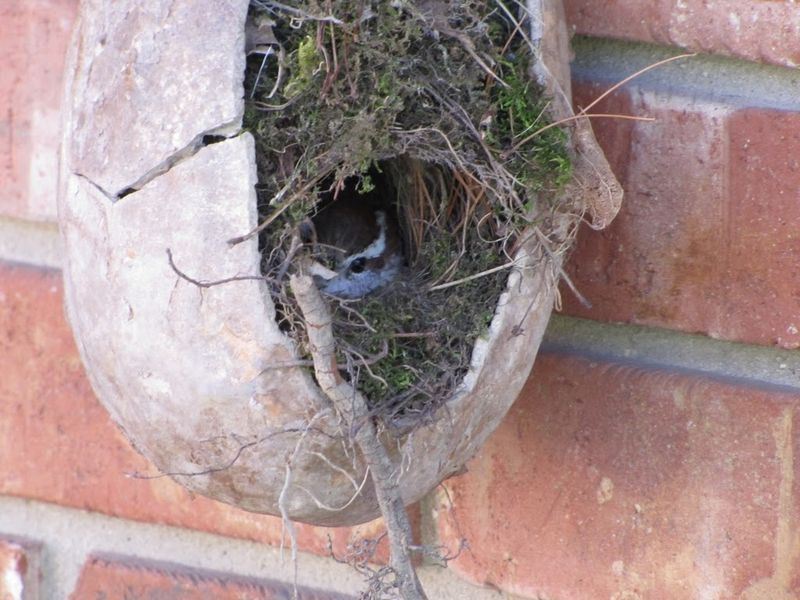
Grab a chair or stand at a window and watch for ten or fifteen minutes. If the bird keeps slipping into one hidden spot, or arrives with grass, twigs, or leaves in its bill, it may be nesting.
If it probes the soil and leaves with something small, it may be foraging.
Neither clue is proof. A wren can carry food to a nest, and it can poke around a pot it has no plans to nest in.
Treat what you see as hints, not a diagnosis.
Until you are fairly sure, leave the pot alone. Do not move it, turn it over, dump it, or spray it.
The Missouri guide at the Department of Conservation notes how readily wrens use planters, so caution makes sense.
Federal guidance matters here too. According to the U.S.
Fish and Wildlife Service, you should not destroy a nest holding eggs or chicks, or one with dependent young. Rules differ for inactive nests, and possessing a migratory bird nest is also restricted, so not every situation is the same.
If a nest creates a safety issue or you are unsure what to do, contact the U.S. Fish and Wildlife Service before acting.
Welcome the bird without relying on it for pest control
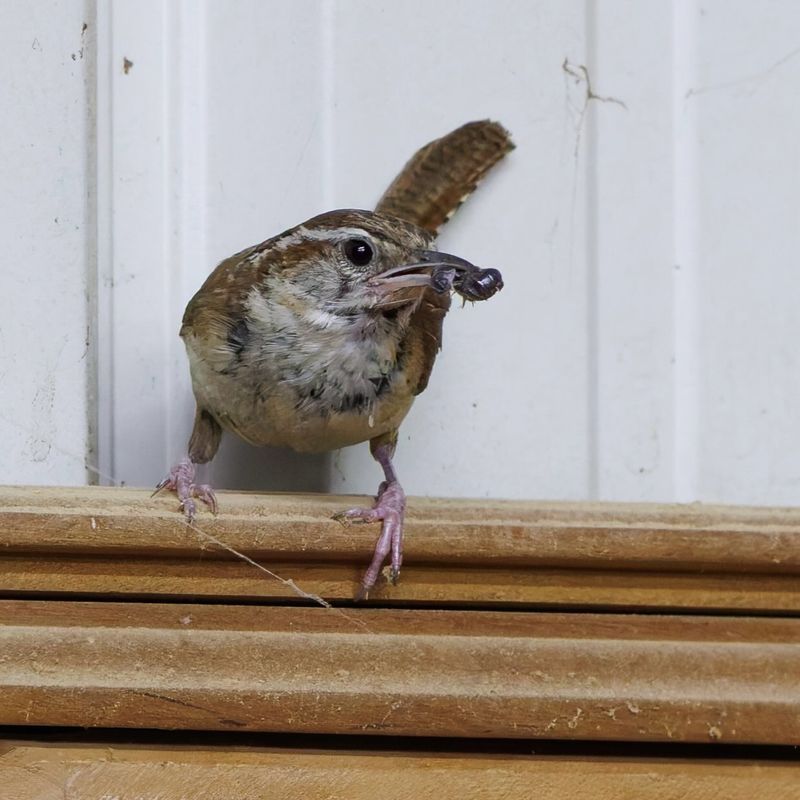
Birds that eat insects can help keep bug and spider numbers in check. The Missouri Department of Conservation makes that general point about insect-eating wildlife.
It does not show that one wren will clear your porch of pests.
So enjoy the bird, but do not count on it as your pest plan. If no nest is at risk, letting it poke around your pots costs you nothing.
Handle any real pest trouble on its own, such as by checking plants for damage and removing problem insects by hand.
If you choose a pesticide, read and follow the product label. The EPA lists birds and other non-target wildlife among the creatures that can be affected, so think about where a treatment might end up.
A wren at your planter is a small daily mystery that rewards patience.