
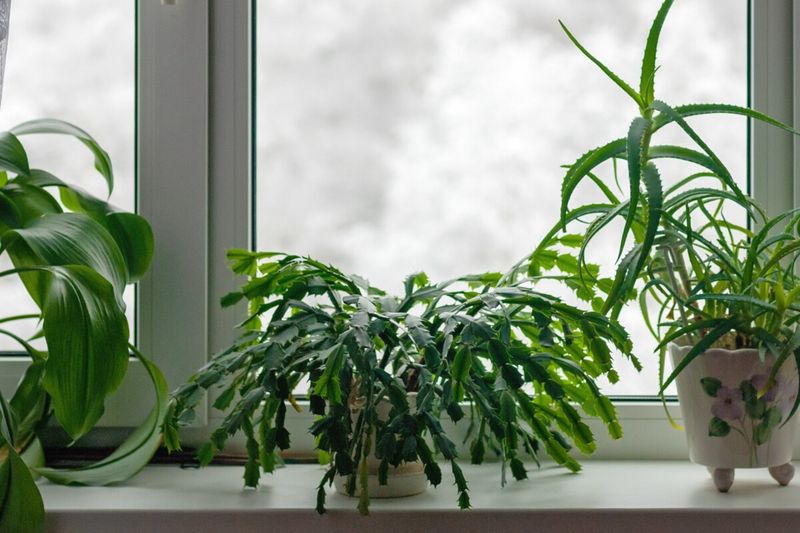
White fuzz tucked into the joints of your Christmas cactus can be alarming, especially when flower buds are just starting to form. It might be mealybugs, tiny sap-feeding insects that love to hide in tight spots.
It might also be something else entirely. Here is how to check, what a careful alcohol swab can and cannot do, and why buds may drop for other reasons.
Is that white fuzz really mealybugs?
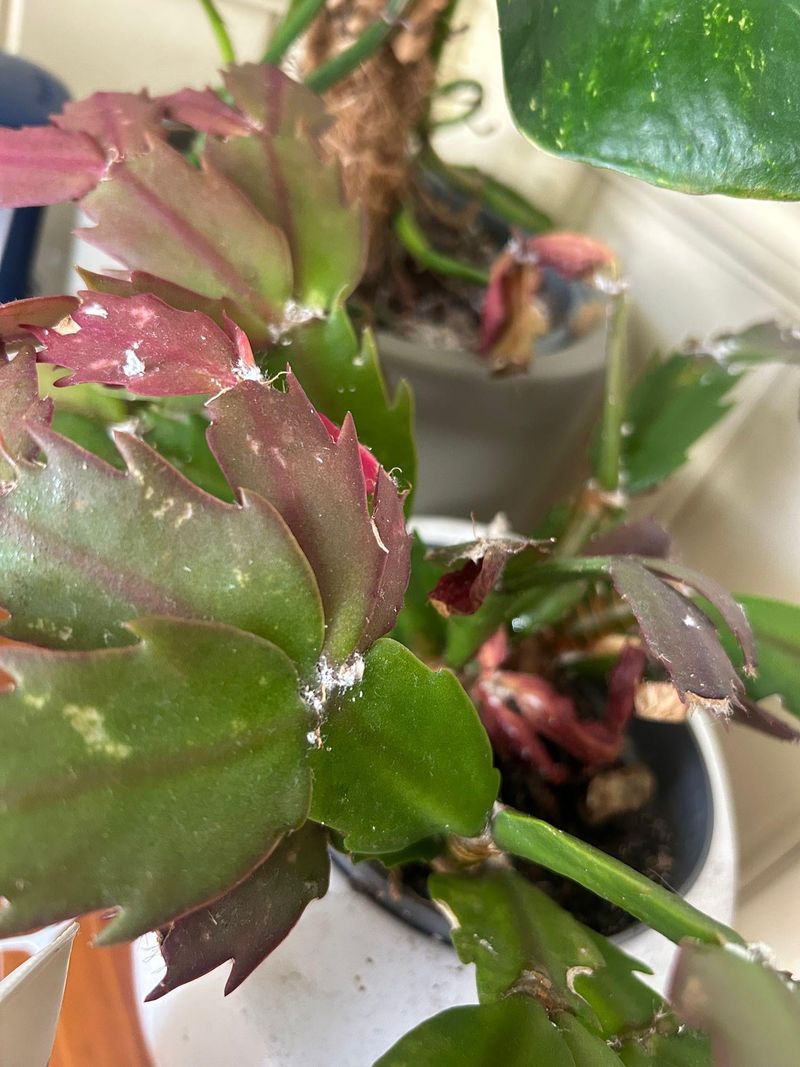
Mealybugs are small, soft insects that feed on plant sap and wear a coat of white wax. That coat is what makes them look like bits of cotton.
According to UC Integrated Pest Management guidance, they can be confused with other pests that make waxy material, so fuzz by itself is not proof.
Look closer, ideally with a magnifying glass. You are hunting for actual insects, small oval bodies that may move slowly, or cottony egg masses tucked into crevices.
Gently touching a fuzzy spot with a toothpick can help. A living, soft-bodied bug is a strong clue.
Other signs can back up your suspicion. Sticky honeydew on leaves or the surface below the plant, and black sooty mold growing on that sticky film, often show up with sap-feeding insects, as noted in the UC houseplant problems guide.
Take a few minutes to confirm what you have. Treating the wrong problem wastes time and can stress the plant.
Isolate the cactus and inspect its hiding places
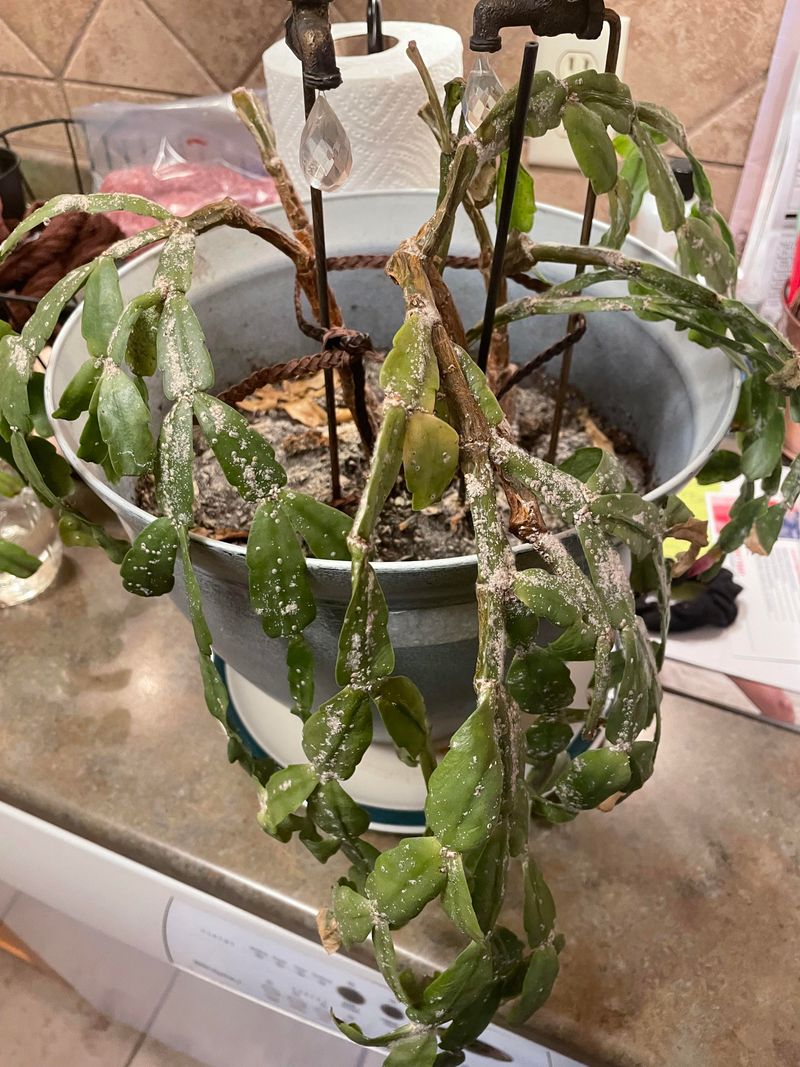
Once you suspect bugs, move the cactus away from your other houseplants. Mealybugs can spread from plant to plant, so a little distance is a smart precaution while you sort things out.
Next, take a slow tour of the plant. Check the joints where segments connect, tight crevices, the base of the stems, and the undersides of segments.
Mealybugs like protected spots, which is why a quick glance from above can miss them. Look at the pot rim and the soil surface too.
Here is a catch. Some mealybugs also feed on roots, as described in the UC houseplant guidance, and you cannot see those from the outside.
A clean-looking surface inspection does not rule out every problem, and UC IPM notes that their hiding habits make them hard to control.
You do not need to unpot the plant just to be thorough. If the cactus looks weak for no clear reason, or you keep finding bugs, peeking at the roots becomes more worthwhile.
Test alcohol before using it
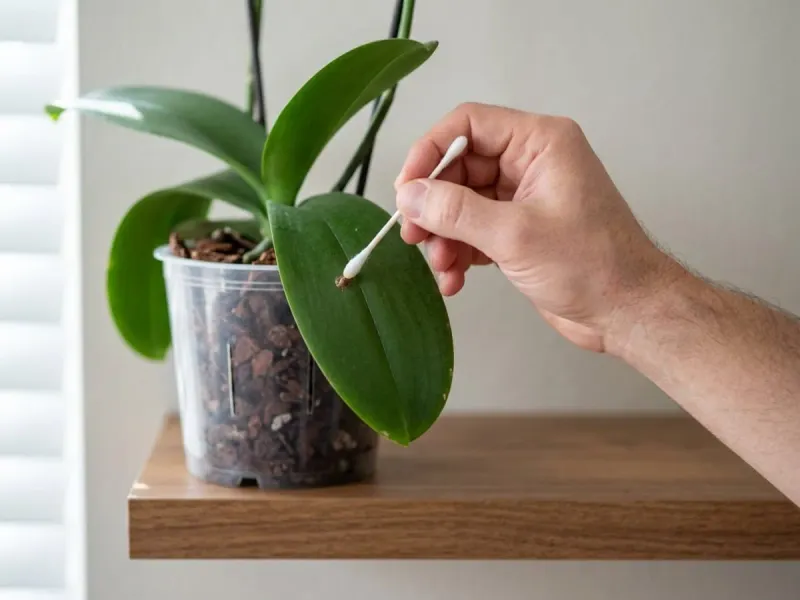
Rubbing alcohol is a common home remedy, but it is not harmless. It can injure plant tissue, so a quick patch test is worth the wait.
UC IPM advises testing a small part of the plant 1 to 2 days before treating, then watching for leaf burn.
Pick a low-profile spot, such as one segment on the back of the plant. Touch it with a swab moistened with isopropyl alcohol at 70% or weaker.
Then leave it alone and check it over the next day or two. If the tissue looks scorched, brown, or damaged, skip the treatment.
Keep the plan narrow. The University of Maryland Extension cautions against getting alcohol on the plant tissue, so this is a spot method, not something to spray or pour over the cactus.
One more safety point: rubbing alcohol is flammable, as the UC houseplant guide notes. Keep it away from flames, candles, and other ignition sources.
Dab visible insects, not the whole cactus
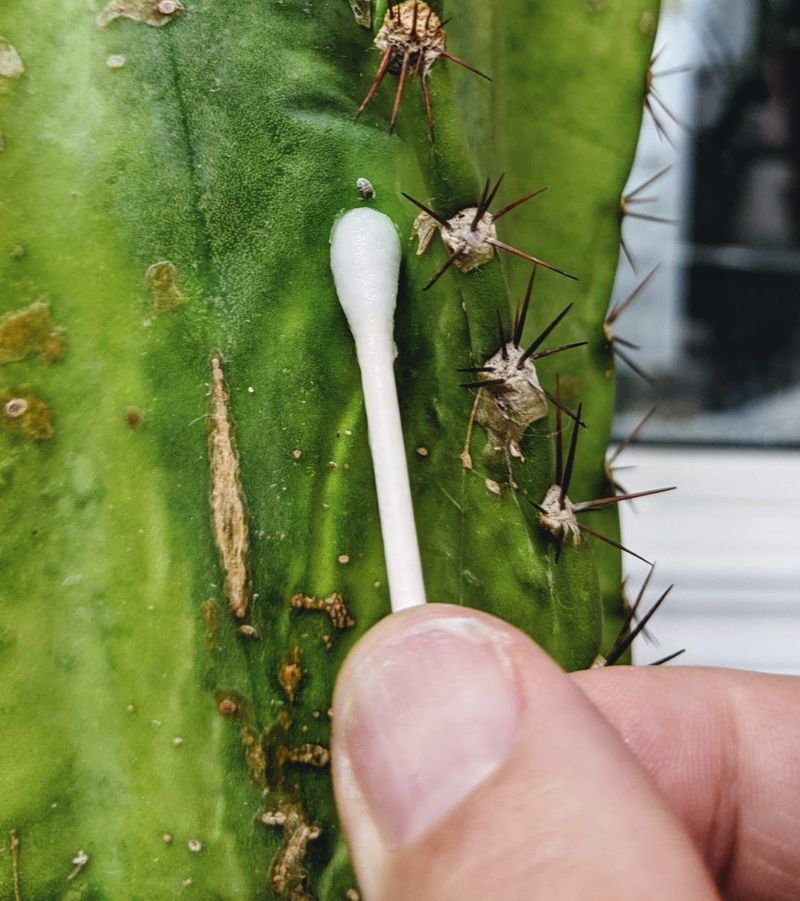
If you have confirmed a small infestation and the test spot looks fine, you can treat the insects one by one. Dip a cotton swab in isopropyl alcohol of 70% or weaker, squeeze off any extra, and touch it directly to each mealybug or cottony clump.
This targeted approach is what UC IPM describes for light infestations.
Work slowly and use a fresh swab when one gets dirty. Reach into the joints and folds where the bugs gather, but try to touch only the insects.
The less alcohol that lands on green tissue, the lower the chance of damage, a concern also raised by Maryland Extension.
This is not a spray or a coating for the whole cactus. A swab only treats what it touches, so hidden insects and egg masses may remain, and even careful dabbing can still mark a sensitive segment.
Think of it as a spot treatment, not a cure-all.
Reinspect and escalate if the infestation persists
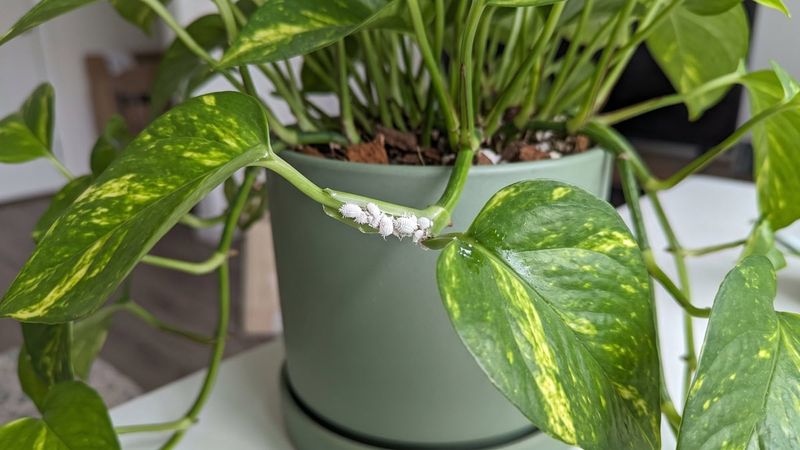
One round of swabbing rarely ends the story. Mealybugs hide, and their egg masses mean new insects can appear days later.
Plan to look over the plant again every few days, and treat any survivors or newly visible bugs as you find them, which matches the follow-up described by UC IPM.
Keep the cactus separated from other plants during this stretch. A short note on your calendar with each check date can help you see whether numbers are shrinking or climbing.
Remember that swabbing the visible joints will not reach insects feeding on the roots. If the plant keeps declining, or the bugs keep returning, root pests may be involved.
For a heavy or persistent infestation, the options narrow. You can use a product labeled for indoor use and for the pest you have identified, following the label exactly.
The UC houseplant guide also supports discarding the plant if control is impractical. That choice is hard, but it protects your other plants.
Bud drop has several possible causes
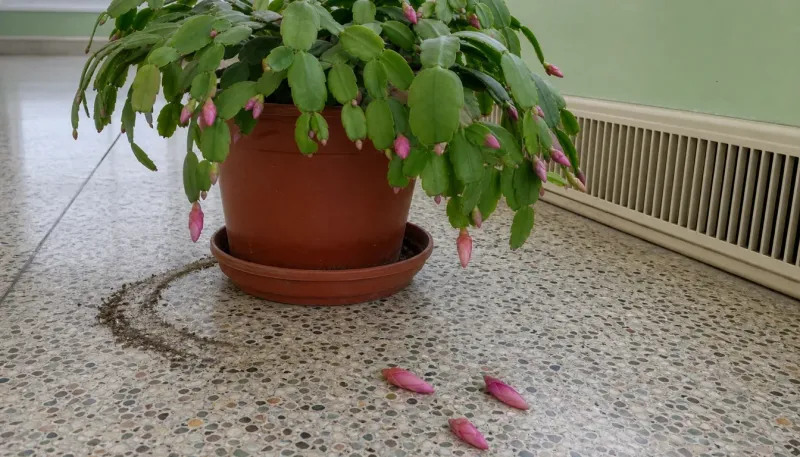
Finding buds on the floor is discouraging, and it is tempting to blame the white fuzz. But mealybugs are not shown to be the usual cause.
They can affect holiday cacti, yet guidance from Clemson Extension lists other culprits, including sudden changes in temperature or light, drying out, and excessive bud production.
The NC State Extension plant profile points to similar environmental stresses. Moving the pot to a new spot, a cold draft, a heating vent, or a missed watering can all be enough to make buds let go.
Because so many things can cause it, bud loss alone does not tell you what is wrong. Look at where the plant sits, how steady the conditions have been, and whether the soil has dried out, along with any pest signs you can actually see.
Treating bugs is about the plant’s health, not a promise about flowers. A steady spot may do more for your blooms than any swab ever will.