
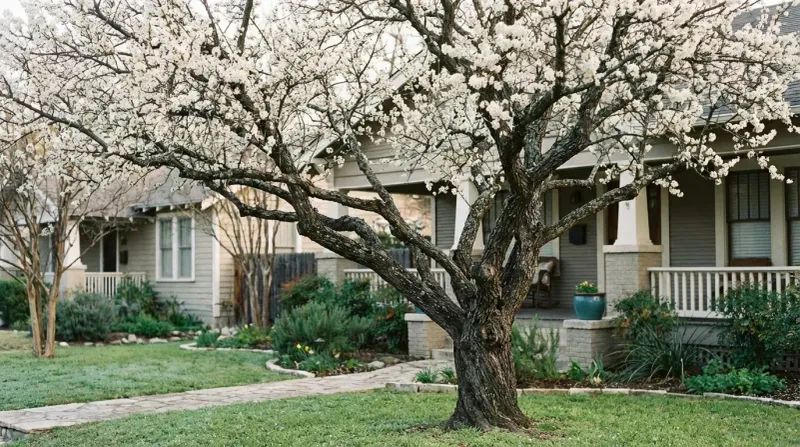
A small native tree can do a lot of work in a Texas yard. Mexican plum drops its leaves in winter, which makes the cooler months a smart time to get one in the ground.
In spring, its fragrant white flowers can offer nectar and pollen to visiting bees and other early pollinators. Here is how to choose a spot, plant it well, and set honest expectations for flowers and fruit.
Why consider Mexican plum for a Central Texas yard?
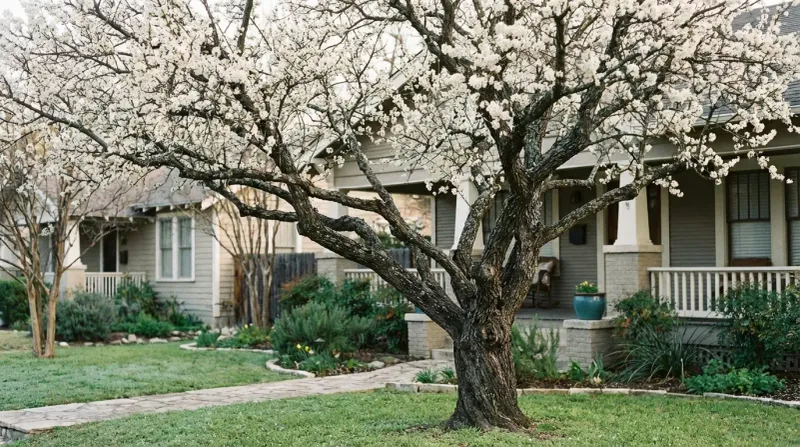
Some native trees earn their space by doing several jobs at once. Mexican plum (Prunus mexicana) is a small tree native to the Blackland Prairie and the Edwards Plateau, so it is already at home in much of Central Texas.
It offers spring flowers, summer fruit for wildlife, and a rounded, spreading shape.
Size matters before you buy. Texas A&M Forest Service lists trees reaching up to 25 feet, and many references describe a small tree around 20 to 25 feet tall.
Heights vary by source and by site, so treat those numbers as a planning range, not a promise.
The crown also needs room to spread sideways. A tree that can grow 15 to 20 feet wide will crowd a narrow side yard, a tight spot beside a fence, or a space right against the house.
It fits best on a lot with open space, such as a corner of the back yard, the edge of a lawn, or a wildlife-friendly planting.
Then there is the pollinator payoff. The Native Plant Society of Texas lists bees among the wildlife that benefit from the tree.
That makes it a resource that can attract visiting pollinators, not a guaranteed show. Whether bees find your particular tree depends on your neighborhood and what else is blooming nearby.
When to plant—and when to expect flowers
Two calendars matter here, and they are not the same one. The first is the planting window.
The City of Austin frames October through March as tree-planting season in the area.
That window is a guide, not a hard deadline. Planting in the cooler months gives roots time to settle in before hot, dry weather arrives.
A tree that goes in during a mild week in February still has a head start over one planted in July.
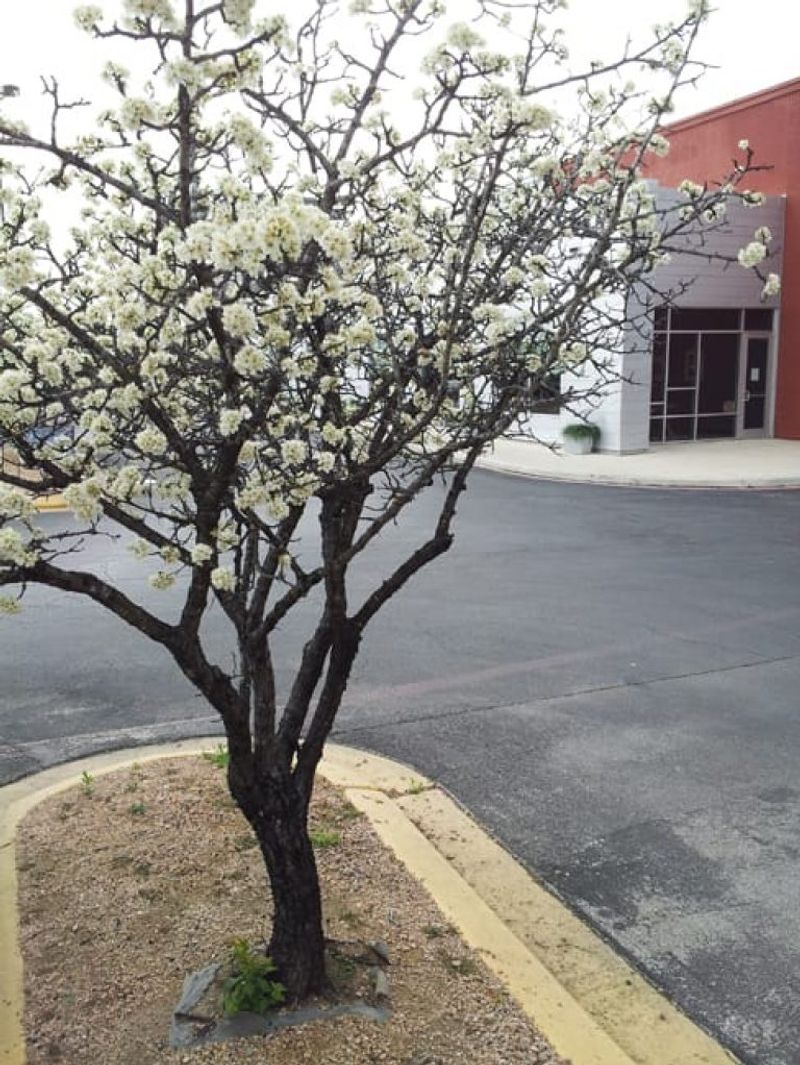
The second calendar is bloom time, and it varies. The Native Plant Society of Texas gives February through April.
Texas A&M Forest Service describes March flowering, and Central Texas Gardener mentions February and early March. Flowers appear before the leaves.
Do not expect a showy display the first spring after planting. Those bloom dates describe what the species usually does, not what a newly planted tree will do right away.
A young tree may spend its first seasons building roots instead.
A practical next step is to mark your calendar for planting in the cool months, then simply watch the tree each late winter. Notes on when yours first opens will tell you more than any general date.
Choose a site with sun, drainage, and room to spread
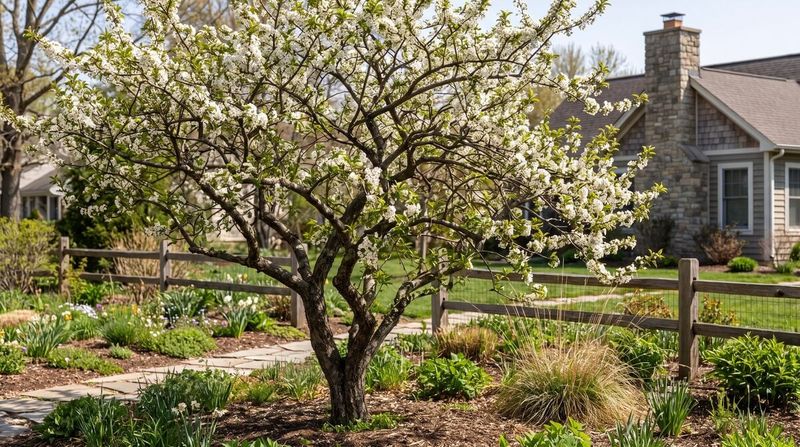
Pick the spot before you pick up a shovel. Mexican plum does well in sun or part shade and wants well-drained soil.
The Native Plant Society of Texas notes that late-afternoon shade may help protect the leaves from scorching during hot summers.
A simple drainage check helps. Dig a hole, fill it with water, and see how it drains.
If water sits for a long time, choose a higher spot or a different place.
Next, measure for the grown-up tree. Texas A&M Forest Service lists heights up to 25 feet, and the crown can spread wide.
Picture a circle about 15 to 20 feet across and keep power lines, eaves, and fences out of it.
Finally, think about what falls and what pokes. The Texas Tree Selector notes messy fruit and some thorny branches.
The Native Plant Society also advises against planting it near paved surfaces or rain gardens because of dropped fruit.
So skip the spot beside the driveway, the patio, or the kids’ play path. A lawn edge, a back corner, or a naturalized area is a better home, where fallen fruit can simply become part of the landscape.
Set the root ball at the right depth
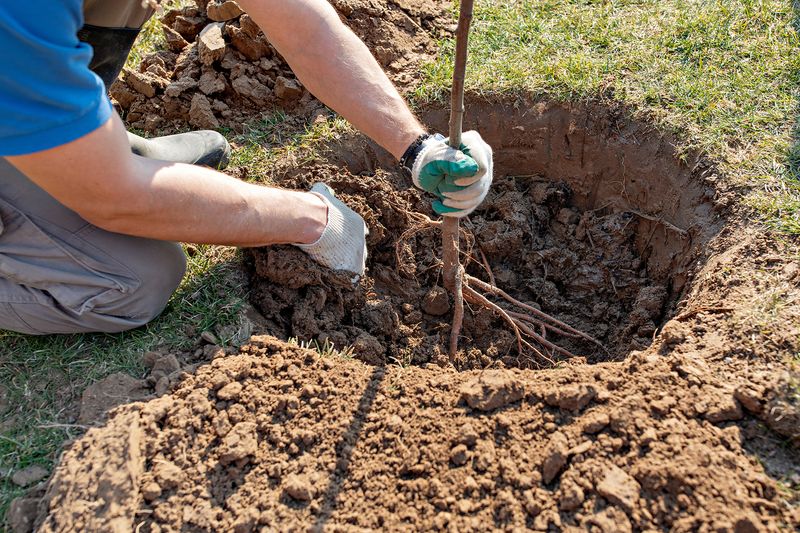
Planting depth is where many young trees go wrong. Texas A&M Forest Service recommends a hole at least twice as wide as the root ball but no deeper than the root ball itself.
A wide, shallow hole lets roots spread into loosened soil.
Find the root collar, the spot where the trunk flares out near the top of the roots. Set it at or slightly above the surrounding ground level.
If it sits below grade, the trunk can stay damp and struggle.
Lower the tree in carefully and check that it stands straight from a couple of angles. Then backfill with the same soil you dug out.
Skip the fancy amendments, since roots will soon need to grow into the native soil anyway.
Water thoroughly once the hole is filled. This settles the soil around the roots and removes large air pockets.
Finish with mulch 2 to 3 inches deep. Spread it in a wide ring, but pull it back so it does not touch the trunk.
A donut shape, not a volcano, keeps moisture near the roots without trapping it against the bark.
Water consistently while the tree establishes
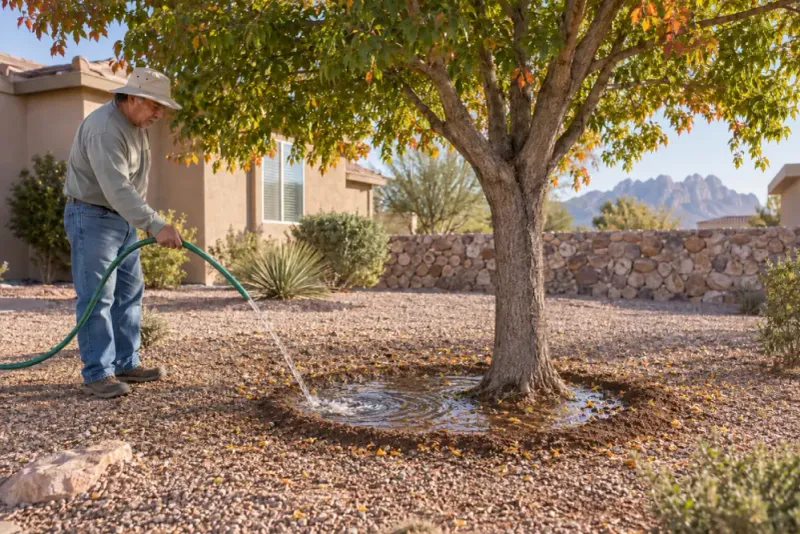
Here is a mix-up worth clearing up. Mexican plum is described as drought tolerant, but that describes an established tree with a mature root system.
A newly planted one is still working on its roots and needs your help.
The Native Plant Society of Texas recommends supplemental water weekly for newly planted trees, potentially for up to two years. Texas A&M Forest Service also says to water new trees for at least two years.
How you water counts as much as how often. Deep, thorough soaking beats light, frequent sprinkling, which wets only the surface.
A slow trickle from a hose or a soaker hose around the root zone works well.
Adjust for the weather and your soil. After a good soaking rain, you can skip a week.
In a dry spell, or in fast-draining rocky soil, the tree may need more.
A simple check is to push a finger or trowel a few inches into the soil near the root ball. If it is dry down there, it is time to water.
If it is soggy, wait.
Flowers can offer nectar and pollen to visiting bees
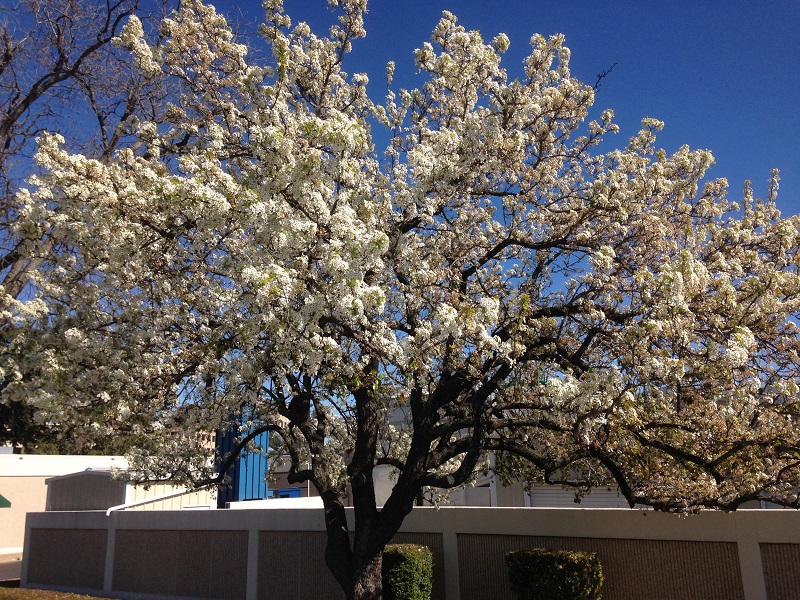
Before a single leaf opens, the branches can be covered in small white flowers. Mexican plum blooms ahead of its leaves, and the flowers are fragrant.
For insects emerging after winter, that kind of early food source can matter.
The Native Plant Society of Texas lists bees among the wildlife that benefit from the tree. Central Texas Gardener also describes the early flowers as a draw for pollinators.
The flowers offer nectar and pollen to visitors.
That is different from a guarantee. Nothing in these sources promises a swarm or a certain number of bees at your tree.
What shows up depends on the weather that week, nearby habitat, and what else is in bloom.
Bloom time shifts too. Some years and some yards see flowers in February, others in March or later.
A cold snap can also affect how long the flowers last.
To give visitors a better chance, avoid spraying insecticides on or near the tree while it flowers. Then, on a warm, calm day in bloom season, stand near the tree for a few minutes and see who stops by.
Later fruit can feed wildlife, but timing and yield vary
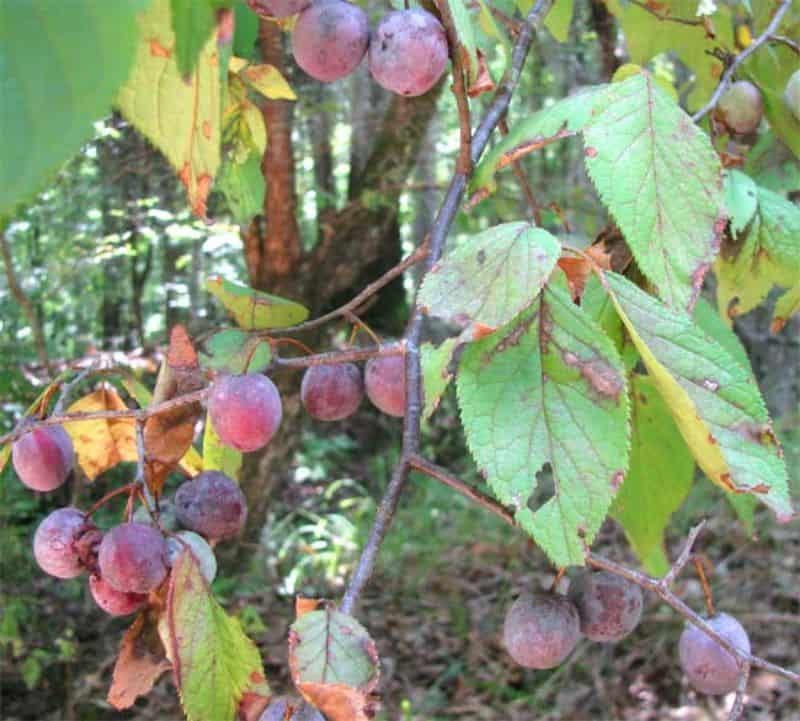
After the flowers fade, a tree may set small plums that ripen in summer. Sources do not agree on exactly when.
Texas A&M Forest Service points to late summer, while the Native Plant Society of Texas guide places ripening between July and September.
Birds are the main reason to welcome that fruit. Central Texas Gardener notes that birds eat it.
Still, none of these sources promise a crop from one tree, and a newly planted tree may take years to fruit, if it does at all.
If you ever wonder about eating the plums, be careful. Ripe flesh is one thing, but the pit is another.
Poison Control warns that plum seeds contain amygdalin, so discard the seed and never chew or crush it.
Fallen fruit can also be a chore. The Texas Tree Selector notes messy fruit and some thorny branches, so plan where you will walk, mow, and park.
A spot with a little mulch or native groundcover below is easier to live with than bare pavement.
Pick a place you can manage, and the tree can quietly feed wildlife for years.