
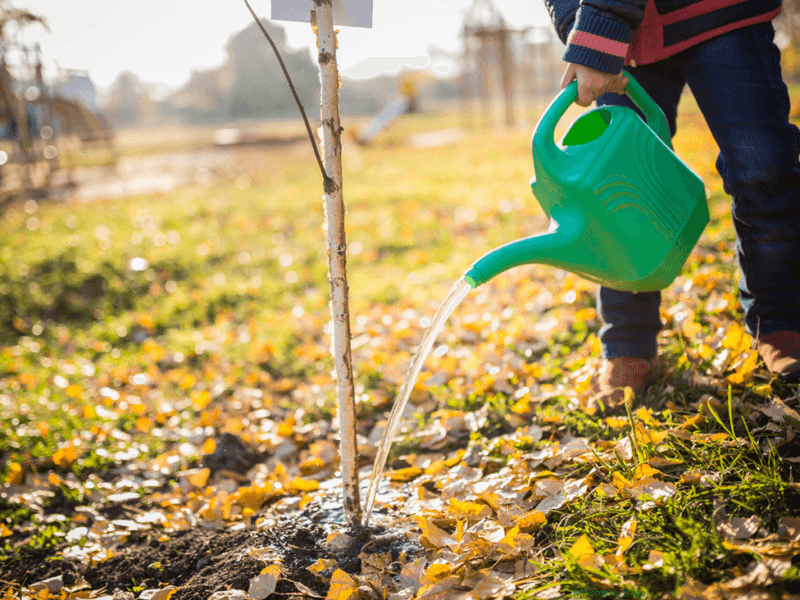
The leaves are down, the yard looks quiet, and the hose is back in the garage. But the new tree you planted this fall is still settling into its spot.
Whether it needs a drink in winter depends on what is happening in the soil, not on what the branches look like. Here is how to check, and how to avoid giving too much.
Leaf drop lowers demand, but it does not end the check
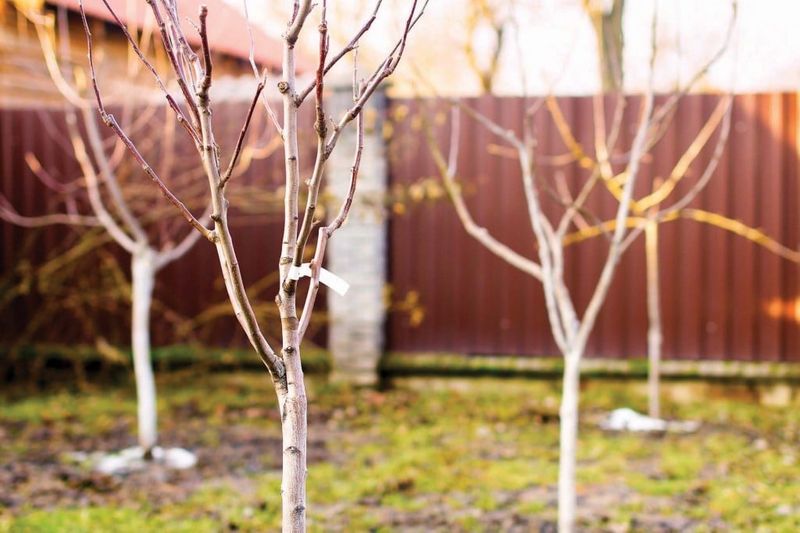
A bare canopy can fool you in two directions. Some people figure the tree is finished needing anything, and others figure it must be thirsty all winter.
Neither idea holds up well.
Once a deciduous tree drops its leaves, its demand for water generally falls. There are no leaves left to lose moisture, and the tree is mostly dormant.
Winter rain often supplies enough moisture on its own, which is why a fixed winter watering schedule makes little sense.
Still, a newly planted tree has a small root system and had only a short time to settle in before cold weather. If the weather turns dry for a long stretch, the soil around those young roots can run short.
N.C. Cooperative Extension in Carteret County notes that winter rain usually does the job, but that irrigation may be needed after a prolonged dry spell.
Its suggested interval of about three or four weeks without rain is a local rule of thumb for that area, not a statewide rule.
So the practical idea is simple. Leaf drop does not mean you should stop looking at the tree, and it does not mean you should start watering on autopilot.
Treat the soil as the thing to check. If it is moist, leave the hose alone.
If it is dry, a drink may help.
Think of it as a quick look now and then, much like checking the mailbox. Most days nothing is needed, but now and then there is something worth doing.
Winter root growth depends on the tree and the soil

You may have heard that roots keep growing all winter. That is true only in some situations, and it is not a reason on its own to pull out the hose.
The roughly 50 to 55 degree Fahrenheit soil temperature number comes from NC State’s guide for smaller orchard plantings. It says fall-planted fruit trees can grow roots in winter when soil stays above that range.
That advice was written for fruit trees, so it does not set a rule for every shade tree or ornamental in a home landscape. It also does not cover every corner of North Carolina.
Other North Carolina Extension guidance paints a quieter picture. The Carteret County winter-care article describes most trees as dormant in the colder months, with little or no growth.
Both statements can be true. A tree might push a few roots during a mild spell and then slow down when the soil chills.
Notice that neither source says a tree needs frequent water because its roots are active. Roots being able to grow is one idea.
A tree needing irrigation is another.
Here is the takeaway for your yard. Do not try to guess what the roots are doing underground.
Let the moisture in the soil guide your decision, and leave the root-growth question to the researchers.
Check the root zone before deciding to water
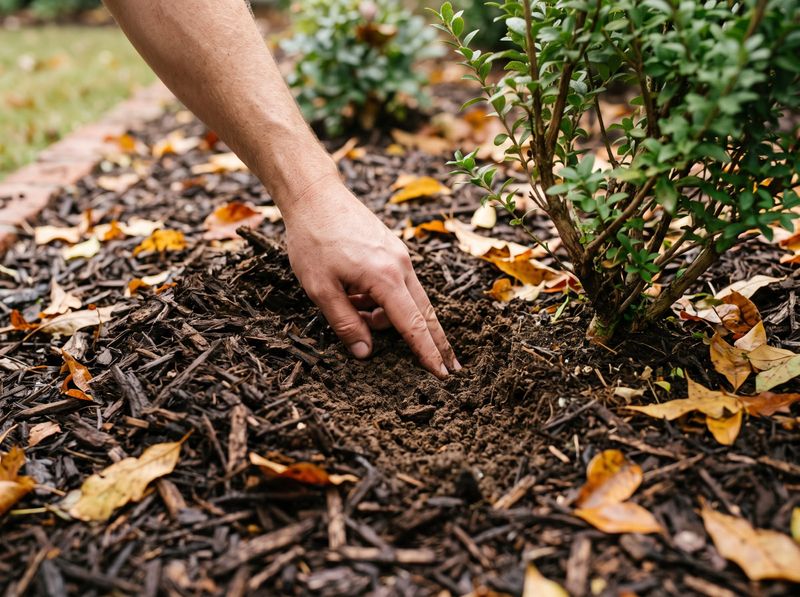
A quick soil check beats any calendar. Grab a trowel or a long screwdriver and spend two minutes at the tree.
University of Maryland Extension advises checking newly planted trees at least weekly for the first two years and watering when the soil is dry at about six inches down. That is regional guidance from a neighboring state, not an official North Carolina schedule.
It is a handy model for how to look, though, even if you check less often when winter is wet and cold.
Dig a small hole near the edge of the root ball and feel the soil. If it clumps in your hand and feels damp, the tree is fine.
If it crumbles and feels dry at that depth, watering may be worth doing.
Rain totals and counting days can mislead you. A heavy shower may run off a slope, and a light one may only wet the top inch.
The root ball and the native soil around it may also dry at different rates, so check both spots.
A root ball from the nursery can stay dry while the surrounding ground is soggy, or the other way around. Poke into each one.
If you find mixed results, you now know what the tree is dealing with, and you can decide with real information instead of a guess.
Water slowly, then let the soil drain
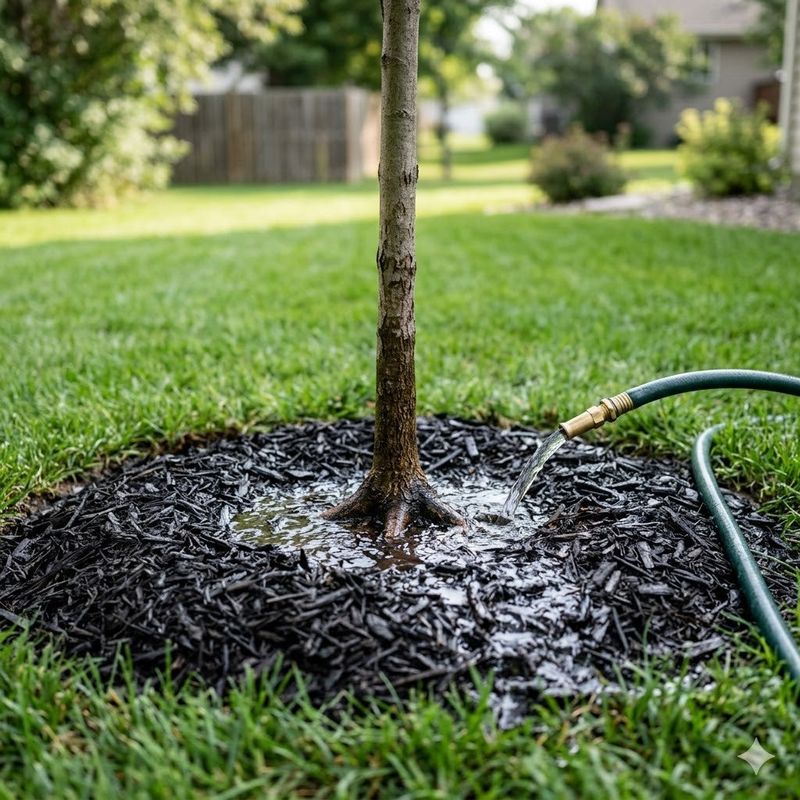
Once the soil tells you it is dry, how you water matters as much as whether you do. A slow trickle from a hose at the base of the tree works better than a fast blast.
Slow water soaks in instead of running off, and it reaches the root zone where it counts.
Water thoroughly around the root ball and the soil just beyond it, then stop and let the ground drain. You are aiming for moist soil, not a muddy puddle.
Afterward, check again in a day or two to see how deep the moisture went.
Your soil type changes the plan. NC State’s woody ornamentals chapter points out that sandy soil dries faster, so a tree in the Sandhills or on the coast may need a look sooner.
Clay, common across the Piedmont, drains slowly and may need less frequent watering.
That slow drainage is also why overwatering is a real risk. Saturated soil can deprive roots of oxygen and contribute to root decay.
A tree sitting in cold, soggy ground is not helped by more water.
If you press a finger into the soil and it feels wet or leaves water behind, put the hose away. Constantly wet soil is not the goal.
Adequate moisture, followed by a chance to drain, is.
Evergreens and leafless trees do not have identical needs

Walk out to your yard and compare a bare maple with a young holly or cedar. They look very different in January, and their water needs differ too.
A leafless deciduous tree has little surface left to lose moisture, so its demand generally drops after leaf fall. Evergreens keep their foliage, and that foliage can keep losing water through the winter.
On a sunny, windy day, a needled or leafy evergreen may be using more than you would guess.
For that reason, University of Maryland Extension recommends deeply watering evergreens before the ground freezes when rainfall has been insufficient. That is regional advice from a colder state, so in much of North Carolina, where the ground often stays unfrozen, the same thinking points back to the soil itself.
None of this means every evergreen needs routine winter irrigation. If rain has been steady, the soil is damp, and the site drains well, an evergreen may need nothing from you.
Water it when the root zone is dry after a stretch without rain.
Poor drainage still matters here. An evergreen in a low spot where water lingers can suffer from too much, not too little.
Check the soil first, and let it decide.
Let soil moisture—not the calendar—make the call
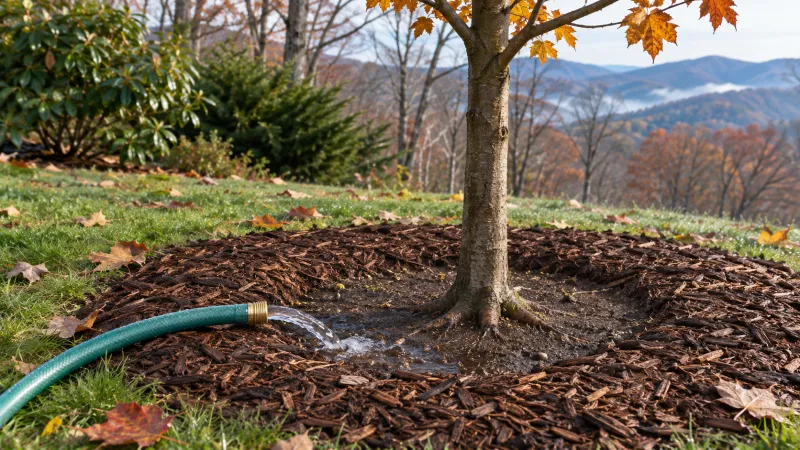
Here is the routine in short form. Check the root zone, think about recent rain and how well the spot drains, and water slowly only if the soil is dry.
A long dry spell may call for extra water, as Carteret County Extension suggests. Remember that sandy and clay soils behave differently, as NC State’s woody ornamentals chapter explains.
Neither bare branches nor the date on the wall settles the question.
The soil answers, and it costs nothing to ask.