
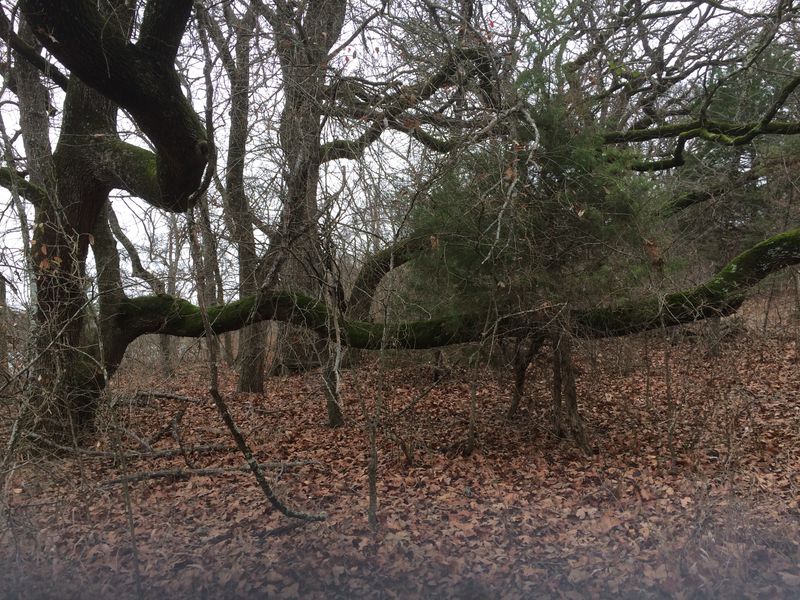
The ground under a big live oak often looks bare, and many Texas gardeners wish something native and useful would grow there. Coralberry, a tough shrub with clusters of pinkish-purple berries, gets suggested for the job.
It can offer cover and fruit for wildlife, but it will not fit every oak and it cannot promise bluebirds. Here is how to tell whether your spot is a good match.
What coralberry can offer in a Central Texas garden
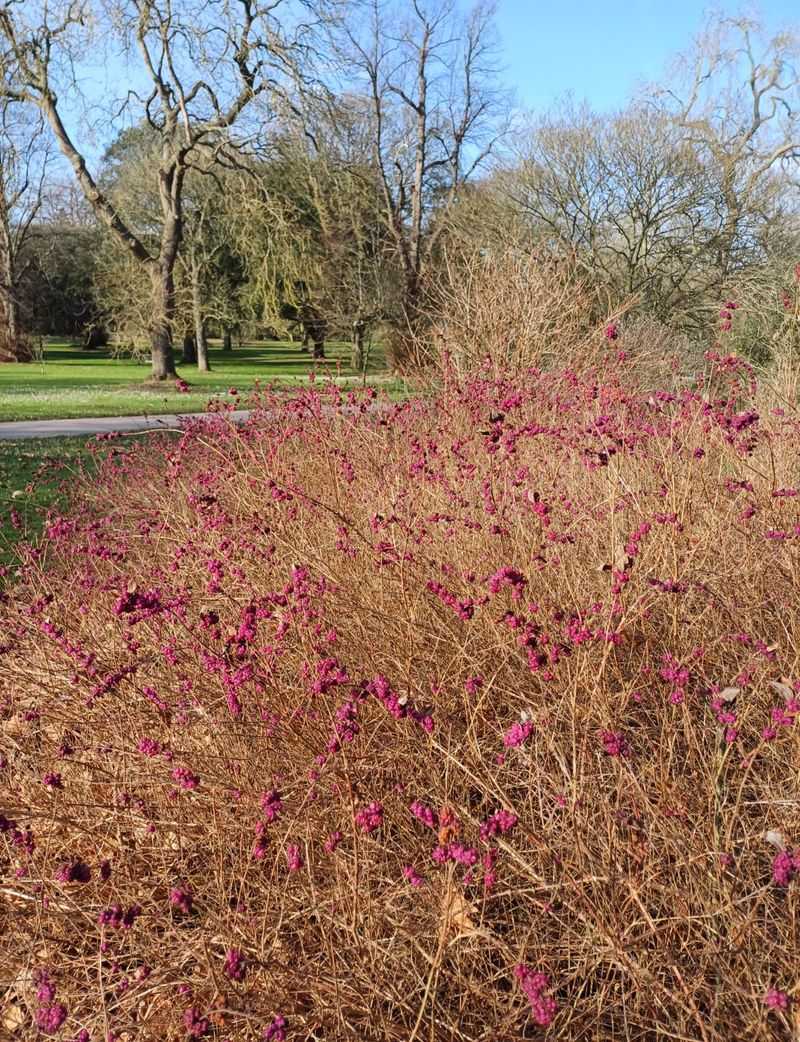
Coralberry, Symphoricarpos orbiculatus, is a Texas native deciduous shrub. The City of Austin plant guide lists it as native to the Blackland Prairie, about 2 to 3 feet tall and wide, and suited to sun or part shade.
Its seasonal interest runs from fall into winter, when the colorful fruit shows up, and it gives wildlife both cover and berries.
That mix is why it keeps coming up as an understory pick. A modest-sized native shrub that drops its leaves, holds fruit after the garden quiets down, and gives small animals a place to hide is a real asset in a Texas yard.
The Native Plant Society of Texas also describes the shrub and notes that its berries can persist into winter, though how long they hang on varies.
Think of these traits as reasons to consider coralberry, not as proof that it will work beneath your oak. Whether it thrives depends on the light, moisture, and root competition at your exact spot.
And nothing here guarantees that bluebirds will show up for the fruit, which later sections cover.
One name warning: coralberry is not coral ardisia, an unrelated plant that also goes by a similar common name. Check the scientific name on the plant tag before you buy.
Check light and moisture beneath the oak
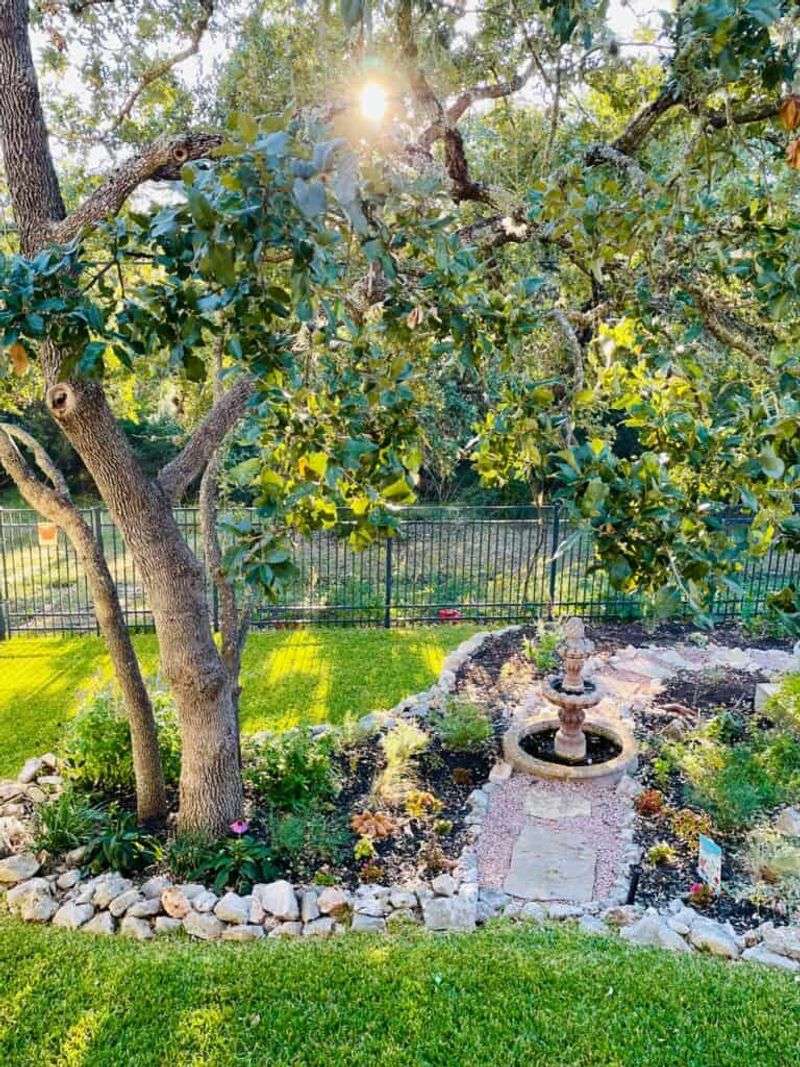
Before buying anything, spend a few days watching the spot. Note how many hours of sun reach the ground, and whether the soil stays damp or turns to dust between rains.
A live oak understory can be bright and open in one yard and dense and dry in the next.
The Austin guide lists coralberry for sun to part shade and gives it a medium water need. It also says the shrub prefers consistent soil moisture, according to the City of Austin.
The Native Plant Society of Texas describes a preference for moist, well-drained soil.
Here is the catch. Being listed for part shade does not make coralberry a good choice for deep, dry shade.
A mature oak soaks up a lot of water through a wide root network, so the ground beneath it can be both dim and parched through a Texas summer.
A simple test helps. Push a trowel several inches into the soil a day or two after a good rain.
If it is dry and hard, or if the area gets only a thin patch of light, coralberry may struggle there. A spot at the edge of the canopy with filtered light and soil that holds some moisture is a much better bet than the dense trunk zone.
If your site is dry, consider that the shrub may need extra care or may simply be the wrong plant for that spot.
Plant without harming the oak
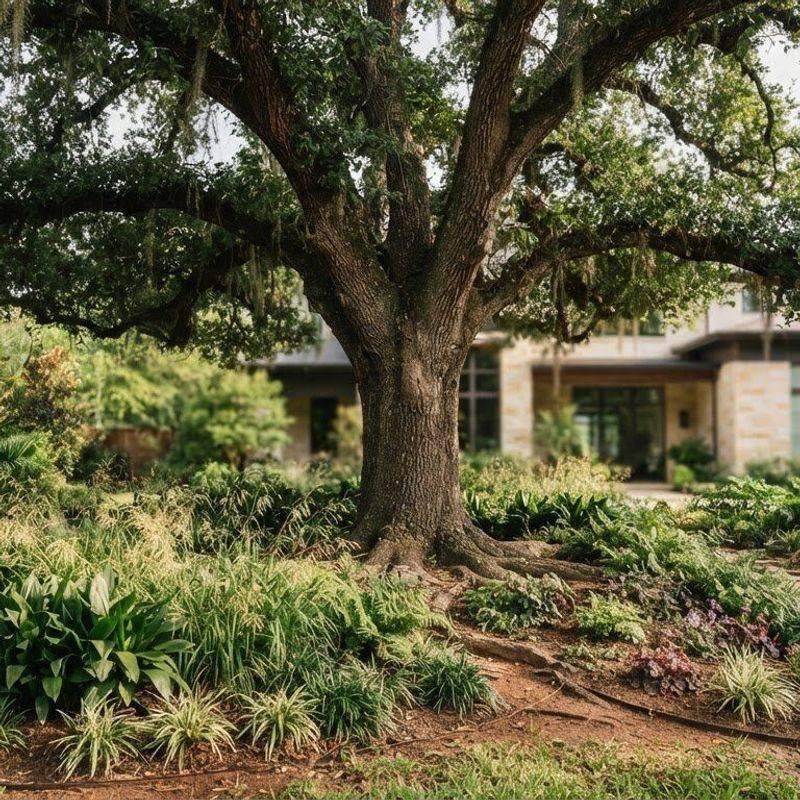
A live oak’s roots reach much farther than most people expect. Texas A&M guidance on oaks notes that roots can extend well beyond the drip line, as described in the Texas A&M oak wilt management program.
That means digging near the tree can reach roots even when you are standing well outside the shade line.
Texas A&M AgriLife also warns that compacted soil and added fill can stress or suffocate tree roots, in its hypoxylon canker publication. So keep the work gentle.
Plant small, dig by hand, and skip heavy equipment.
Do not cut substantial roots to make room. Do not stomp or drive over the soil, and do not pile mulch, soil, or amendments up to raise the grade around the trunk.
Avoid nicking the trunk with tools too.
If a hole keeps hitting thick roots, that is your answer: move the shrub to a different spot. A coralberry is easy to relocate, while a damaged oak is not.
Planting is also separate from oak pruning. Texas A&M warns that wounds made during oak wilt active periods can give the disease a way in, so keep any tree pruning on its own schedule.
Coralberry does not protect an oak from oak wilt.
Plan for runners and colony growth
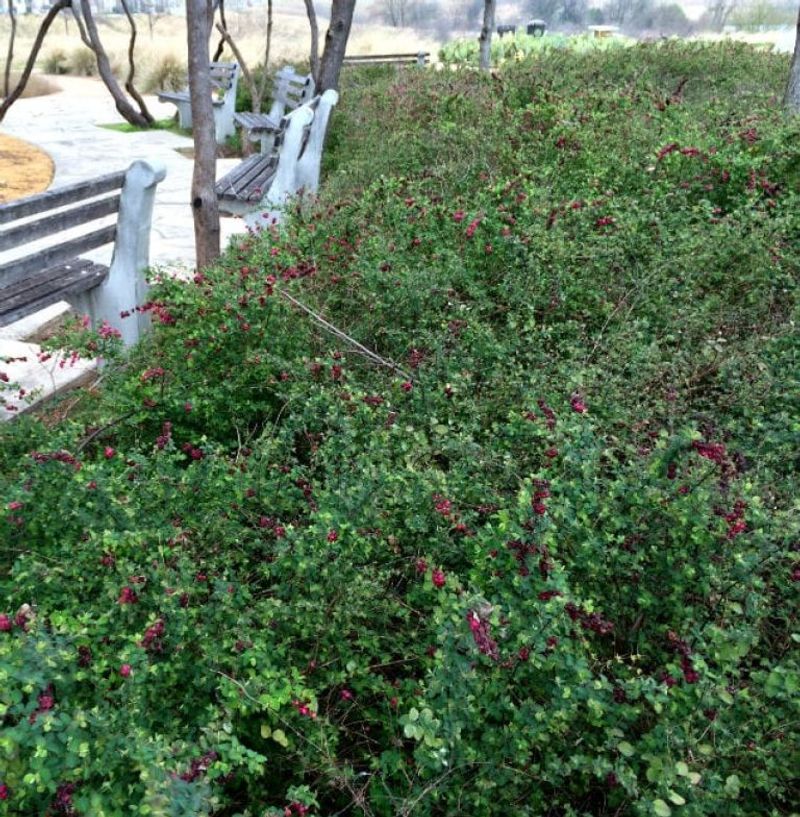
Coralberry does not stay politely in one spot. Both the Austin plant guide and the Native Plant Society of Texas note that it spreads by runners and forms colonies, which may need control.
That shapes how you design the bed. Give it a clear area where a slowly widening patch is welcome, such as a naturalized corner or the edge of a woodland-style border.
Keep it away from tidy perennial beds or a neighbor’s lawn unless you plan to trim the edges.
Spreading is not the same as covering bare ground fast. Do not expect an instant groundcover, especially under an oak where moisture and light are limited.
A new plant may take time to settle in before the runners get going, and in a tough spot it may spread little at all.
Walk the planting edge once or twice a year. Pull or dig out unwanted shoots by hand, and be careful near the oak so you do not tear at its roots while you work.
Hand pulling in loose soil is far gentler than digging deep trenches.
Winter berries may help wildlife, but bluebirds are not guaranteed
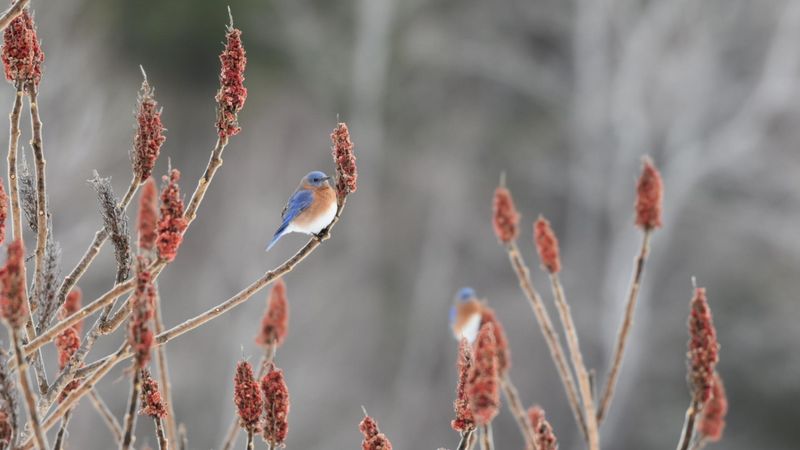
Bluebirds do eat fruit in fall and winter, according to the Cornell Lab of Ornithology. Coralberry is also recognized as food and cover for songbirds in general, as Penn State Extension describes.
Put together, that makes a benefit for birds plausible.
Plausible is not the same as proven. The Texas Bluebird Society plant list does not check coralberry in its bluebird-food column.
That does not mean bluebirds never eat it, but it means you should not plant coralberry expecting them to arrive.
Timing is another limit. Berries can persist into winter, as the Austin plant guide and the Lady Bird Johnson Wildflower Center describe, but how long they last varies.
Birds and other wildlife may eat the fruit earlier, so there is no safe promise of berries in January.
A realistic goal is a native shrub that adds cover and possible winter fruit for local wildlife. If bluebirds are your main interest, pair it with other things they are known to use, like open lawn edges, water, and nest boxes.
Then watch your own yard. What actually visits is the best evidence you will get.
Do not eat the berries
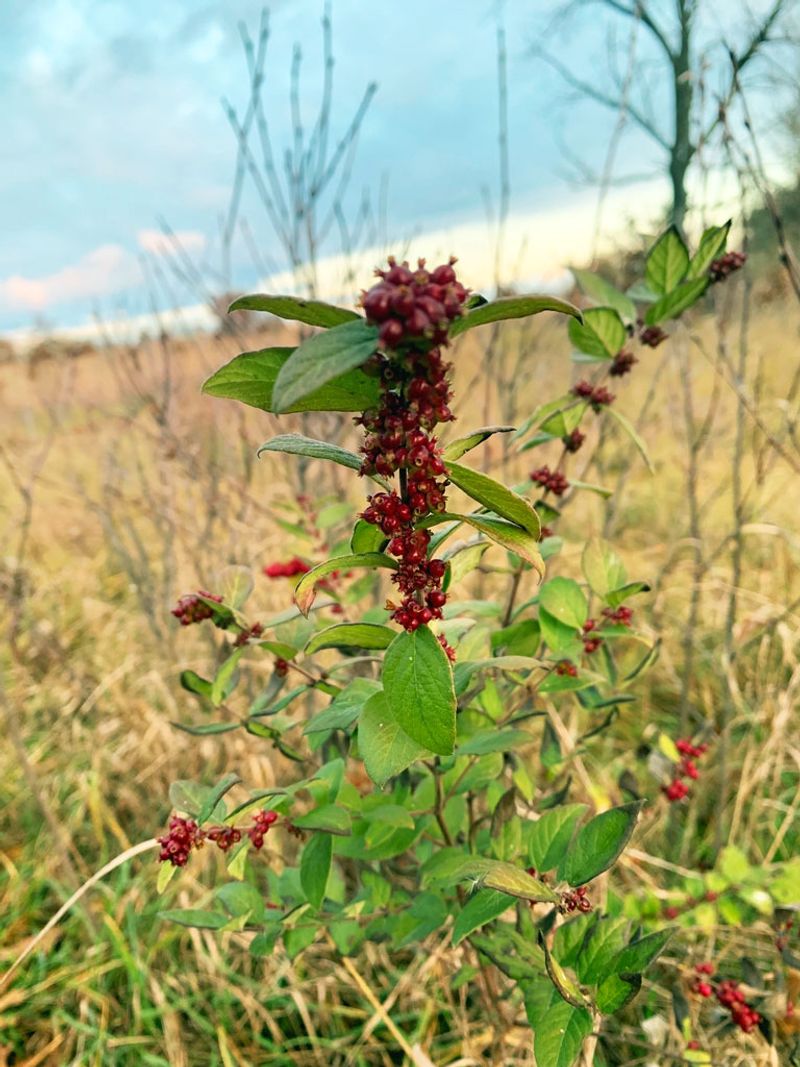
Pretty fruit is not food. North Carolina State Extension lists coralberry fruit as poisonous to humans at a low severity, with vomiting and diarrhea as possible symptoms.
Do not taste the berries, and teach children not to pick them. Keep pets from chewing on the fruit as well.
The source does not give a precise risk level for pets, so the careful approach is simply to prevent them from eating it.
If someone eats berries and feels sick, contact poison control or a doctor for advice.
One more safety point is mix-ups. Native coralberry, Symphoricarpos orbiculatus, is not coral ardisia, Ardisia crenata.
UF/IFAS Extension covers coral ardisia as an unrelated invasive plant in Florida that also gets called coral berry. Check scientific names when you shop so you bring home the right plant.
Decide whether the site is a good fit
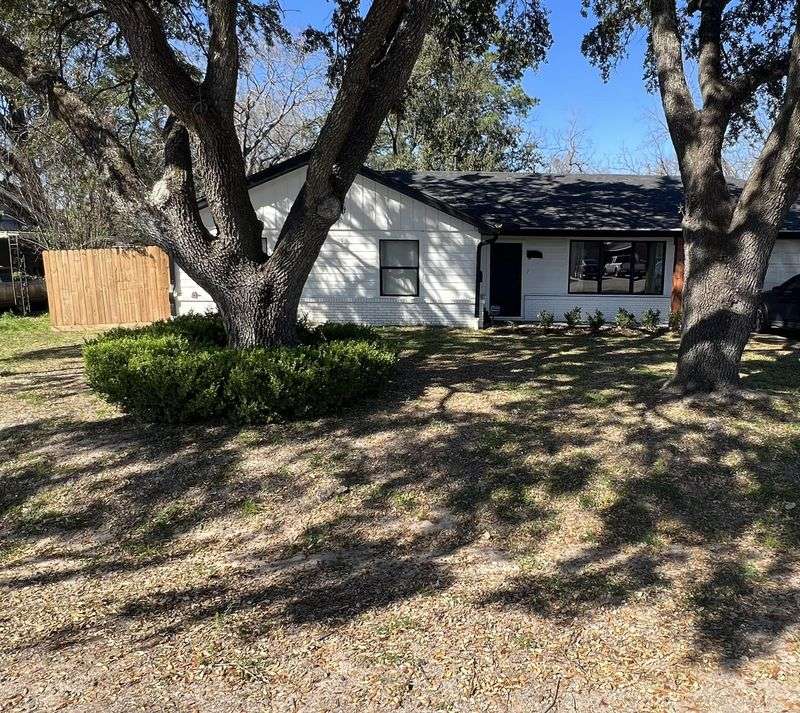
Run through these checks before you plant. Is there part shade with soil that stays reasonably moist, as the Austin guide suggests?
Is there room for runners? Can you plant by hand without cutting big roots, packing the soil, or adding fill, as Texas A&M oak guidance advises?
If any answer is no, pick another spot or another plant. Coralberry can add cover and berries for wildlife, but bluebird visits and January fruit are never certain.
A good fit beats a big promise.