
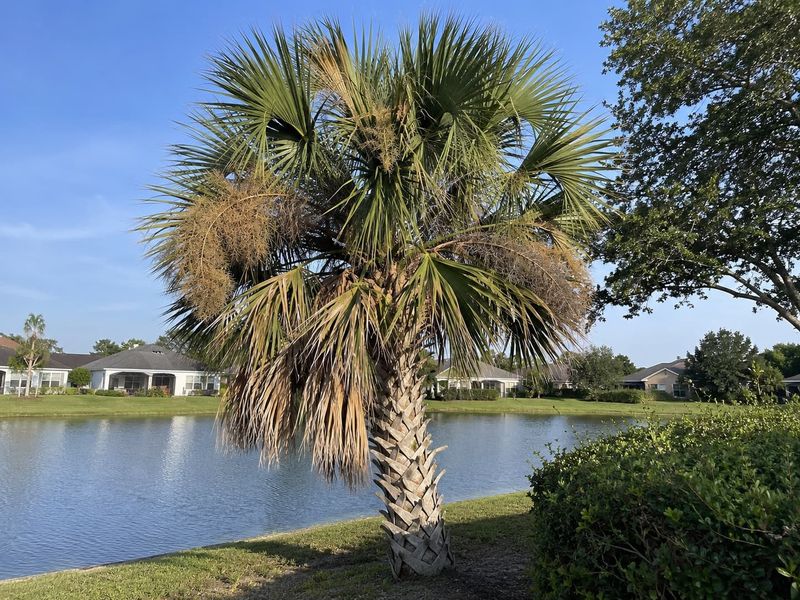
Brown fronds on a Florida palm can make any gardener reach for the pruners or a bag of fertilizer. Before you do either one, it helps to know what the palm is telling you.
Some palms need feeding in November, and many do not. A few simple checks can keep you from wasting money or hurting your palm.
November is a checkpoint, not a statewide cure
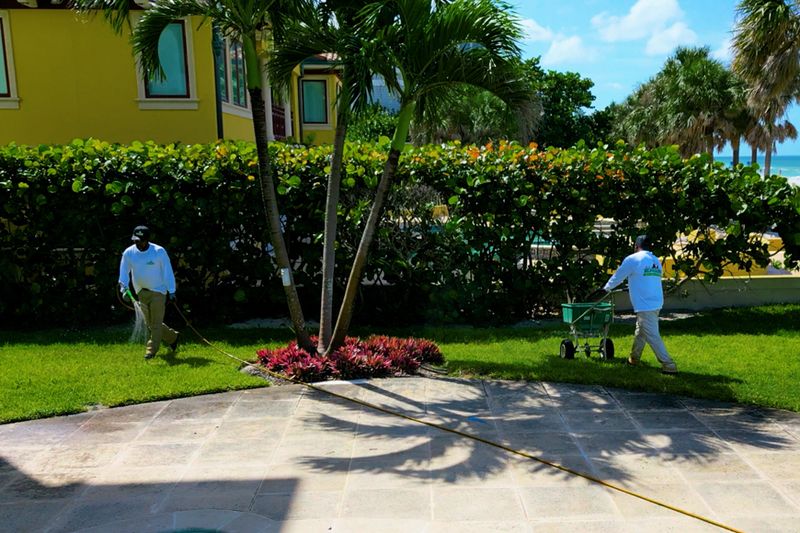
Whether a palm needs feeding in November depends on the palm, where you live in Florida, and which schedule applies. UF/IFAS palm fertilization guidance describes a February, May, and November program for landscape palms.
The same guidance says the winter application can be skipped in central and north Florida landscapes. South Florida recommendations may differ, so a Miami gardener and a Gainesville gardener may follow different calendars.
That means November is a time to check on your palm, not a promise of a cure. A fertilizer bag cannot guarantee a palm stays green, and it cannot fix problems that have other causes.
Cold snaps, dry spells, and age can all leave brown tips behind.
Some palms do not need extra feeding at all. UF/IFAS Gardening Solutions notes that Florida native palms usually do not need supplemental fertilizer.
Cabbage palms and saw palmettos growing in a natural setting are good examples. Even among non-native palms, an individual tree that looks healthy may be fine without a November application.
A practical first step is to ask three questions. Is this palm a native or a landscape palm that usually benefits from feeding?
Which part of Florida am I in, and what does the regional schedule say? Does the palm show real signs of a nutrient problem, or is it just shedding old fronds?
Your answers decide whether the bag comes out of the shed.
Brown fronds do not point to one cause
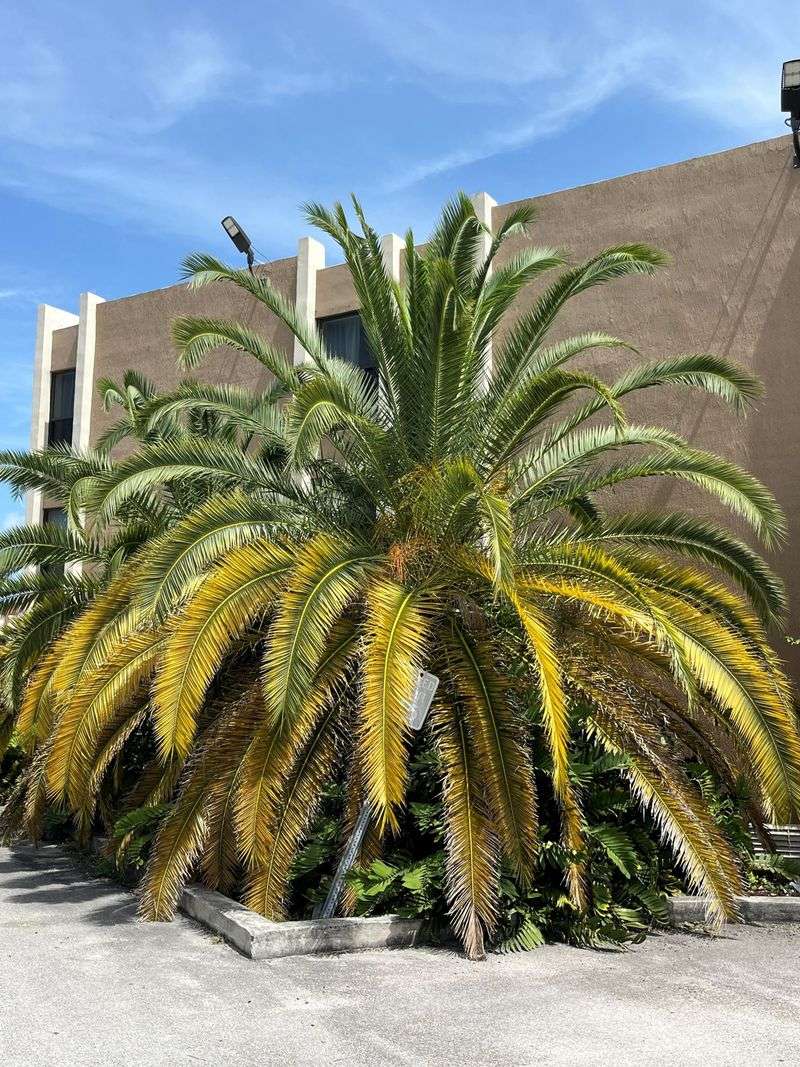
Start by looking at where the browning shows up and what it looks like. UF/IFAS describes potassium deficiency as common in Florida palms.
It often begins on the oldest leaves with yellow-orange spotting, then leaflet tips and edges turn brown or die. The damage usually gets worse toward the tip of the leaf.
Magnesium trouble looks different. UF/IFAS magnesium guidance says it typically causes broad yellow bands along the leaf edges while the center stays green.
A palm can have both deficiencies at once, so the pattern can look mixed. Treat these patterns as clues, not final answers.
Plenty of other things turn fronds brown. Ordinary aging of the lowest leaves is normal.
UF/IFAS lists water stress as one cause of leaflet-tip browning, and cold injury can scorch fronds after a chilly night. Disease is another possibility.
Lethal bronzing can begin with discoloration of older leaves, so not every brown frond is a feeding issue.
If the pattern is unclear, or the palm looks truly distressed, call your county Extension office. UF/IFAS nutrient deficiency guidance recommends getting local help when a palm shows distress.
Photos of the whole palm, the crown, and a single affected frond make that conversation much easier.
Keep older fronds that still have green tissue
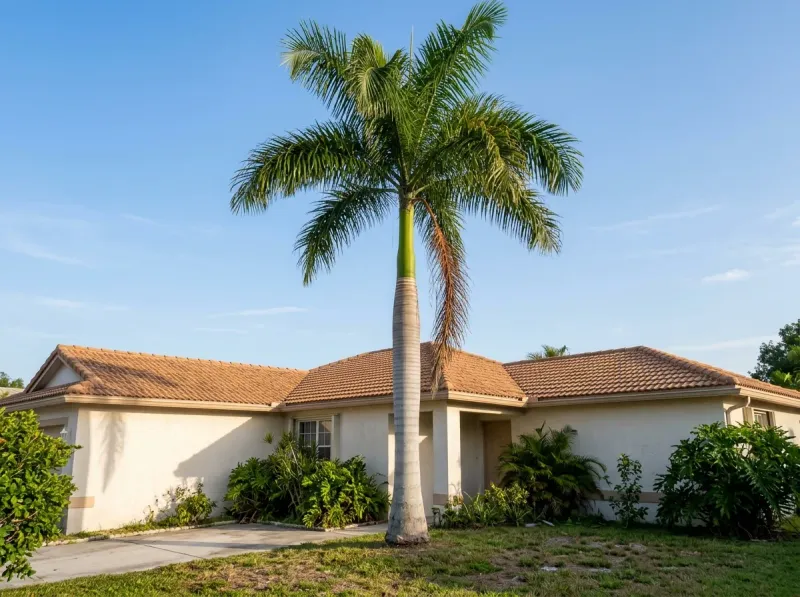
A struggling palm can pull nutrients out of its older leaves and send them to new growth. Cutting those leaves off removes a reserve the palm is still using.
That is why UF/IFAS pruning guidance says to leave discolored or partly green older fronds in place.
The caution matters most when potassium deficiency is suspected. Potassium deficiency shows up first on older leaves, which is exactly where the palm may be drawing from.
A frond with yellow-orange spots and brown tips may look ugly, yet it can still be feeding the crown.
This is not a ban on pruning. Fronds that are completely dead can be removed when needed, for tidiness or to clear a walkway.
The test is simple: if any green tissue remains, leave the frond. If it is brown from base to tip, it has no more to give.
A handy habit is to wait until a frond is fully dead before you reach for the saw. Hold back on the urge to give the palm a tidy haircut in November.
A palm with a few shaggy older fronds is usually healthier than one trimmed up to look neat.
Choose a complete palm fertilizer, not a single-nutrient fix
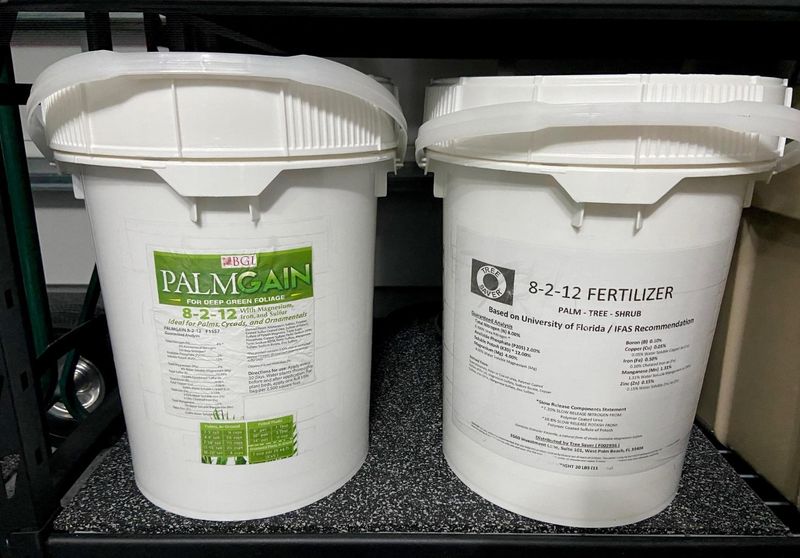
For routine landscape care, UF/IFAS points gardeners to a slow-release palm fertilizer rather than a single nutrient. UF/IFAS landscape fertilization guidance recommends a product with controlled-release nitrogen, potassium, and magnesium, plus suitable micronutrients.
Examples include 8-2-12+4Mg or 8-0-12+4Mg.
The cited Florida landscape rate is 1.5 pounds per 100 square feet. Treat that number with care, because the area you cover and the schedule depend on your location and the application guidance.
UF/IFAS palm fertilization guidance lays out those details, and the product label should be your daily reference.
A formula is not a diagnosis. Seeing yellow margins does not mean you should grab a bag of magnesium alone, and brown tips do not mean you should dump on potassium.
UF/IFAS explains that unsuitable nutrient ratios can cause or worsen deficiencies, which is why balanced palm products are the usual advice.
When you shop, read the analysis on the bag. Look for the potassium and magnesium numbers, a note about controlled-release forms, and micronutrients.
Skip lawn fertilizers, which are built for grass and may lack what palms need.
Spread granules under the canopy and check local rules
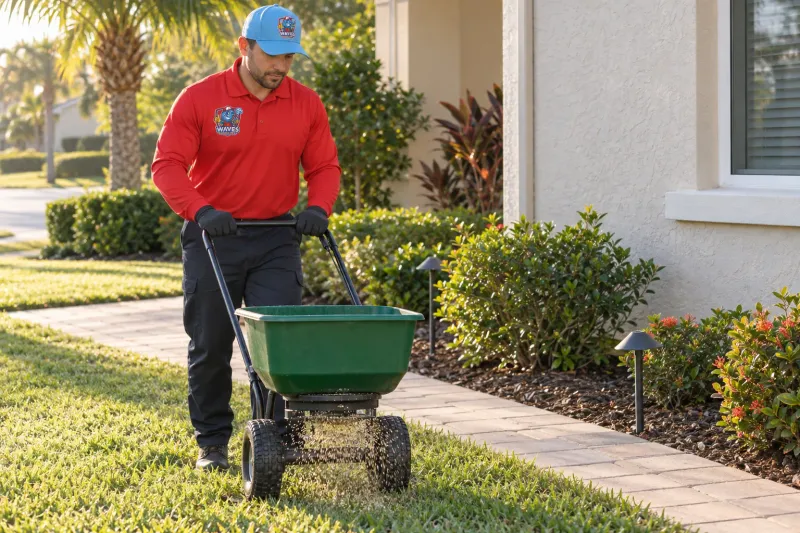
Spread granular fertilizer evenly across the ground under the palm’s canopy. UF/IFAS guidance advises against piles, bands, or holes, since concentrated fertilizer can injure roots.
A broadcast spreader or a steady hand-swing works well on a larger area.
Palm roots reach well beyond the trunk. UF/IFAS Gardening Solutions explains that the root zone is wider than many people expect, so a ring right at the trunk misses most of it.
Sweep any stray granules off sidewalks and driveways so they do not wash into storm drains.
Check your local rules before you buy. The UF/IFAS fertilizer ordinance tool helps Floridians look up local ordinances, and some places limit fertilizer use during certain seasons.
Rules can differ between a city and its county.
Near water, take extra care. UF/IFAS guidance advises against soil-directed fertilizer within 10 to 14 feet of a waterway.
If your palm stands close to a pond, canal, or lake, that setback applies, and it is a good reason to ask your Extension office about the best plan.
Expect new growth, not a quick color change
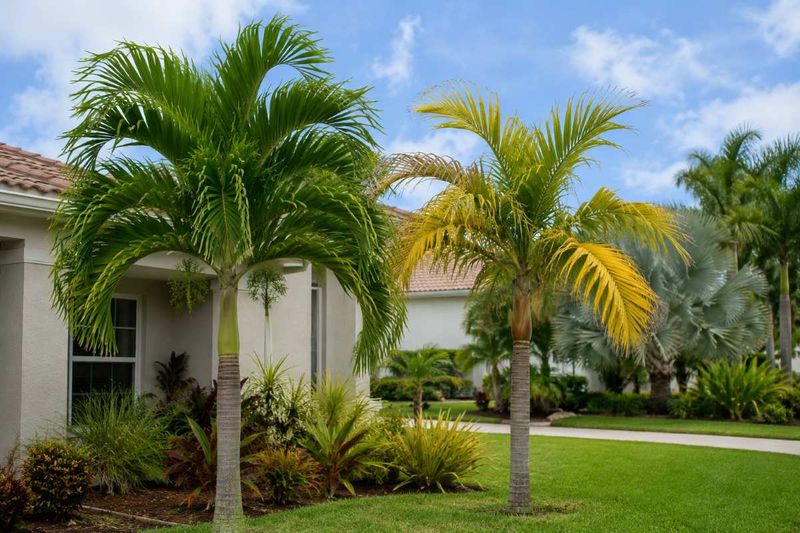
Feeding does not repaint leaves that are already damaged. Yellow, orange, brown, or dead tissue may never turn green again.
UF/IFAS magnesium deficiency guidance makes clear that the fix shows up in new leaves as they grow out.
Patience is part of the plan. UF/IFAS landscape guidance notes that correcting a deficiency is slow, and a healthy-looking crown can take two or more years to develop.
A new frond that opens cleaner than the last is a good early sign.
Keep a simple record. Take a photo of the crown now, then another every few months from the same spot.
Compare the newest fronds, not the old ones, to see whether things are improving.
If new growth still comes in yellow, spotted, or stunted, or if the palm looks worse overall, get help. UF/IFAS nutrient deficiency guidance recommends contacting a local Extension office when a palm remains distressed.
Something other than nutrition may be going on.
Use November to make a careful palm-care decision
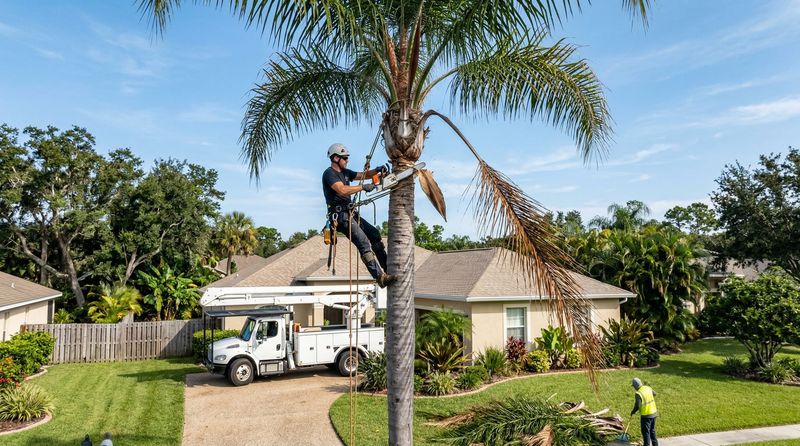
Start by checking whether your palm and region call for feeding, since UF/IFAS fertilization guidance varies by location. Look closely at symptoms before assuming browning means a deficiency.
Keep older fronds that still have green tissue, and remove only fully dead ones, as UF/IFAS pruning advice describes.
If you do feed, follow the product label and your local rules. A calm look beats a rushed trim every time.