
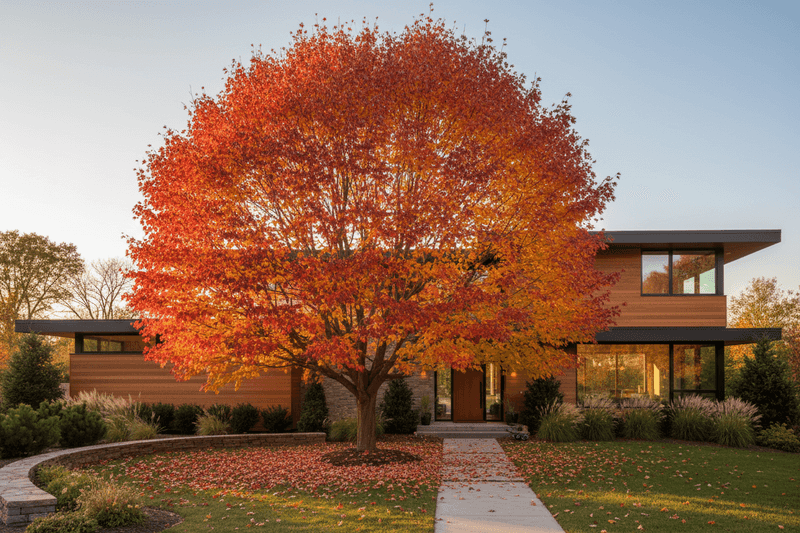
Florida is not famous for fall foliage, but a few native trees do put on a show. Red maple is one of them, with leaves that can turn yellow, orange, or red.
The display changes from tree to tree and year to year, so knowing what to expect matters. Here is how to tell whether this native shade tree fits your yard.
Red maple brings native fall color to Florida
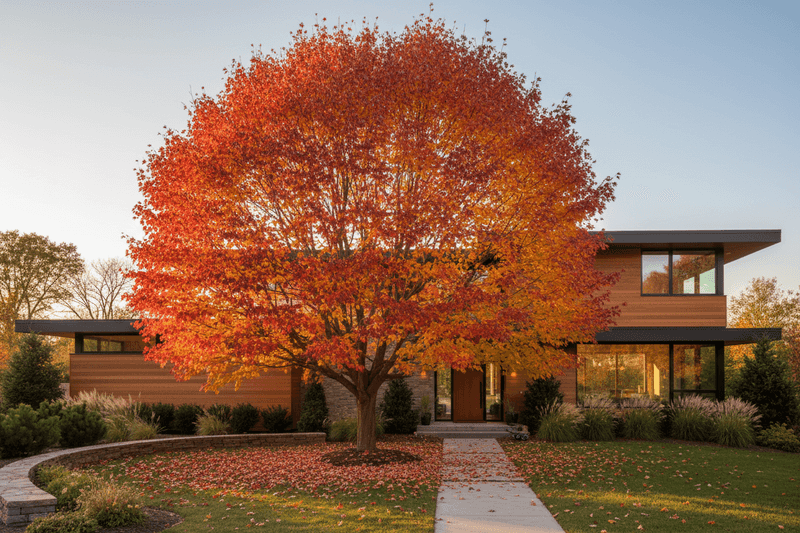
Plenty of people assume Florida skips autumn color altogether. Native red maple (Acer rubrum) is a good reason to look again.
According to UF/IFAS Gardening Solutions, its leaves can turn yellow, orange, and red, and the show often lasts several weeks.
This tree belongs here. It grows wild across much of the state, mostly in wet places such as swamps, stream banks, and low woods.
Wild populations reach as far south as the wet areas of mainland Monroe County, so it is not just a North Florida tree.
That said, Florida’s fall color is less widespread and often less vivid than in many northern regions. A red maple in a Panhandle floodplain and one in a South Florida suburb will not necessarily look the same in November or December.
Some trees lean yellow, some orange, and some deliver the deep red that gives the species its name.
Think of red maple as one native way to add a seasonal moment to a Florida landscape, not a guaranteed blaze of red. The sections ahead cover timing, cultivars, site needs, size, storms, and wildlife, so you can decide if it suits your property.
November can start the show, but it is not the statewide peak
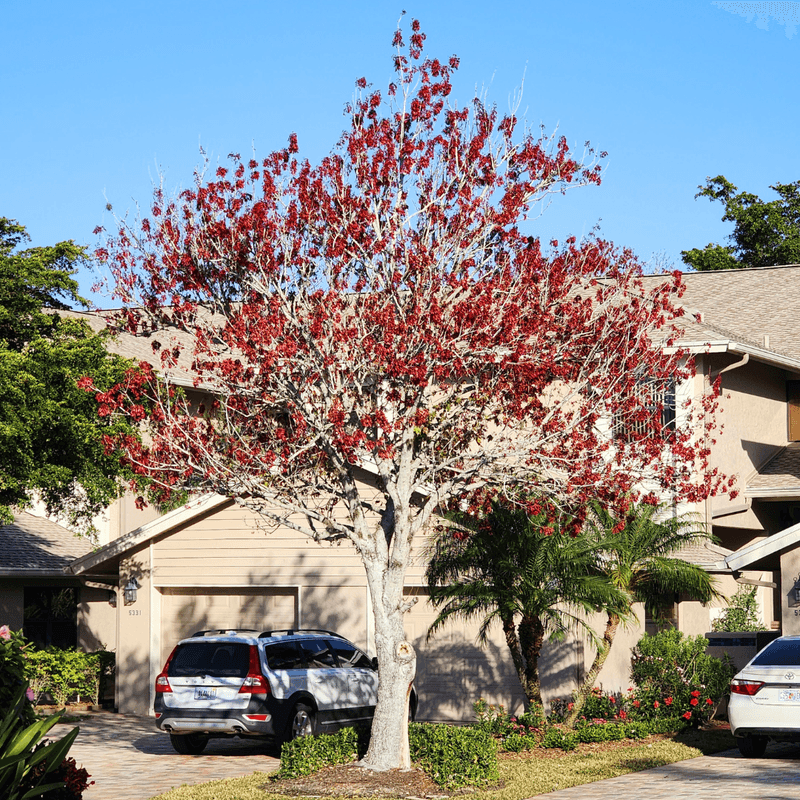
Calendar dates make for tidy headlines, but leaves do not follow them. A WUSF report from October 2026 says Florida color often begins in early November, while peak foliage in parts of the state typically comes in December.
So if your red maple still looks mostly green in mid-November, nothing is necessarily wrong. It may simply be early in the season.
Seasonal reports describe what usually happens, not what is happening on your street today. Conditions in one yard or county can differ from another, and no article can tell you the exact week your tree will color up.
The same report points to weather as a factor. Cloudy stretches, hurricanes, and drought can all affect how a Florida fall plays out.
A practical habit helps here. Check your tree every week or two from early November through December, and take a few photos.
After a season or two, you will know your own tree’s rhythm better than any general forecast.
Why one red maple may turn red while another does not

Walk through a nursery and you may find red maples that look identical in summer. Come fall, they can go separate ways.
UF/IFAS says fall color varies by cultivar and site, and a single tree may show yellow, orange, and red at once.
Cultivar is the part you can choose. UF/IFAS describes ‘Florida Flame’ as having brilliant red fall color.
It calls ‘Red Sunset’ a good-color choice and the best cultivar for the coastal South.
Those are smart starting points, but they are not promises. Even a well-chosen cultivar can turn out a duller or more mixed display in a given year, depending on where it is planted and how the season goes.
Site matters as much as the tag. A stressed tree in dry, alkaline soil is unlikely to look its best.
A healthy one with steady moisture has a better shot at good color.
When shopping, ask the nursery which cultivar you are buying and where it was grown. Then plant it where it will be healthy, and treat any red as a welcome bonus.
A wet, acidic site gives red maple a better fit

Before buying a red maple, take a hard look at the ground it will stand on. UF/IFAS says the tree prefers full sun and wet, acidic soil with plenty of organic matter, though it can grow in partial shade.
In the wild it favors wet sites, and it can grow elsewhere when it gets adequate irrigation.
Many Florida yards are the opposite of that. Sandy soil drains fast and often holds little water, which is why irrigation planning matters, as covered in UF/IFAS guidance on landscape irrigation.
In drier sites, especially in South Florida, too little water can cause leaf scorch.
Soil chemistry is another check. High-pH soil can cause chlorosis, which shows up as yellowing leaves, along with manganese deficiency.
If your yard sits on limestone or has alkaline fill, this tree may struggle.
Salt is the third red flag. Red maple is not salt tolerant, so oceanfront lots and spots with salt spray are poor candidates.
A low corner where water lingers after summer rains is often a better match than a hot, dry front lawn. If your yard cannot offer that, a different tree may serve you better.
Make room for a large tree before you plant
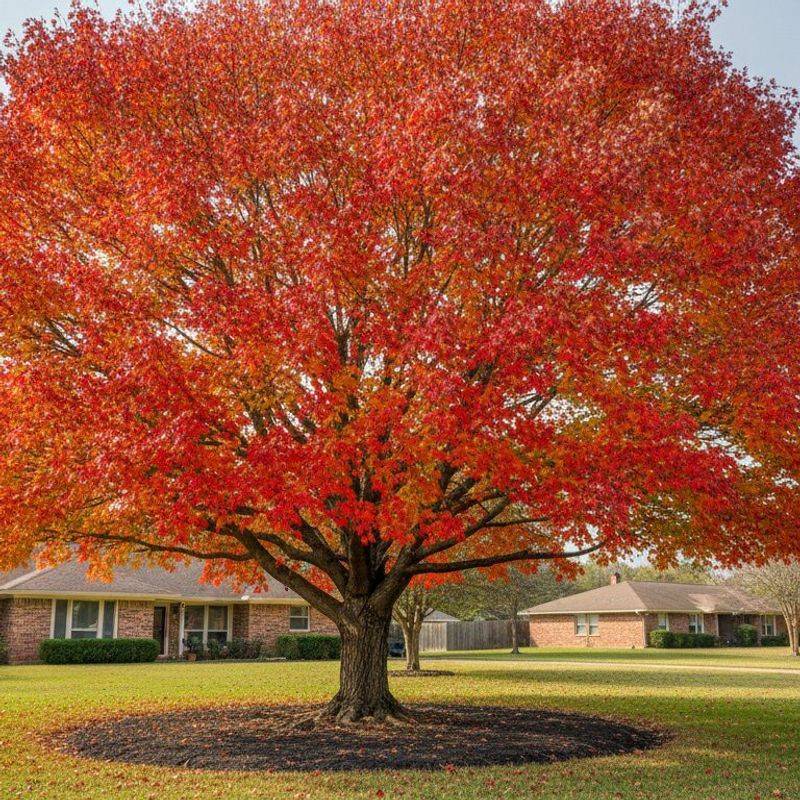
A small container tree is easy to underestimate. UF/IFAS lists the typical mature size of red maple at 60 to 75 feet tall and 25 to 35 feet wide.
Trees may stay smaller in warmer, drier conditions, but planning for the full size is safer.
Picture that spread over your property. Look up for power lines and eaves, and look around for roofs, pools, septic systems, and driveways.
A spot that seems roomy at planting time can feel crowded in fifteen years.
Good establishment habits start at the nursery. UF/IFAS recommends checking the root ball for circling roots before you buy.
Roots that wrap around the pot can keep growing in circles after planting.
The same guidance calls for pruning young trees to build a strong central leader, meaning one dominant trunk rather than competing stems.
Measure before you shop. Pace off the distance to the nearest house wall and fence, and imagine a circle about 30 feet across.
If it does not fit, look at a smaller native.
Storm exposure belongs in the planting decision

Hurricane season shapes every tree choice in Florida, and red maple is no exception. The UF/IFAS Florida-Friendly plant guide rates its wind resistance as medium to low.
That means it is not a tree to count on for storm toughness.
Rating is only part of the picture. UF/IFAS hurricane guidance stresses that site conditions, root space, tree structure, and care all affect how a tree handles a storm.
In practice, that means a few checks. Is there enough open ground for roots to spread?
Does the tree have one strong leader rather than weak, crowded stems? Is it far enough from the house, so a failed limb will not reach the roof?
Good early pruning and regular care help, but they cannot make any tree storm-proof. If a red maple would stand where a fall could damage a home or block a road, think carefully about another spot or another species.
Its value continues after the leaves change
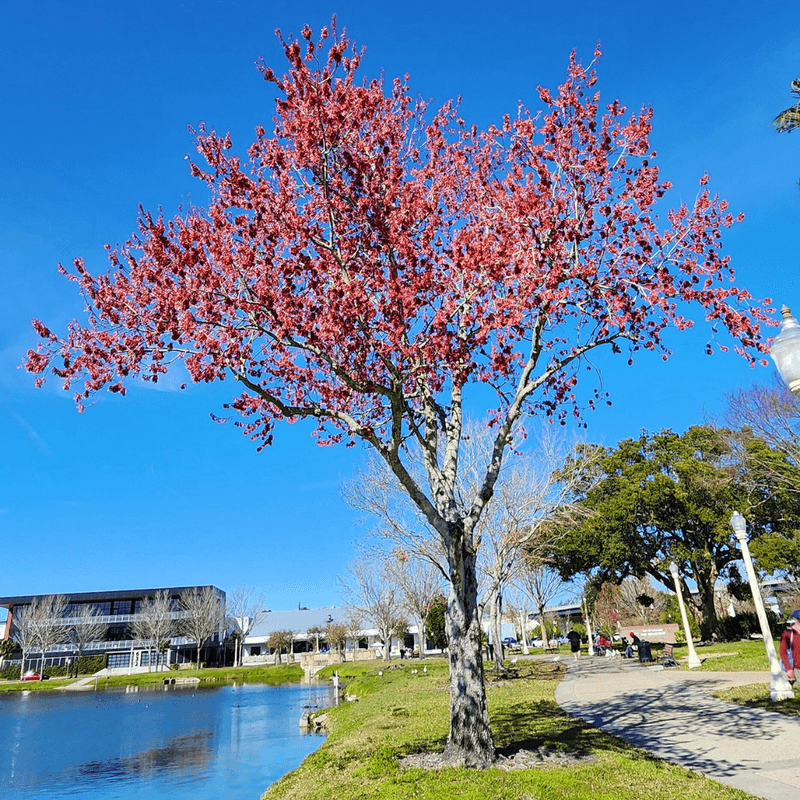
Fall color gets the attention, but red maple keeps working after the leaves drop. UF/IFAS notes that the tree produces flowers and seeds from winter into spring, and birds and other wildlife eat them.
Those small blooms show up when many other trees are bare, adding a touch of red to the late-winter landscape. The winged seeds that follow become a food source as spring arrives.
No tree can promise which animals will stop by. Visitors depend on your neighborhood, nearby habitat, and the season.
Still, a native tree that offers food across several months adds real value to a yard.
Treat this as a bonus rather than a reason to plant in the wrong place. A red maple struggling in dry, salty, or alkaline ground will not offer much to anyone.
Get the site right first, and the extra seasons of interest come along with it.
Plant for the site, not for a date on the calendar
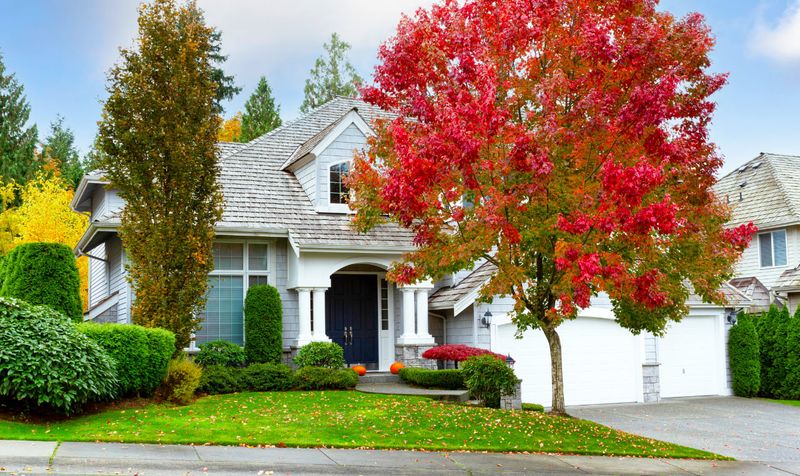
Red maple can bring fall color to a Florida yard when the site fits, and the show may begin in November, with peak color in parts of the state often arriving in December. Before planting, check water, soil, salt exposure, mature space, and storm risk, using the UF/IFAS red maple profile as your guide.
If those boxes are checked, you have a good candidate. If not, skip it without guilt.
A tree that thrives beats a tree that merely survives.