
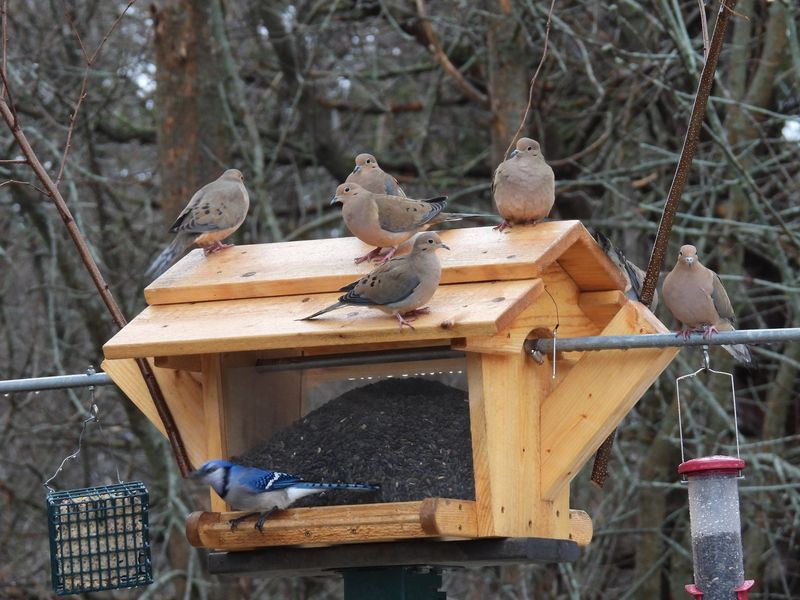
Those soft gray doves pecking beneath your feeder are doing exactly what doves do. Many California homeowners wonder if the birds are tidying up weed seeds before the winter rains arrive.
The real answer is more mixed, and it changes how you handle the ground under your feeder. Here is what doves eat, what we do not know, and how to enjoy them without inviting a mess.
Mourning doves forage where seed is visible
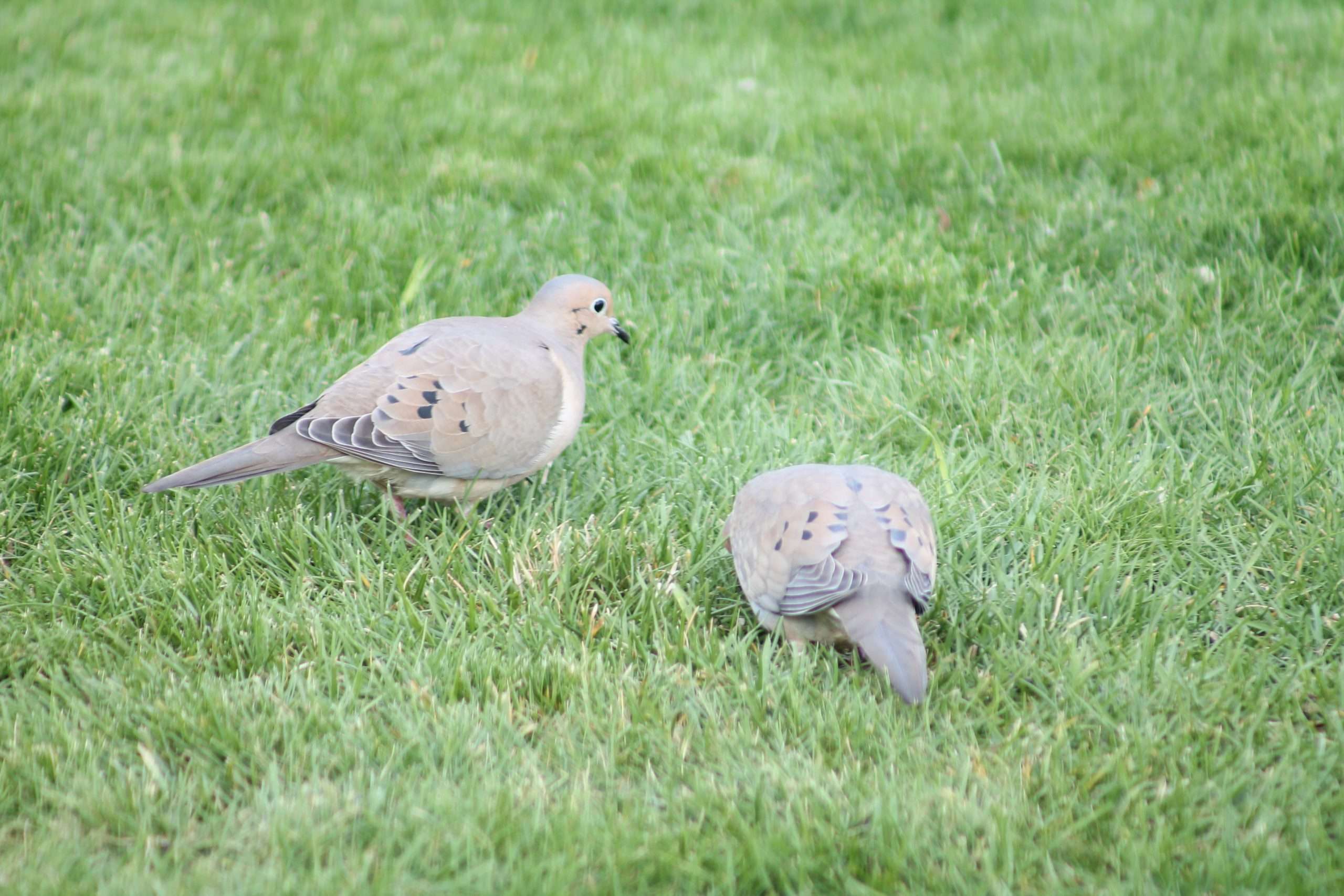
Watch a mourning dove for a few minutes and the pattern becomes clear. Instead of clinging to a feeder perch like a finch, it walks along the ground and pecks at what it can see.
California’s wildlife habitat account describes doves as birds that feed on the ground, taking mostly seeds.
That habit explains why they show up beneath your feeder. Seeds that other birds knock loose land in the open, and open ground is where doves feel comfortable working.
Bare soil, a patio, or a short, sparse patch of lawn gives them a clear view of each seed.
Doves favor seed that is visible and easy to reach. They are not diggers.
They do not scratch through thick leaf litter or dense groundcover the way towhees or thrashers do, so seed buried under heavy cover is mostly out of their reach.
It helps to keep that in mind when you picture doves as a cleanup crew. They are opportunistic pickers.
They gather what is sitting out in the open, and they leave the rest. Their presence under a feeder tells you the feeder is spilling seed where they can get it, not that they are targeting any particular plant.
If you like seeing them, there is nothing wrong with letting them work the ground. Just treat them as welcome visitors rather than a built-in solution to anything.
The next sections explain why that distinction matters for the weeds in your yard.
Their menu is broader than weed seed
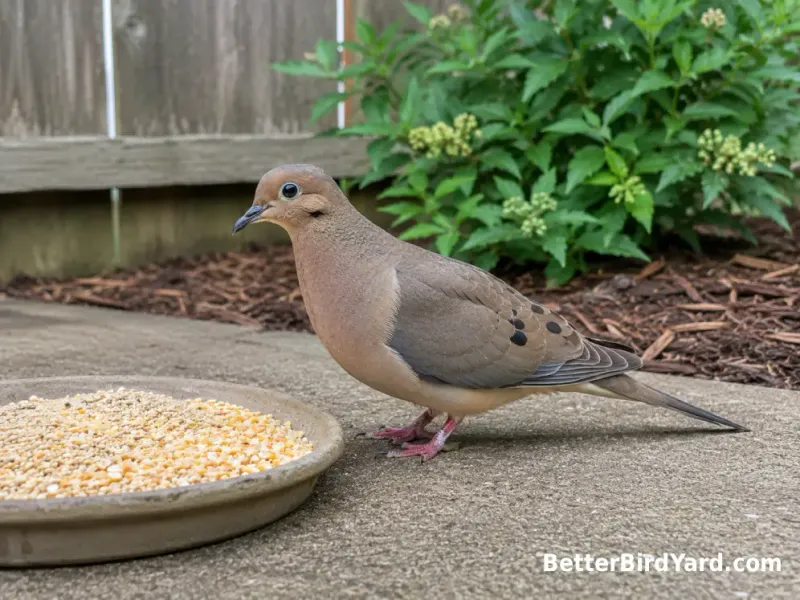
A dove’s diet is wide, and weeds are only one slice of it. USDA’s Natural Resources Conservation Service notes that mourning doves eat seeds from cultivated crops as well as from wild grasses and forbs, and that what they eat shifts with the seeds available where they live.
Some of those wild plants are ones homeowners call weeds. That part is true.
But a bird that eats seeds from grasses and forbs is a general seed eater, not a weed-seed specialist.
Think about what actually lands under your feeder. Millet, cracked corn, milo, and sunflower bits are all cultivated grains or crop seeds, and doves will happily take them.
Wild seeds may blow in from nearby plants too, but nobody can say how much of any one feeder’s spill is weed seed. It could be very little, or more, depending on your yard and your seed mix.
Regional differences matter as well. A dove in an inland valley near farm fields may have different options than one in a coastal suburb or a foothill neighborhood.
Available food drives the menu.
A simple check can tell you what is going on at your place. Look at the ground under the feeder after a few days.
If you see hulls and whole grains from your seed mix, that is feeder spill. If you see seedlings later, notice whether they resemble the grains you feed or something else entirely.
California’s fall rains can prompt weed growth
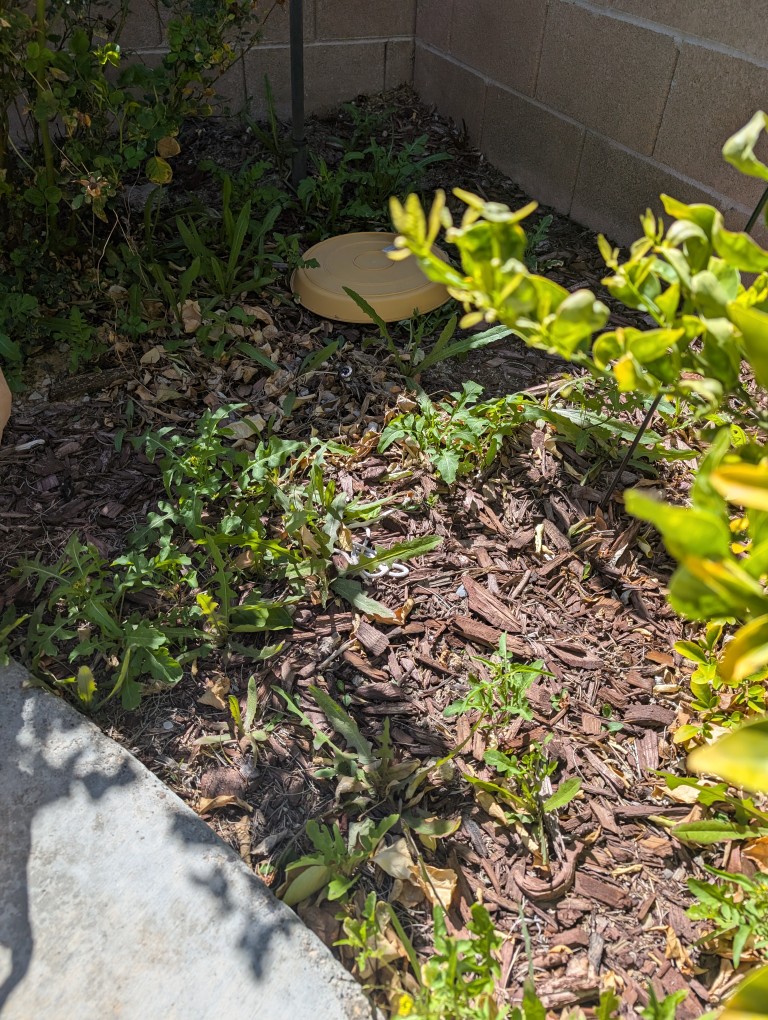
Anyone who gardens in California knows the pattern: the first good rain of the wet season, then a flush of green where the ground looked empty. The UC Statewide IPM Program explains that fall rains can stimulate weed germination and growth.
The timing is not the same everywhere or every year. It depends partly on when the rain actually arrives and on whether temperatures are still warm or have already cooled.
A warm, early storm in the south can set off sprouting weeks before a cool late one in the north.
Not every seed sprouts either. Some stay dormant, some rot, and some get eaten or washed away.
So there is no single statewide calendar to circle, and no guarantee that every seed under your feeder will come up.
That uncertainty is the key point. Weed germination in your yard is driven by rain, temperature, soil, and the seed that is present.
Doves picking at the ground are one small variable at most, and nothing here shows they control the outcome.
A practical habit is to watch your own weather. After the first soaking rain, check the area under the feeder and along paths for new seedlings, and pull them while the soil is soft and the roots are small.
Eating weed seeds does not prove weed control
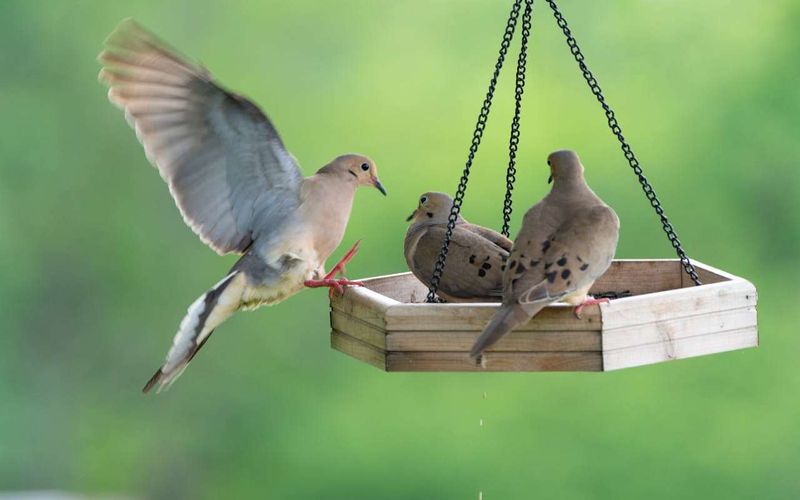
Here is the direct answer. Doves eat some seeds from plants people consider weeds, and sources on their diet back that up.
California’s wildlife account and USDA’s dove biology guide describe diet and foraging, not weed reduction in anyone’s yard.
Neither source measured whether doves feeding under garden feeders lower the number of weeds that come up afterward. So the idea that doves reliably clear weed seeds before the rains is not something we can promise.
Doves take visible seed, miss plenty of it, and also eat grains that were never weeds to begin with.
There is another wrinkle. In a study of Benghal dayflower, an agricultural weed, researchers in Georgia fed seeds to mourning doves and found that some eaten seeds stayed viable.
Germination was 92 percent for seeds recovered from crops and 45 percent for seeds recovered from gizzards.
That result belongs to one species in one farm setting. It does not show that doves spread weeds in California yards, and it should not be applied to other plants.
What it does show is that a seed being eaten is not the same as a seed being destroyed.
The takeaway is practical. Enjoy the doves, but keep your own weed plan: pull seedlings early, mulch bare soil, and manage spilled seed yourself.
Let doves forage, but remove excess seed
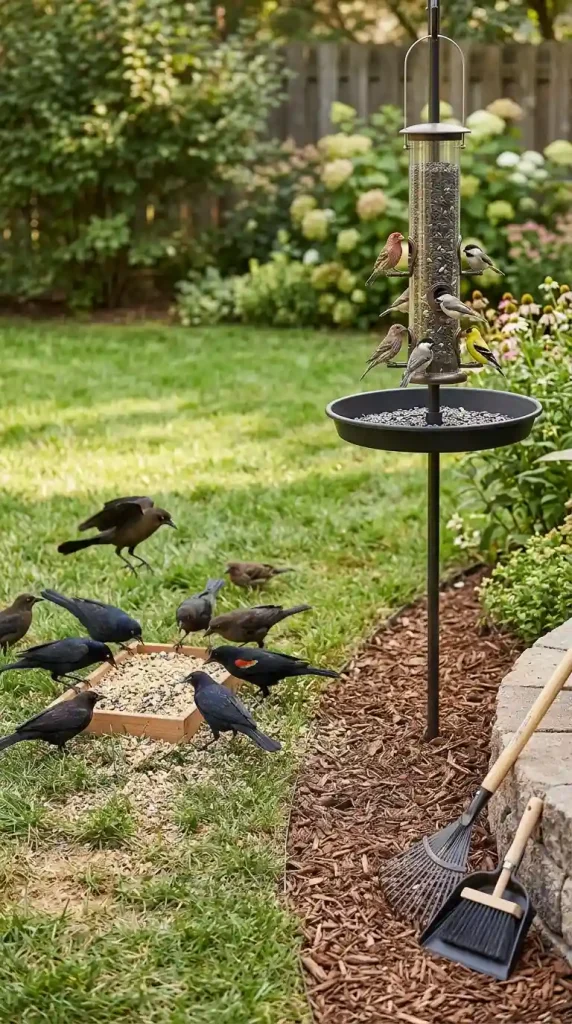
You do not have to chase doves off. Letting them pick up fresh, accessible seed that falls from the feeder is a normal part of feeding birds.
The goal is simply not to rely on them for cleanup.
Start with how much you put out. The U.S.
Fish and Wildlife Service advises offering only what birds will eat and sweeping up old, moldy, or discarded seed. Smaller refills more often usually mean less waste.
Then do a quick sweep under the feeder every few days. Pay extra attention to wet spots, where seed clumps, sours, and grows mold.
Wet or moldy seed is not something to leave for doves, and it can also attract rodents.
A few small changes cut down on spill. A tray or seed catcher under the feeder keeps more seed off the ground.
Choosing seed with fewer filler grains means fewer hulls and discards. Setting the feeder over a hard surface, such as a paver or patio, makes sweeping easy and keeps seed from settling into soil where it could sprout.
Welcoming wildlife and keeping the yard tidy fit together fine. Doves can have a place to feed, and you can still rake and sweep so leftover seed does not pile up before the rains start.
Clean feeders and respond to sick birds
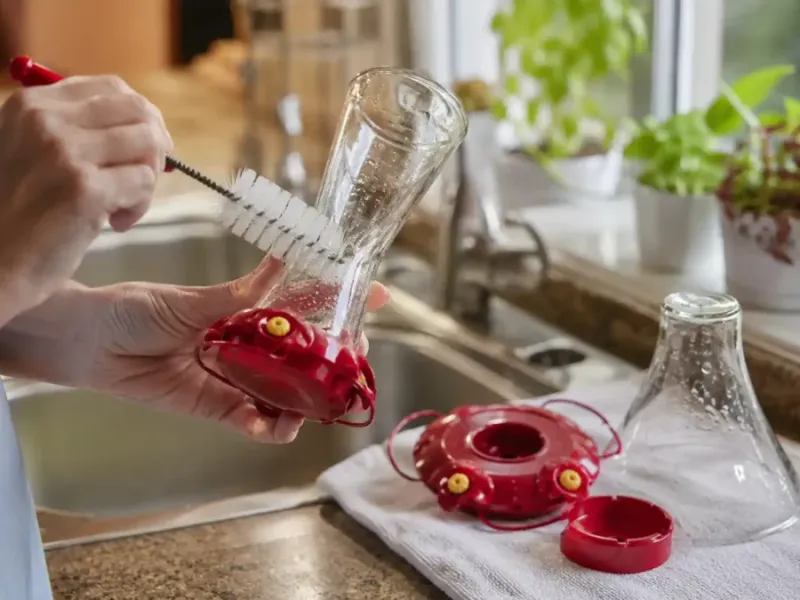
Feeder cleaning advice comes with a range, so there is no single magic interval. CDC guidance sets a minimum of cleaning feeders at least monthly, and more often if they look dirty.
Cornell Lab of Ornithology recommends about every two weeks, and more often with heavy use or wet weather.
The safest approach is to clean on a regular schedule and move up the timing whenever things look off. Damp seed, clumps, droppings on the perches, or a soiled area underneath are all signs to clean sooner.
Wash the feeding area too, not only the feeder.
CDC also lists a few simple precautions. Wash your hands after handling bird food, feeders, or bird baths.
Keep pets away from those areas.
If you find a sick or dead bird, CDC advises taking down feeders and baths for two weeks. That break gives birds a chance to scatter and lowers the chance of passing illness among those that gather.
Doves are welcome seed-eating visitors, and they are fun to watch. They are not a substitute for weed management or for sweeping and scrubbing.