
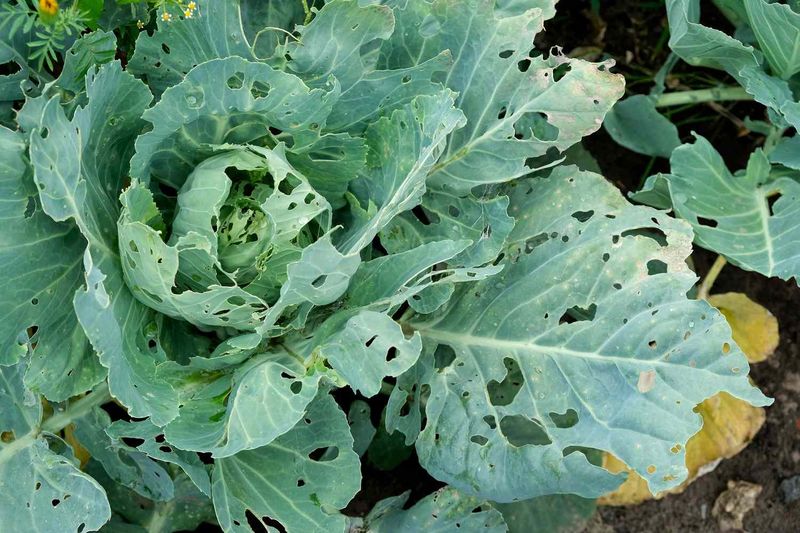
Spot a few holes in your fall collards and it is tempting to blame the first pest you read about. But holes are only a clue, and several different insects can leave them.
Taking a few minutes to look closely can keep you from spraying the wrong thing. Here is how to sort out what is chewing your greens and what to do next.
Tiny holes do not identify the culprit
Holes in a collard leaf are a symptom, not a verdict. Cabbage loopers can cause them, but so can other leaf feeders, and guessing wrong means wasted effort.
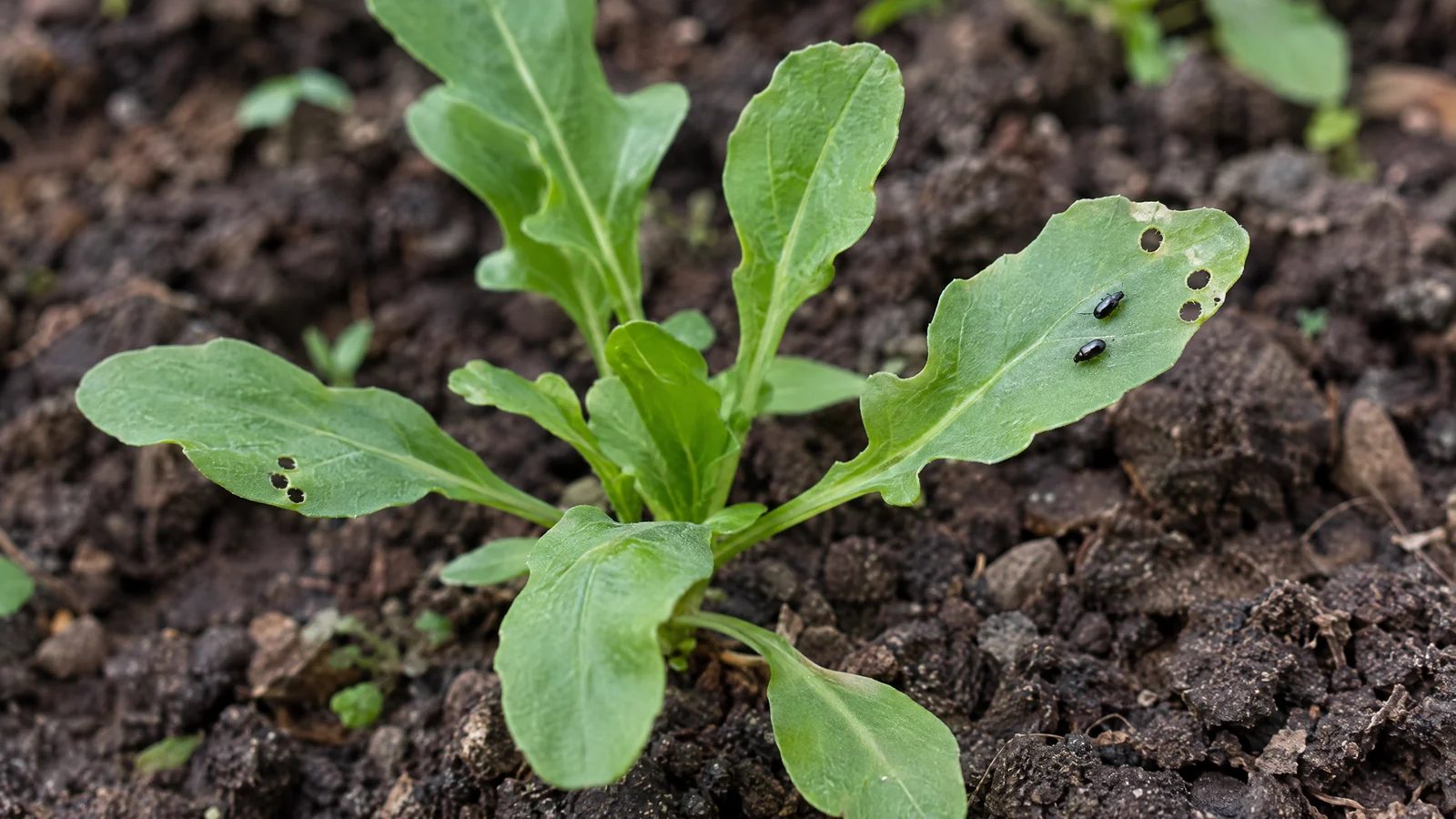
Size and shape give useful hints. University of Kentucky guidance on flea beetles describes small, shallow shot holes as typical beetle work on brassicas.
Young looper caterpillars, on the other hand, tend to scrape the leaf surface and leave thin, see-through patches often called windowpane damage.
As loopers grow, they chew larger, irregular holes, which is why a leaf can show several damage styles at once. University of Minnesota Extension’s cabbage diagnostic page also lists looper damage among several possible causes of leaf holes.
So treat the holes as a reason to investigate. Match the damage pattern to an actual insect before you choose any treatment.
Look for looper larvae before you spray
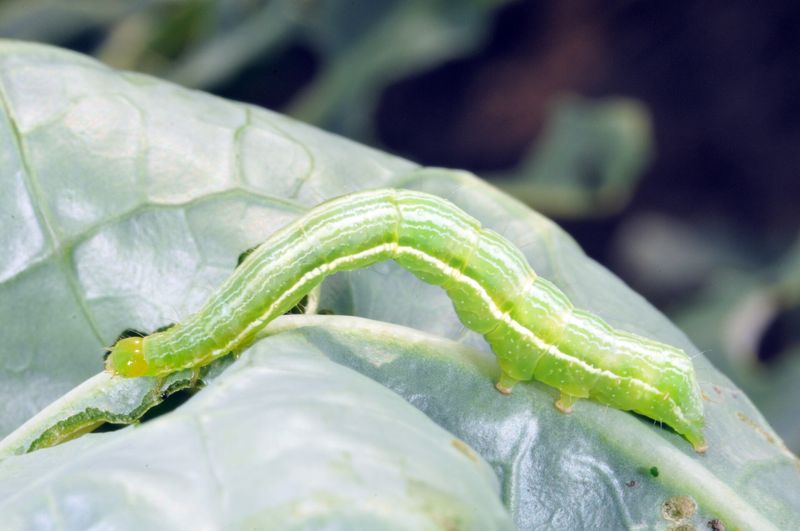
Grab a cup of coffee and check your plants up close. Turn leaves over and look at both sides, since young caterpillars often hide underneath.
Check the center of the plant and the leaf folds too.
Cabbage loopers are green, often marked with pale stripes, and they move by arching the middle of the body into a loop. UF/IFAS describes these traits, and they are your best identification clue.
Fresh droppings and larger ragged holes can back up what you see. Still, droppings and damage alone do not prove loopers are the cause, so keep looking until you find the insect itself.
One more thing: the leaf cannot tell you when a caterpillar ate. The adult moths are described as semi-nocturnal, active around dusk and more so at night, but that says nothing about when the larvae feed.
A hole is not proof of a midnight meal.
Fall pest timing differs across Florida and Texas

Florida and Texas do not share one fall calendar, so avoid borrowing timing from a neighbor in another part of the South.
Collards suit Florida’s fall and winter growing season. According to the UF/IFAS cabbage pest profile, cabbage looper activity peaks in early fall and late spring in central Florida, while southern Florida can see activity continue through winter.
That means a Miami gardener and a north-central Florida gardener may need to scout on different schedules.
For Texas, Texas A&M AgriLife’s field guide identifies the cabbage looper as a pest of cole crops, which include collards. That confirms loopers are a possibility in Texas beds, but it does not set a statewide fall peak.
The practical takeaway is simple. Wherever you garden, scout your own plants regularly and let what you find, not a regional guess, guide your next move.
Btk works only when susceptible caterpillars eat it
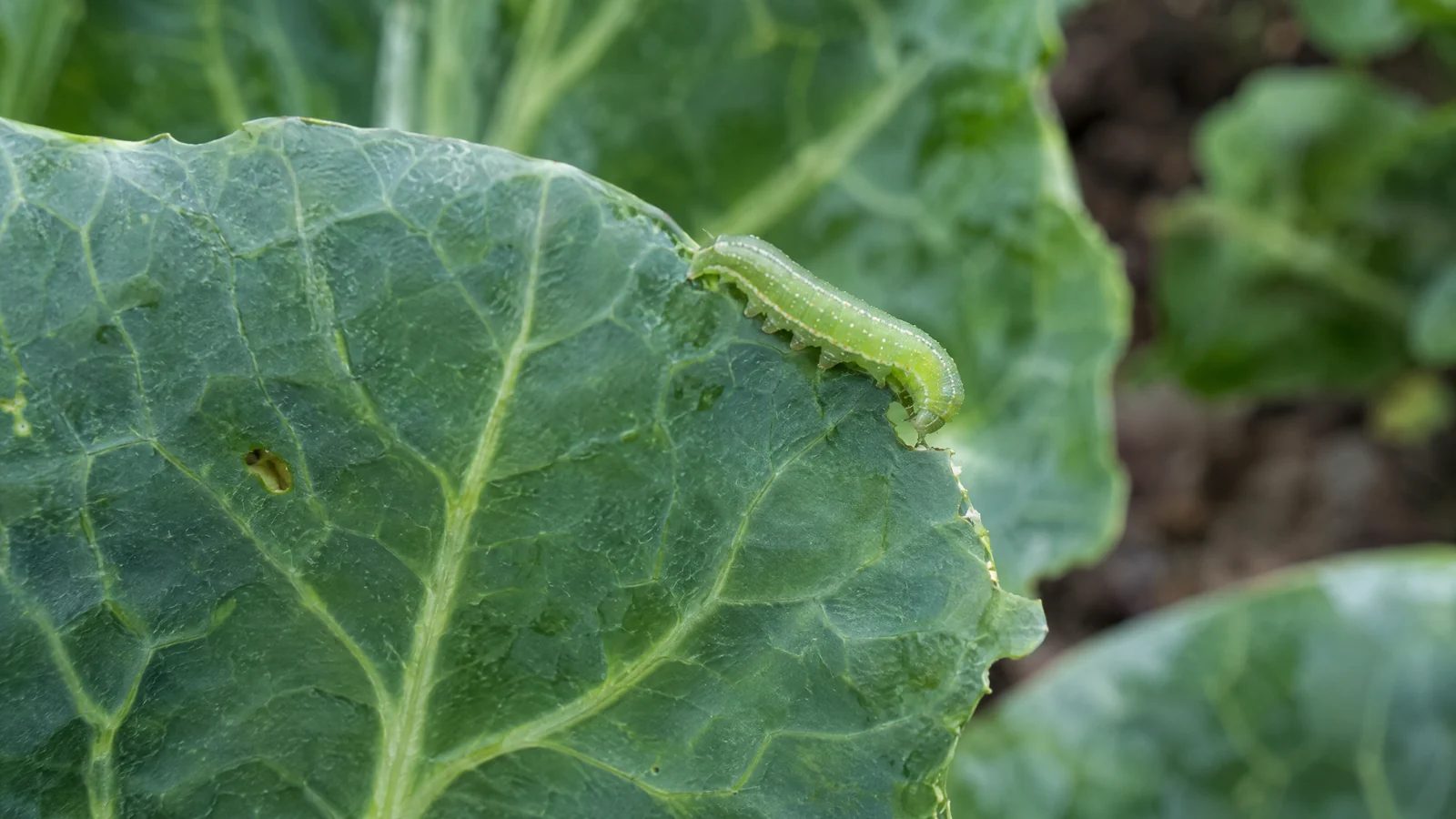
Bacillus thuringiensis var. kurstaki, called Btk, is a natural bacterium used against certain caterpillars. It is not a contact poison.
The caterpillar has to eat treated leaf tissue for it to work.
That is why timing matters. University of Missouri Extension explains that Bt works best on small, actively feeding larvae, so a spray applied after the caterpillars are big may disappoint.
Expect a delay, too. Feeding may slow within a day or two after a caterpillar eats it, but death can take longer, so you may still see damage for a little while.
UC Statewide IPM guidance on loopers also stresses using Bt on young larvae.
Finally, Bt is a family of products. Btk targets moth and butterfly caterpillars, while other strains aim at different insects.
Matching the strain to the pest is what makes the product useful, and even then results are not guaranteed.
Choose a labeled treatment and cover the foliage
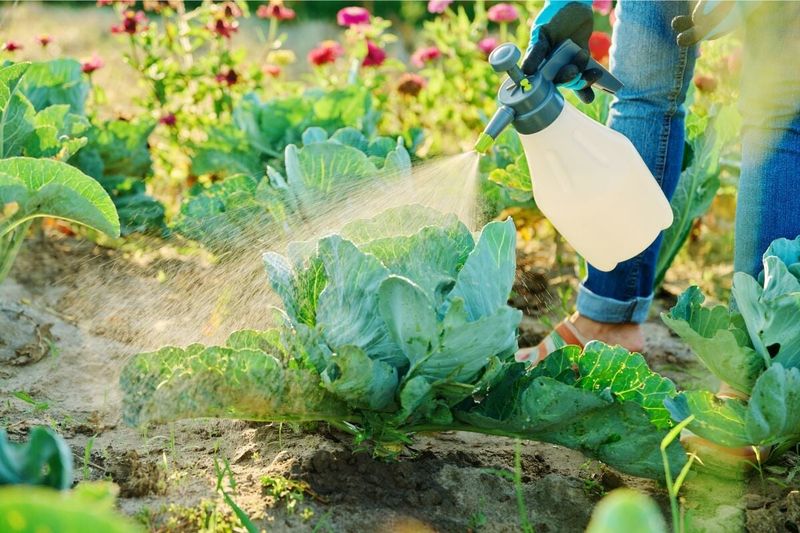
Start at the label, not the shelf. Pick a product that lists collards as an approved crop and names your target pest.
Mississippi State University Extension reminds gardeners that label directions are the rules for safe, legal use.
The label also tells you the application rate, how often you may repeat, what protective gear to wear, and how many days must pass before harvest. These details differ from product to product, so no single recipe fits every bottle.
Coverage matters because Btk only works if caterpillars eat it. Wet the leaves thoroughly, including the undersides where small larvae often feed.
Missouri Extension notes that good coverage helps.
If you find only a handful of caterpillars, hand-picking is a reasonable option, as UC IPM also suggests. It may not catch every larva, so keep watching the plants afterward.
Recheck plants and protect other caterpillars
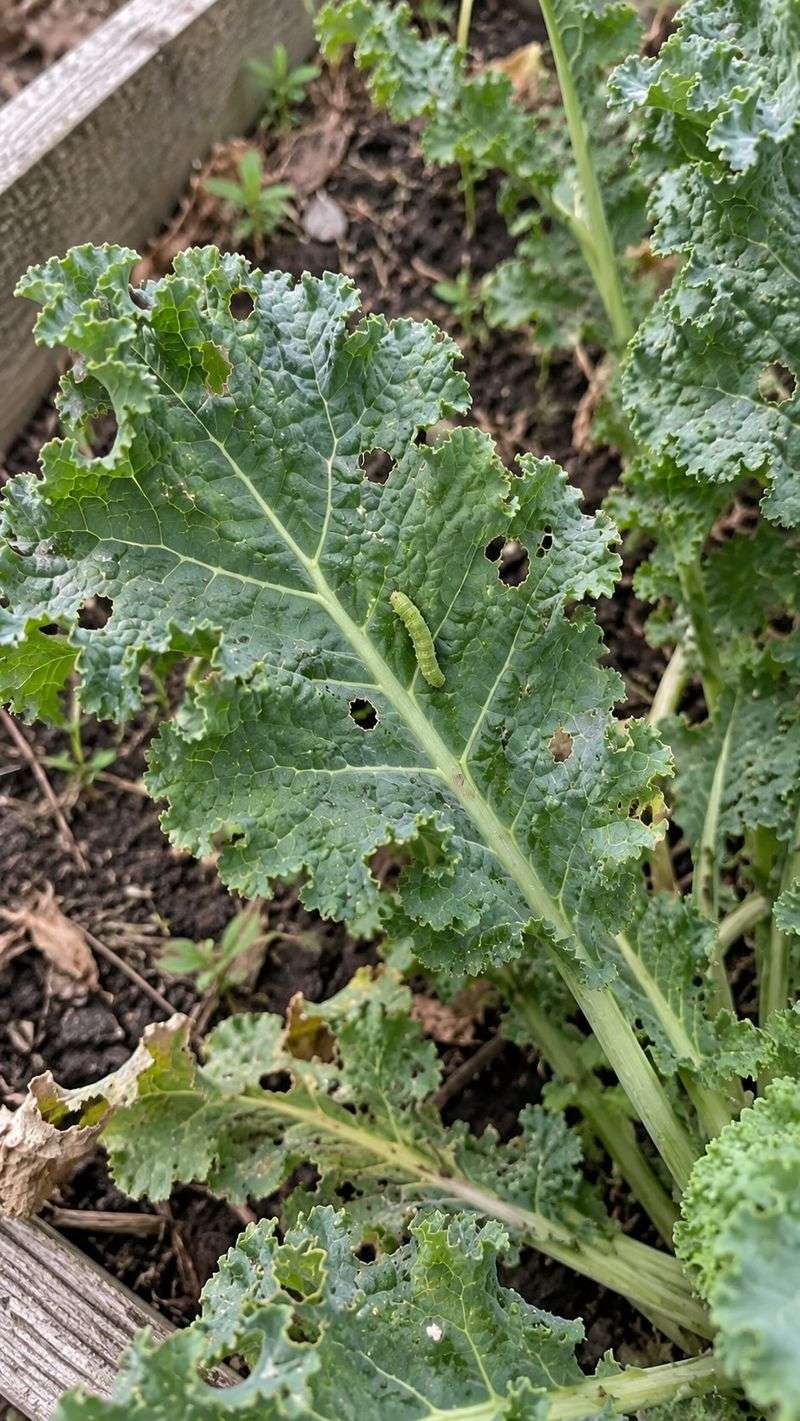
One spray rarely closes the case. Walk the bed again in a few days and look for live caterpillars, fresh droppings, and new feeding on the youngest leaves.
Sun and rain can reduce how much Btk stays on the foliage. UC IPM notes that Bt breaks down on leaves, and Missouri Extension says weather can wash it off.
If new larvae appear, repeat only on the schedule your label allows.
Also think about neighbors in the yard. According to the National Pesticide Information Center, Btk is more selective than broad-spectrum insecticides, but it can still harm moth and butterfly caterpillars that eat treated leaves.
Keep spray off nearby host plants for caterpillars you want to protect.
The routine is simple: inspect, match the treatment to the pest, and keep checking. A collard patch rewards the gardener who keeps looking.