
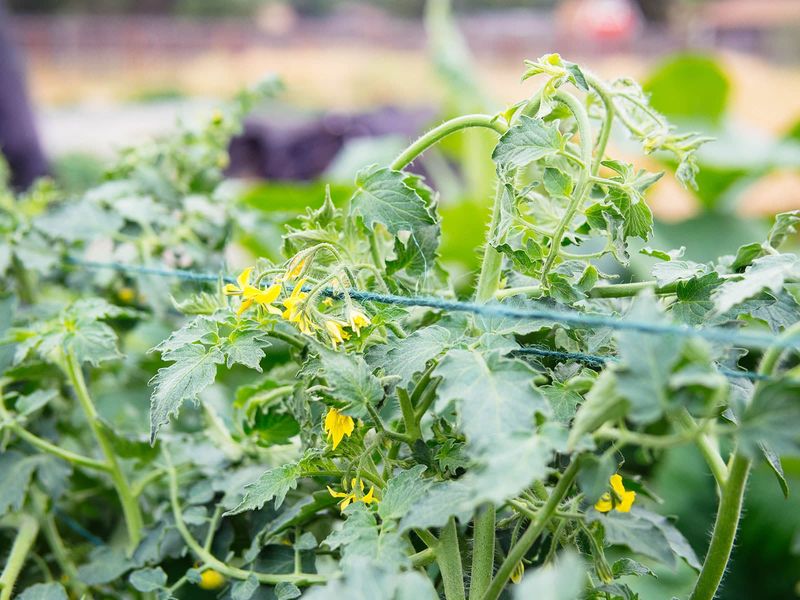
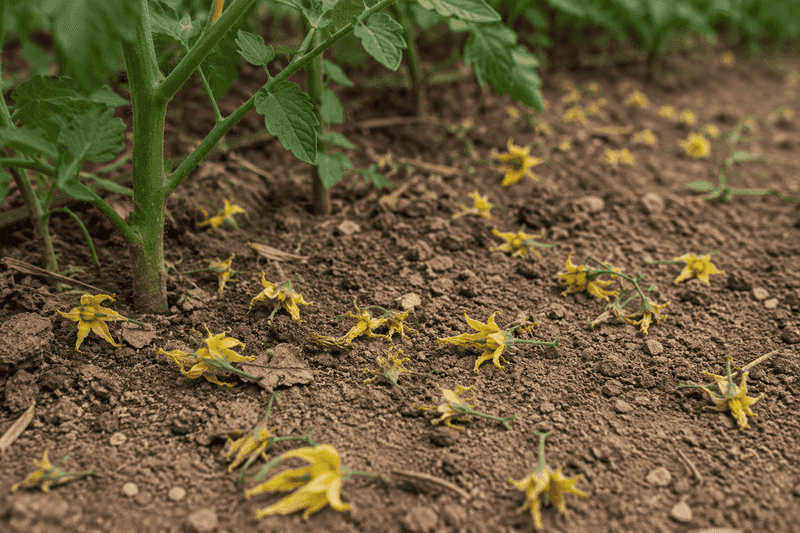
Your fall tomato plants are covered in yellow flowers, yet the blossoms keep falling to the ground. It is frustrating, especially when you planted early to get fruit before winter.
Blossom drop has several possible causes, and night temperatures are only one piece of the puzzle. Here is how to check what is going on in your own bed and what you can change.
Blossom drop signals trouble, not its cause
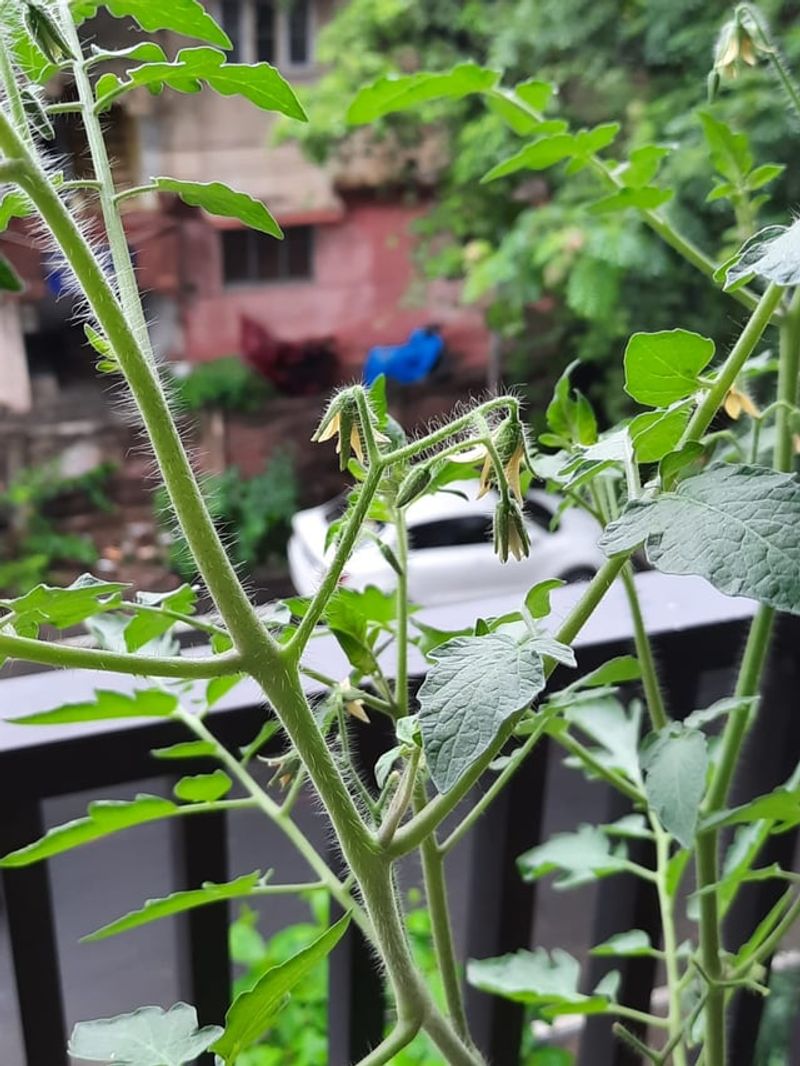
Flowers on the ground tell you something is off, but they do not tell you what. Blossom drop is a symptom, much like a cough in a person.
Many different things can cause it, and a few can happen at the same time.
According to UF/IFAS gardening guidance, possible causes include night temperatures that are too high or too low, too much nitrogen, too much shade, overwatering, and flower thrips. That list is a good starting point because it covers weather, feeding, site, watering, and insects.
Any one of those could be at work in your yard, and several could be overlapping.
So the smartest first move is to investigate before you change anything. A gardener who sees dropped flowers and immediately dumps on a bloom booster may be fixing the wrong problem.
Worse, some quick fixes can add stress, such as extra fertilizer on plants that were already well fed.
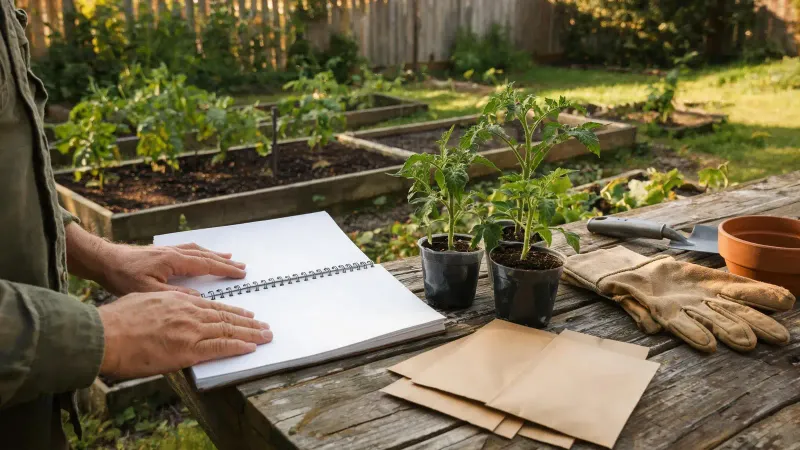
Think of the next few days as detective work. Write down recent night temperatures, when you last fertilized and with what, how many hours of sun the bed gets, how wet the soil stays, and what you see inside the flowers.
Those notes will point you toward the likeliest causes in your garden.
Blossom drop alone cannot tell you which factor is responsible, and that is okay. The goal is to find the stresses you can actually control and ease them one at a time.
The sections ahead walk through each clue in turn.
Night temperatures can disrupt fruit set at either extreme
Tomatoes are picky about nighttime temperatures, and that goes in both directions. Nights that are too warm can interfere with fruit set, and so can nights that are too cool.
That is why it is a mistake to rule out either one without checking.
On the warm side, UF/IFAS tomato guidance notes that large-fruited varieties may keep flowering but stop setting fruit when average night temperatures rise above about 80°F. That number is not a universal cutoff.
Cultivar and growing conditions matter, and some varieties handle heat better than others. Extension guidance also flags nights below about 55°F and very hot days as risks.
Heat appears to affect the flower itself. A peer-reviewed study on mild, chronic heat stress found reduced pollen release and fruit set in tomato plants, with responses that varied by cultivar.
Pollen that does not release well means flowers may not get pollinated, and unpollinated flowers often drop.
Humidity may add to the trouble. Virginia Cooperative Extension describes how pollination depends on pollen moving freely, and sticky, humid air can work against that when paired with high temperatures.
Treat humidity as a possible contributor, not a proven cause by itself.
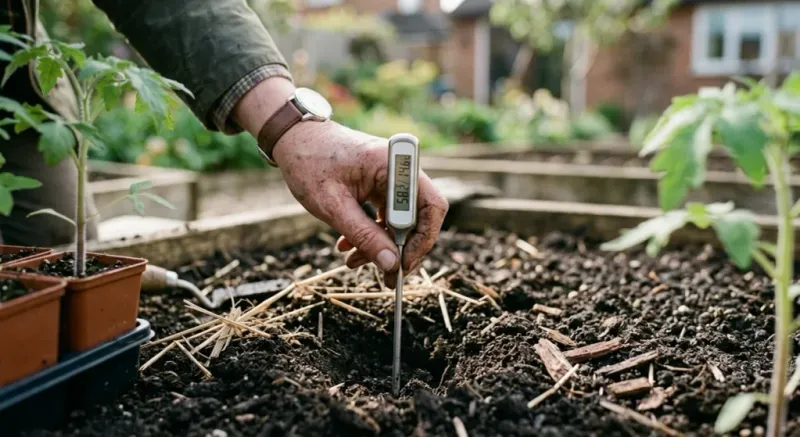
To see what your plants actually experienced, check lows during the weeks when the flowers formed. Nearby airport or weather-app readings may not match your bed, especially near pavement or walls.
A simple thermometer placed at plant height gives you a more honest picture.
Excess nitrogen can favor foliage over fruit
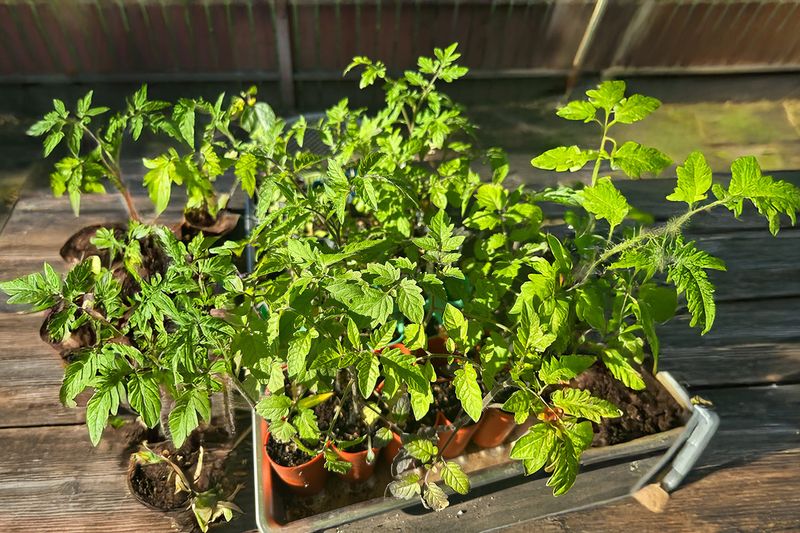
Dig back through your feeding habits before you blame the weather. Tomatoes that get too much nitrogen can pile on leaves while setting less fruit.
UF/IFAS lists excess nitrogen among the possible reasons blossoms drop.
Lush, deep green, leafy plants make this cause more plausible. Still, a big leafy plant does not prove nitrogen is the culprit.
Good soil, plenty of sun, and fall rains can all grow healthy foliage, so look at what you actually applied.
Ask yourself a few questions. Did you use a high-nitrogen lawn fertilizer nearby that could have washed into the bed?
Did you add compost or manure on top of a regular feeding schedule? Did you keep feeding at the same rate after flowers appeared?
If the answers suggest plenty of nitrogen already, the practical move is to hold off on extra. That does not mean stopping all feeding, because tomatoes still need nutrients to grow and fruit.
UF/IFAS Extension Duval County suggests a complete fertilizer with a lower first number, the nitrogen number, during flowering and fruiting.
Skip the automatic switch to a bloom booster, too. Adding phosphorus or a hormone spray by default does not address a nitrogen problem and may not address any problem at all.
Sandy Florida soil drains fast and holds few nutrients, so the right amount depends on what the plant has already received and how it looks.
Check light, soil moisture, and flowers for other stressors
Sunlight is the easiest thing to measure. Walk out at mid-morning, noon, and mid-afternoon and note whether the bed is shaded.
Fall sun angles are lower, and a tree or fence that was no problem in summer can now cast long shadows. UF/IFAS names too much shade as a possible cause of blossom drop, along with overwatering.
Next, test the soil. Push a finger two inches down near the plant.
If it feels soggy day after day, drainage or watering habits may be adding stress. Even in sandy soil, a spot near a downspout or a sprinkler zone can stay wetter than you think.
Then look at the flowers. Flower thrips are tiny, slender insects that hide inside blooms.
Tap a flower over a white sheet of paper and see whether small specks move. Seeing a few does not prove they caused the drop, so confirm that you have a real problem before reaching for any treatment.
You may also hear that a shortage of honeybees is to blame. That explanation falls short, because Mississippi State Extension says tomatoes are wind-pollinated and do not depend on bees, though bees can assist.
Movement from wind, or a gentle shake of the plant, matters more.
Treat these checks as clues to gather, not verdicts. Light, moisture, and insects can combine with temperature and feeding, so a pattern across several clues tells you more than any single one.
Make measured changes instead of chasing a quick fix
Once you have gathered your clues, work in a sensible order. Start with temperatures and fertilizer history, then look at light, soil moisture, and flowers.
After that, adjust only the stresses you can actually avoid.
Changing five things at once makes it impossible to learn what helped. Pick one or two adjustments, give the plants some time, and watch the new flowers rather than the old ones.
Blossoms already dropping will not come back, so judge progress by what forms next.
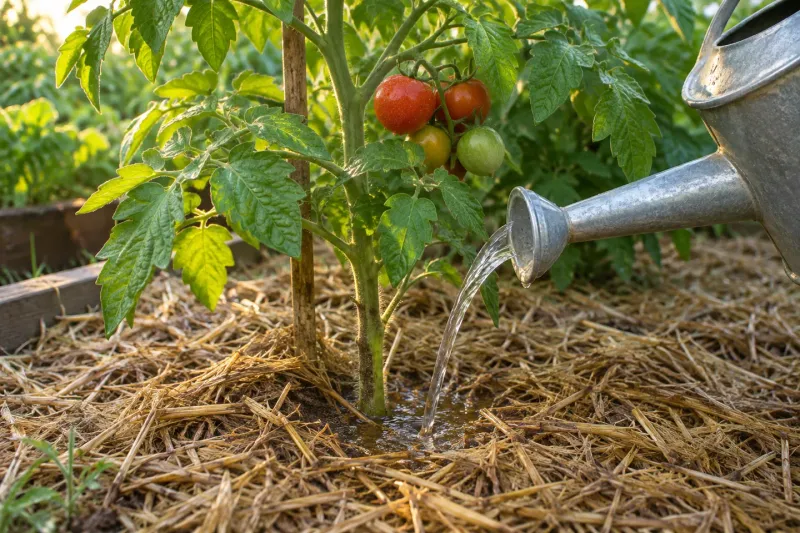
Watering is the most useful place to begin. UF/IFAS recommends about 1 to 2 inches of water per week, including rainfall, and mulch to conserve soil moisture.
A rain gauge or an empty tuna can set out in the bed helps you track what you are really getting. In fast-draining sandy soil, mulch makes a big difference in keeping moisture steady.
Water at the soil, ideally in the morning, rather than routinely soaking the leaves. Morning watering gives plants moisture before the heat and lets any splashed foliage dry, which also helps limit disease.
Feeding follows the same logic. If your records show heavy nitrogen already, skip additional doses, and if plants look hungry, use a balanced approach suited to the stage of growth.
Details are covered in UF/IFAS Vegetable Gardening Questions.
All of these steps support better growing conditions. They cannot guarantee fruit set if the weather stays unfavorable, so aim for steady care and patience.
Florida planting windows cannot promise fruit by January
Florida stretches across very different growing conditions, so fall planting dates vary by region. UF/IFAS lists tomato planting windows of July to August in North Florida, August to September in west-central Florida, and August to February in South Florida.
The same publication lists 70 to 90 days to maturity. That number can look like a countdown, and it is tempting to count forward from your planting date to a January harvest.
But days to maturity is an estimate, not a deadline for flowers to set fruit or for ripe tomatoes to appear.
Several things can shift the timeline. Region, cultivar, the stage your plants had reached, and the weather during flowering all play a part.
A stretch of warm nights or an early cold snap can push fruit set later, and large-fruited types may behave differently from small-fruited ones.
If you planted outside your region’s window, you are not necessarily doomed, but your timeline is less predictable. If you planted within it, you still cannot count on a specific date.
Both situations call for the same approach of steady care and close observation.
Use the calendar as planning guidance. It tells you when planting makes sense, not when a watering schedule or fertilizer change will deliver tomatoes.
Flowers set when the plant and the weather agree, and no schedule can order that on demand.