
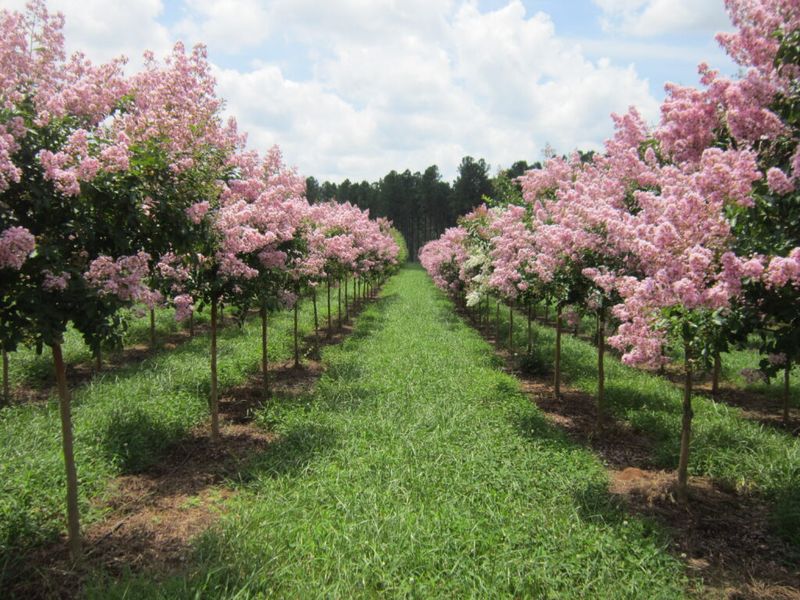
A crape myrtle with one clean, smooth trunk can make a front yard look tidy and sculpted. But a single trunk is not how the plant grows on its own, and it comes with its own follow-up jobs.
Here is what the form really involves, how to match it to your space, and when to plan your pruning in North Carolina.
A single trunk is a trained choice, not a proven trend
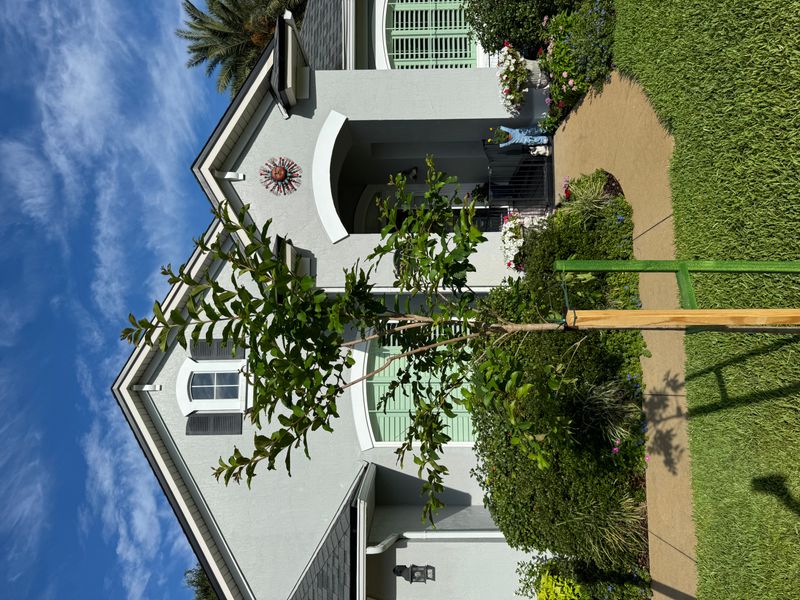
Left alone, a crape myrtle grows several stems from the base. A single-trunk form is something a gardener creates by starting with a plant grown from one stem, or by choosing one upright main stem and removing the others.
It is a trained shape, not the plant’s natural habit.
You may hear that more North Carolina yards are going this route. No adoption data back that up, so it is best to think of one trunk as a design option rather than a new standard.
NC Extension describes crape myrtles as naturally multi-trunked. In its tree-form pruning advice, N.C.
Cooperative Extension guidance recommends selecting three to five strong trunks, not one. A second Extension article on correct pruning follows the same multi-trunk approach.
That does not make a single trunk wrong. It simply means you are choosing a look and agreeing to maintain it.
Picture a young tree near a walkway where you want open ground beneath it, and one trunk starts to make sense.
If you like a cluster of trunks with a vase-shaped crown, you are growing the plant the way Extension describes it. Neither shape is automatically healthier, and neither one is a shortcut to better flowers.
Less garden space can mean a different canopy
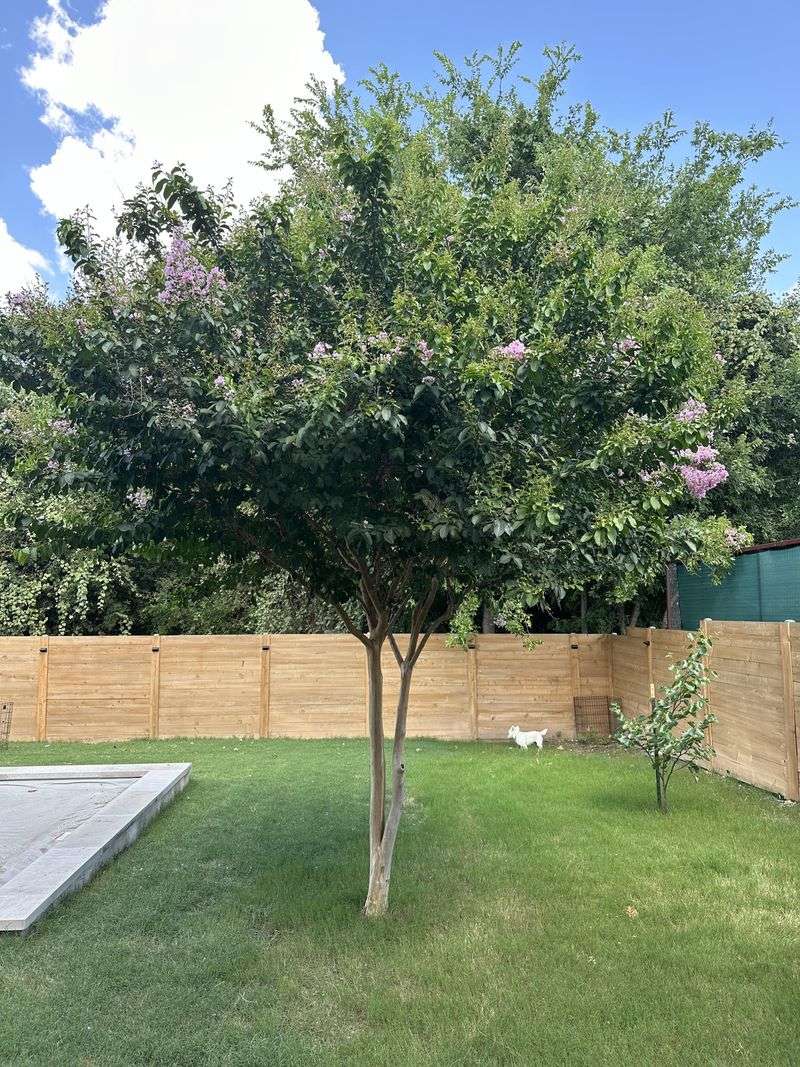
A single-trunk crape myrtle has a clean, upright look. Its smooth bark shows off in winter, and the open ground at the base leaves room for low plantings, a path, or a mailbox.
According to a UC Marin Master Gardeners pruning guide, single-trunk plants use less garden space. Multi-trunk plants can develop a wider canopy and carry more blossoms.
Think of it as a trade. One trunk gives you a narrower footprint and a more formal outline.
Several trunks give you a fuller, broader crown with more places for flowers to form.
That is a question of silhouette, not proof that one form blooms better overall or takes less work. A single trunk can still send up shoots at the base that need clipping.
Stand where you usually view the plant, such as the driveway, the porch steps, or the kitchen window. Ask whether you want a slim, tailored shape or a wide, billowing one.
Your answer says more about your yard than any broad preference.
Match the cultivar to the space before you prune

Trunk number cannot fix a plant that is simply too big for its spot. Crape myrtle cultivars vary a lot in mature size.
NC State Extension notes a range from roughly 3 to 4 feet to over 25 feet.
A tall cultivar planted under a window or beside a walkway will keep pushing into the space. You end up pruning it again and again just to hold it back, and that cycle is hard on the plant.
Before buying, read the tag or the nursery listing for mature height and spread. Then measure your site, including the distance to the house, the eaves, power lines, and the sidewalk.
Leave room for the full width as well as the height. A shrubby dwarf fits a small bed, while a larger cultivar suits an open lawn corner.
If you are shaping a single-trunk specimen, pick a cultivar whose adult size already fits the spot. That way pruning stays a matter of guiding the plant, not fighting it.
Keep one main stem without topping the canopy
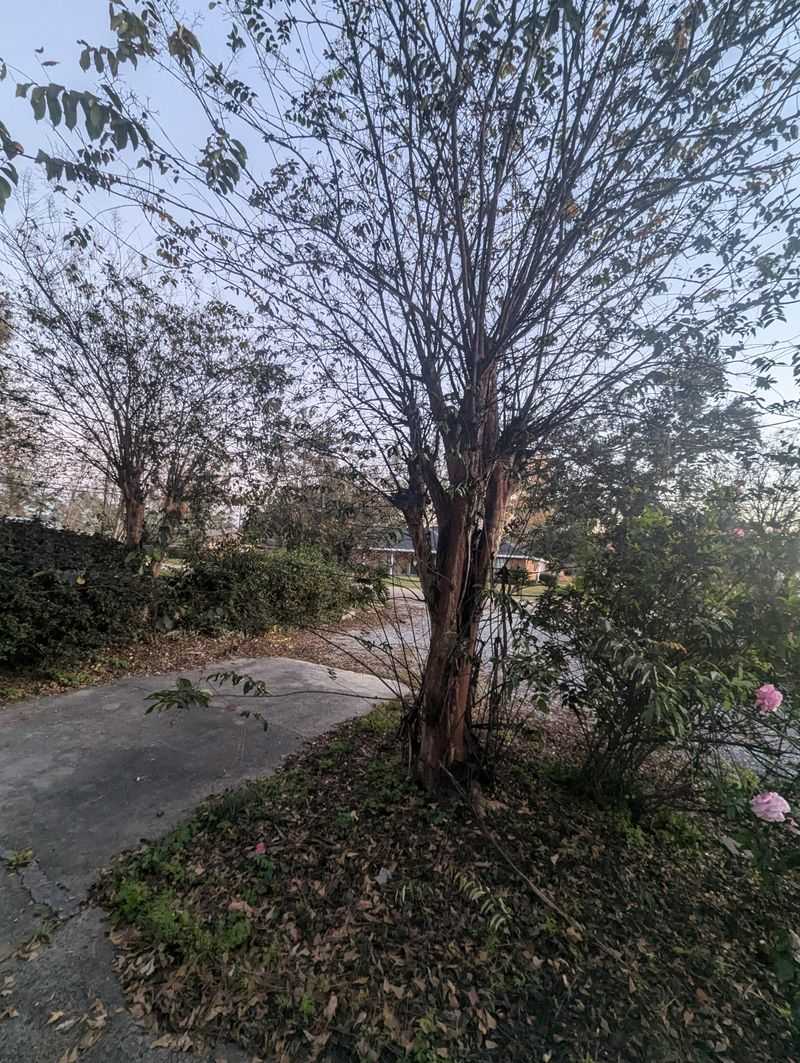
To train a single trunk, start with a plant grown from one stem or choose one strong, upright main stem. Then remove the competing stems or basal suckers near ground level, as described in Virginia Cooperative Extension’s crapemyrtle pruning publication.
Doing this while the plant is young is far easier than reshaping an older one.
Routine structural pruning is a separate job. Take out dead, damaged, crossing, inward-growing, or crowded branches, and make each cut just outside the branch collar, not flush with the trunk.
Be ready for follow-up. NC Extension notes that removing whole trunks can prompt abundant sucker growth.
Unwanted suckers and water sprouts at the base can be removed any time of year, so expect to do this more than once.
Training a young plant is not the same as topping a mature one. Chopping the canopy back hard does not give you more blooms.
Extension warns it can delay flowering, shorten bloom time, weaken branching, and invite insect or disease problems.
Keep your work at a safe, ground-level reach. NC State advises against pruning from ladders unless you are experienced, and suggests hiring a certified arborist for large trees or anything you cannot handle safely from the ground.
Leave chainsaw and overhead work to a professional.
Late winter can be a good time to prune, depending on local conditions

Pruning time is a separate question from trunk count. Late winter is generally a sound window for appropriate crape myrtle pruning, whether the plant has one trunk or five.
Single-trunk training does not get a special calendar.
For eastern North Carolina, Extension guidance points to February through March. The broader rule is to prune before spring growth begins, then adjust for your own conditions.
Mountain, Piedmont, and coastal yards warm up on different schedules, so there is no single statewide date.
Cutting too early carries a risk. Pruning can reduce cold hardiness, and Extension notes on swinging winter temperatures show that fresh cuts just before a cold snap can raise the chance of damage.
Check the forecast and skip days right before a hard freeze.
That is why November and December are best used for planning. Walk the yard, note which branches cross or crowd, measure the space, and decide on a shape.
Then wait for a milder stretch in late winter to make the cuts.
Suckers are the exception. Basal shoots and water sprouts can be removed whenever you spot them.
Choose the form that fits your yard

Pick one trunk if its slim, trained outline and smaller footprint suit the site. Keep several trunks if the natural habit and wider canopy fit your space better, since UC Marin Master Gardeners link multi-trunk plants to a broader crown and more blossoms.
Either way, check the mature size first and plan on trimming suckers now and then. Save structural cuts for a local late-winter window, as NC Extension describes.
The best crape myrtle is the one that has room to grow into its own shape.