
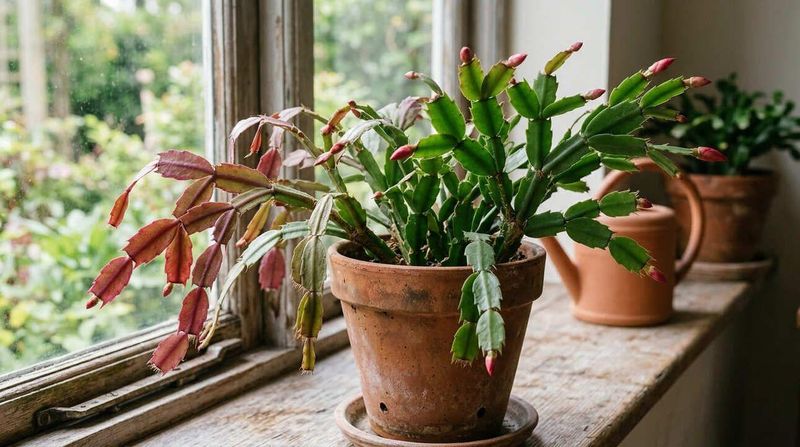
A healthy Christmas cactus has firm, plump segments that stand up and arch out like little green chains. When those segments turn soft, wrinkled, or droopy, the plant is telling you something is off.
The good news is that most causes are simple to spot and easy to correct once you know what to look for. Here are the seven most common stresses behind floppy leaves and what you can do about each one today.
1. Overwatering and Root Rot
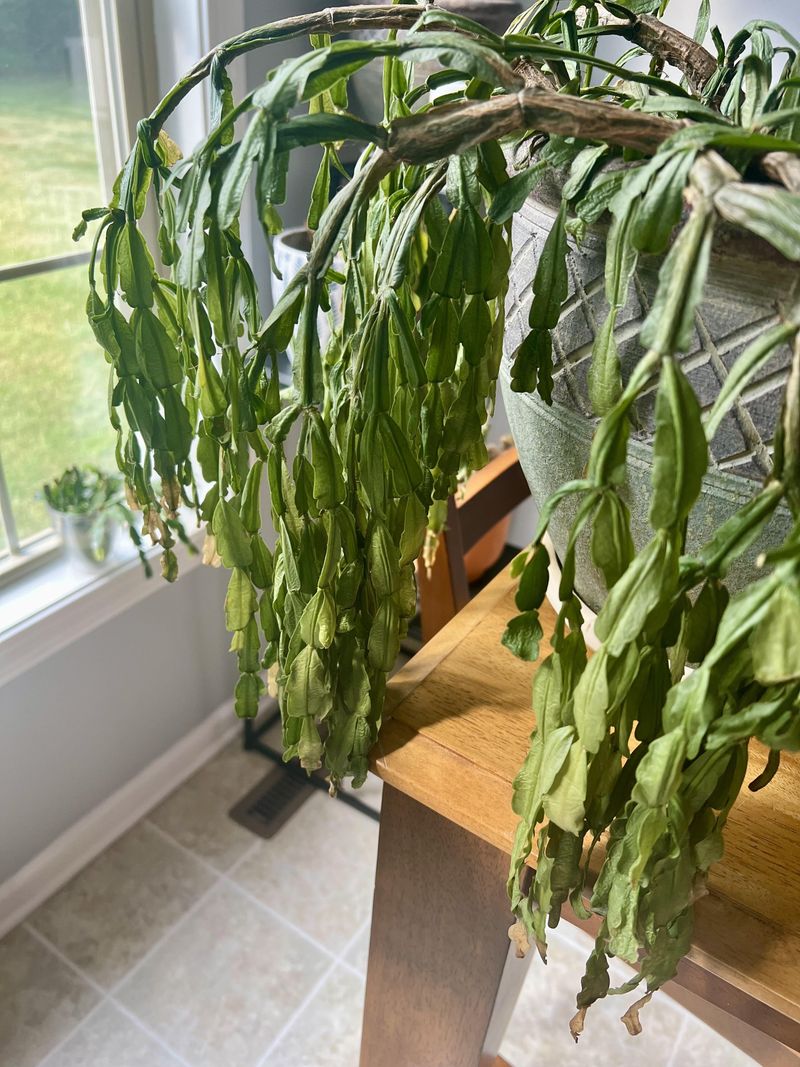
Kindness kills more Christmas cacti than neglect ever does. Many owners see a droopy plant, assume it is thirsty, and pour on more water, which can make the real problem worse.
Soggy soil squeezes out the oxygen roots need. Without air, roots turn brown, soft, and smelly, and they can no longer move water up into the leaves.
The result looks strangely like drought: limp, wrinkled segments sitting in wet soil. Check by sliding a finger two inches into the pot.
If it feels damp days after watering, overwatering is a likely culprit.
For a quick rescue, ease the plant out and inspect the roots. Trim away any black or mushy sections with clean scissors.
Repot into fresh, fast-draining mix, such as cactus soil blended with some orchid bark or perlite, in a pot with a drainage hole.
Afterward, hold off on watering for about a week so cut roots can callus. From then on, water only when the top inch or so feels dry.
Plants with a healthy share of firm roots often perk up within a few weeks, though badly rotted ones may need to be restarted from cuttings.
2. Underwatering and Dry Soil
Picture a grape slowly turning into a raisin. A thirsty Christmas cactus does something similar, with segments that look thin, puckered, and wrinkled instead of plump.
Unlike desert cacti, Christmas cacti come from humid Brazilian rainforests, where they grow on tree branches and get regular moisture. They store some water in their leaves, but not enough to handle long dry spells.
Bone-dry soil that pulls away from the pot edges is a strong clue. So is a pot that feels surprisingly light when you lift it.
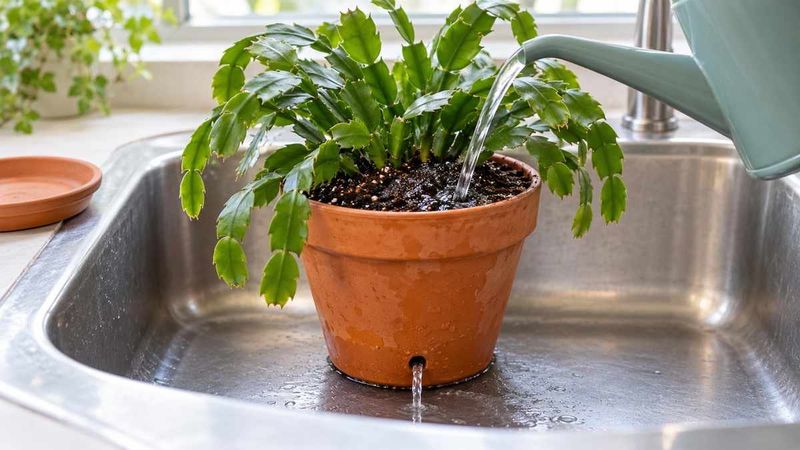
Fixing it is refreshingly simple. Set the pot in a sink or bowl with a few inches of room-temperature water and let it soak up moisture from the bottom for 20 to 30 minutes.
Drain it completely afterward so it does not sit in a puddle.
Going forward, check the soil weekly. During blooming season, most plants appreciate a drink whenever the top inch dries out.
Segments usually start firming up within a few days to a week once roots rehydrate, as long as the roots are still healthy.
3. Heat and Too Much Direct Sun
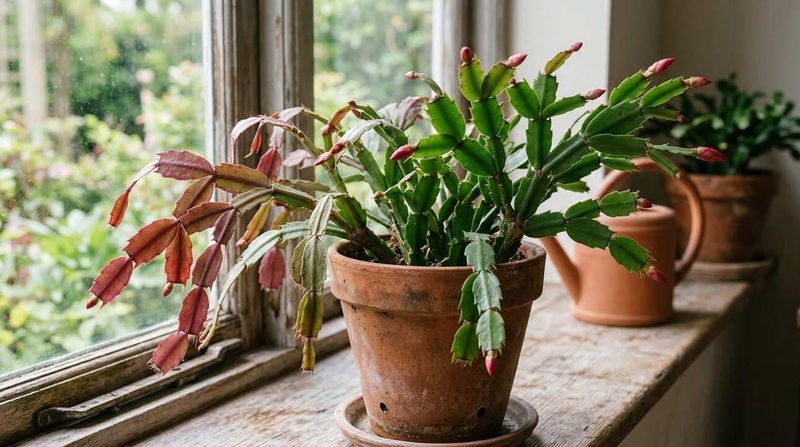
That sunny window that feels so cozy in winter can quietly cook a Christmas cactus. Strong afternoon sun, especially through glass, may scorch the segments and make them lose water faster than roots can replace it.
Watch for leaves that look limp in the afternoon and recover a bit overnight. A reddish or purplish tint often shows up too, which is the plant’s version of a sunburn.
Pale, bleached patches suggest the damage has gone further.
In their native habitat, these plants live in dappled shade under a forest canopy. They love bright light, but filtered and gentle.
An east-facing window with soft morning sun is often ideal. A spot a few feet back from a south or west window, or behind a sheer curtain, also works nicely.
Move the plant today and give it a good check for dry soil, since heat and sun use up moisture quickly. Keep daytime temperatures roughly between 60 and 70 degrees when possible.
The reddish color usually fades over a few weeks once the plant settles into a kinder spot, and the segments tend to stiffen back up.
4. Cold Drafts and Chilly Windows
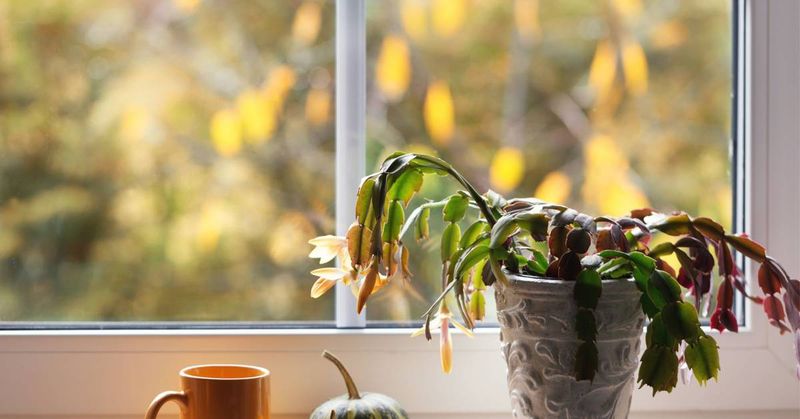
Ever stood next to the front door in January when someone lets the cold rush in? Your Christmas cactus feels that blast too, and it does not enjoy it any more than you do.
Across much of the U.S., winter windowsills can drop well below room temperature at night, especially in older homes with single-pane glass. Cold below about 50 degrees can stress the plant, and frosty glass touching the leaves may cause soft, watery, or translucent damage.
Repeated drafts from doors and leaky windows can also lead to droopy segments and dropped buds.
A quick test: hold your hand near the glass at night. If it feels icy, the plant needs a new home.
Slide it back a foot or two, or move it to an interior table with bright light.
Avoid the opposite extreme, too. Placing it right next to a heat vent or radiator swaps cold stress for hot, dry air.
Mildly chilled segments often bounce back once the plant is warm and steady. Any segments that have turned mushy will not recover, so snip them off cleanly to keep the rest of the plant looking tidy.
5. Rootbound or Worn-Out Soil
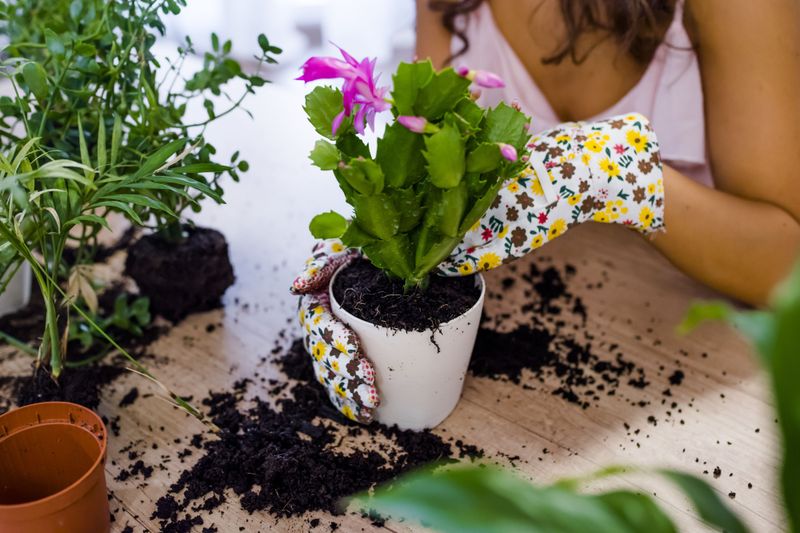
Some Christmas cacti are passed down for decades, and that heirloom quality is part of their charm. The catch is that an old plant may have been living in the same tired soil for far too long.
Over the years, potting mix breaks down, packs tight, and drains poorly. Roots may also fill every inch of the pot, circling around until there is barely any soil left to hold water.
Either situation can leave leaves limp even when you water on schedule. Telltale signs include water running straight through, roots poking from the drainage hole, or soil that stays crusty and hard.
Interestingly, these plants actually like being a little snug, so avoid jumping to a huge container. Choose a pot just one size up, about an inch or two wider.
Gently loosen the root ball and shake off old mix.
Fill in with a light, chunky blend made for cacti or succulents, ideally with extra perlite or bark. The best time to repot is in spring after flowering, but a plant in real distress may benefit from being repotted sooner.
Expect a short adjustment period before new growth appears.
6. Relocation and Bloom-Time Shock
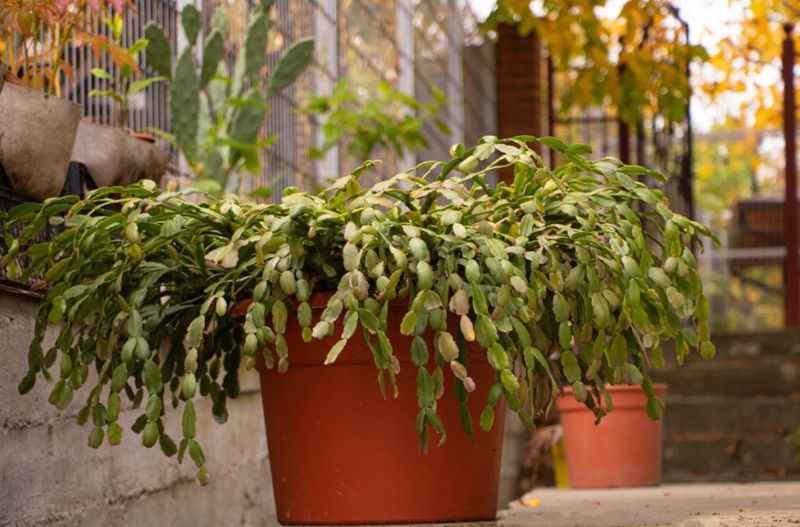
Brought one home from the garden center recently? A little sulking is completely normal.
Christmas cacti are creatures of habit, and sudden changes in light, temperature, and humidity can throw them off.
Store plants often spend weeks in steady greenhouse conditions. Then they ride home in a cold car, land in a dry heated living room, and get placed in a totally different light level.
That whirlwind can lead to drooping segments and dropped buds within days. Even moving a plant you already own from one room to another during bloom time can trigger the same reaction.
The best fix is patience paired with stability. Pick a bright spot without direct afternoon sun, away from vents and doors, and then leave it there.
Resist the urge to keep shuffling it around looking for a better location.
Hold off on fertilizer and repotting while it adjusts, since those add more stress. Keep the soil lightly moist but never soggy.
Most plants settle in over two to three weeks. Fun fact: in the Southern Hemisphere, where it originates, a close relative is sometimes called the Easter or May cactus depending on bloom time.
7. Pests Sapping the Plant
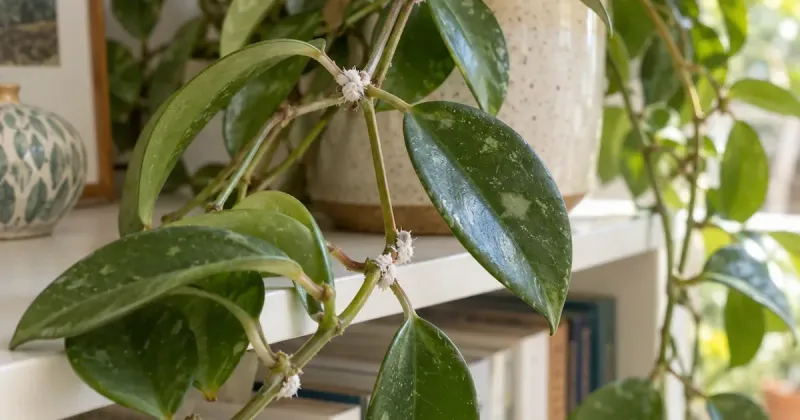
Tiny freeloaders can drain a Christmas cactus surprisingly fast. Mealybugs, scale, spider mites, and fungus gnat larvae are the usual suspects, and most hide in places you would not notice at a glance.
Start with a careful inspection. Mealybugs look like little bits of cotton tucked into the joints between segments.
Scale shows up as small brown or tan bumps that do not wipe away easily. Spider mites leave fine webbing and a dusty, speckled look.
Fungus gnats hover around damp soil, and their larvae may nibble on roots.
Sap-sucking insects pull moisture from the leaves, which can leave them soft and weak. Isolate the plant from your other houseplants right away.
Dab mealybugs and scale with a cotton swab dipped in rubbing alcohol, then follow up with insecticidal soap, testing a small area first.
Repeat treatments every week or so for several weeks, since eggs keep hatching. For gnats, let the soil dry out more between waterings and try yellow sticky traps.
These steps can reduce pest numbers significantly, though heavy infestations may take persistence. Once the bugs are gone, the plant often regains its firmness gradually.